Summit Stories: Lessons in Simplicity and Strength on Kilimanjaro

Summer is waning. Have you yet had the luxury to truly and entirely dedicate yourself to any one thing? If so, did you have the space to do so for eight consecutive days? I was fortunate to have the space. The focus was climbing to the roof of the African continent. A lot was learned along the way. A reminder of the power of song, teamwork, and the importance of listening to leadership. However, most enduring is the lesson learned on the beauty of simplicity.

One Team, One Dream: The Power of Unity and Song

We elected to take the 8-day route up the mountain. This provided the opportunity to cross through five distinct climatic zones. On day seven we would be climbing at midnight, up and across talus and scree fields. More vertical than before, the ascent would begin after a few attempted evening hours of sleep at over 15,000’. Like most higher camps, tents at Barafu High Camp, our base camp, are pitched on unlevel ground and I would find myself a huddled mass at the bottom of my tent. Having slid all the way down, often I would awake wondering if there might be some way to strategically clip a D-ring to connect my sleeping pad to the tent in order to stay in place. 

The night was dark, days prior was the new moon, and the entire way up was lit by little torches. We would pause approximately every hour, a time kept at short intervals so as not to freeze. The guides would adamantly advise, “Do not sleep!” The higher up one goes, the less oxygen and feeling sleepy is one of several symptoms of altitude sickness, a not so uncommon occurrence when a person travels above 8,000 feet. I was one of two trip leaders in a group with 13 gung-ho teens who similarly shared a sort of mantra. Ari, our lead guide, periodically called it out, “One team, one dream. To the top, non-stop.”  Though bleary-eyed, sleep deprived, with headache, and freezing cold, everyone was likely wondering if we would ever reach the peak. Five hours gone by and the sun was still not on the horizon. The summit remained invisible. Morale was between low and dormant. Yet, Ari continued to call out and we echoed, “One team, one dream. To the top, non-stop.”  

Our call and response were surprisingly not the only sounds to be heard on the mountain. For much of the way, a team behind us sang one song after another, the entire way up. Every twenty minutes or so, their songs recycled. The most memorable was a sort of classic, one we were introduced to during our first days in Tanzania. It is called, “Jambo Bwana.”  The first verse goes:

Jambo! Jambo bwana!   (Hello!, Hello sir!)

Habari gani? Mzuri sana!  (How are you? Very well!)

Wageni, mwakaribishwa!  (Guests, you are welcome!)

Kilimanjaro? Hakuna matata!   (Kilimanjaro?  No trouble!)

The exclamation marks are fitting additions as Kilimanjaro is a mountain of superlatives. The song shares optimism, encouraging to walk “pole pole” (slowly) and to drink plenty of water.  Hakuna matata, hakuna matata, hakuna matata (No trouble, no trouble, no trouble). The reason for the song was not frivolity as science proves how singing is one way to release endorphins. The voices resonating behind us were filled with morale. The song possibly distracted their minds and added to having a good time. Or so they seemed to be having a good time!  We all chose this experience after all, and a focus on fun is so important when you otherwise might feel like being part of a death march.

So, might we be wise to intentionally bring a little song into our schools and classrooms?

Teamwork: Dependence Upon the Unsung Heroes

Education like most institutions and industries finds itself in transition. Many of us are gassed, short of breath, and possibly are unable to see the mountain top. How critical it is then that we trust. In ourselves, what is true and what is possible. Staying the course is essential. As is conditioning. To prepare for Kilimanjaro, I did what I considered to be the best elevation training I could. Trekking six miles from 9,200’ to 13,803’. In retrospect, better training would have had me start from sea level! Warren Hollinger is an example of the sort of tenacity required to push through times of transition. His sea-to-summit adventure on this same mountain covered 54 miles and over 14,000 feet of elevation gain. A lesson on perseverance and strength and yet it does not exactly rival the feats of skyrunner, Karl Egloff. On average, most trekkers take 6 days to ascend Kilimanjaro, but Egloff reached the summit in an unconscionable record-breaking time of 4 hours and 56 minutes. Over 13,000 feet of elevation gain! 

Hollinger and Egloff’s superhuman solo feats are fantastic, yet we would be remiss if we were to overlook the importance of teamwork. For none of us is going about education alone. 

Our trip up Kilimanjaro epitomized teamwork. We depended on a team of guides and a legion of porters. One student asked in an off-the-cuff conversation, “Matt, how much would you charge us if you were our porter?”  Before I could even fathom an amount, another student half whimsically intercepted the exchange, saying frankly “If you could even do it, Matt.” She was right, I don’t think I could do it. Porters, the unsung heroes, not only carried personal gear and our packs but all of the group gear (mess tent, food, fuel, tents, etc.). In effect, approximately 60-70lbs. Some of them humbly recounted having been to the mountaintop more than 200 times and one porter on our team was 64 years old!  The lesson is one of utmost respect for our porters but also a greater understanding of how we always are part of something greater than just ourselves and are not alone. Even if our classrooms or schools may at times feel like islands, we are a collective.

Leadership and Vital Lessons Learned from the Climb

One student in particular, we’ll call her “T” ended up possibly being our greatest teacher. To say she reluctantly listened to the guides is an understatement. Instead, she consistently defied their guidance. Obstinate, her choices led to ill health, a negative impact on the group, and a definitive strain on resources. T’s stubbornness was first noted when she refused to join the group. Even with a clear invitation from us and peers, she would stand on the side and partially pay attention. When it came time to revise what she packed in preparation for the “expedition” she had a windbreaker for a jacket, no gloves, a blanket as opposed to a sleeping bag, and no sleeping pad. All told, seven fellow students came to the rescue and lent her the necessary gear. The guides probably reiterated the importance of hydration close to 200 times. A minimum of three liters of water a day was the expectation.  Yet, T was determined to do what she wanted, drinking less than ½ a liter even with constant probing. Claiming a very strict diet T also either did not eat or selected just white rice. The result was a little engine that simply could not. Four porters ended up coming off the mountain with T. Again, this was a lesson of what not to do and we all understand even better the importance of listening to those who have come before us, our guides.

From Mountains to Classrooms: Simplicity in Action

“Nature is pleased with simplicity”.  (Sir Isaac Newton)

Life in nature has a way of radically simplifying things. We rose with the sun and crawled into our tents when the night skies turned on. Other than our dependence on porters and the value of listening to our guides, any complexity to life was stripped down.Such simplicity was refreshing. 

Could such simplicity be translated to learning?  To our classrooms?  Moreover, what about our education systems?  What might this look like?

For a few weeks, I considered this. As an example, for a course I teach on entrepreneurship it might all be boiled down to three competencies:

  • Communicate and empathize with people who have perspectives and experiences different from your own. 
  • Curate and create content relevant to real-world issues.
  • Reflect on and take responsibility for your learning and that of others.

This ultimately is what I endeavor for students to walk away having learned. Within each competency, there are a few expected outcomes.  Further, there are many activities and assessments. However, the focus is on just three competencies. The result of such simplicity is clarity for students. Such a winnowing down of competencies helps to inform the student experience. The competencies are like hydration on the trek up Kilimanjaro, something we drink daily as students have ample opportunity to practice. With this practice and feedback, students move toward mastery. 

Maybe we even sing along the way.   

Jambo! Jambo bwana!   (Hello!, Hello sir!)

Habari gani? Mzuri sana!  (How are you? Very well!)

The power of song, teamwork, listening to leaders, and the beauty of simplicity. Though there is much to consider, hopefully, there is at least one transferable idea.

See you on the mountaintop!

The post Summit Stories: Lessons in Simplicity and Strength on Kilimanjaro appeared first on Getting Smart.

from Getting Smart https://www.gettingsmart.com/2024/07/30/summit-stories-lessons-in-simplicity-and-strength-on-kilimanjaro/

Green Workforce Connect and Building Green Pathways with Cynthia Finley

Over the last few years, we’ve been covering New Pathways, which we think of as a framework for school leaders and community members to create supports and systems that set students up for success in what’s next. This might be career exploration, client-connected projects, internships, or entrepreneurial experiences.

But what it really comes down to is connecting learners to real-world experiences and people and helping them articulate the skills that they gain in the process. Along the way, we began to talk a lot about green jobs. Many of the pre-existing pathways in secondary schools point towards CTE programs and trades, which are more in demand than they’ve been in decades.

This coincides with a pivotal moment in the arc of infrastructure redesign and development, one that heavily emphasizes clean energy trajectories and transferable skills. Many of these jobs we refer to as green pathways or requiring some of these green skills. 

One leading organization in this space is the Interstate Renewable Energy Council or IREC. I got to sit down with Cynthia Finley, the Vice President of Workforce Strategy at IREC to talk about green pathways and what IREC is doing to increase awareness and exposure of green jobs and skills. 

Mason: Hey there Cynthia Finley. Could you tell me a little bit about your own pathways and career journey. How did you get to where you are today?

Cynthia: My journey was a little bit bumpy and definitely had some on and off-ramps., I started my career going to a four-year university and I got a bachelor’s degree in psychology and I came out working in public service. So I had a career working with underserved communities both with abused and neglected children in our court system. 

After that, I migrated over to education and public safety. I ended up working and spending a lot of time in Virginia developing and implementing community and education programs specifically to help build out workforce pathways connected to in-demand occupations, but it took many years and many jobs to get there.

That journey included getting a master’s degree and eventually a Ph.D. It was combining my passion for helping others and really making a difference in my community.

That pathway could have been a little bit more streamlined if I had some more information about what careers were available. I wasn’t your typical best student, math was not my strong suit and I didn’t really have a lot of direction when I started out. I knew I wanted to make a difference and help people, but I didn’t really know where to go and how to make those connections. It would have been nice to know about opportunities such as apprenticeship or jobs that I could have had in the interim before racking up mountains of student debt that aren’t easy to pay off when you work in public service. Because of this, I decided that in the work with IREC, especially for these green jobs, we want to really put a focus on making those pathways visible and those connections better for our students.

Mason: Tell me a little bit about the work that IREC is doing along with these pathways. So what are some of the initiatives that you have started and who are the kind of audiences you’re reaching with that work?

Cynthia: So IREC has a long history of working in the green space, particularly in workforce development and education and training. They hold the accreditation for weatherization jobs and we’ve developed curriculum and micro-credentials and training and technical assistance for both education and training providers and employers.

We have a lot of great programs that help with some of those jobs that you don’t even think impact directly green energy, but they do — like coding officials and public safety officials. We also develop pathways for particular audiences, like our solar-ready vets program that focuses on getting veterans into jobs and apprenticeships and solar.

We wanted to really expand on that work and have a stronger connection to the job seeker and bring awareness to what these jobs are. There are a lot of jobs in clean energy., and that’s what’s so great about this industry. We’re sort of everywhere. We’re woven into a lot of different occupations and sectors.

There’s an opportunity for anybody to get involved. We developed career maps. That show a job seeker or anybody who’s interested in getting into the industry, where you can start, what these jobs are and what your pathway could be. So your career opportunities are almost endless. And we really wanted to help expand those maps and bring something a little bit more interactive to that job seeker.

And again, strengthen those connections to that quality training and education that we all need. We work with our partners and bring more visibility to those employers who are doing this great work and who have a need, a huge need for employees, especially if we’re going to build out the clean energy workforce in such a short period of time.

Mason: Yeah, those career maps are super helpful. You mentioned a couple of the jobs that we don’t typically think of as green jobs, can you give me some more examples of jobs that exist within the ecosystem of green that people might not associate?

Like if we’re actually going to ramp up green and green jobs in that workforce, what else do we need to be thinking about and doing in the meantime?

Cynthia: I like to say that a green job is like the six degrees of Kevin Bacon, right? You could almost run a line anywhere with green jobs, right? In any industry. And I love that we can do that because we make it available and interesting to people who might not want to get into solar. Maybe they don’t want to do a particular job or what they envision clean energy to be. But there’s a whole host of jobs and weatherization and construction. So bringing energy efficiency to our home that includes, you know, appliance, mechanical work, weatherizing the homes through construction and energy efficiency techniques, solar jobs. Obviously, in solar alone there are numerous jobs that someone can do. And what’s really nice is that a lot of these jobs, you can come in at an entry-level, but really work your way up. So it’s not just you stay at that one level forever. There’s a huge need for the grid interconnecting to the grid, modernizing the grid, and those might be higher-level positions. If someone’s interested in going to school, they really got bitten by the energy bug. There are HVAC, coding officials and energy auditors, jobs within a county or a city and municipalities, IT, there’s manufacturing and logistics, and there’s a wide variety of jobs and other sectors that really touch and are dependent. 

Or you might think I just have to be an electrician, but there are a whole host of jobs attached to any one of these industries. So it’s what makes it kind of nice is that it’s flexible and pretty expansive.

Mason: Totally. Yeah. I toured a cool project-based school in Colorado called the STEAD School where they have three pathways for their students to start getting affiliated with different jobsand it’s all environmental-related. So you have two of the pathways strands, like ag veterinary and environmental science and they’re like, and we’ve cross-referenced it and we can identify at least 7,500 different jobs that these three like sort of work into, which is amazing.

As we’ve just highlighted there are tons of viable pathways, but additionally there are numerous skills that these various trades must acquire and continually hone. What are some of the most in demand transferable or durable skills that prospective green employees should have?

Cynthia: So I think there are definitely skill set gaps that each particular sector, might want to address — I think there’s an opportunity to really learn about clean energy as a whole. For example, how do these jobs really impact clean energy? Your job might seem really small, but how do you fit into that bigger picture, right? 

Some of these trade type positions, or maybe more entry-level positions, can be difficult physical work. You might be climbing under a home to weatherize a home. You might be up in someone’s attic. You might be climbing on a roof to install solar panels. And so the culture and the climate of the work and the occupations I think are also really important, but just to be able to have those critical thinking skills, the communication skills to be able to work with, depending on your job to be able to work.

Mason: The physical labor component is kind of great in this current job market as well, because for now its pretty guaranteed job stability as robotics and AI really struggle to make discrete physical gestures. So much of this pathways work involves exploration and exposure and we believe that really belongs in high school (and earlier). What is IREC currently doing to reach high school students?

Cynthia: At IREC, we’ve launched our strategy for workforce development called Green Workforce Connect which brings awareness to job seekers who are currently in the market or thinking about transitioning into clean energy. So just like what we talked about, what are these jobs? What is the detail? What does it look like? Let me see some actual footage of people who do these jobs. 

At its core, we’re really interested in making sure we create a diverse and equitable career pathway for these students and for job seekers. So that’s also at the core of what we’re trying to do. But the goal will be to bring that awareness to the K-12 space or the CTE space and to share that curriculum and help build out that curriculum for the in-demand industry that these students might be experiencing.

And with any industry, it is not a one and done. This is a growing industry. The technology is changing where it’s moving at a rapid pace. So we want to be an intermediary through our National Clean Energy Workforce Alliance to help keep that curriculum and training up to speed with what aligns with the industry, but then bring that awareness to that K-12 system. Our hope is to work with K-12 and CTE programs across the country to really bring that awareness component and provide resources that educators can use in their classroom: toolkits and technical assistance training that we might be able to provide students with some practical experience while they’re in school, there are some great programs in the country right now who are doing just that across the country.

There’s one in Virginia that developed a youth solar technician apprenticeship program. Students get hands-on experience building solar panels, earn $17 an hour, get college credit for it, and they got some experience to really check out this field to see if it was something they might be interested in. And if, at the end of that, they were graduating and there were positions open, they automatically partnered with an electric utility company.

And those students were hired at the end of that apprenticeship if they wanted to go into work there. So giving them those opportunities, and as many as we can, and aligning that with the curriculum. Where you learn about the history of energy, you learn about solar, really learning all the mechanics of all of these things. 

In New York and Virginia they have short-term credentialing programs for solar. You can go in, take a course to be a photovoltaic installer, come out with an industry credential there, and then you can, you know, go pursue a job at that point. But a lot of colleges also have stackable credentials, so there might be, you might come in in solar, and it might be a stackable credential on your way to become an electrician, creating different on and off ramps that a student can pursue to expand in that career pathway. That said, not every employer is looking for a credential. A lot of times they’re just, they’re looking for someone that they can train, or they’re looking for someone who’s had some experience or some training, so it’s not necessary that you have to have all of that in your back pocket, and that’s where it’s important to really connect to those employers to find out what they’re looking for.

Green Pathways

This publication focuses on identifying the many opportunities for developing a purpose-driven and skillful workforce via Green Pathways for K-12 students.

View Publication

Mason: That’s super helpful. I have a few questions from some students I’d love to ask you. “Say you have the internet, but you’re like 15, 16, and you care a lot about the environment. What is something I should be googling to figure out more about this emerging job space?”

Right now we’re at an interesting space where a lot of folks might not be one degree removed from somebody who has a job that is evidently in clean energy. There are some people and that’s going to be obviously growing a ton over the next 3, 5, 10 years. But if you’re young and non connected to current green workers but you want to make a positive impact on the environment and the energy transition, where would you look?

Cynthia: There are a couple of things I would suggest that folks do. First I would narrow down what you’re interested in. As we’ve discussed, there are a lot of different energy issues or clean green jobs or clean energy. There’s climate resiliency, green spaces, water, etc. So I think kind of looking at what all those things are, what does it mean to be in clean energy or that green space and really find out what you gravitate towards in terms of those interests.

Some of the resources I’ve already mentioned are a great place to start — our career maps, Green Workforce Connect. So, IREC’s a good place to start and really see what kind of what those jobs look like and kind of reach out to the employers in your community to get to learn a little bit more about what they’re doing and the impact they have that you’re interested in making. But then more practically, try to get some hands-on experience. There are a lot of great programs for youth, the Kid Wind Challenge is one, that comes to mind. And that’s sort of a hands-on design that lets students, enter this competition. It’s through the lens of wind and solar energy. So they join teams and they design and construct and test small-scale wind turbines or solar structures, and then they go to these competitions that are all over the world and they’re amazing.

There’s the Clean Energy Youth Apprenticeship that lets you look at if you’re interested in pursuing a career in clean energy or energy efficiency. It’s a great launching pad to what those pathways look like.

Definitely take a look at your community colleges and your four-year institutions as well. So there’s a lot of places to just, a lot of places on the internet to do some research, but I think going to these vetted partners like your community colleges or the Clean Energy Youth Apprenticeship or your own high school would be a great place to start.

Mason: Yeah, even just doing the first tier of research to figure out what clean energy assets you already have in your community so that you can leverage that local connection.

Cynthia: And there are a lot of great mentor programs in states. She’s In Power is in Colorado and they hook up students with women, with girls, women, students with women in the industry to really kind of mentor them through how they got in the industry, you know, what was their pathway, what does that look like?

So really finding those mentorship opportunities, building your network and your social capital. Even things as small as just learning about the energy efficiency in your own home, you know? Someone gave a great example just last week of leaving your phone charger in — even if your phone’s not attached, it’s still using energy or the difference between plugging in your cell phone at night to charge and the drain that that has on the grid. We all share that grid versus everybody using their energy at the same time. And so really learning about what some of that even means in your own community is a great place to start.

Lastly, you can just reach out to me on LinkedIn. I mean, we’ve got the National Clean Energy Workforce Alliance. If we don’t have a direct connection, we know somebody who does, and we often get a lot of emails just that, you know, click the more information on our website. Those emails absolutely make their way to myself or my staff and we answer every single one of them. I take meetings all the time with folks, and it might not even be things that I particularly can help you with, but we are definitely passionate about what we’re doing and we’ll always connect you to somebody in your area. And that’s what we’re working to do is really build out that repository of resources nationwide.

So that our employers can connect with one another and, and, you know, find out what everyone’s doing and training folks can too, but really for students and job seekers as well.

Mason: Amazing. Another question from a student, “we live with a lot of volatile weather patterns between flooding and fires and news of melting ice caps and it’s hard not to be overwhelmed. What new developments or technologies have you learned about that make you optimistic about the future?” 

Cynthia: There’s a company here in Charlottesville, Virginia that built a building there in clean energy, and it is like zero carbon footprint. Everything is recycled down to the nails, the siding. Everything in that building was repurposed or reused, and it’s, it’s completely energy efficient. There is a solar panel on every part of that building that they could put a solar panel on. There are little picnic benches and they’re covered. They have solar panels on top. Their parking deck has solar panels everywhere. There are solar panels on every inch of the roof that they could get a solar panel on., but everything was recycled, and repurposed.

It is completely energy-efficient and eco-friendly in every way. And it was done intentionally and it took a whole host of folks to be able to pull that off., replicating that in other places is going to be gigantic and revolutionizing kind of that, you know, those advancements. And I think that’s going to be gigantic, especially for communities that maybe don’t envision themselves like, you know, they don’t, they might not think, well, that’s the way we’ve never done it. We can’t do it before. Seeing one person do it, I think is contagious and that innovation will spread for sure.

This generation brings a perspective that my generation or the one before it, we don’t have to that point of we’ve never built a building that way, but your generation, younger generations can look at the same thing and see something totally unique based on their own experiences and their passion. And you don’t have to necessarily wait to kind of get involved and play around with it, or really spark something in your own community.


Cynthia Finley

Cynthia Finley serves as the Vice President of Workforce Strategy at the Interstate Renewable Energy Council (IREC). In her role, she leads efforts to develop robust workforce strategies that support the clean energy transition. Cynthia brings over 20 years of experience in workforce development, policy advocacy, and strategic planning. Her career is marked by a commitment to fostering diversity and inclusion within the energy sector, ensuring that all individuals have access to training and employment opportunities. Cynthia holds a Master’s degree in Public Administration and is a recognized leader in the field, frequently speaking at industry conferences and contributing to key publications on workforce innovation and sustainability.

The post Green Workforce Connect and Building Green Pathways with Cynthia Finley appeared first on Getting Smart.

from Getting Smart https://www.gettingsmart.com/2024/07/23/green-workforce-connect-and-building-green-pathways-with-cynthia-finley/

The Women Building Community to Support Microschool Growth and Sustainability

By: Ayana Verdi

Before the COVID pandemic magnified the vast inequities that exist within our education system and spurred an education renaissance that rapidly spread across the country, the quest to reimagine what school could be had already begun in pockets across the country. In my home state of Florida, microschools and learning cooperatives were already serving families with fresh and innovative learning models. When families realized their learners needed options that better met their needs, these environments were poised to respond. Nimble and hyper-local, each innovative model designed solutions intended to serve the unique population of children in their community. 

When I met Iman Cassells Alleyne in 2018, she was just beginning her visionary journey to build a new school model of her own. She came to visit the newly founded Verdi EcoSchool in Melbourne, Florida. We sat together, sharing ideas and a vision of what school could be if led by individuals brave enough to challenge the status quo. Verdi EcoSchool was founded in 2016 as the first place- and project-based urban farm school in the southeastern United States. Using the community as a campus, students learn that “school” doesn’t just happen behind a desk with a textbook—learning is all around us. Our connections to the community deepen experiences that we might otherwise miss in a conventional classroom. As we explored the campus, Iman joyfully expressed her desire to build a community of people connected to each other and united by a desire to be kind—to themselves, to each other, and to the world. 

My time with Iman highlighted a great absence for me in my work as a school founder—fellowship. The road to founding and leading a school is exhausting and often lonely. How do we sustain ourselves as school founders in an industry where 50% of school leaders leave the profession entirely after five years? Iman’s vivacity brought me to the beginning of a new journey: connecting to a community of women—mothers and educators—dedicated to changing the face of education.

A highly accomplished educator and entrepreneur, Iman went on to establish the Kind Academy Microschool Network, based out of Coral Springs, Florida, a network of innovative learning programs that specializes in supporting unique, gifted, and neurodiverse learners. Iman offers Kind Online School, and she’s also started the Launch Your Kind program to help education entrepreneurs open their own Kind Academies. There are 10 new Kind Academies planning to open for the upcoming school year—seven in Florida and three in other states. Iman’s diverse teaching background in public, charter, private, and homeschooling programs fueled her passion for a personalized learning approach. Iman is at the center of a movement to redefine our why for school. She recently shared: “I passionately believe that education holds the key to transforming our world. True change, in my view, can only be achieved through education and the sharing of knowledge. I am convinced that peace is not just a lofty goal but an attainable reality within ourselves and our communities when we are equipped with the necessary knowledge.”

Iman’s purpose is to be a beacon to other school founders. Kind Academy is supporting a new generation of leaders to continue to mold our education ecosystem into one that works for all learners.

My journey to find fellowship became an experience in holding and building beautiful connections—co-creating a community that nurtured every opportunity to lift its members up. We found each other somehow—fellow educators waving our flags on individual islands, desperate for the presence of those who could understand. Emails sharing grant and award opportunities, school visits, and strategy sessions—anything we could do to give each other a hand up and the benefit of fail-forward wisdom. We cared about each other and celebrated our individual successes as a collective. 

My time with Iman highlighted a great absence for me in my work as a school founder—fellowship.

Ayana Verdi
Founder, Verdi Ecoschool

In 2021, a conversation with Iman yielded a new connection—an inspired educator starting her own journey to change what school can be. I jumped into a Google Meet with Shiren Rattigan. Shiren greeted me with a smile and a sigh as she asked one question that still resonates within me to this day: “When is what we give enough?” 

Shiren was vulnerable and raw in a way that I avoid out of fear of sharing too much. Her openness is her superpower, and this presence forged an impressive path. Shiren founded Colossal Academy in South Florida when remote schooling options created an opportunity for families who needed more personalized learning opportunities for their children. Shiren has spent 15 years championing innovative education. Her dedication to amplifying student voices and tailoring future-forward education is unwavering. Balancing her professional endeavors with her role as a wife and a mother to three daughters, Shiren is a true embodiment of educational passion and familial devotion. 

Shiren shared: “Our vision is to create an educational ecosystem that is as dynamic and interconnected as the vibrant community that surrounds us, where education is not just about acquiring knowledge, but about inspiring change and building a better world.” Shiren has given life to an education renaissance in South Florida—co-founding the Innovative Educators Network to harness the collective power of a movement—place-based, community-driven, and mission-focused founders and “edu-preneurs” providing an unprecedented array of options for families. 

The movement is spreading. Kind Academy, Colossal Academy, and Verdi EcoSchool have received national recognition as Yass Prize awardees. 

On a sunny January morning in Fort Lauderdale, Florida, I attended the InEd Conference, a catalyzing event where parents, educators, and students gathered to collectively redefine the boundaries of conventional education. I watched as the leaders in our education renaissance took to the stage to share, inspire, and lead. After, I ran into Shiren as she prepared to step into another talk, and she greeted me with a smile and a sigh. This is enough.

Ayana Verdi is the founder and director of Verdi EcoSchool, a place- and project-based urban farm school in Melbourne, Florida—and a 2023 Yass Prize awardee.

This article was originally published on Education-Reimagined.org.

The post The Women Building Community to Support Microschool Growth and Sustainability appeared first on Getting Smart.

from Getting Smart https://www.gettingsmart.com/2024/07/22/the-women-building-community-to-support-microschool-growth-and-sustainability/

How Many Teachers Can a Building Be?

By: Dan Coleman, Ph.D.

By now, most educators are used to thinking of the school building as a “third teacher:” the term coined by Loris Malaguzzi in the 70’s to describe the role played by space in the Reggio Emilia approach to education: “There are adults, other children, and their physical environment.” We know how powerfully where we learn can shape what and how

But even when we think of the physical school as a teacher—even when we design school buildings—we rarely think about the kind of teacher a building can be. 

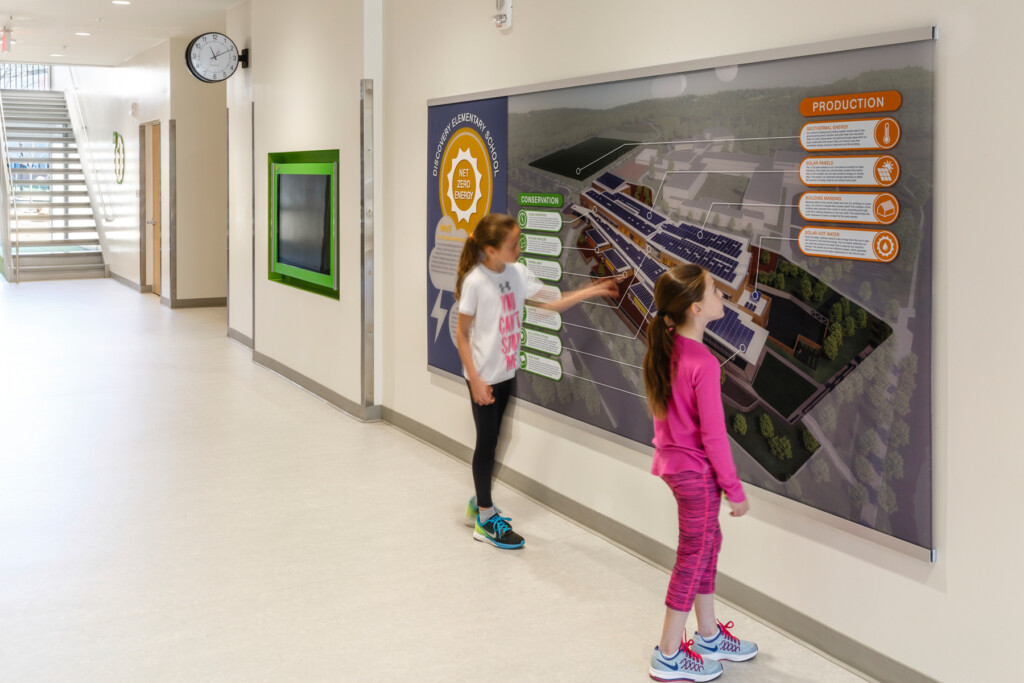
We install signs that show how the heating system works, or we call out the materials the walls are made of, or we make visible the route the roof water takes. But we don’t recognize that, in doing so, we’re turning our school buildings into lecturers: teachers who teach by explaining. Who pass knowledge from the expert who knows to the novice who doesn’t. Who—without our intending it—deepen our children’s belief that the things we know are so sure and final that we could write them in stone.

And this building-teacher is more permanent—and perhaps more fundamental in its impact—than all the human educators that do their work inside it. A standing model of instruction, it offers a demonstration lesson every time we walk through it. When we design our schools, we make a concrete commitment to the kind of teaching and learning we hope to see happen inside them.

Because the ways we learn are shaped by the character of the teacher we learn from. There’s the faraway expert who delivers the information we lack. The coach who leans over our shoulder, watching what we do and suggesting how we might do better. The counselor who helps us believe we have what it takes to handle the challenges we’re facing. But what if one of the key relationships we designed for our students—one of the “people” we got them learning from and with—was their school building? What if there were as many different kinds of “third teachers” as there are teachers? 

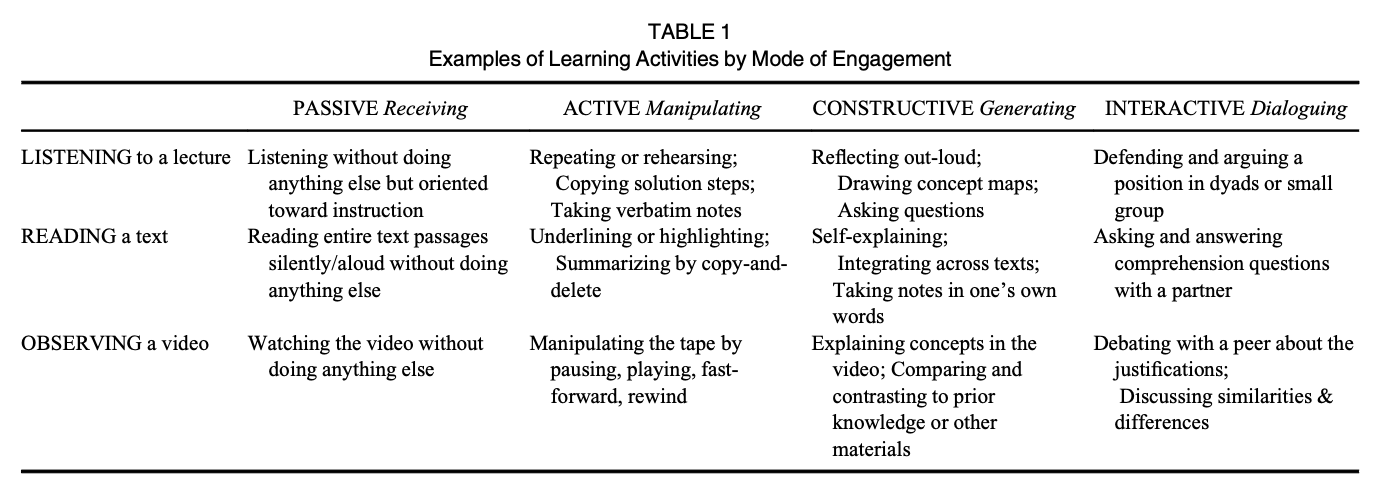
One way to open our minds is by thinking about interactivity. Buildings, like human teachers, can invite us to learn by just absorbing information. Or they can draw us deeper into sensemaking, in ways that get us coming up with problems as well as figuring them out. And between these extremes of “passive” and “active” learning there are all sorts of other possibilities. In their research on engagement, Michelene Chi and Ruth Wylie offer a framework that can help us think about these differences more subtly—and imagine a much richer range of roles for building-teachers to play. 

We all know about the power of learning by doing. But “doing” can mean a lot of different things—underlining while you read; building a video that explains your thinking; arguing your idea to others. And these different kinds of doing affect how deeply you learn. What if the physical design of our schools pushed students farther along Chi and Wylie’s spectrum? 

Imagine how a school building might teach us about rainwater collection, for example: 

Passive
receiving
Active
manipulating
Constructive
generating
Interactive
dialoguing
A poster that labels and explains the different parts of the building’s collection system.  Clear pipes that expose the system’s mechanics, and a diagram inviting you to retrace the flow with moveable pieces.  A display that explains alternative collection systems—and challenges you to draft your own…or to set up a similar system at home. A challenge that draws in other people to help you solve it—perhaps through a terminal that gets students collaborating with students at other schools.

Each of these space designs elicits a different response; each invites us to play a different role as students; each challenges us to do a different kind of learning-work. As we imagine schools that operate farther along this continuum, we move beyond the building-lecturer that drones on in the background like the teacher in a Charlie Brown movie. We turn our schools into something more like playgrounds, environments designed to get people acting—and interacting with one another—in particular ways. Or like the best museum exhibits, those that recognize that our agency in the world depends on our understanding of how it works. (Michael Spock’s 1962 What’s Inside? exhibit at the Boston Children’s Museum captured this principle brilliantly. Early on, it invited children to explore the insides of ordinary objects, such as a toaster, baseball, or a drop of rainwater;  over time, it grew to include a cross-section of a Victorian house and a city street—which allowed children to crawl above and below the street through manholes and sewer pipes.)

Imagine a school that felt a little like a construction site, that prompted its students and teachers to feel more like builders. A place that helps people take for granted that “learning” is a process of assembling our own mental models of how a concept holds together and bolts onto what we already know. What if our school buildings asked us to do more than just read a sign or interpret a graph? How might we design a building that asks a follow-up question? What if we treated “school-building” as a verb, an activity that starts before the space is fully planned and lasts long after it’s occupied?

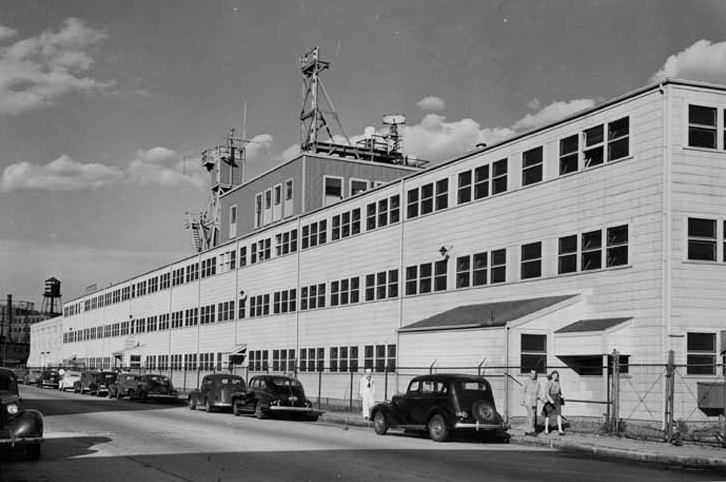
One such building-teacher might be MIT’s Building 20, a space built in 1943 and meant to last “for the duration of the war and six months thereafter.” According to Paul Penfield, one of the strange mix of teachers and students assigned a room in it, Building 20’s “temporary” status licensed its inhabitants “to abuse it in ways that would not be tolerated in a permanent building. If you wanted to run a wire from one lab to another, you didn’t ask anybody’s permission—you just got out a screwdriver and poked a hole through the wall.” Over the next 55 years, this “magical incubator” was where Noam Chomsky developed modern linguistics, Amar Bose conducted his early research on loudspeakers, and Rainer Weiss and his team built the Cosmic Background Explorer. 

So what might our school buildings teach us about the world and our role in it? About what it means to be “a good student”? About what school is for–and who it’s for? Rob Riordan, President Emeritus of the High Tech High Graduate School of Education, believes that the best school buildings “tell stories about the work and learning that’s going on AND make a huge statement about who owns the space—whose house it is.”Imagine a school that feels like car engines used to: you lift the hood and see the parts with no smooth cover to hide the wires. The logic of how things fit together, the reasons they work or don’t, are right in front of you, daring you to figure them out. Imagine a school building that teaches its students to see the way things are as nothing more than the way they were made—the last, best solution developed so far, to a problem that someone like you could always solve better.

The post How Many Teachers Can a Building Be? appeared first on Getting Smart.

from Getting Smart https://www.gettingsmart.com/2024/07/16/how-many-teachers-can-a-building-be/

Exploring New Pathways to Teaching Credentials with iteach

Teacher preparation is undergoing a significant transformation, offering new pathways for aspiring educators to enter the profession. As the education sector faces challenges such as teacher shortages and the need for more diverse and prepared educators, innovative solutions are emerging to address these issues. One of the most promising developments is the rise of apprenticeship programs and alternative certification pathways, which provide practical, hands-on experience and mentorship to future teachers.

In our Getting Smart Town Hall “Apprenticeships for Tech and Teaching,” we highlighted the growing momentum behind apprenticeship programs as a viable route to teaching. These programs allow aspiring educators to earn while they learn, gaining valuable classroom experience under the guidance of seasoned mentors. This approach not only helps address the skills gap but also fills the experience gap that many new teachers face.

In addition to apprenticeships, “Educator Pathways” in our New Pathways Handbook emphasizes the need for innovative and flexible routes into the teaching profession, particularly in light of challenges highlighted by the pandemic, cost of living, and evolving educational technologies. Traditional teacher pipelines are proving inadequate, necessitating programs that adapt to new responsibilities and leverage technology. Initiatives like The New Teacher Project (TNTP) and the Center for Black Educator Development focus on culturally relevant practices and equitable working conditions to attract and retain diverse teaching talent. These efforts collectively aim to build a respected and diverse teaching workforce equipped to meet the needs of modern education

With the rise of alternative certification programs like those offered by iteach, a diverse array of individuals are finding their way into classrooms, bringing with them unique backgrounds and experiences that enrich the learning environment. iteach supports aspiring teachers through every step of their journey by offering a blend of coursework, field experience, and mentorship, which helps candidates develop the necessary skills and knowledge to excel in the classroom. This program is particularly beneficial for those looking to make a career change or those who need a more flexible certification process due to other commitments.

A New Pathway: iteach

Here are inspiring stories of educators who have chosen innovative pathways to enter the teaching profession, showcasing the transformative impact of alternative certification programs. What unites these remarkable educators? They all received online alternative teaching certification through iteach, proving that traditional pathways are not the only route to becoming an outstanding and award-winning educator. Each of them has a bachelor’s degree, real-life field experience, and aspirations to lead in their respective fields. These commonalities emphasize the value of diverse experiences and the importance of alternative certification programs in shaping the future of education.

Brianna McCook’s Journey: From Preschool to Special Education

Brianna McCook holds two bachelor’s degrees and has always been driven by a desire to help those without a voice. Her passion for education was ignited while working with preschoolers. This experience led her to pursue a teaching credential as a special education teacher. She shared “I found the iteach program to be really helpful, especially since other programs required three years of work experience which I didn’t have at the time. iteach provided a pathway for me to pursue my passion for teaching without traditional qualifications, and I’ve been grateful for the opportunity it has given me. The iteach program allowed me to start teaching after completing the instructional coursework in just a few months, which was a great advantage for me. iteach has been accommodating and supportive, helping me navigate the journey of becoming a teacher despite not having the typical background in education.” Brianna is now in her residency training at W.W. Robinson Elementary School in Woodstock, Virginia, where she is dedicated to making a difference in the lives of her students.

Susan Lebeck: From Corporate Training to Rookie Teacher of the Year

Susan Lebeck, a special education teacher at Wallen ISD in Texas, exemplifies the potential of alternative certification pathways. Starting as a paraprofessional, Susan transitioned into teaching, earning her certification and recently being named Rookie Teacher of the Year in December 2023. She shared “I definitely wouldn’t be able to do a lot of things that I do without the information and training I received from iteach. It has been invaluable in helping me navigate through this program and excel in my teaching career. Winning Rookie Teacher of the Year validated everything that I’ve been doing. It was nice to receive recognition for my hard work and dedication to teaching. It motivated me to continue making a positive impact on my students’ lives.” With a bachelor’s degree in business and a background in corporate training, Susan’s journey showcases how skills from other industries can translate into educational success.

Storm Ridgeway: A Community Advocate and Educator

At Delhi Charter School in Louisiana, Storm Ridgeway is not only a high school history teacher but also a coach for football and baseball. As a first-generation high school and college graduate, Storm’s commitment to his community is unwavering. He shared “I found out about iteach in 2012 when I graduated college with a history degree but was not certified in Louisiana. iteach offered a pathway to certification that was straightforward and practical, unlike traditional master’s programs. iteach allowed me to get certified in middle school education, which was crucial for me as nobody else was offering certification for grades five through eight at that time. This unique offering was a game-changer for me. I recommended iteach to others because it gets to the point, prepares you for the challenges of being a first-year teacher, and provides psychological insights into education. iteach has been instrumental in my career and has helped me transition to the next step in the profession.” Storm is now entering a master’s program to become an administrator, aiming to further impact the educational landscape. His story highlights the importance of community involvement and continuous professional growth.

Morgan Greenburg: From Edtech to the English Classroom

Morgan Greenburg’s career pivot from working in edtech companies to becoming an English teacher at Del Valley High School in Texas is a testament to the flexibility and efficiency of iteach’s certification process. Regarding her journey, she shared “iteach prepared me so much—having that human connection with somebody from iteach has made the experience feel more connected and streamlined.” Hired in January, Morgan found the transition swift and rewarding, making it one of the best career choices she has ever made. Her experience underscores how alternative certification can open doors quickly and effectively.

Megan Hall: Overcoming Challenges to Achieve Excellence

Megan Hall, a high school science teacher and department head at Arlington Preparatory Academy in Baton Rouge, Louisiana, was named Teacher of the Year in her first year. Despite facing disabilities and juggling various unfulfilling jobs, Megan’s perseverance led her to find her true calling in teaching. Regarding her journey, Megan shared “I was struggling with changing careers and becoming a teacher, but thanks to iteach, I was able to fast-track my certification process and get hired within a month and a half. iteach provided me with a mentor who helped me improve my teaching methods and classroom management, which was crucial for my success in my first year of teaching. The support from iteach and my on-site mentor helped me navigate challenging situations, such as handling difficult student behaviors and making effective lesson plans. I appreciated iteach’s program structure, which allowed me to complete the coursework at my own pace while balancing teaching multiple science subjects. I credit iteach for helping me achieve success in my teaching career, culminating in being named Teacher of the Year for my district in my first full year of teaching.” Her story is an inspiring example of resilience and dedication to education.

Kayla Qualis: Balancing Family and Ambitions

Kayla Qualis, now teaching at an elementary school in the Clark County School District in Nevada, exemplifies how life’s detours can lead to fulfilling careers. With a bachelor’s degree in education, Kayla took time off to be a stay-at-home mom of four. She shared “I did not want to do student teaching. There’s no way with 4 kids that I could do student teaching for free. So to avoid student teaching, I did the iteach program, which allows me to be in the classroom, to teach and get paid. I’m thankful for it.” She has since returned to teaching and aspires to earn a master’s degree, demonstrating that it’s never too late to pursue professional growth.

Christina Day: From Criminal Justice to Educator of the Year

Christina Day, named Clark County School District’s New Educator of the Year, transitioned from a background in criminal justice to teaching 3rd grade. Her experience working with youth and as a substitute teacher in Las Vegas paved the way for her current success. Christina’s journey highlights the diverse professional backgrounds that can contribute to excellence in education.

Conclusion

The stories of Brianna, Susan, Storm, Morgan, Megan, Kayla, and Christina illustrate the transformative power of alternative certification pathways. Programs like iteach are not just creating teachers; they are cultivating leaders, innovators, and advocates who are making a profound impact on the educational landscape. 

As the education field continues to evolve, these innovative pathways are crucial for building a robust and adaptable teaching workforce. They not only address the immediate need for qualified teachers but also pave the way for a more diverse and skilled educator population, ultimately enhancing the quality of education for students nationwide.

Whether you’re considering a career change or looking to advance in your current role, alternative certification can provide the flexibility and support needed to achieve your goals.

The post Exploring New Pathways to Teaching Credentials with iteach appeared first on Getting Smart.

from Getting Smart https://www.gettingsmart.com/2024/07/15/exploring-new-pathways-to-teaching-credentials-with-iteach/

A Conversation with Auditi Chakravarty of AERDF on Education Research and Development Measuring Edtech’s Impact

I was recently at ISTE 2024 where I got the chance to sit down with Auditi Chakravarty, CEO of the Advanced Education Research and Development Fund (AERDF). Auditi had just finished leading a session at ISTE, which focused on K-12 demand for evidence of the edtech lifecycle, including evaluation, implementation, and outcomes.

This conversation came on the heels of writing Unfulfilled Promise: The Forty-Year Shift From Print to Digital and Why It Failed to Transform Learning for the Hoover Institute. This paper addressed many of the points mentioned in a recent study that found that school districts accessed an average of 2,591 edtech tools and students and educators both averaged about 42 tools in the 2022 to 2023 school year. This number was then complicated by the fact that the number of unique digital solutions accessed by educators decreased by more than 14% over the year prior – highlighting that educators may be starting to feel “tech fatigue.” 

I sat down with Auditi live at ISTE to discuss what’s next for edtech. 

Tom Vander Ark: Auditi, I had an interesting experience this year. I wrote a 40-year retrospective of EdTech for the Hoover Institution, and it was a difficult paper to write because I’ve been involved in edtech for 40 years and the big conclusion was we haven’t done very well. We haven’t made the big intended impact that I hoped for. When I listed the reasons why, high on the list was the fact that we just don’t have much R&D in the education sector, or at least we didn’t until recently.

Unlike the health sector where there’s significant R&D linked to innovation and to venture capital, we don’t really have that link. So there’s missing R&D and a limited link to private capital. 

AERDF is an important part of that solution for the education sector. I imagine that’s what drew you to AERDF. Tell us what is AERDF and what are you up to now? 

Auditi Chakravarty: Yes Tom, that is what drew me to AERDF. Similarly, having been a teacher, having built edtech tools and programs led research teams, and seeing how these are really siloed and separate spaces in education. that edtech space where product and program development happens, it’s like an entrepreneur gets that funding and thinks, ‘ I have a great idea and I’m going to go build the thing. 

Tom Vander Ark: This is a joke that I’ve told for 20 years because there was no venture capital until 20 years ago. Then in the beginning, in the first 10 years, like from 2010 to 2020, it was a tech dude whose sister was a teacher, who complained over Thanksgiving. He would say, “I can take care of that” and they would code an app. And so that was R&D in education 15 years ago. 

Auditi Chakravarty: Yeah, along with the idea of building based on what we already know from the research about how learning happens, what actually supports learners the best. Let’s start from that. Let’s bring researchers into this, around the table with us. So now I’ve got a teacher and a developer, but let’s also bring the researcher to the table. A lot of the edtech companies now have researchers on their teams.

They have research departments. They’re doing a lot of product usage research, market research, and mining the data they have. The kind of research that doesn’t happen in our sector, but does happen in other industries, is more like the researcher working at Stanford, or whatever university it may be, to really understand a product or problem or build a technology or tool. From there, the product developers and solution providers go build. Now, we have some of that with certain edtech products that came out of university labs, but once commercialized, it’s like the tether, the link to the research gets lost. Then they’re commercialized in the hands of a big commercial entity, and continuing to track and monitor for evidence, becomes an afterthought. 

I was on a panel yesterday at the Solutions Summit here where we were talking about evidence and why that’s so important. One of the things we talked about is how much it matters that districts and policies demand it. 

Tom Vander Ark: There hasn’t been strong aggregated demand. 

Auditi Chakravarty: That’s right. 

Tom Vander Ark: This is one of the downsides of a very decentralized system. That school systems haven’t aggregated demand in a way that helps to drive both research and innovation funding.

Auditi Chakravarty: That’s right, yeah, I think the demand side needs to move more. I’m curious to see if some of the impact of the ESSER cliff that everybody here is talking about, might actually be good in that respect, it might force districts and purchasers to say, Alright, I’m going to have to get smart about what I’m spending my money on, do the things that I purchase, actually work?

Do they produce results for my students, educators, and my context? To your point about 40 years of edtech and not seeing much change, it’s only in the last few years that we’ve started using this phrase, as researchers and developers talk about a lot now: “it’s not enough to understand that something works, it’s for whom it works.” That has been true for researchers for a long time. That’s part of the methodology and what researchers look for in a published study, However, people have not been as focused on that in the actual product research they’ve done. I think that’s starting to shift. In terms of what we do with our R&D programs, at AERDF.

Tom Vander Ark: What is AERDF? when did it start and what is it? What’s the charge? How much money do you have to spend? 

Auditi Chakravarty: We started AERDF officially in 2021, but our demonstration program launched in 2019.

Tom Vander Ark: Is it a public charter? What kind of an organization is it? 

Auditi Chakravarty: We are a philanthropically funded non-profit.

Tom Vander Ark: How much of it is federal funding?

Auditi Chakravarty: It’s all privately funded. We are fully funded by private philanthropy at this point. Our founding story dates back to Sir Jim Shelton, who was part of the founding team. He was with Chan Zuckerberg Initiative (CZI) at the time and AERDF came from a dream and a vision he had when he was at the Department of Ed as assistant secretary looking to launch a DARPA for education. He was looking at the model of DARPA saying, we need this kind of R&D in education. That was a big deal. on his part, but it didn’t pass Congress. So philanthropy took up the charge and said, this is a space where we can show what’s possible.

We’re part of these efforts in coalition with other R&D organizations to see a DARPA Ed, which would be called NCAID. We’re also really interested in seeing increased public funding for education R&D because public funding for education R&D is minuscule in comparison to funding for defense, health, and pretty much any other sector supported by R&D. This has been philanthropically supported, but we can also help to move the needle in terms of public investment over time. 

At the core, what we’re demonstrating and doing now with three programs — EF+ Math and two additional programs.

Tom Vander Ark: And EF+ Math is aimed at math instruction?

Auditi Chakravarty: Particularly for middle grades each of our programs addresses a hypothesis and an area of knowledge to unlock. EF+ Math was founded by Dr. Melina Uncapher, a neuroscientist specializing in executive function skills.

The question was, we know that it is possible to strengthen executive function skills in isolation, but much of that work happens in the lab. We’ve seen very limited application of strengthening these skills in the context of academic work by the time students are in middle school, you really want to see that it’s translating to their math learning performance or literacy performance. Moreover, much of the existing research had small sample sizes and didn’t prioritize our students, particularly regarding Black and Latino students and learners experiencing poverty, These students who’ve historically been on the margins, have not been centered in a lot of R&D. When you dig into effects on a lot of the studies and you see how they do for Black students or Latino students and you suddenly see, wow, they’re not getting the same benefits as the aggregate, the overall number of students is seeing. We believe that designing our R&D for these students will result in outsized benefits that will translate to all students. 

Tom Vander Ark: So is the EF+ Math research program focused on developing particular products or knowledge?

Auditi Chakravarty: Each AERDF program focuses on producing generalizable knowledge, and technical capabilities, as well as prototypes and products. EF+ math supports multiple prototypes each taking different approaches to strengthen executive function skills while focusing on equity to improve math learning They are learning about the levers that have the greatest impact in creating generalizable knowledge The prototype teams themselves, build various Materials and edtech tools including novel uses of AI for assessing executive function within academic contexts. we want others to learn from, share, and embed these technical capabilities into their tools For instance, one of our prototypes, Q Think, was recently acquired by Imagine Learning. It’s a product with substantial research behind it that’s generating generalizable knowledge, and now has the potential to scale because it’s embedded in a larger edtech company. That’s an example of how our programs work, but each program is different. 

Tom Vander Ark: What are your other programs? 

Auditi Chakravarty: Reading Reimagined, is one of our programs. It addresses the question of how we can help older elementary readers, from Grades 4 through 8, who are struggling to read. Rebecca Kockler, the Executive Director of that program, uncovered research showing that students who can’t decode by around 4th grade, if they don’t reach a decoding threshold, never become proficient readers. Post-Grade 3, we stop measuring and supporting decoding, we focus everything on comprehension. The interventions that exist for decoding, are not grade-appropriate for older elementary learners so the program looks at defining a decoding threshold. better measuring decoding skills of older elementary learners and supporting them with linguistically and age-appropriate instruction, to create an integrated tool.

Tom Vander Ark: Think of the Learner Variability Project from Digital Promise. It has really helped unlock a broader view of the cognitive challenges that could be part of reading difficulty. Is that fair? 

Auditi Chakravarty: That’s part of it. For example, considering a learner’s home language is crucial. A student who speaks Spanish at home…

Tom Vander Ark: Would then need different interventions compared to someone whose first language is Chinese. 

Auditi Chakravarty: There is also the aspect of students who may be somewhat literate in their home language. Translating that to literacy in English. The work of Digital Promise, among others, has been really helpful and has helped shape and form meeting learners where they are, and approaching them from a strengths and asset-based perspective rather than a deficit-based one. if a learner doesn’t speak English at home and is struggling to read, how do we see their home language as a strength, and build a reading intervention on that?

Assessment for Good aims to transform formative assessment of skills supporting learning. such as Belonging, engagement, and self-efficacy. It aims to do so in a culturally relevant way, engaging learners and providing educators, and caregivers with valuable information. the program seeks to unlock new knowledge about how we assess these skills differently and deliver assessment seamlessly into instruction. This means frequent, embedded assessment rather than pulling students aside for tests.

Tom Vander Ark: I’m really excited about experience-embedded assessment. So much of this can move into the background. AI will be super helpful here. 

Auditi Chakravarty: Yeah, AI is a component of each of the three programs R&D. It requires a deep commitment to equity in each program, particularly in Assessment for Good where they’re methodically assessing the ethical elements of the technology. Instead of avoiding AI due to concerns, they’re doing the R&D to test and improve it making it work for their needs.

Tom Vander Ark: I’m an old project-based learning guy. I’m a Ron Berger devotee. I love how he and the EL schools, and to an extent the New Tech Network schools, have done a nice job of using formative assessment in project-based learning. I’m trying to decide if I’m excited about immersive environments, game-based environments, and simulation environments.

Is that part of this? Are you bullish on AR and VR and sims and games to advance formative assessment? 

Auditi Chakravarty: Yeah, one of the capabilities and prototypes Assessment for Good is exploring is games and game-based assessment. It’s early to know if I’m bullish, but we need to advance these technologies and tools by integrating them into our work and seeing what works. Kids are already familiar with this tech, so we should capitalize on that while increasing the evidence base for what works or not. 

Tom Vander Ark: I don’t know much about games, but Fortnite and World of Warcraft are pretty sophisticated in assessing some dimensions of player interaction. They build on that in an interesting. way. There’s some sophisticated assessment happening there. Maybe not labeled as ‘ assessment for good’ but it is assessing.

I wonder about Roblox. I see my grandkids play it. It seems like an exciting creative environment. but I’m not sure about formative assessment there any thoughts?

Auditi Chakravarty: Yeah, I know a bit about what they’re doing. While I’m not sure how much formative assessment they’re doing, they’re partnering with many providers to develop those capabilities. There are researchers like Eva Baker, have explored game-based assessments for long-standing, durable skills hard to measure otherwise. At the College Board, we tried to assess creativity for AP Computer Science principles. but couldn’t build an immersive game-based platform. Even then, about a decade ago, the vision was clear. We’re about to name our next group of fellows which is also exciting. That’s coming up in the next few weeks.

Tom Vander Ark: that’s what I wanted to ask you about. You must have this long list of stuff that you’d like to dive into. What are the driving questions you most want to investigate? 

Auditi Chakravarty: For this fellowship, we framed three opportunity areas. First, we know that students are increasingly disengaged from school. What if every learner had high-quality, relevant learning every day?

Second, we know that multilingual learning has many benefits, what if every learner became multilingual? 

Tom Vander Ark: Aiming for early years? Elementary or K-12?

Auditi Chakravarty: Our charter is pre-K through 12. So it’s open-ended. We want to support the vision of our program leaders who see problems and have hypotheses, whether it suits early or later stages of learning.

Tom Vander Ark: You think about how AI can integrate those first two into a fully immersive, personalized curriculum, and it could be multilingual. That would have been impossibly difficult before.

Auditi Chakravarty: Our third area is, what if assessments eliminated inequity? 

More R&D is needed to think about assessment as a lever for learning with student-centered methods. What’s interesting is how these areas can overlap. We’ve seen proposals that cut across them, showing that these challenges are interconnected. There’s a lot of interest in relevant learning every day. Not just schooling. I’m excited to see the ideas that come from this call for proposals. We’ve received hundreds of applications and are narrowing them down to eight fellows, there are many worthy of funding, and hopefully we can support more in the future.

Tom Vander Ark: Let me underscore the importance of the quality of the question. Framing three programs and driving questions, creates focal points for research which is critical. In healthcare. university-sponsored research is often driven by funding. In education, we traditionally push PhD candidates into research areas that haven’t been studied but may not be meaningful. We haven’t had a way of, as you said before, of aggregating demand. or identified important questions to work on. Instead, we’ve pushed researchers to dark corners with little relevance and without inviting rising talent to address substantial questions in a collaborative way.

We haven’t done either one of those well. It seems your work is doing just that, surfacing important questions and inviting collaboration.

Auditi Chakravarty: Thank you. That’s the core of our inclusive R& D model, educators researchers, and product developers work together. Shaping both the research and the tools. One lesson we’ve learned that we put into this call for proposals is, encouraging applicants to apply with a partner who balances their skills. This might be a school leader, with a research partner or vice versa. even if applicants don’t, apply with a partner, part of our process is to help them build a balanced team. when diverse perspectives come together we can unlock significant breakthroughs. That’s what we’re aiming for.

Tom Vander Ark: Is funding a barrier? Do you need more money to do this well?

Auditi Chakravarty: Absolutely. 

Tom Vander Ark: Some federal funding wouldn’t hurt. 

Auditi Chakravarty: Absolutely. We’re lucky to have strong support from our current funders and we’re working to bring others on board. We’re now at a point where we have great examples from each of our programs to show what this work looks like, and why it’s worth supporting. I’m optimistic about demonstrating our capability to, attract more federal funding to support and expand this work. There’s a great appetite for solving problems differently, evidenced by the hundreds of people applying to our programs. We can only support eight fellows at a time, but there’s clearly much more potential and interest.

The post A Conversation with Auditi Chakravarty of AERDF on Education Research and Development Measuring Edtech’s Impact appeared first on Getting Smart.

from Getting Smart https://www.gettingsmart.com/2024/07/11/a-conversation-with-auditi-chakravarty-of-aerdf-on-education-research-and-development-measuring-edtechs-impact/

Place-Based Learning Goes International: Lessons from Luxembourg

By: Nicole Assisi

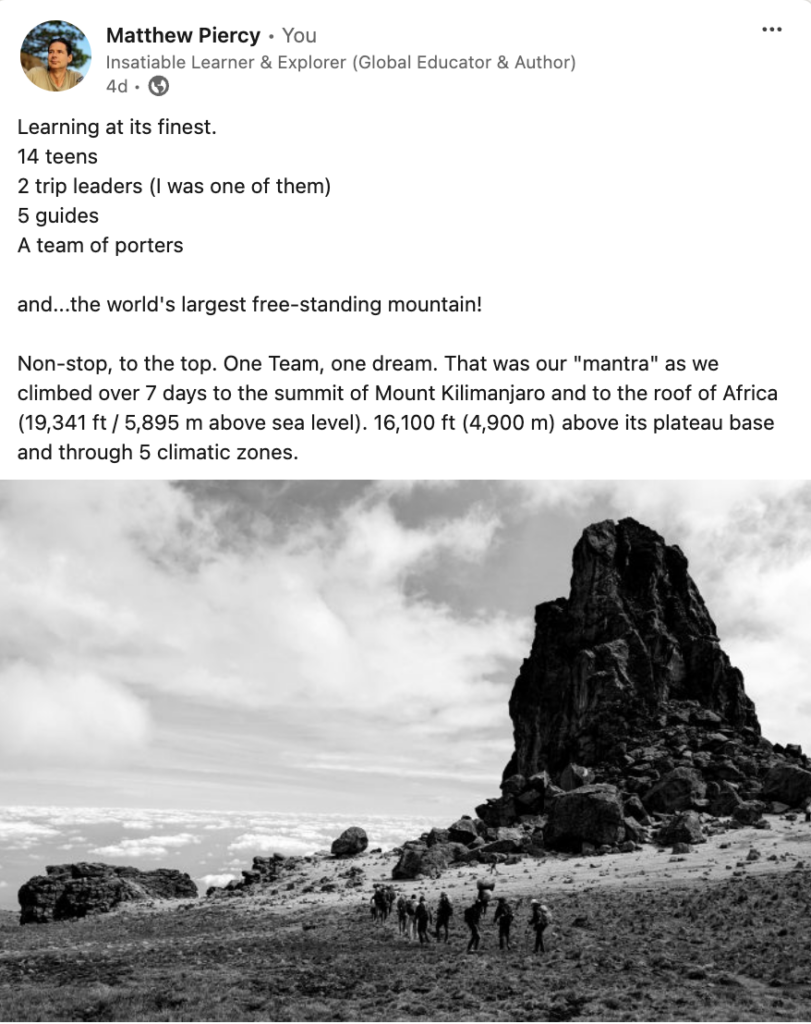
Stumbling upon place-based learning has become a recreational hazard during my summer travels. Two years ago, I found myself learning about internships on the Alaskan railroad. But this summer, I found myself wandering through a forest in Luxembourg, surrounded by elementary students’ vibrant artwork. I had the privilege of learning with the children and families of Groundschoul Luerenzweiler in the charming community of Lorenzweiler, Luxembourg.

Lorenzweiler is a small farming community nestled in the heart of Luxembourg. It is known for its picturesque setting along the Alzette River and is surrounded by lush forests and rolling hills. With a population of around 4,500, the community is rich with resources for learning and exploration. The elementary school has embraced this, creating a curriculum deeply rooted in the local landscape and ecosystem.

As I arrived at the school on a Wednesday evening, just two weeks before the end of the year, I was greeted by a flurry of excitement. At 6 pm, the students were preparing for their annual exhibition – but this was no ordinary display of work. The forest adjacent to the school had been transformed into a living gallery, with student artwork hung from trees and twinkling in the fading light.

The students had spent months observing the natural flora and fauna of the forest, meticulously documenting their findings and delving into the habitats of creatures both familiar and unknown. This place-based approach to learning inspired a depth of engagement and curiosity that was palpable as the students eagerly shared their projects. Tom Vander Ark describes this kind of excitement in Place Based Learning across the United States but it’s also flourishing across the pond in the forests of Europe. 

One group of students created intricate drawings of the forest’s animals, complete with detailed notes on their habitats and behaviors. Another group ventured into the realm of fantasy, designing mythical creatures and crafting stories set amidst the trees. Through this work, the students not only developed their scientific skills but also tapped into their creativity and imagination.

“I love nature and animals. For my art, I worked really hard. I ran out of time to put all the details, so I want to do more of this,” said Carol, a second grader.  

“The children spend at least one day a week in the forest with the class. They often came home from school and told me about their adventures. I had never seen the trail. I love seeing where they are, how they spend their time, and what they did,” said Marie Christian, a parent.

 In Lorenzweiler, the school and community formed a powerful partnership centered on place-based learning. By embracing the rich resources of their local environment, they created an educational model that is deeply relevant, engaging, and meaningful. This approach has fostered a sense of pride and ownership among the students, who see their learning as connected to the world around them.

“It is so exciting to see so many people in the community come together to see the work students did. I think this event brings all of us, young and old, together to experience a world we usually just see from our own perspective,” said Daniel, a fellow visitor. 

Here is what I learned about implementing Place-Based Learning in any community from my observations in Lorenzweiler and my work supporting schools at Thrive:

  1. Make the Ordinary Extraordinary By considering the unique opportunities present in our communities and leveraging the natural world as a classroom, we can inspire a deeper level of engagement and curiosity in our students. The natural environment offers endless possibilities for hands-on learning and exploration that can make even the most ordinary subjects come alive.
  2. Bring Adults into the Kids’ World and Vice Versa Through place-based learning, we can help students see themselves as part of a larger ecosystem, cultivating a sense of stewardship and wonder. Children become eager to preserve nature, learn about it, and even teach adults. Bridging the gap between adults and children in learning environments fosters mutual respect and understanding, empowering students to take ownership of their education. 
  3. Invite the Community In Lorenzweiler, the mayor addressed the families and led a group through the forest. This involvement benefits elected officials who want to be part of the community and shows kids that adults care about their work. Engaging community members in educational activities not only emphasizes the importance of learning but also strengthens community bonds.
  4. Don’t Be Afraid to Try Something New and Have it Not Be Perfect The exhibition in Lorenzweiler followed days of heavy rain, turning the forest into a muddy slide. I overheard educators considering how to have kids build bridges and walkways to make it safer. Sometimes, what seems like a failure can become an opportunity. Embrace the unexpected and use it as a learning experience for both students and educators.

As we strive to create more impactful and learner-centered educational experiences, the example of Lorenzweiler offers valuable lessons. By considering the unique opportunities present in our communities and leveraging the natural world as a classroom, we can inspire a deeper level of engagement and curiosity in our students. Through place-based learning, we can help students see themselves as part of a larger ecosystem and cultivate a sense of stewardship and wonder.

I invite you to reflect on the potential for place-based learning in your own community. What rich resources surround your school, waiting to be tapped? How might you partner with local organizations and businesses to create more relevant and engaging learning experiences? By embracing the unique character of our communities and the natural world, we can create educational pathways that are deeply rooted in place and inspire students to grow and thrive.

Nicole Assisi, CEO of Thrive.

The post Place-Based Learning Goes International: Lessons from Luxembourg appeared first on Getting Smart.

from Getting Smart https://www.gettingsmart.com/2024/07/09/place-based-learning-goes-international-lessons-from-luxembourg/

To My Children: Letters From An Educator and Parent

By: Timothy Jones

I’ve been blessed with many opportunities to speak as an educator and an innovator. I want to take this opportunity to speak as an educator but from the lens of a parent. As a parent of two young adult children I often find myself reflecting on their educational experiences as I get to participate in some of the transformations that are taking place in educational spaces. I invite you to take this journey with me where we may stir up more questions than answers. The questions are the fuel that drives us toward intervention, innovation, and invention. At times, answers can lead us to believe that we have arrived, and in education, just as in life; do we ever arrive at a state of true completion?

My Personal Pathway

As my children grew up, I grew as an educator. This began in the out-of-school space with some in-school workshop development centering on poetry and hip-hop. I would view my education experience growing up as average at best. There were a few memorable teachers but overall education was a pathway to ensure that I wouldn’t have to remain in the projects in Brooklyn, NY as an adult. I never learned to love learning or that true education is a series of enlightening experiences that expose and expand the person I was and could become. Education was presented as a tool to build my life but often lacked the opportunity and support for me to dream of a design to build. Education often lagged behind what was presented in the environment as trendy, opportunistic, and desirable.

I was an average student in the classroom throughout most of my education. I blossomed outside the classroom in college and I believe this is where I received the education I hold onto most to this day. In retrospect, I was schooled in the classroom and it was presented as education. Education was presented as an academic achievement as opposed to a life skill. As much as I love my children, I didn’t do anything to have them look at school and education differently than I did growing up. My wife and I ensured we lived in a neighborhood where the schools were good based on metrics but not necessarily schools where our children would be able to discover who they are and who they desired to become. Without having an idea of these aspects of their identity, how effective can the new pathway design principles be?

In theory, this is the land of the free, in practice this is the land of the free within the parameters of tradition, acceptance, privilege, and opportunity.

Timothy Jones

As a parent and an educator, how do we support our children and or our students when their intentional journey and pathway will take them into spaces that are not safe or unchartered? How do we prepare and support them as they go on a journey that is based on their most intimate desires knowing they will face challenges designed to make them feel like they don’t belong regardless of their capabilities? When a child’s dream is not confined by societal norms, do we tell them to wake up to reality or to dream a different dream? It is easy to answer these questions the way that our guts are telling us to but I am talking about the lives of young people and the parents and educators that love them. This is the difference between theory and practice. In theory, this is the land of the free, in practice this is the land of the free within the parameters of tradition, acceptance, privilege, and opportunity.

Unfortunately, we have so much work to do as a society. The reality is that our children must dream with permission. If the child’s dream is one that falls within the realm of what is permissible based on their skin tone, gender, family structure and history, and zip code then there is a pathway for the dream to become a reality. Well, what do we do when the dreams of our children are rooted in the resilience, faith, and hope of ancestors who walked so others may run? When our children are inspired to reach for what some deem unreachable, it is incumbent upon us to help our children with their self-advocacy as we ensure the new pathways are welcoming and supportive for all children.

To those whose learning pathways have taken them to inequitable spaces, to spaces where your zeal faded leading you to depart; it was not your fault and we see you. Know that it is never too late to decide to pursue what makes you feel alive and what wakes you up in the morning. I speak for the parents and educators who may not understand your path, but we know you and love and will support you with all of our hearts. We need you young people to hold on to what you would question as being right and fair as children before we changed you in our efforts to protect you by turning down the volume of your wonder and the soundtrack of your belief in miracles. When we as adults shield children from the disappointment that is part of their destiny we make them near-sighted to the point where they dream without faith.

To those who went through and are still going through the motions, know that you are being seen, heard, and felt. I apologize if the changes that are forthcoming don’t change your experiences, but prayerfully for your children; they will have the reality of multiple pathways of learning and validation of learning. I pray that your children will find learning and education as natural as breathing and imagining as they grow to become what this world desperately needs; independent and conscientious thinkers who see themselves as stakeholders in society’s community. 

I dedicate this piece to my children. Learning must never be defined and or confined to an activity designed to only take place in a formal classroom setting. Never allow your intelligence to be measured exclusively by a grade. I need you to both understand that being and or learning differently is not deficient. If you are called to charter a learning pathway, know that you are never alone. You are both fearfully and wonderfully made. I hope in this piece you will understand me better as an educator and your father and yourselves as lifelong learners. 

Dear Jasmine

You knew your desired pathway at 10 years old but the pathway at times wasn’t welcoming. There is a difference between challenges on a pathway designed to build your strength and those designed to break your will. In this season where you are forging a different pathway, know that wherever your heart takes you, you belong. If you find yourself being the first, believe that you will not be the last. Bring your village with you especially where you don’t think they may fit. Never think you are proving anything by going at it alone. A child’s first educator is their parent and this is a class designed to last a lifetime. 

Take the time to reflect on where your education and life pursuits have taken you to this point in your life. See where you were resilient but silent. Be honest with yourself about how those moments felt. Ask yourself, based on who you are now, what would you have done differently? In your reflection don’t gloss over the great achievements along the way. The risks that you undertook in successfully completing your bachelor’s and master’s degrees must serve as reminders to you as to what you can do when you put your mind and your heart in the same place at the same time.

You are an avid reader. Read the words of those who will inspire you. Read the words of those who validate how you see yourself today, tomorrow, and in the future. Read the words of those who you are willing to carry with you so you will see yourself as a continuum of greatness and overcoming. Read the words of those who evoke the emotions that you need to feel to always ensure that you are living and not existing. Read the words of those who you trust will inform you so that when you make your decisions, there are no regrets. Read to find where the void is so that your life’s journey will be written so that a little girl in the future will be inspired, validated, and charged by you.

Jasmine as you navigate your learning pathway, take your family with you. When we don’t understand, know that our love is ever present and that our mind will always catch up. I am writing you this letter because I believe in you and I believe that there are so many others like you who need to hear these words. When I think about new pathways of learning, I think they must be intergenerational. They must foster dreaming with our minds open and our eyes closed. Then when we open our eyes we collectively learn and press towards making the world what we saw with our eyes closed and our minds open.

Dear Isaiah,

School was never your cup of tea. It was, as you would say, a necessary evil that was required for society and for our household. Unfortunately, this thinking never provides enough fuel to finish the race. I apologize for where I focused more on your discipline than your dreams. You are the young person who knows they’re talented but is unsure of where the talents should be applied. You, and many young people today, are more enamored by the prize than the process. You’ve been battling on the inside between searching for the learning pathway based on profit and embracing the learning pathway based on purpose.

I’ve seen you at your best when your learning pathway has placed you in the position to be a teacher in various forms to people younger than you. I’ve watched you light up when you’re in front of a room talking to a group of high school students about Hip Hop and their future. I’ve witnessed you share some of the most difficult moments in your life to help a young brother who was in need. You give of your time and you are willing to share your successes and your failures to help those coming behind you be more informed. This is a gift that makes you special.

As you work to complete your traditional education, know that the degree will not define you but we live in a society where it serves as a key. When I think about myself, my degree represents my capacity to learn even though my career is a different pathway than my degree. I see the same thing happening with you. I pray that you can observe me on my multiple pathways as an entrepreneur and find a level of comfort in moments of contemplation. At times you have to spend time with yourself to get to know yourself and to understand and love yourself. Most importantly, you have to trust yourself so that you can commit to whatever you put your mind and heart to.

I hope your past and even present educational experiences don’t make you bitter when it comes to learning. You represent part of my muse for the work that I do and the way I go about doing my work. To have you working with me as part of your learning pathway brings me hope and joy. It brings me hope because it reaffirms that starting my business was God’s plan not only for me, but for you, and everyone we get to instruct, inspire, and ignite. It brings me joy because we get to see each other at our best and we realize that being at our best is doing this work together. 

I am thankful for being able to write this piece knowing that I have discovered a love for learning that has me exploring multiple pathways. I read now with a different intention and expectation. I write to liberate, listen to educate, and think to motivate myself first. I strive to be a model for youth and adults alike to understand the power and potential within the process of learning as a way of living. #LearnLiveAndProsper #NewPathways 

Timothy Jones is a New Pathways Senior Fellow for Getting Smart. Additionally, he is a long-time educator, coach, mentor and someone who lives and breathes hip hop. Timothy is the Chief Visionary Officer at HipHopEd, a digitally-birthed organization with a sprawling membership of brilliant educators and passionate advocates that know just how powerful this intersection can be.

He is also the founder of Techniques4Learning, a company dedicated to utilizing Hip-Hop and Culturally Relevant Pedagogy to develop and implement strategies, curriculum and activities to improve teacher student engagement for schools, universities, education organizations and community based organizations.

The post To My Children: Letters From An Educator and Parent appeared first on Getting Smart.

from Getting Smart https://www.gettingsmart.com/2024/07/08/to-my-children-letters-from-an-educator-and-parent/

Libraries as Community Learning Hubs: Connecting Students to Degrees and Opportunity

“I was told that I may lose my job unless I went back to school and got my high school diploma,” said Natalie Pinales, a resident of Durant, Oklahoma. As a young mom, Natalie had to forego completing high school on the typical timeline. Now working multiple jobs, she was told that not completing high school was not only an obstacle toward upward mobility in a career but also to keeping one. 

Fortunately for Natalie, innovative partnerships have made high school easier to access asynchronously. It all started as many stories do, at the local public library. 

Natalie approached the library with the question of how to get her GED on a fast timeline, as she needed to show her employer that she was working toward completion. In that process, she met Jamissa (Jami) Kaye Ellis, the program director and literacy coordinator at the local library. Jami informed Natalie that not only could she help Natalie get her GED, but she could do her one better. Through a new program, Gale Presents: Excel Adult High School, residents aged 24 and older now had the opportunity to earn their high school diploma in a self-paced, accredited online diploma completion program. Natalie submitted her credentials from her prior high school experience and realized she only needed 7 more credits to graduate. She was able to close this gap in a matter of weeks.

Jami played a crucial role in bringing the Excel Adult High School program to the library. Inspired by an email, she wrote a grant proposal and secured five initial scholarships for prospective students. Her involvement goes beyond administrative duties; Jami also serves as a “Success Coach,” a role introduced last year. In this position, she provides support to students, helping them navigate the program, stay motivated, and remain on track. Reflecting on her role, Jami notes, “It’s a voluntary thing, but once you see how much of a difference it makes…”

Empowering Adults Through Education

According to the Census Bureau, “From 2011 to 2021, the percentage of adults age 25 and older who had completed high school increased for all races and Hispanic origin groups. During this period, high school completion increased from 92.4% to 95.1% for the non-Hispanic White population; from 84.5% to 90.3% for the Black population; from 88.6% to 92.9% for the Asian population; and from 64.3% to 74.2% for the Hispanic population.”

High school graduates typically experience a significant pay increase, earning approximately $10,000-$15,000 more annually than non-graduates. 

Data from the Census Bureau

Accessibility and Diversity

By offering full-tuition scholarships to anyone with a library card, the Excel Adult High School program demonstrates a profound commitment to lifelong learning and community development. The program’s benefits extend beyond personal achievement. Additionally, graduates are celebrated with formal ceremonies and provided with job or career advancement resources, ensuring they have the support needed to succeed in their professional endeavors.

A unique aspect of the Gale Presents: Excel Adult High School program is its inclusivity regarding the diverse linguistic backgrounds of community members. The program incorporates English language learner (ELL) tools, offering side-by-side translations in multiple languages and an audio reader for enhanced comprehension. This feature ensures that non-native English speakers can fully benefit from the program and improve their language skills alongside their academic achievements.

One of the program’s strongest features is its adaptability, as it takes into account pre-existing high school credits, allowing students to complete only the courses they need. For example, the first student in the program needed just seven credits, while another required ten courses. Currently, a student with no prior high school experience is working through the program. To date, the library has celebrated its third graduate and has three more students enrolled.

Unlike traditional HiSET or GED programs, which require students to pass a test without necessarily mastering the content, Gale Presents: Excel Adult High School ensures that students truly learn the material. This approach provides a more comprehensive educational experience and results in an actual high school diploma rather than a GED.

What’s Next for Natalie

Not only did getting her diploma enable Natalie to keep her job at Big 5 Community, but after securing her diploma she got promoted and now works in the accounting department, where she enjoys great benefits and is using her income to pay her way through college.

Equipped with the Gale Presents: Excel Adult High School program, public libraries can offer even more services to their communities, adding to the list of free access to media, free museum passes, free “libraries of things,” free tax, small business help and grants and so much more.  By offering accessible, adaptive, and comprehensive educational opportunities, libraries are not just promoting literacy but also fostering economic development and personal growth. The gift of education provided by libraries like Durant’s is a powerful reminder of the critical role these institutions play in supporting lifelong learning and community empowerment

Natalie Pinales with family.

The post Libraries as Community Learning Hubs: Connecting Students to Degrees and Opportunity appeared first on Getting Smart.

from Getting Smart https://www.gettingsmart.com/2024/06/27/libraries-as-community-learning-hubs-connecting-students-to-degrees-and-opportunity/

Make AI Literacy a Priority With These Free Resources

We’re 18 months into the age of human-computer interaction, where reasoning engines, new forms of co-intelligence, are accessed through natural language. It’s clear that generative AI will reshape work and learning in ways we’re just beginning to understand. Announcements in May (from OpenAI, Microsoft, and Google) reinforced the cadence of new capabilities every six months. 

Leading school systems are responding with tutoring, chatbots, teacher assistants, and project authoring. In February, Digital Promise reviewed the guidance offered by seven states. They all encourage AI literacy among teachers and students. 

Start with Fun, Then Get to Work 

On getting started with AI, Warton prof Ethan Mollick suggests starting with fun, “Go to Suno or Udio and make a song.”

Wes Kriesel, an Administrator of AI and Innovation at Orange County Department of Education (serving 440,000 public school students in SoCal) said, “I think being playful, being joyful, lead with joy.” Kriesel produces the OrangeJuice.ai Podcast with three guiding values: inclusiveness, storytelling, and innovation. 

Kriesel prefers AI Fluency over AI Literacy because it’s “not just understanding but truly engaging with AI, enabling educators and learners to co-create, adapt, and innovate.”

He likes to introduce educators sitting side by side, making AI part of their experience. Kriesel invokes Mollick, “Invite AI to everything you do!” Mollick estimates that it takes about 10 hours of use to learn what the AI models do. “To learn to do serious stuff with AI, choose a Large Language Model and just use it to do serious stuff – get advice, summarize meetings, generate ideas, write, produce reports, fill out forms, discuss strategy – whatever you do at work, ask the AI to help.”

Mollick urges using one of the most advanced frontier models: Claude 3 Opus, Gemini 1.5, and GPT-4o because they connect to the Internet, read files, make images, see images and videos, run code, and do data analysis. If you want background on how large language models work, Mollick recommends the Jargon-Free Guide and blog by Stephen Wolfram and 3Blue1Brown video.

AI Literacy Frameworks

“AI literacy includes the knowledge and skills that enable humans to critically understand, use, and evaluate AI systems and tools to safely and ethically participate in an increasingly digital world.” The Digital Promise AI Literacy Framework, pictured below, includes three components: Understand, Use, and Evaluate. 

Other sector leaders have published useful guides for school adoption: 

The Middle States Association recently announced Responsible AI in Learning (RAILS), a framework for safely and effectively deploying AI in schools. Thirty schools are piloting the self-study modules that will result in a series of endorsements, allowing schools to signal their progress. 

AI Literacy Content for K-12 Students

The Penninsula Plan 

Washington’s Penninsula School District was early in stating its principles and beliefs about artificial intelligence. Executive Director of Digital Learning Kris Hagel has been providing guidance regionally and nationally for years. 

Building on two years of professional learning on AI, Hagel is offering five summer learning modules for teachers to choose from: 

  • What is AI: a foundational background on safe and effective use.
  • MagicSchool.ai: a tool (used by 75% of Peninsula teachers) that can help with many different tasks (but not as the first introduction to AI).
  • AI & UDL: expanding on Universal Design for Learning with a primary focus on flexible methods of knowledge consumption and ways to show your learning.
  • Advanced AI utilization: building your own chatbots that are specifically targeted to your class of subjects.
  • AI for efficiency and wellness: how can using AI reduce the monotony of some of the tasks teachers do with a focus on how can that free them up to build a better work/life balance?

“We know we still have some teachers who are hesitant, but also making it imperative that all students get the opportunities to learn and explore with AI,” said Hagel. 

School principals are primary instructional leaders in the Peninsula. Next year they will be advancing their implementation of UDL and AI with a focus on feedback and formative assessment. The new high school ELA curriculum incorporates AI literacy.

Behind the scenes, Hagel is aligning district operations and data governance with AI deployment using the CoSN/CGCS Maturity Model. They are also updating their student handbook to reinforce how AI can and should be used in the classroom and are at work building a chatbot around UDL principles as an open curriculum, allowing teachers to ask questions specific to their school. 

St Vrain Valley Schools is another district that took an invitational approach to supporting teachers with Exploration AI which encompassed:

  • Self-directed, gamified learning that encouraged the use of a range of AI tools
  • EdCamp Pop-Ups: monthly sessions that emphasize dialogue and shared learning, demonstrations, and hands-on experimentation.
  • School Champions who weave AI strategies into their site-based professional development days and provide local on-demand support. 

This year St Vrain is adding Elementary AI Literacy based on the AI+Me series designed to introduce the 5 Big Ideas of Artificial Intelligence (AI4K12) to young learners. 

Add AI Literacy to summer professional learning. Make AI Literacy a priority for every secondary learner this fall.

The post Make AI Literacy a Priority With These Free Resources appeared first on Getting Smart.

from Getting Smart https://www.gettingsmart.com/2024/06/25/make-ai-literacy-a-priority-with-these-free-resources/

Design a site like this with WordPress.com
Get started