Redefining Creativity in the Age of AI

Recently I received an invitation to speak at an upcoming global education summit in Beijing.

The organizers asked me to give a presentation on the two topics that have dominated my work for the last 30 years: Project Based Learning and 21st Century Skills.

At the Buck Institute for Education (now PBLWorks) I created the PBL World Conference and co-wrote The PBL Starter Kit. At the Partnership for 21st Century Learning (now part of Battelle for Kids), I led the organization’s efforts to embed 21st Century Skills into the educational policy of 30 states.

These skills, which were last defined by P21 nearly 20 years ago, have been on my mind since ChatGPT dropped into our lives nearly two years ago. In August of last year I wrote a blog for the New Tech High School Center for Excellence in which I advocated redefining the core skills of collaboration, communication, critical thinking, and creativity (the four Cs) to incorporate the capacities and requirements of generative AI. 

Is There an Editor in the Room?

In April, on a prior trip to China, I got into a heated discussion with teachers at an elite school in Hangzhou. They were proud of the work their students had done using Midjourney to generate Chinese historical images. The students melded those images with narratives written by a Chinese generative AI (Kimi) to create picture books. I argued that the work was not creative, though it was gorgeous.

Upon reflection, I was wrong. I ignored my previous admonition: The definition of creativity must be expanded because of generative AI. In this blog I’ll argue that a new definition should be informed by the field of film editing. Bear with me.

Jennifer Lame, in early March of this year, won the Oscar for film editing for her work on Oppenheimer.  Ms. Lame did not act in the film. She did not direct it, film it, score it, design costumes, program special effects, or write it. She took the output of a talented group of performers and technicians and gave their work form, coherence, emotional impact, and deeper meaning. She did not produce any of the creative components, but she did bundle those components into a strikingly creative motion picture. 

Is this not a signal feature of creativity in the age of generative AI? Is this not what our students are doing when they use image generators to produce impactful visuals, use Perplexity to generate cited research, and use ChatGPT, Gemini or Claude to write and/or edit copy? Their work lives on a tiny stage, but are their actions by definition any less creative than Jennifer Lame’s? Are we judging the process as creative? The elements as creative? Or the final product as creative?

Creativity Is a Set of Skills

P21 partnered with one of its funders, Pearson Education, to write a series of research briefs on the four Cs (published in 2017). This series, called Employability Skills for Today, serves as a starting point for a definition of creativity that predates gen AI.

The executive summary of the report begins with this sentence: “The ability to generate novel and useful ideas is reportedly one of the most sought-after skills among new hires, yet students may not be graduating with the level of skills needed to succeed on the job.”

One of the foundational beliefs of the authors is that creativity is not a skill, but more a set of skills that are teachable. Accordingly, it’s important to teach our students to draw, write, and compose as part of creative development. In the age of gen AI, it is also important to teach our students to write effective and efficient prompts so that they get the output they need to create and improve a report, presentation, website, business plan, or video. They will do this using the technology (generative AI) that is going to be a part of their professional, creative, and personal lives for the foreseeable future. 

Is Innovation a Lesser Form of Creativity?

Should we create a new term for a creative output that actively incorporates the products of gen AI? “Innovation” comes to mind, but I wonder …

The Pearson/P21 report explores a problem teachers have had for years when assessing creativity: Is creativity the same as innovation? The Buck Institute team  struggled mightily to meld the two domains but was unsuccessful, opting to create a set of rubrics called Creativity and Innovation, as though they are separate but related. Calmer heads and a new staff prevailed a few years later when those rubrics were revised, joining what was once bifurcated into a single heading: Creativity Rubrics.

Teresa Amabile of Harvard argued in 1988 that it is important to distinguish individual creativity from innovation. As Amabile explains, creativity “is the production of a novel and appropriate response, product, or solution to an open-ended task. The Pearson/P21 team claimed that innovation is a broader term often used in a business context to refer to the successful application of creativity.

In either case, our expanded definition of creativity (i.e., the creative student is an “editor” equipped with the technology of generative AI) certainly allows for the successful application of creativity even if the components are generated by AI. So, the original label for this set of skills (creativity) stands.

Democratizing Innovation

I will close this discussion with reference to a term coined by MIT’s Eric Von Hippel, who focused for decades on the potential for users of products and services to develop what they need themselves rather than simply relying on companies to do so. In 1991 he called this process “democratizing innovation.” Gen AI allows every student to be a creator in ways that were previously closed off to many. Let’s expand our definition of creativity to accelerate this process of democratizing innovation and allow students to use generative AI in ethical and effective ways. We can all become creators.

The post Redefining Creativity in the Age of AI appeared first on Getting Smart.

from Getting Smart https://www.gettingsmart.com/2024/08/26/redefining-creativity-in-the-age-of-ai/

Afrofuturism as Liberation and Design with Ingrid LaFleur

I recently visited the National Museum of African-American History and Culture In Washington, D.C. As I walked through the Afrofuturism exhibit, it was inspiring to see how out-of-this-world thinking has allowed Black visionaries to create new futures for Black children. Writer Greg Tate said, “Being Black in America is a science fiction experience.” Through the lens of Afrofuturism, new dreams are closer to possible than ever before. 

Earlier this year, a viral trend called #BlackatNASA took over social media. Tyrone Jacobs Jr. shared his company headshot that he was proud of and it prominently featured his hair in locs. Millions of views later, people were celebrating him and other NASA employees which added to the trend of showcasing black excellence in a STEM field at a globally recognized organization. One person commented that her young son saw the trend, who also has locs and has always wanted to work at NASA.

The TikTok trend as well as the continued highlights on black excellence and Afrofuturism continue to shine a light on a world where systemic inequalities still exist and black boys and girls don’t see themselves in every space, Afrofuturism empowers individuals from marginalized communities to envision a future where they are not only represented but also celebrated for their unique contributions.

Afrofuturism combines elements of culture, history, technology, and imagination to promote innovative thinking and creative problem-solving. This approach is essential in addressing complex issues that impact our society, particularly in education, where new ideas and methods are needed to overcome persistent challenges.

I had the chance to chat with Ingrid LaFleur, a globally recognized curator, design innovationist and Afrofuturist who is committed to exploring and implementing forward-thinking solutions across multidisciplinary industries including but not limited to art, technology, education, social enterprise, and finance.

LaFleur believes that, “Afrofuturism is a cultural movement that imagines Black people in the future, however, the construction of that future relies on the wisdom of the ancient and near pasts of Africa and the African diaspora.” Enjoy our conversation below, I know I did.

Outline

Afrofuturism as a Liberation Movement

Shawnee Caruthers: One of the things I referenced in the introduction was about Afrofuturism being a liberation movement. How does that resonate with you?

Ingrid LaFleur: Oh, yeah, that’s exactly its purpose. It’s to not only serve as a point of liberation but also to create alternate destinies for Black bodies. What I mean by that is we have a particular destiny that is being shaped by the stories of our societies around the world. Oftentimes, there are elements of anti-Blackness or subjugation embedded in those stories.

So we believe that we can only attain certain things based on our positioning today. Afrofuturism is surreal; it’s science fiction. Magical realism comes into play to break us out of all of those narratives that we’re most familiar with and bring us into spaces of magic that we would think are completely impossible.

And I think that opening up is the true freedom. That’s the true liberation that comes into play, albeit temporary, right? Because it is in our imagination, and we do live in a world where systems latent with, for instance, racism and sexism are surrounding and controlling our lives. So my work really is to bring those beautiful elements of Afrofuturist thought that we see within the literature, music, and design and see how that looks in practice. What does it look like in actually creating these kinds of new destinies?

Bridging the Gap Between Fiction and Reality

Shawnee Caruthers: You referenced the magical part of it. We see a lot of it in movies and science fiction, like Octavia Butler and Wakanda, with these really grand worlds where it feels like Black people are excelling in all these different industries. But sometimes people don’t understand how to take it from that world and make it relatable back to what it looks like in today’s ecosystem. How do we get it from that magical place to something tangible?

Ingrid LaFleur: Yeah, I think my journey through Afrofuturism and becoming a futurist highlights that tangibility. I ran for mayor of Detroit in 2017, and it was then that I was really looking at the economic status of the city, where the lower-income and working poor made up 64 percent of the city. Instead of thinking with this baseline narrative of “people need jobs,” in a place where people were being laid off constantly, jobs were not the narrative to go with, right? There’s no stability or safety there. 

I began to think about: what would it look like for us to create an alternate economy in a city that is majority Black, based on our values and the way we move and use currency? That, I think, is the way to go into this space of the impossible, where there’s a lot of risk, for sure. But to leapfrog these technologies or these institutions, like the banking system that’s discriminating against us, and figure out a different way to ensure that collectively we have a prosperous future.

So that was just one example in an economy, but I wanted more. I am in grad school at the University of Houston in foresight, so I can learn the different methodologies for researching the future. I think that is important. The more informed we are, especially if you’re part of a marginalized community, the more prepared and proactive we can be right now.

We’re constantly just trying to put out fires of the moment, and there are a lot of fires, right? My support goes to those activists on the front lines, really trying to put out those fires. How do we make sure that this innovation is inclusive? That is through exposure and education. It is absolutely necessary for our youth to know what is happening, what’s being built, what’s being created, even the craziest things, so they’ll be inspired and work within that space. Then there’s more balance and harmony when that innovation comes to fruition.

The Dinkinesh Method

Shawnee Caruthers: Listening to you talk is inspiring in terms of what the future could be when you think like an Afrofuturist or just a futurist in general. But sometimes people think it doesn’t feel attainable for them, that they don’t necessarily consider themselves to be a futurist. But through that foresight method you referenced, that you’re working on now, it feels more attainable. Can you walk us through what that foresight method is and what the framework is?

Ingrid LaFleur: Definitely. I brought together Afrofuturism, which is the inspiration point, and foresight methodologies, which are hardcore ways of understanding what’s on our horizon. Bringing the two together, I created the Dinkinesh Method. The Dinkinesh Method has five different portals, as I call them because it is a mind-shifting space. The purpose of the method is to reshape your consciousness, which is the foundation for everything. You are making decisions and perceiving the world based on this consciousness.

The beginning starts with you as the individual, creating a new myth about yourself to disrupt those narratives and stories that have held you back about who you are or what you’re capable of. You can call this the development of the superhero self or the mythical self. It is inspired by jazz musician Sun Ra, who said he was from the planet Saturn and lived, wore clothes, and ate with all of that in mind. He lived his myth. It’s possible for us to live our myth as well.

The second section is “Dark Matter.” That’s when we get into systems thinking and different concepts informing our world, like racial capitalism and necropolitics. Why? Because we don’t want to imagine a system that is already causing us harm. What often happens is people just jump in and imagine based on the limitations they’ve created for themselves, and they repeat the same thing they understand. If you only understand capitalism, you will only believe that’s the only way we can exist in the future.

When there are alternate systems we can use, and capitalism, you might want to have a deeper understanding of how it functions. So we can create new ways of being, interacting, and distributing resources.

Then there’s “Ultra Destiny,” where your future research skills really come into play. This gets into the emerging tech and science, bringing all the other elements from the other portals together to start world-building.

Finally, there is “The Continuum,” because the future is not a destination. There is no end point; it is a continuum, which a lot of Afrofuturists discuss. That is the nurturing of this consciousness, this way of perceiving the world more and more every day, and really challenging yourself about how you are imagining futures, discussing them, the language you are using, and when you become a little dystopian or pessimistic, and why. Really challenging those notions so you can move into that liberated space Afrofuturism wants you to be in.

Empowering Students to Change Their Stories

Shawnee Caruthers: As you were talking, I was trying to frame this in the world of a student and think about what that would look like for a student to think about the stories they are telling themselves that might stand in the way of them imagining their possible futures. Do you have any suggestions on how students can get into that space of changing their mindset to change their story? And the other half of that is sometimes it feels like a privilege that some students, depending on their stories, don’t necessarily have.

 So how do you also move beyond that?

Ingrid LaFleur: Oh, man. That’s a tricky situation because I can see youth feeling uncomfortable or silly. When I first returned to Detroit almost 15 years ago, I taught a group of young Black youth from 10th to 12th grade. I had them choose a superhero name right off the bat. I didn’t go into creating a new story about ourselves or anything like that. I just said, in this class, you are called by your superhero name only.

In the beginning, they were a little shy and quiet. But then one person mentioned a superhero they could liken themselves to, and someone else said, in another universe, they are actually this kind of being. The conversation started moving, and it totally went beyond my head. What I noticed over time, and what I was told by the parents, was that calling each other by that superhero name only within the class made them feel like they were that superhero. It went from the parent trying to get them out of bed and ready to come to my course, to them waiting by the door, saying, “Mom, hurry.” They were excited.

You can create the mythical place in your classroom by just changing what they are called. Of course, I have my own superhero name, so they call me that name. One day, I said, “I love you guys so much,” and they replied, “We love you too, Dr. Shiluva.” I was like, “Yes, this is my utopia.”

Shawnee Caruthers: I love that and the confidence it can bring to youth who aren’t necessarily there yet within themselves and don’t have those relations within themselves. Putting on a different persona that they choose feels empowering and can make all the difference. I have so many thoughts for teachers and how they start the year. I love hearing that. One of the other things you referenced was living their myths or living your myth in your foresight method. How does that play in a world where truth is so hard to come by, in terms of media literacy and all the resources we have to access information? How does that play into living your myth?

Ingrid LaFleur: Sun Ra would say we’re already living a myth. He said the world we live in is a mythocracy. It’s true if you think about it; fact doesn’t seem to be working anymore. If you think about how we even perceive our histories, nostalgia, it’s ignoring all the violence or discrimination that might have happened. In terms of education, we don’t want the transatlantic slave trade to be a myth, right? That’s a fact. Being clear about when to use it and when not to is important. I see living myth as an individual thing in terms of how to shift how I engage the world. If I can see the world through a utopian lens, I’ll act in a more positive way, bring more positive energy into the world, and probably receive that back. 

Future-Thinking in Education

Shawnee Caruthers: As we think about those realms, we may be living in a myth now, and we can create a new one. How do we use that thinking, or that perspective or lens, to think about what the next iteration of education looks like for students? What does it feel and look like from this framework?

Ingrid LaFleur: I gave a workshop for an African American Leadership Institute recently, looking at the future of education. Two groups, separately without talking to each other, developed their visions. The first thing you see in their images of the future is that they’re all outside. As a teacher, you might think, “I work in a school building; what can I do?” But that’s saying we need a new environment to teach our children. It’s difficult to teach children when there are cement blocks, and fluorescent lighting, and they’re told to sit still. Even as a teacher, it’s painful to require that of our kids. We want them to be liberated thinkers, but physically they’re not in environments nurturing creative thinking.

The other thing is the collapsing of subjects. They wanted to integrate english, math, and science to show how they’re all connected, using ancient African and African diasporic stories to support that approach. That was exciting for me because it’s very Afrofuturist without me suggesting or pushing it. It’s an analysis of how we truly educate our children and the best ways for them to learn, especially those in marginalized communities. Those are moonshots, but we can bring elements into the now. Is there a way to start a garden at your school and have children learn about nature, sacred geometry, and physics? 

Another point is all children need to learn how to code. Other countries are teaching coding at age five. What does that mean for our future in the U.S.? We’re already behind because they’ve been doing that for a generation. We’re a generation behind children already equipped and taking coding seriously. It doesn’t matter if you want to be a painter or dancer or think you’re outside of tech; nothing is outside of tech anymore. Everything is connected to tech and emerging science, so everyone needs to know these things. It’s almost a state of emergency to protect our children of color especially.

Shawnee Caruthers: I appreciate you surfacing that because I wondered what we needed to embed in our K-12 systems to teach students how to be future thinkers. We talk a lot about the throughline of entrepreneurship and entrepreneurial mindset, but maybe not enough about the futures mindset. When you said every kid needs to learn how to code and hack and have critical analysis, I think that’s a great starting point. Are there other components we need to embed into schools for students to inherently be futures thinkers?

Ingrid LaFleur: Emotional intelligence is extremely important. Jack Ma, head of Alibaba, says soft skills are so important: understanding, compassion, love, listening skills, and human engagement. As tech grows and innovation advances, how we relate and understand each other becomes even more critical. Afrofuturism creates that grounding, and spirituality is essential, not necessarily religion, but spirituality. Understanding that as a part of being human helps connect us to each other and all living beings. 

Shawnee Caruthers: How do we go a level up? We talked about within classrooms, but leaders and public officials, district leaders, also need to understand how to incorporate that thinking for themselves so it can trickle down into the system. How do we build that skill set in our leaders?

Ingrid LaFleur: Definitely. They probably need to take futures thinking workshops to begin some of the unlearning. Seriously, I always say within city government, a historian and a futurist need to be on staff. It’s the same with our school board. Having internal research available to you is important in understanding the future of education. There’s the meta of the future of education, but then there’s the micro of where we live. Right now, I’m in rural Louisiana, so how we discuss education here is different from a big city like Detroit. Localizing it is essential, having a future thinker equipped with research and understanding what’s on the horizon for rural America. The pandemic showed that children here lacked internet access, so they couldn’t continue studies at home. They did hotspots and other things to get access. If we had a futurist on staff, this would have been taken care of. The internet connection should have already been there; the fiber was laid down but not activated. Understanding a pandemic, futurists have talked about global pandemics. That’s not new. How do we ensure that information comes down and becomes concrete? If futurists talk about a global pandemic, what does that mean for this town? How will we function and keep children engaged if we get shut down? There are more pandemics coming, unfortunately. We have to stay prepared and develop virtual systems that are resilient and can evolve based on what’s happening on a larger scale.

Shawnee Caruthers: Thank you for the spoiler alert that there will be more pandemics. Futurists won’t be surprised. That’s the theme: futurists won’t be surprised. 

As we think about future career clusters and how industries are morphing, one thing you surfaced was having a futurist on staff as a norm moving forward. I appreciate this conversation and you highlighting that the future looks different for everyone, whether in rural Louisiana or a major city like Detroit or New York. It’s a skill set anyone can build, and we need to bring it into classrooms in a real way as we push on critical analysis, research, problem-finding, and impact. Thank you for this insightful conversation. I’ll carry with me the idea of changing our stories, being our own superheroes, and activating our power in the most real way. With that, we can change our future and the future of many generations. Thank you, Ingrid.

The post Afrofuturism as Liberation and Design with Ingrid LaFleur appeared first on Getting Smart.

from Getting Smart https://www.gettingsmart.com/2024/08/22/afrofuturism-as-liberation-and-design-with-ingrid-lafleur/
Community-Centered Research & Development in Education

By: Shannon Murtagh 

In 2021, deep in the midst of COVID, we surveyed Chief Innovation Officers (CIOs) working in public school districts across the country about the skills, core work, and mindsets that were most important to innovate for equity. These CIOs identified research and development (R&D) as the most important skill and the missing piece in driving innovation in their district. This reality–that those tasked with systems innovation are not sufficiently equipped with the skills to innovate and scale new solutions–must be addressed to improve public education at scale.

In the intervening three years, R&D has emerged as a priority in public education circles. Conferences, webinars, and think pieces are all buzzing with mentions of R&D–particularly in the context of artificial intelligence (AI) within schools. Well-designed R&D–rooted in clear needs with equal clarity about the intended and actual outcomes–manages risk, acknowledging not all things will work. It provides safeguards for students and families while creating space for innovation. It ensures that students, teachers, and communities are involved not just as “end users” but as part of the design and testing process. 

What does this look like in practice? While involving the community in R&D may seem intimidating, systems actually have multiple ways to do so. Practitioners are accustomed to learning by doing, and there is an opportunity for district innovation leaders to build their R&D skills through deep, authentic community collaboration in three key areas: 

  • Equitable design processes
  • Empathy-driven solution testing
  • Scenario planning.

Solutions do matter but how you get to a solution matters just as much if not more. R&D is the way in which school districts can and should be developing innovative solutions so that positive, equity-driven, change can be achieved for students at scale. 

So what do these three components look like in practice? Let’s explore a scenario.

A Scenario: Franklin Public Schools

Imagine a district, we’ll call them Franklin Public Schools (FPS), where the district leadership failed to employ any of these skills as they spent their Elementary and Secondary School Emergency Relief (ESSER) COVID funding. FPS, like all public districts nationally, received a significant one-time infusion of additional funding to help recover from the impact of the pandemic. The district leadership announced, to great fanfare, that they would be spending the funding to expand the world languages program in the school district to begin at Kindergarten rather than in middle school. To the district’s surprise, the plan was met with outrage. 

Parents could not understand how world language expansion was the spending decision being made. They argued that students needed more social-emotional support, more tutoring, and other targeted interventions to ensure students made up ground lost during the pandemic, and that the plan to expand world languages would cause a future funding challenge. The FPS administration downplayed these concerns. They explained that in Franklin, a fairly well-off suburban district, the students were overall fine and the schools were already resourced to provide extra support. Money was needed to launch an expanded world language program, but the administration was confident that after the ESSER funding expired, continued funding would not be a problem.

Teachers were also against expanding the world language program. To make time for language classes in the elementary schedule the district would be eliminating ½ day Thursdays that had been a long-standing feature of the calendar and provided weekly teacher prep and in-service time. Teachers did not want to lose this ½-day worth of planning and development time and could not believe that the administration had announced a plan that involved a major calendar change without consulting the teachers’ union. 

Ultimately, due to overwhelming pushback, the plan was scrapped. The language program, and school calendar, stayed as they were. And what (or if) the ESSER funding was spent on is unclear to the school community. If the funding was not spent, it was returned to the federal government and never used to enhance the learning experience of students in the district. And if it was spent on students, it was done so quietly without building community and educator support. The teachers ended up in a protracted contract battle with the school district, in part due to anger over possibly losing the ½-day without being consulted. FPS did not just fail to expand the language program–the attempt and failure to launch a language program left sustaining negative impacts. Most notably, eroding trust in the district at a time when public education was already experiencing a trust crisis from parents and communities. 

It is easy, in retrospect, to see all the ways the administration went wrong. But a more valuable exercise is to think about how the administration could have done right. Imagine a scenario where the administration used a rigorous R&D process rooted in community collaboration to reach a better outcome for students, families, the community, teachers, and the district. Below we explore how each of the four components introduced previously could have been used by FPS to spend ESSER funding in a better way.

Equitable Design Processes

Equitable design processes use empathy exercises and inclusive practices to identify and center end-users, interrogate problems in community with others, acknowledge how historic inequities play into the problem and potential solutions, and create new solutions in collaboration with those proximate to the problem. In school districts, the community, families, and students that have been most underserved must be engaged in the design process to make sure that new solutions do not simply maintain the status quo or even widen the equity gap. To come up with new, innovative, equity-focused solutions the design process must include those voices.

An Example: FPS brought a fully formed plan to the community. They allowed community voting around the languages that would be taught in elementary school, but the idea to spend ESSER funds on expanding the world language program was brought to the community pre-decided. This lack of problem exploration, identification, and definition with the most impacted stakeholders led to multiple breakdowns. First, at least externally facing, they started with a solution without identifying all of the needs of students, families, and educators. Second, once a solution was decided by the district, the lack of meaningful, inclusive engagement and shared decision-making resulted in significant pushback and ultimately caused the idea to fail.

How R&D practices help: FPS could have built a design process that enabled the community to help define the highest need and identify possible spending solutions in the wake of the pandemic. Data would be part of this design process–using state test results, formative assessments from the schools, behavioral data, and qualitative data (such as conversations with parents and teachers regarding academic and non-academic support needs to learn post-pandemic)–in order to understand and define the current barriers to learning as the district emerged from COVID. From there, FPS would likely land on a different need and design a different solution for this one-time Federal investment.. 

If, within this process, there was space for the district to introduce possible spending options, expansion of the world language program could have been included. At the end of the engagement process, whatever the district ended up focusing ESSER spending on would have had support from a group of community members and be responding to real needs felt by students, parents, teachers, and others. For a great example of what this might look like check out this blog by Maggie Favretti and Kyle Wagner. 

Empathy-Driven Testing 

As new solutions are unveiled they need to be evaluated via empathy-driven testing. This is testing that anchors itself in the experience of and feedback from the users in addition to collecting quantitative data tied to what is being tested. Empathy-driven testing enables districts to understand how solutions feel to students and families and creates space for innovation that meets the needs of students.

An Example: FPS never tested the world languages expansion, they were confident it was the right plan and should be expanded district-wide. However, they did have an existing world languages program that started in middle school with both students and teachers who could have been engaged in empathy interviews to understand the value, as well as the challenge, of successful program implementation. This invaluable context about how middle school students and educators experience world languages would be useful when considering piloting or wholescale expansion at other grades This is common in public education settings–new curriculum, classroom technology, scheduling models, and other changes are often adopted without an understanding of how they current practices are being experienced. New programs and practices are also often implemented without a plan for user testing and experiential feedback that is critical to understanding the impact of new practices. . 

How R&D practices help: The world languages program, if it had been enacted, should have been put in place with clear evaluation criteria that looked at both how students were faring on traditional quantitative measures of success but also at how the expansion of languages was experienced by the families and teachers in the district. Did it feel like it was addressing needs the pandemic surfaced? Were students and families happy with the program, did it need additional changes or support to better meet the needs of families, teachers, and the community? A plan for empathy-driven testing–even if the district had gone ahead with the language program expansion–would have given the community a continued voice during implementation, made space to improve and innovate to fit needs as well as possible, and potentially developed further buy in due to the commitment to only having programs that work for students on multiple measures.

Scenario Planning

Scenario planning starts by articulating some of the ways in which policies, practices, programs, or other variables may be planned out over the future–Once scenarios are envisioned,  they can be navigated to determine what the impact would be on different individuals, enabling districts to build a collective understanding of what success looks like for students. Scenario planning creates a shared future vision and creates space to design new solutions that will put the district (or other designers) on track to the future scenario they want to be a reality. It also helps set clear, equity-tethered outcomes for R&D work.

An Example: FPS planned to expand world languages without playing out what that might look like or mean. What is the profile of a graduate they aim to achieve? How does an expanded world languages program prepare a student for that future and under what circumstances? What other shifts or changes (like the known ESSER end date) impact the longer-term viability of the program expansion? Without building a collectively held definition of what success looks like for students, articulating scenarios for how the change may be executed and impacted over time, and charting a path toward the best scenario, new ideas and programs often have a short run.

How R&D practices help: FPS could have framed their ESSER spending decisions with a longer view, not just in the context of trying to recover from the pandemic but also about recovery and preparation. Together with key stakeholders, scenario building and planning could build a collective understanding of what student success (rather than simply recovery) would look like moving past the pandemic. Had they done this work they could have defined future success and then examined, with the community, how different spending options would impact the likelihood of students achieving it. This may have helped families select world language expansion over increased mental health services, high-impact tutoring, additional teacher development, or the many other things families asked for when FPS presented its spending plan.  

These three suggestions are examples of just some of the ways that communities and students can be involved in education R&D to develop new solutions that meet their needs.  Utilizing equitable design processes, empathy-driven solution testing, and scenario planning are straightforward ways that districts can, and should, involve the community. These actions will ensure that R&D is a process districts are using to create space to innovate in sustainable and equity-focused ways and avoid R&D just being a thing that is attached to any AI-related tool. 

The post Community-Centered Research & Development in Education appeared first on Getting Smart.

from Getting Smart https://www.gettingsmart.com/2024/08/20/community-centered-research-development-in-education/

AI in Education: Leading a Paradigm Shift

By: Dr. Tyler Thigpen

A buddy of mine, Paul, works for a major airline headquartered in Atlanta. The airline deploys him to examine new technologies. He assesses whether integrating them will improve plane flights and, if so, what the ripple effects are. Money, time, and lives are at stake. What a responsibility!

As an education leader, I feel a similar responsibility regarding new technology, though the stakes are different. Money and time, yes, but also morale, safety, and relevance.

These days, a massive tech integration question for teachers and school leaders is—What’s the right use of artificial intelligence (AI) in education?

My colleagues and I at The Forest School: An Acton Academy and The Forest School Online have integrated AI since our inception seven years ago. We believe understanding AI’s inner workings and using AI are both important. By teaching AI development to select learners and AI usage to all, we prepare our learners for the future. The greatest takeaway for us hasn’t been finding helpful tools. A bit of R&D testing in classrooms with pilot users reveals whether the tools positively impact learning and are perceived as effortless by stakeholders. Rather, our exploration of AI has been much more meta than that. It’s more fundamental, more paradigm shifting.

My buddy Paul explains that the shift from piston-engine to jet-engine aircraft in the 1940s and 1950s required one of the most comprehensive changes in airport infrastructure, air traffic control systems, and international aviation regulations. It also led to the development of new safety standards and innovations in aircraft design and engineering. It shifted the aviation landscape for the better.

How should AI shift the current paradigm for teaching and learning? And how shouldn’t it?

I teach the leadership track of the Intro to Teaching with AI course at the University of Pennsylvania Graduate School of Education (our application window closes at the end of July 2024). In that program, we wrestle with fundamental AI questions, explore emerging tools, walk through the unique components of a school model where AI could play a part, consider ripple effects on the infrastructure of learning, and appreciate the risks. We wonder about and plan for a new division of labor for teaching and learning—what’s AI’s job vs the teacher’s vs the student’s vs the parents and caregivers? Like with any big change, we riff on how to invite stakeholders to adjust to AI and eventually row in the same direction.

As an example, my team and I walked through 13 unique components of a school model and made (for now) the following moves:

1. Vision

We asked—How can AI help us achieve our school’s vision more effectively?

How we answered—Our school mission is each person who enters our doors will find a calling that will change the world. For us, AI is like any other new tech. It can be used for good or ill. Thus, we’ve sought and embraced AI to the extent it helps us guide stakeholders to reify their life’s purpose. Anything short of that bar doesn’t get our attention for long.

2. Curriculum

We asked—How can AI customize and adapt our curriculum to meet the diverse needs of our learners?

How we answered—We landed on responsive and adaptive learning programs like Khan Academy, Zearn Math, DuoLingo, Lexia Core 5, and Amira Learning (the world’s first AI teacher of reading). The latter tool didn’t replace 1-on-1 or small group reading instruction, but it increased our capacity 10x to facilitate personalized reading practice. Since then, 100% of our diverse community of learners experienced reading gains of one year or more. Overall, the AI learning programs are far from perfect. But they’ve allowed many students to learn deeply and at their own pace. When ChatGPT launched, I led our middle school in an “AI Quest.” For six weeks we played with new AI tools and riffed on possibilities. For a final Exhibition, the middle schoolers wowed parents, caregivers, and visitors by writing e-books with visuals, responding to emails, synthesizing research, discussing AI ethics, and more. The adults were blown away.

3. Pedagogy

We asked—How can AI enhance our instructional methods and support personalized learning?

How we answered—Three methods arose for us. First, self directed learning. We’ve always been about learner-led education. But adding AI tools to peer-to-peer learning and trial and error meant our learners were even more empowered to take charge of their learning. Second, we embraced AI-driven career counseling with YouScience. Enhanced with AI, YouScience analyzes learners’ skills, interests, and aptitudes to suggest potential career paths and colleges that align with their unique profiles. One hundred percent of our middle and high schoolers now use it. Third, we enhanced learner support systems through tools like speech-to-text, language translation, and personalized tutoring.

4. Assessment

We asked—How can AI-driven analytics provide deeper insights into learner performance?

How we answered—Three methods arose for us here as well. First, we leveraged the learning analytics embedded in the responsive and adaptive learning programs mentioned above. They analyze student performance data to identify strengths, weaknesses, and interests, helping guide learners toward discovering their passions and potential callings. Second, we had our middle and high schoolers take the College and Career Readiness Assessment Plus. This world-class test uses AI to assess learners’ quantitative reasoning, analytical thinking, writing effectiveness, and writing persuasiveness. Third, we brought back a form of oral exams (which we call Practicals) to ensure authenticity in assessments. Essentially, learners can use AI at various points throughout their learning journey, but ultimately, they must prove mastery of foundational learning objectives in foolproof ways—i.e., both with and without AI tools.

5. Schedules and Routines

We asked—How can AI optimize our schedules and routines to create a more efficient learning environment?

How we answered—There are loads of possibilities on this front. We’ve used various AI tools for dynamic grouping, educator allocation, automated scheduling, task prioritization, traffic flow analysis, and more. Asking AI to brainstorm use cases helps.

6. Roles, Development, and Management Model

We asked—How can AI streamline administrative tasks and support data-driven decision-making for staff?

How we answered—AI has played a role in job posting, creating and synthesizing performance reviews, and professional learning. Now, we look for candidates with experience using AI in teaching and learning. On the job, we provide professional development for staff to practice doing so. We guide educators through prompt-making exercises. We’ve made our own bots to aid internal planning and reflection processes.

7. Community Practices and School Culture

We asked—How can AI foster a more inclusive and connected school community?

How we answered—To get everyone on the same page, we appointed a small team to facilitate our educators, learners, parents, and caregivers across our organization to authorize guiding principles for AI use. The resulting principles reveal a dual commitment to encouraging AI use while maintaining a commitment to authentic, collaborative, iterative, and deep disciplinary learning.

8. Bridges and Partnerships

We asked—How can AI facilitate stronger partnerships with external organizations and stakeholders?

How we answered—We’re actively searching for partnerships to help us with enduring IP and privacy wonderings. We’re not alone in needing help here. Given recent failures in the sector (like the recent one in Los Angeles), there’s nervousness around partnerships.

9. Tech and Tech Infrastructure

We asked—What technological infrastructure do we need to support AI integration effectively?

How we answered—Over the last seven years, we’ve purchased 20+ subscriptions to AI-driven programs.

10. Continuous Learning and Improvement Mechanisms

We asked—How can AI support continuous professional development for our staff?

How we answered—To inform decision making, we’ve used AI bots to synthesize internal and external stakeholder feedback, helping identify themes across stakeholder groups.

11. Space and Facilities

We asked—How can AI enhance the use of our physical space and facilities for better learning outcomes?

How we answered—AI use demands dynamic space management and personalized learning environments. Recently we conducted this research about catering our space to individual learning styles and needs.

12. Budget, Operations, and Logistics

We asked—How can AI optimize our budget, operations, and logistics for greater efficiency?

How we answered—We’ve streamlined some routine administrative tasks like updating learner support documents and personalized learning plans), allowing our team to focus more on guiding learners and communicating with parents. Also, we amped up data-driven decision making (e.g., AI-driven predictive analytics to anticipate resource needs and manage budget allocations) to make better decisions based on data.

13. Communications

We asked—How can AI improve our communication with parents, students, and staff?

How we answered—Emails, emails, emails. Web copy. Newsletters. Job postings. Social media. Graphics. Did I mention emails?

In sum, AI has helped our schools by: providing personalized and interactive learning experiences, tailoring educational content to cater to different intelligences, scaffolding support that adjusts to learners’ current abilities, increasing administrative efficiencies, and aiding our team’s progression from teaching to guiding.

Integrating AI has potential pitfalls. It can increase screen time, make cheating more attractive, diminish human-centered relationships, and increase tech company influence in schools. Prioritizing efficiency might incentivize learner laziness, undermining productive struggle and creativity. It could exacerbate educational inequalities between better and lesser resourced schools. Environmental impacts from tech infrastructure needed for AI add further challenges. To mitigate these issues, some combination of promoting balanced AI usage, facilitating bona fide learning and evaluation processes, enhancing human connections, and focusing on equity and eco-friendly practices makes sense.

Despite possible drawbacks, an exciting wondering has been—What if AI was a tipping point helping us finally move away from a standardized, grade-locked, ranking-forced, batched-processing learning model based on the make believe idea of “the average man” to a learning model that meets every child where they are at and helps them grow from there?

I get that change is indescribably hard and there are risks. But the integration of AI in education isn’t a trend. It’s a paradigm shift that requires careful consideration, ongoing reflection, and a commitment to one’s core values. AI presents us with an opportunity—possibly an unprecedented one—to transform teaching and learning, making it more personalized, efficient, and impactful. How might we seize the opportunity boldly?

The post AI in Education: Leading a Paradigm Shift appeared first on Getting Smart.

from Getting Smart https://www.gettingsmart.com/2024/08/19/ai-in-education-leading-a-paradigm-shift/

Why We Need More New Schools (Even with Enrollments Down and Closures Ahead)

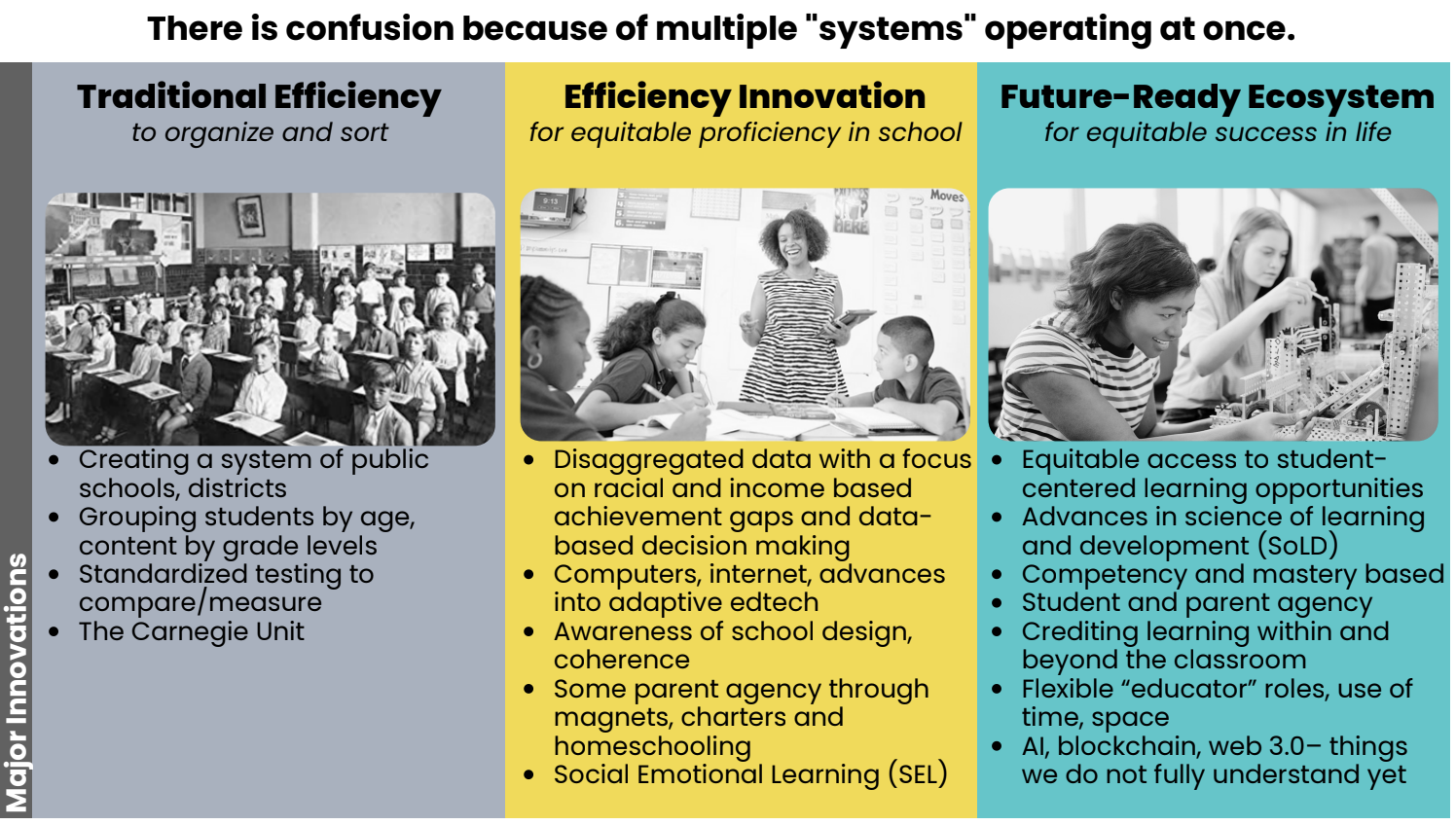
After a two-year investigation including hundreds of interviews, Kim Smith and Jen Holleran published a landscape of innovation in US K-12 education. What they found was a lot of confusion because there is not a single unified landscape. There are multiple systems are operating simultaneously often in the same geography: 

  • Traditional Efficiency: schools organized in age cohorts focused on grade-level proficiency tests
  • Efficiency Innovation: tech-enhanced often networked schools of choice   
  • Future-Ready: flexible student-centered models with broader aims and opportunities 

The traditional efficiency system (labeled Horizon 1 in the chart below) includes most public district schools (probably 70% of total) but is in decline as parents, students and teachers opt out and as new and conversion efficiency (Horizon 2) and future-ready (Horizon 3) schools and learning experiences are created. 

Most charter schools, according to CREDO, particularly those opened by networks, are Horizon 2 models “that opened with strong results and delivered stronger gains compared to traditional public schools.”

Next Generation Schools 

Smith and Hollerand described a new learner-centered ecosystem that is agentic (with student agency at the core) and defines success as thriving in life, careers and democracy. “It requires shifting from ‘schooling’ towards more focus on deeper learning. With the support and guidance of a robust community in which each student is known, connected, and engaged, learners have agency to define their path, own their data, and pursue their goals.” 

When Jal Mahta and Sarah Fine went In Search of Deeper Learning they didn’t find much in core courses in Horizon 1 and 2 schools. Instead, they found agentic experiences and deeper learning around the edges in the arts, in work-based learning, and in extracurricular activities. They found deeper learning across the curriculum in newer (Horizon 3) schools like High Tech High where powerful learning experiences are co-authored, community-connected and immersive, extended and challenging. They are occasionally awe-inspiring and frequently flow-producing. Products are often public and valuable to a community. Deeper learning experiences not only develop important knowledge, skills, and character, but they also build (what Charles Fadel calls the Drivers) motivation, purpose, agency, and identity.  

Inspired by the expression of new learning goals (see The Portrait Model) and next generation schools, the Getting Smart team distilled a set of learning design principles

  1. Accessible: All students deserve access to high quality learning opportunities that support long term success
  2. Personalized: Every learner is different. By providing personalized approaches to meet challenging outcomes, we increase the chances of success for every student. Competency-based approaches ensure proficiency on all outcomes.
  3. Purposeful: Learning experiences should help students find/develop a purpose to make a difference in the world.
  4. Joyful: When learning leads to awe, wonder, joy, and engagement, outcomes are stronger. Joy can be supported by strong relationships with others (peers, mentors, teachers, etc.).
  5. Authentic: Building learning experiences that are culturally connected, contextualized, relevant, or real-world increases engagement and outcomes. 
  6. Challenging: Every learner deserves to be intellectually challenged with high expectations. We believe in experiences that build opportunities for flow with the appropriate balance of challenge and engagement.

Similarly, Digital Promise says, “Powerful Learning is personal and accessible, authentic and challenging, collaborative and connected, and inquisitive and reflective

Dr. Yong Zhao describes the Horizon 2 “essence of personalized learning is to create individualized paths for students, adjusting the difficulty and pace of the material based on their progress and understanding.” However, another emerging (H3) version of AI-powered personalized learning is drastically different. “It does not aim to help all students achieve the same outcomes. It is not to allow students to move along the same path to the same goal. Instead, it is to help each student to become uniquely great in their own way…Since every child has strengths and deficiencies, we should shift our mindset of education toward developing the strengths of each child instead of fixing their deficiencies.”

Zhao explains the need for entrepreneurship and difference making: “In the age of AI, the first thing students need to do is to find problems worth solving because when they enter the society, they need to create value for others using their unique greatness. With AI and related technology, human greatness can be drastically enhanced. Today, everyone needs to have an entrepreneurial mindset as everyone has the potential, opportunity, and perhaps necessity to create solutions to problems with the assistance of AI.”

Together, these design principles outline next-generation (H3) environments and experiences. The three routes to create H3 supply is new school development, learner experience networks, and school transformation. 

New School Development  

One in three students in the U.S. attended a new public school created during the last three decades. A 2020 Carnegie report suggested that new school development has been an important change strategy. Because school improvement typically yields better but not different, new schools are the primary way new H2 and H3 school models are introduced. “The schools of the future that our society needs won’t come from transforming our existing schools. They’ll have to come through launching new versions of schooling from new value networks,” explained Thomas Arnett, Christensen Institute.

A quarter of the 31,000 new schools opened in the last 30 years were charters. The growth of H2 was boosted by charter networks from 1998 to 2012 (e.g. Achievement First, Alliance, Aspire, IDEA, KIPP, Harmony, Success Academy, Noble, Uncommon, and Uplift). Charter networks were cited in the most recent CREDO study as one of the few sustained signs of progress at scale. 

About 500 charter schools open each year (with a pandemic dip) but about 200 charter schools close each year. With blue state charter limitations and lack of facilities funding, the 300 net new charter school growth is likely to continue through the end of the decade. Dated authorization practices will trap most of the new supply in H2. 

Texas High School Project (which became Educate Texas) was a big successful H2 project resulting in 200 early college high schools and, in the last decade, more than 200 P-TECH schools that add work-based learning. 

The early seeds of H3 student-centered models can be traced back to Ted Sizer and the Coalition of Essential Schools and the project-based networks that got their start around the turn of the century (Big Picture, Edvisions, Envisions, High Tech High, New Tech Network, EL Education, Internationals). Most of these deeper learning schools opened as a new school of choice, about half district and half charter. 

School districts open a few hundred schools a year to support growing populations. Some H2 school districts are evolving to H3 by opening new models:  

  • NYC opened more than 400 schools (while closing dozens of failing schools) during the Bloomberg administration (2002–2013) and about half were early H3 models. 
  • El Paso ISD kicked off a 2015 turnaround with 6 New Tech Network academies (now 13). 
  • Kettle Moraine SD opened Health Sciences, KM Global, KM Perform, KM Connect, and KM Explore (K-8)  
  • Cajon Valley USD opened Bostonia Global, Paramount USD opened Odyssey STEM Academy,  and Poway USD opened Design 39 Campus.
  • In Kansas City, Park Hill SD opened LEAD Innovation Studio and Liberty PS opened EDGE
  • Tacoma PS opened SOTA, SAMI, and IDEA.  

School districts close about 800 schools each year due to shifting enrollment. Closures are likely to jump to 1,200 or more for a few years with post-pandemic shifts. Closures are always challenging events for local communities but at their best, they signal new school opportunities. The total number of schools will climb through the end of the decade with continued growth in microschools (but more private than public). 

Homeschooling, specifically microschools in homes and community spaces, is a vector of H3 growth. It got a boost from the rise of virtual learning in the first decade of the century and from microschools and cooperative models that exploded during the pandemic (e.g. Prenda, KaiPod, Outschool) aided by the expansion of ESA funding in 17 states. Home schools include a couple of varieties:  

  • Informal cooperative agreements of multiple virtual charter school parents (one multistate operator said 40% of students benefited from cooperative arrangements in 2022), 
  • Informal cooperative agreements of homeschool parents receiving ESA funds, and 
  • Private microschools where all or most of the tuition is ESA-funded (like those featured here).

Of the 3.4M students likely to be in new options by the end of the decade, maybe half will be H3 models. If that leaves 42M students in traditional public school options. That suggests a massive new school opportunity and why we’ve launched a microschool initiative to support the formation of next-generation models in school districts, in charter networks, and home schools. 

Microschools offer a faster and less expensive approach to new school development, one that can supplement and accelerate traditional approaches. But even with aggressive acceleration in the next five years, the shift to H3 requires new strategies like learner experience networks.  

Learner Experience Networks 

A growing number of initiatives are inserting H3 experiences into H1/H2 schools. It’s a faster and cheaper entry point than new school development and scales more rapidly. The downside to these LX networks is that it’s typically a partial day and can be limited to upper-division high school students. 

Ten years ago, the Blue Valley Center for Advanced Professional Studies expanded access to career-connected learning for juniors and seniors in southwest Kansas City. Its success spurred the development of two learner experience networks: 

  • CAPS Network has grown to 105 affiliates nationally that launch graduates into postsecondary with purpose and career-relevant skills.
  • Three dozen Kansas City metro area school systems convened by the Kauffman Foundation are promoting Real World Learning experiences (dual enrollment, client projects, internships, entrepreneurial experiences) in 85 high schools.  

NFTE, Uncharted Learning, and JA are promoting entrepreneurial experiences nationwide. StartupEd leads a statewide pitch competition in Indiana. The US Chamber of Commerce Foundation is sponsoring Employer Provided Innovation Challenges (EPIC). Nine regional intermediaries are hosting challenges and recruiting youth participants. After 30 years of promoting work-based learning through a network of more than 600 career academies, NAF added KnoPro, a client-connected project platform, to extend access across and beyond the network. Find the Why is a client-project challenge network in the state of Nebraska and growing. With continued investment and innovation, these and other LX networks could reach half of high school students by the end of the decade. 

School Transformation

School improvement efforts typically yield incrementally better but not different results. The multifaceted transformation required to move from one horizon to the next is rare especially early cycle. It requires leadership, capacity, and models of success (often found in new school development). 

Gates Foundation funded efforts (2000-2006) to catapult 800 struggling H1 high schools into H3 models largely failed (compared to successful new school development). More measured and deeply supported (H1 to H2) Linked Learning efforts sponsored by Irvine Foundation resulted in large scale high school transformation across California with subsequent national scaling. Some blended learning networks (many following the Horn/Staker playbook) made a successful H1 to H2 transition. The 17 state sponsored networks advancing competency-based models (most H1 to H2) showed modest results with little adoption outside the networks.

A few collaborations like League of Innovative Schools and the lighter weight Future Ready Schools are networked H2 to H3 transformation efforts. Like earlier H1 to H2 efforts, these collaborations of the nation’s best school systems suggest that transformation is hard. The rise of generative AI could make H2 to H3 transformation easier, faster and more widespread. New AI powered platforms like Schooljoy power personalized pathways. ASU spinout Lifelab Studios is reimagining growth experiences for justice involved youth. Playlab powers dozens of educator built apps. 

Conclusions 

New school development is the early key to building H3 supply. New schools can bundle new goals, new strategies and new tools into coherent models. While they expand access to next gen learning, they illustrate the way forward for transformation. This transformation is multifaceted and can be technically and politically challenging. AI will lower the technical complexity of transitioning to agentic and experiential pathways (while introducing new concerns). 

Learner experience networks can scale relatively quickly but are typically partial day programs for upper division students. ESA funding in a dozen states (while mostly a private school subsidy) creates an opening for innovative new models and expanded family agency. 

If large urban districts remain preoccupied with traditional improvement and school closures, they will stagnate in H1/H2 and increasingly be displaced by new H3 supply (as context variables permit). Even with aggressive new school development and LX networks, the majority of students will rely on late-stage transformation as proven models, deep capacity and new policy incentives expand. 

The post Why We Need More New Schools (Even with Enrollments Down and Closures Ahead) appeared first on Getting Smart.

from Getting Smart https://www.gettingsmart.com/2024/08/15/why-we-need-more-new-schools-even-with-enrollments-down-and-closures-ahead/

Here are our design principles. What do you think?

At Getting Smart, we partner with organizations that help collectively reach our mission of actively building the future of learning by designing, accelerating and amplifying equitable innovations that empower all people to thrive and lead in a complex world. 

Within our learning design work, we spend a lot of time writing about, supporting and implementing three critical elements: values, goals and design principles. Without these, learners in organizations do not benefit from a coherent, aligned and focused model. Values are how we act and the filter through which we make decisions. At Getting Smart, we have our own values and help others build values as a first step to learning design. We have written extensively around building a clear North Star for learners within an educational organization. The end result of this work is the Portrait Model – roadmap for not only building a Portrait of a Graduate, but also Portraits of Leaders, Systems, Educators and learners themselves (via a self-portrait).

In addition to strategic advisory and learning design, our work also focuses on sharing stories about education innovations. Over the last six months, we drafted a set of design principles that integrate what we have learned from the landscape. 

While each of these is a tried and true description of powerful learning, collectively, they describe our point of view at Getting Smart. If learning experiences, whether formal or informal, adhere to these as principles, we believe that learners will have had transformative and powerful learning experiences. 

  • Accessible: All students deserve access to high quality learning opportunities that support long term success and a strong sense of belonging.
  • Personalized: Every learner is different. By providing (or supporting learners to co-author) personalized approaches that meet challenging outcomes, we increase the chances of success for every learner. Competency-based approaches can ensure proficiency on all outcomes.
  • Purposeful: Learning experiences should help students find and develop a purpose or purpose mindset to make a difference in the world.
  • Joyful. When learning leads to awe, wonder, joy, or engagement, outcomes are stronger. Joy can be supported by strong relationships with others (peers, mentors, teachers, etc.).
  • Authentic. Building learning experiences that are culturally-connected, contextualized, relevant, place-based or real-world increases engagement and outcomes. 
  • Challenging. Every learner deserves to be intellectually challenged with high expectations. 

These design principles are nimble and adjust to environments and emerging challenges and opportunities. Artificial Intelligence, for example, will be a new design partner in our work and the education sector and the use of these tools has the ability to enhance or diminish each of the above principles. It is critical to be measured and thoughtful when implementing and co-designing. To see recent examples of learning approaches and initiatives that satisfy the above guidelines, check out our blog and our podcast.

Over the next six months, we will write about each of these in more detail, adjusting and editing as we go based on what we learn.

So, what do you think? Do these design principles correctly capture high quality learning? What are we missing?

The post Here are our design principles. What do you think? appeared first on Getting Smart.

from Getting Smart https://www.gettingsmart.com/2024/08/13/here-are-our-design-principles-what-do-you-think/

Youth Design Day: Mapping Civic Learning Across Pittsburgh

By: History Co:Lab

“What would a map of every opportunity in Pittsburgh where young people feel powerful and seen look like?”

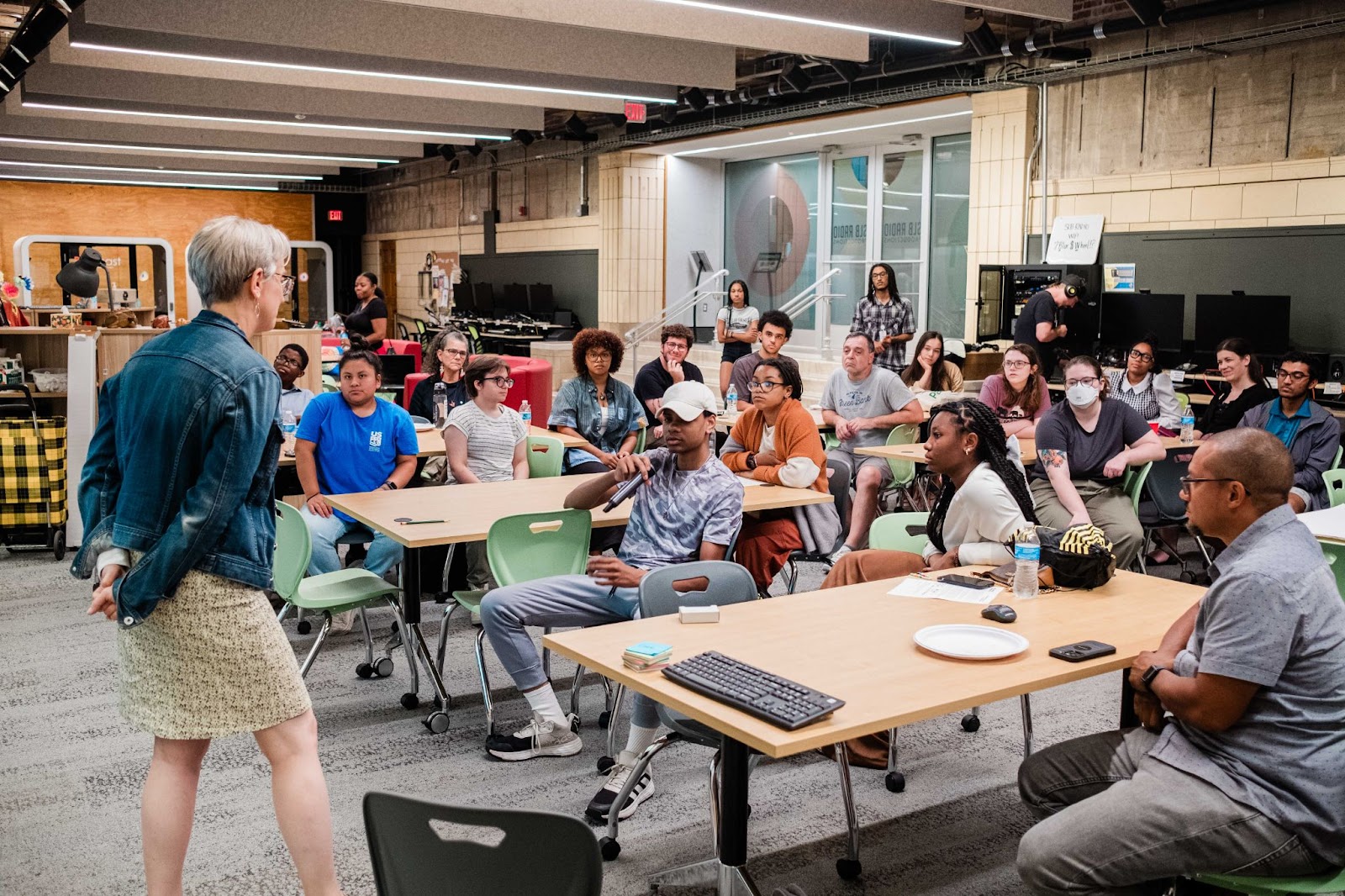
On June 25th, at the Civic Learning Ecosystem’s Youth Design Day, youth leaders, educators, civic organizers, and community members from southwestern Pennsylvania gathered in the Children’s Museum of Pittsburgh’s SLB Youth Media Center to co-create an answer to this question. Young people shared their stories of spaces across the region where they felt most civically engaged, weaving them with testimonials of belonging and community to create a comprehensive map of youth-centered civic learning opportunities throughout the region.

Led by youth voice, every adult in the space witnessed a unique showcase of teen and young adult perspectives on civic engagement and left with better understanding of what’s needed to support their thriving as makers of our shared history.

The Collaborative Learning Ecosystem Transforming Pittsburgh

Ecosystems for the Future of Learning,” a report written by Education Reimagined and the History Co:Lab in partnership with the Carnegie Foundation for the Advancement of Teaching, explores how learner-centered ecosystems that extend beyond traditional school boundaries help embed young people in their communities, making education more inclusive, impactful, liberating, and supportive of belonging. Pittsburgh, with its dynamic network of schools, community centers, museums, libraries, and organizations that work to co-create enriching learning experiences for young people, is a perfect embodiment of this. 

Remake Learning reports in “Shift: How Cultivating an Ecosystem Remade Pittsburgh’s Learning Landscape,” that Pittsburgh Public Schools collaborates with early childhood specialists and local museums to create innovative learning environments that prioritize play and hands-on experiences. And a partnership between Allegheny Health Network and Northgate School District led to the transformation of a shuttered suburban hospital into a space dedicated to health, wellness, learning, and innovation. Robust partnerships between community actors and spaces are helping to cultivate a learning ecosystem across the region that is making education more youth-centered, community-connected, and meaningful.

Young People Spoke and We Listened

The Civic Learning Ecosystem, the regional working group we lead with Remake Learning, unites individuals and organizations committed to redefining civic education across southwestern Pennsylvania. 

To fulfill this mission, we, together know that young people must be our thought and design partners. Their wisdom, feedback, and creativity are central to the process, and with them at the table sharing their ideas, challenging ours, and co-envisioning with us, we get to relevant, engaging, and meaningful civic learning experiences created with and for them. 

Youth Design Day, held on June 25, was our opportunity to connect and collaborate with Greater Pittsburgh’s young people again, and learn from them. All were informed about the gathering and invited to it through their involvement with community partners including Youth Enrichment Services (YES), SLB Radio, LIGHT Education Initiative, the World Affairs Council Pittsburgh, and the Mayor’s Office. The Day’s gathering was a direct result of interconnection. These existing networks and relationships made the event an emotionally safe one where all young people could show up with their ideas, questions, and stories.

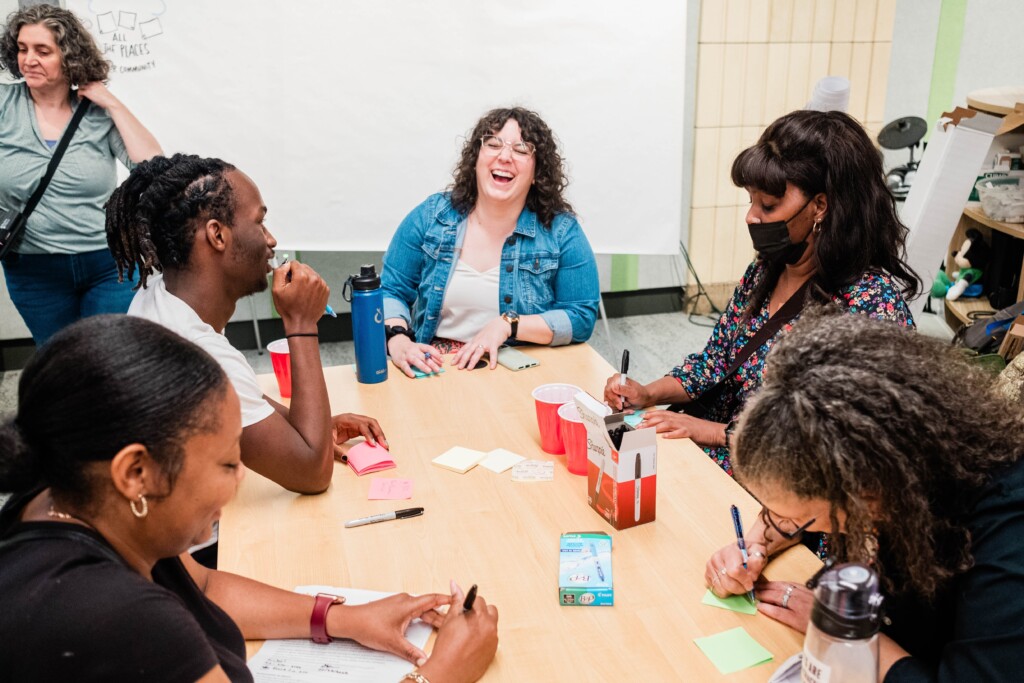
Throughout Youth Design Day, multiple listening sessions were held and each were structured to facilitate meaningful dialogue and active participation among all in attendance. Each session began with a sharing circle where participants expressed their thoughts and experiences related to civic engagement and learning. This was followed by active listening exercises designed to surface key insights and themes from the discussions. Six groups, each composed of youth and adult participants, engaged in these activities to ensure diverse perspectives were heard. Many of the young people in attendance noted the strong sense of agency felt throughout the experience.

  • “We the youth must be a part of and at the center of problem-solving in our communities as we are the future and must be part of the conversations about our future.” — Youth Participant
  • “Involving young people in the creation process ensures that they feel valued and heard, which contributes to positive results.” — Youth Participant

Mapping Pittsburgh’s Civic Learning Opportunities

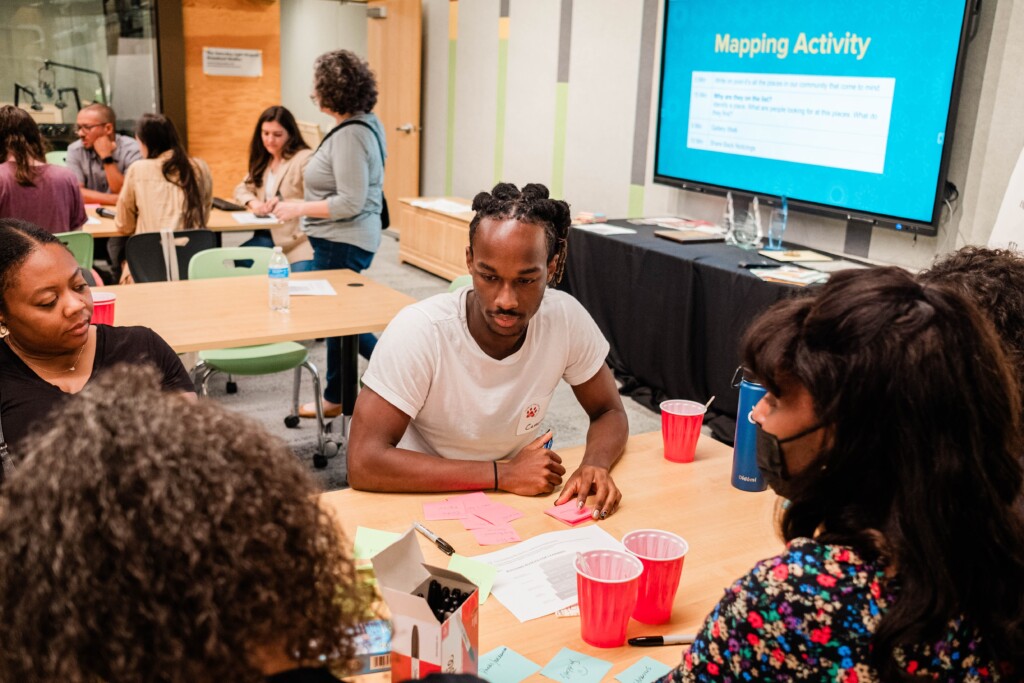
Building on the agency felt, the conversation shifted into the young people in attendance naming the youth-led and youth-centered spaces in their communities that offer meaningful and accessible civic learning opportunities. 

Wanting to capture more than just a list of places, our team started this part of Youth Design Day pulled up the Building Blocks for Learning from Turnaround for Children and asked the learners to identify places in their community where they felt the respective blocks. 

This approach provided both a visual reference and created a shared understanding of respect, which led to the development of a rich ecosystem map of experiences named by young people as opportunities that expanded their civic understanding and supported their sense of belonging. 

  • “The opportunity to create our own clubs in school gives us a chance to develop leadership skills and see what kind of leaders we can become.” — Youth Participant
  • “Programs like SLB Radio give us a platform to express our voices and showcase our talents, which makes us feel connected to our community.” — Youth Participant
  • “Working with organizations like the Mayor’s Office has been transformational. It’s inspiring to see the changes being made and to be a part of that process.” — Youth Participant
  • “Having the chance to lead projects and make decisions in programs like YES Academy has given me a sense of agency and confidence.” — Youth Participant
  • “Networking and professional development opportunities, like those provided by the Warhol Museum, help us engage with our passions and prepare for the future.” — Youth Participant

Some of the standout places highlighted by the young people during the mapping activity included:

  • SLB Radio, which was recognized for providing a platform for youth voices and allowing young people to showcase their talents and express their opinions on important issues.
  • The Mayor’s Office, which was valued for its transformational programs and initiatives that involve youth in decision-making processes and civic activities.
  • YES Academy, which was praised for offering leadership development opportunities and giving young people a sense of agency and confidence through project-based learning.
  • Warhol Museum, which was appreciated for its networking and professional development opportunities that engage youth with their passions and prepare them for future careers

From their robust list of places, youth participants began to categorize and imagine how these civic opportunities would connect, eventually mapping them together to form a cohesive web of civic and community supports for young people like them.

What’s Next?

Relationships and a dynamic learning ecosystem of community partners made this unique knowledge-sharing and knowledge-building experience possible. 

The comprehensive map created during Youth Design Day will be a living artifact that will continually evolve and be leveraged to support civic learning and engagement across the Greater Pittsburgh area, ensuring that every experience or opportunity shaped responds to the needs and aspirations of young people. The Civic Learning Ecosystem will be maintaining and updating the map, ensuring it remains relevant, accessible and folded into the group’s ongoing efforts to foster a youth-centered, community-connected civic learning ecosystem. The map will continue to be designed with and for young people and we anticipate sharing it at a community showcase event happening later this year that will highlight the learning opportunities named on it.

The momentum and magic of Youth Design Day led to student-created, innovative ideas that support our learning ecosystem development goals. We look forward to more workshops that develop these ideas, building on event data to inform future ones, recruiting more young people and community stakeholders into the process, and maintaining connections with those already involved. 

Through collaboration, inclusive conversations and shared discovery, we are fostering a dynamic learning ecosystem with and for young people that is responsive to their needs and aspirations. Together, we are committed to ensuring that every young person in Pittsburgh can find their path to civic engagement, creativity, and agency.

Special thanks to the organizations and partners who attended and helped lead the Youth Design Day: Remake Learning, City Charter High School, Committee of 70, LIGHT Education Initiative, Pittsburgh Mayor’s Office, Pittsburgh Parks Conservancy, SLB Radio, World Affairs Council, Youth Enrichment Services, and more.

The post Youth Design Day: Mapping Civic Learning Across Pittsburgh appeared first on Getting Smart.

from Getting Smart https://www.gettingsmart.com/2024/08/12/youth-design-day-mapping-civic-learning-across-pittsburgh/

Help Us Shape the Future of Education: Vote for Our SXSW 2025 Sessions!

At Getting Smart, we are passionate about driving innovation in education. This year, we’ve submitted three exciting session proposals for SXSW 2025, and we need your support to bring these important conversations to the forefront. By voting for our sessions, you are actively contributing to advancing innovative education strategies that can significantly impact the future of learning. Your support helps bring essential discussions and practical solutions to educators and leaders, enabling them to implement transformative practices in classrooms and schools worldwide.

Integrating the Arts into High School Pathways

Join us for an interactive workshop where you’ll discover how integrating the arts into high school pathways can boost engagement in core classes and build durable skills. Participate in hands-on activities, collaborative discussions, and immersive experiences that highlight the role of arts education in fostering creativity, critical thinking, and collaboration. You’ll leave with practical strategies and ideas to create engaging, arts-integrated learning environments that prepare students for diverse futures.

Integrating Humanistic Values into Educational Pathways

Inspired by Carlos Moreno’s Leadership Soul and the innovative work of Getting Smart, this session explores integrating love, care, vulnerability, and joy into high school pathways. In an ever-evolving world, preparing students for future careers requires more than just technical skills. Love, care, and vulnerability are transforming the workplace. This live recording will feature education experts and industry leaders discussing the importance of emotional intelligence, empathy, and vulnerability in shaping future professionals. By fostering these qualities in students, we help them succeed.

Future Schools Forum: Microschool Meet-Up

As Steve Jobs famously said, ‘The best way to predict the future is to invent it.’ Join us at the Future Schools Forum: Microschool Meet-Up to explore the vast microschool ecosystem and discover innovative models shaping the future of education. Engage in an open Q&A with experienced microschool leaders, delve into sustainable and scalable practices, and experience our new Microschool AI bot for real-time answers to all of your questions about microschools. This learning and networking meet-up provides valuable insights on how these small, agile learning environments are making a big impact!

How to Vote

Voting is simple and takes just a few minutes. Follow the links provided above for each session you want to support. Your vote will help us bring these important discussions to SXSW 2025, where they can inspire educators and leaders to implement innovative practices that make a real difference in education.

Why Your Vote Matters

By voting for our sessions, you are not just supporting Getting Smart, but you are also championing the future of education. Each vote helps bring essential ideas and practical strategies to a global stage, where they can inspire change and improve educational outcomes for students everywhere. Together, we can drive meaningful change and make a lasting impact on the future of learning.

The post Help Us Shape the Future of Education: Vote for Our SXSW 2025 Sessions! appeared first on Getting Smart.

from Getting Smart https://www.gettingsmart.com/2024/08/08/help-us-shape-the-future-of-education-vote-for-our-sxsw-2025-sessions/

5 easy steps for responsibly piloting AI and tech in education

By: Alice Waldron

As educators, it can feel like a new AI tool is introduced daily and there is pressure to use new tools just to keep up with the times. What if, instead, we made technology decisions based on ethical considerations and our students’ needs? AI has potential to support student learning, educator development, and more – but a thoughtful approach is critical.

How can schools effectively evaluate the potential impact of new technology without negatively affecting teachers or students? How can we ensure AI is being used to complement and support teachers rather than replace them or add to their workload? How can we confront the drawbacks of AI, such as bias in responses? Here are five steps to help schools pilot AI and other tech tools with purpose and responsibility.

1. Identifying the problem 

Teachers already have more than enough to do, so asking them to adopt any new technology or idea just for the sake of seeming cutting edge is simply not the best use of their time.

The first step is naming the reason you are considering piloting a new innovation in the first place. What is the problem you are trying to solve and why is that problem important? Once you answer those two questions, you can move on to exploring how a new technology or idea might help address this challenge.

RECOMMENDATION FOR CLASSROOM USE: Review qualitative and quantitative data such as student work, classroom observation trends, student surveys or interviews, and assessment or rubric scores to analyze the strengths and needs in your class. Where are students succeeding and having a positive experience? Where are students struggling more? Is there a support need that technology could meet or a barrier it could remove? 

For example, imagine you are a middle school science teacher and you notice that, although your students can follow the steps in a given lab, they struggle with designing lab questions and procedures themselves. You might explore PhET simulations given their open-ended nature, the ability for students to choose and control different variables, and the associated teacher resources available to you. 

2. Ensure ethical use and alignment with core values

Before piloting any new tech tool, program, or idea, make sure it can be used ethically and that you can avoid unintended negative consequences. For example, when considering any technology tools, schools should always ask what data is collected and how it is used. When it comes to AI specifically, schools should consider how the tool presents information – is the potential for bias and inaccurate information acknowledged? Does it come with guidance on how to interpret AI responses with this in mind? What training or support might you have to provide to users at your school site to avoid unintended consequences? Additionally, evaluate compliance with applicable laws and regulations, such as those protecting student privacy – those exist for a reason!

Any new tool should also align with your school’s or organization’s mission. This guarantees that whatever you are piloting will serve your educational goals rather than just introducing novelty for novelty’s sake. At Relay Graduate School of Education, we’re committed to creating a diverse and inclusive institution that recruits talented teachers to the profession and supports them throughout their careers. Any AI tool we pilot must align with our mission. With this in mind, consider the purpose of the technology, and review impact studies or data related to the technology, if available. 

RECOMMENDATION FOR CLASSROOM USE: First and foremost, check with your school’s administration about guidelines and policies for the use of technology, including AI, with your students. Before you make a decision to test a new technology, good questions to ask and discuss at your school site include: 

  • How will the technology support classroom learning and/or experience? 
  • Can all students, including those with disabilities, access the technology?
  • Does the technology require personally identifiable information from students (e.g., a log-in) and if so, how is this information used and protected? Never use technology that requires personally identifiable information without checking with your administration first. 
  • How much does the technology cost? What devices and/or operating systems are required to use the technology? 
  • Is the technology easy to use and likely to engage students? How much instructional time will you need to roll out the technology? 
  • Is the technology free from bias and/or can it be used as a learning opportunity for students to develop the technological literacy skill of identifying and mitigating bias in technology? 

Continuing with the middle school science example above, you might continue with your plan to use PhET simulations if they are aligned to the standards and goals for your curriculum, given that they require no personally identifiable information, are free to use, and include a menu of simulations with inclusive features for accessibility. PhET simulations do not use AI, but if you were exploring an AI-tool, you might consider pairing it with some introductory lessons on AI and ethics for your students: here’s an example from Common Sense Education

3. Make a plan and set clear goals

In my experience, institutions often evaluate technology based solely on user surveys – did the users like the new technology? This data is important, but does not give the full picture. Schools should also evaluate the impact of the technology.  

Take for example one of one of our tech pilots at Relay last year involving classroom teaching practice in a simulated environment. We identified the following three types of goals:

  • Short term: Reduced faculty grading time and student demonstration of target skills in the simulated environment
  • Medium term: Increased student self-efficacy and student demonstration of target skills in their actual classrooms, and 
  • Long term: Positive impact on culture in students’ actual classrooms as measured by rubrics used during observations.

We then collected data on each of these goals over time. We still surveyed our users, but defining our goals for the impact of technology helped us ensure we were making decisions based on what was helpful for teachers and kids in addition to considering the user experience with the technology.

RECOMMENDATION FOR CLASSROOM USE: Align your goals to the initial problem or need you identified in step 1. With the middle school science example, you could set a goal for a student rubric score increase on lab questions and lab procedure portions of your lab rubric. From there, you could identify labs to run using a PhET simulation. 

4. Monitoring progress and making adjustments

Here’s where your user perception data – along with your impact data – comes in. 

TeachFX is an app that records and analyzes classroom interactions and generates AI-powered instructional insights for teachers to reflect on and improve their teaching. We wanted to see how TeachFX could improve the feedback loops for our teacher candidates and save time for our faculty. Students appreciated the instructional feedback and ease of use, but found that long videos were slow to upload. We made an adjustment and reminded students that they could simply record the audio, which uploads quickly. TeachFX was also responsive to the feedback and adjusted how their system responded to video uploads.

We surveyed our students after they used TeachFX for each assignment. After those adjustments were made, the comments about slow uploads disappeared. Responding to data is how you ensure you’re giving the tech the chance to actually work in your context and see if it will have its intended impact.

RECOMMENDATION FOR CLASSROOM USE: Here is where you check in with your students and their learning! Can they use the technology easily? Do they feel like it is supporting their learning and do you notice this impact in their classroom discussions and/or work? 

For our middle school science example, let’s say you modeled how to use a Natural Selection PhET simulation with your students before having them ask an experimental question and design a procedure to answer that question using the simulation. However, while students were working on their own procedures, you noticed they were lacking details on the type of data they would collect to answer their questions. Just like you would with any other lesson, you adjust to your real time data and, in this case, pause to teach a quick mini-lesson on how to read the population graph in the simulation. 

If you are using an AI tool with students in your classroom, monitor the AI-output as well as students’ work and experience with the tool. This allows you to keep a pulse of how well students are able to identify potentially inaccurate or biased information, and adjust your instruction as needed. 

5. It’s time to make a decision

Unfortunately, not every pilot is destined to succeed. Even AI or other tech tools that seem promising at the start might not be adapted or rolled out for a variety of reasons, including budgetary constraints or data suggesting the potential for impact did not translate into real impact. During every pilot, there’s a point where you have to decide what comes next. 

The decision could be a simple “Yes” or “No” in terms of proceeding with a program. You can also simply decide that you need to gather more information before moving forward with full implementation. When we piloted TeachFX during the fall semester we saw a lot of promising data, including a notable increase in student talk time in the classrooms of Relay students. But, we needed more data in order to assess our long-term impact goals (such as observation rubric scores). As a result, we presented our preliminary findings – which included strong data on short and medium term impact goals, as well as positive user experiences – to the full faculty. Faculty who were already piloting TeachFX shared their experiences and encouraged others to join the pilot based on this data. The positive fall results led us to expand our pilot into the spring so we could learn more about long term impact.

RECOMMENDATION FOR CLASSROOM USE: Review the data you collected relative to your goal(s) for the use of the technology. Did it have the intended impact? How did students feel about it? Did any unintended consequences arise? With our middle school science example, you might decide to keep using PhET simulations if student scores on your target lab rubric rows started to increase with use of the simulations. You might also consider factors like how much instructional time you had to spend introducing each simulation, the clarity and accuracy of the conclusions students were able to draw relative to their experimental questions from the simulation, or the impact of the simulation on student engagement in labs. 

A lot of these ideas aren’t new or revolutionary, but we can and should apply them in this new landscape of rapidly growing AI tools. As new AI models and tools continue to emerge and evolve in education and beyond, users can help shape the landscape to focus on ethical practice and positive impact through intentional piloting and decision making.

The post 5 easy steps for responsibly piloting AI and tech in education appeared first on Getting Smart.

from Getting Smart https://www.gettingsmart.com/2024/08/06/5-easy-steps-for-responsibly-piloting-ai-and-tech-in-education/

Fostering Student-Centered Environments: From Teacher Assessed through Grades to Self, Peer, Expert Feedback and Critique

Why do we award grades? Do they really improve learning?

Research shows that in the short term, grades do indeed improve learning outcomes…on standardized tests.

But when it comes to retaining information, thinking critically, recalling concepts later on, and applying + transferring learning to new contexts, grades are proven to be very ineffectual

There’s a much more powerful, research-based alternative. Feedback and Critique. 

But it’s not only learning outcomes that improve when we offer feedback and critique in our classrooms. Learners also demonstrate greater cooperation, trust, and intrinsic motivation.

Case Studies in Going Gradeless

In a high school English classroom Student-Centered Practitioner Gary Heidt, founder of Nova Lab and High School English Teacher made the decision to go gradeless when he saw that his students were overly stressed and “just checking achievement boxes, climbing each ladder so they could get to the next.” 

He noticed it “wasn’t really about learning or things they wanted to do, it was just about reaching the next tick box.” 

Gary replaced tick boxes with a system of ongoing feedback, narrative comments, and peer review. Students would no longer receive grades on intermediary tasks for longer-term writing assignments or projects, but rather feedback on how to improve their work for subsequent drafts. 

They kept track of each draft in dynamic digital portfolios. To manage the process and keep track of individual progress, students used dynamic Kanban boards to mark tasks that were planned, being worked on, or completed. They presented their growth in dynamic ‘Presentations of Learning’ at the end of each semester. 

And while Gary explains that it took time to adapt to an ungraded system, the results were incredible. Students sought out feedback for work on their own, demonstrated significant growth, and in formal “pitches” could articulate exactly what they were learning in class. 

Gary retells the story of one former student, now at the top of her class in University, who wrote a letter thanking him for “asking for her thoughts, and listening to them.” She goes on, “You taught us that everyone is constantly improving. You taught us not like children, but like high-minded people.”

But it’s not just Gary who is using feedback and critique to supplement or replace grades. 

At VIS Better Lab School in Taiwan, students present their learning at the end of each semester in formal ‘presentations of learning.’ (POLs) In these 8-10 minute presentations for a panel of peers, students demonstrate major concepts learned, skills and habits of mind gained from taking on personalized projects, challenges they have overcome, and finally, areas in which they would still like to improve. After the presentation, their peers offer additional insights and feedback for the presenter. The presentations of learning are ungraded and instead receive a pass/fail mark, determining if they can move onto the next year’s level. 

Student-centered powerhouse High Tech High in San Diego also uses presentations of learning to supplement grades. In this video, a 12-year-old student stands tall in front of his peers and exclaims, “I think I have gotten more balanced and responsible with my work, and I’m really proud of that.” His teacher jots down questions for the ensuing 1:1 conversation they will have once he finishes presenting.  

Another confident girl with tightly bound braids reflects on the power of POLs on her learning, “They help you reflect on what you want to become, or what you have accomplished…like a lily pad in the middle of the river that you are hopping over.”   

Getting Started

As a student-centered practitioner, what resonates most with you? How might you create a culture of ongoing feedback and critique in your classroom in the 2024-2025 school year? 

You might try…

  • Peer Review Sessions: Schedule weekly sessions where students review each other’s work using a structured rubric to provide constructive feedback. At Futures Academy at the International School of Beijing, we used a gallery walk format for these sessions. Students sat down at a piece of work and used the rubric to generate kind, helpful, and specific comments. When finished, they would rotate to a new piece of work. The evidence it was working was in the specificity of each comment.  
  • Modeling Effective Feedback: Demonstrate how to give and receive feedback by role-playing examples of constructive and respectful critiques. In my former 6th grade Humanities class we took a fun spin on these role-plays. In small teams, students acted out in scene one how not to give and receive feedback, and in scene two, modeled exemplary feedback behaviors. In addition to generating a ton of laughs, we co-constructed a list of norms for future sessions. 
  • Feedback Journals: Have students maintain journals where they record feedback received, reflect on it, and set goals for improvement. Deborah McNally, a personal project facilitator, has students use a simple .ppt slide deck with distinct checkpoints for reflective questions, and relevant evidence of growth.  
  • Feedback Ladder Protocols: Use a ladder approach where students start with positive comments, then move to suggestions for improvement, and end with questions to provoke further thinking. During tuning sessions at Marymount Secondary School, students regularly rotate roles for each rung of the ladder in giving feedback on community project work.
  • Group Feedback Activities: Incorporate group activities where students collaboratively review and critique each other’s work, fostering a sense of collective responsibility for learning. Ron Berger, Chief Program Officer at Expeditionary Learning facilitates these sessions regularly, and brings in work from outside the classroom to help establish the norms. He asks questions like, “What do you notice? What would you tell the author of this work? What specifically stands out to you?”  

The excerpt above is from Shift 10/Chapter 10 of my new book, Where is the Teacher: 12 Shifts for Student-Centered Environmentsscheduled for release in Early August. It includes more stories, strategies, and immediate takeaways for shifting from teacher-led to student-centered environments in the new school year. Attend the launch party to meet like-minded educators.

Here’s to empowering our students to take ownership of their own learning! 

The post Fostering Student-Centered Environments: From Teacher Assessed through Grades to Self, Peer, Expert Feedback and Critique appeared first on Getting Smart.

from Getting Smart https://www.gettingsmart.com/2024/08/05/fostering-student-centered-environments-from-teacher-assessed-through-grades-to-self-peer-expert-feedback-and-critique/

Design a site like this with WordPress.com
Get started