World of Work Summit 2023

By: Norton Gusky

Over 600 people came to San Diego from March 23-25, 2023 to join the first World of Work (WOW) Summit convened by the Cajon Valley Union School District. The Summit brought together educators from all over the United States who wanted to see the WOW program in operation in Cajon Valley Union schools, hear from leaders in the business and education community about setting a vision for the WOW movement and discover more about how to accelerate literacy so learners could create gainful employment pathways based on their strengths, interests, and values. I traveled with the River Valley School District from Pennsylvania which shared its STEAM Academy and the successful CyberSecurity pathway at a session during the conference. Joining me were twelve other educators from the Pittsburgh area representing the World of Work, Pittsburgh contingent.

DAY 1

For two years COVID limited my opportunity to visit schools. I was excited to be able to start the conference by visiting two schools and interacting with educators and learners. The Cajon Valley school district arranged for six busloads of people to visit four elementary buildings, a middle school, and a charter high school. I spent the morning at the Bostonia Global Charter High School and the Avocado Elementary School. California, unlike all other states, has separate school districts for grades K-8 and 9-12. The Cajon Valley School District created a charter high school so some of their students could continue along the career pathways begun in their K-8 program.

As I joined the line for the buses to the schools, I spotted my Consortium for Schools Networked (CoSN) colleague, David Jarboe. David, the Director of Instructional Technology and STEAM for the Harrison School District in Colorado Springs came to San Diego to visit family and discovered that there was a conference in his home area. David not only attended Cajon Valley as a student, but he also became a teacher and then an administrator at Cajon Valley. When we arrived at the Bostonia Global Charter High School, David pointed out the room where he taught when the building was a middle school. We had a chance to hear from a variety of Advisers (teachers) who allow each Scholar (student) to have their own personal pathway. In addition, we heard from a delegation of Scholars who shared why they enjoy learning at Bostonia Global Chart High School. It was refreshing to hear how much the Scholars value their Advisers. It was obvious that the WOW model at Bostonia was built on strong relationships with empowered educators and learners.
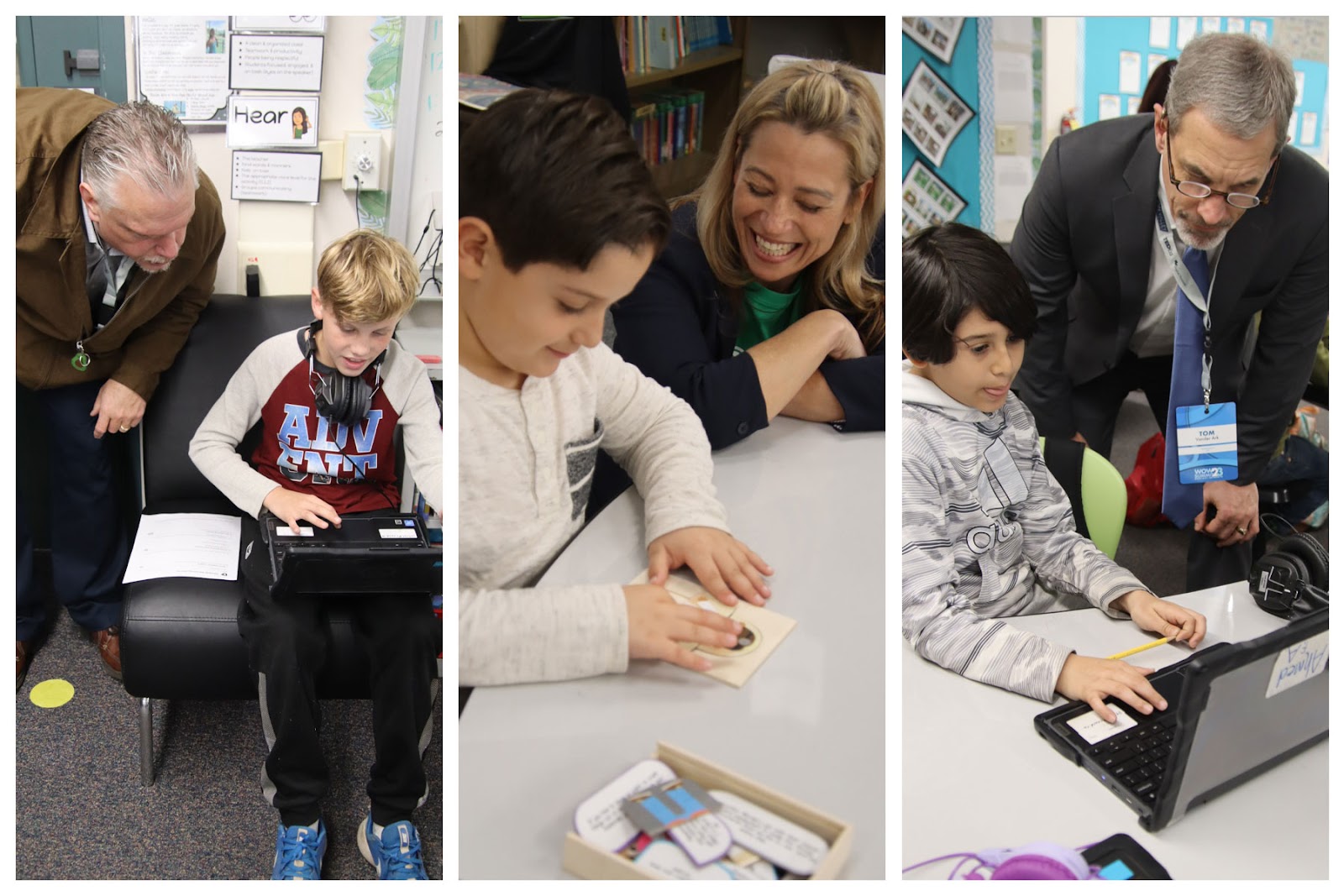
At the Avocado Elementary School, I had a chance to interact with students in grades K-5. It was wonderful to see kids share their business cards and talk with fourth-grade entrepreneurs. I observed how well the kids interacted with the adults and I photographed wonderful moments with some of the key people attending the conference, such as Tom Vander Ark from Getting Smart. It was amazing to hear the students outline how they tapped into their RIASEC (Realistic, Investigative, Artistic, Social, Enterprising, Conventional) personality traits. According to David Jarboe, “I was thoroughly impressed with the students and their ability to articulate their life choices with clarity and purpose. Each student not only described what they wanted to do but also explained why they had chosen that path. It was evident that they had developed a strong sense of agency and direction. This exemplifies the immense value of programs like World of World and the direct impact they have on students.

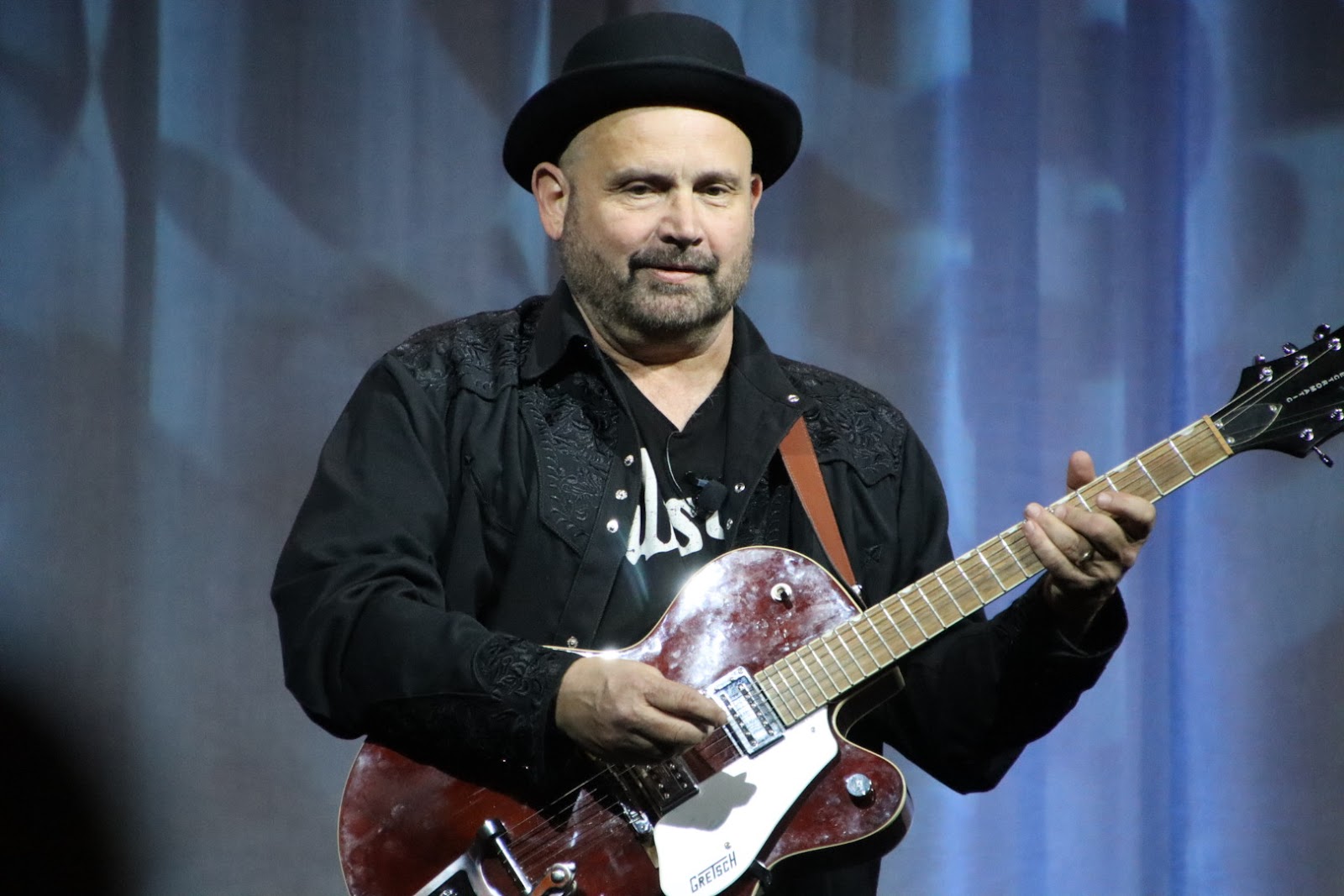
We returned to the Summit Hotel, the Hilton on the Bay, for lunch and a general session before Kevin Honeycutt shared his amazing personal story. Kevin grew up in poverty, attending school in more than 20 states before becoming the first high school and college graduate in his family. He taught K-12 art, and summer art camps and wrote and directed high school plays for 13 years. Kevin now travels around the United States working with educators and students to embrace their creativity and entrepreneurial spirit. He helps learners find a pathway that allows them to sell their creative products online.

Ashli Detweiler, the Coordinator of the Pittsburgh World of Work project that includes Avonworth, Duquesne, Elizabeth Forward, and the South Fayette School Districts, added, Keynote speaker, Kevin Honeycutt, asked, what would school look like if we saw the school through the eyes of a child?  Furthermore, what would school look like if we really loved our kids?”
DAY 2

Horst Schultze provided a wonderful work-world connection as the keynote for the General Session. Horst challenged the audience to think about ways to achieve Excellence in Education as he has done in the business world. Horst helped the Ritz Carlton Hotel Chain become the gold standard for hotel services. Today he works with corporations and international projects around the world to reach the highest levels of success. Horst’s words reaffirmed what I’ve always believed: if you reach for the moon you’ll have a team of student astronauts travel with you.

Later that afternoon I joined the River Valley School District team to share their STEAM Academy Success Story creating a CyberSecurity Career Pathway.   Phillip Martell, the Superintendent of the River Valley School District, a rural district about 40 miles east of Pittsburgh, set the stage for the CyberSecurity project and then Missy Milanak, outlined how she developed the course by tapping into resources at the University of Pittsburgh as well as state and national standards. Jeff Geesey then added how the course taps into national certification from CompTIA and provides real-world experiences including industry certification opportunities for high school students.
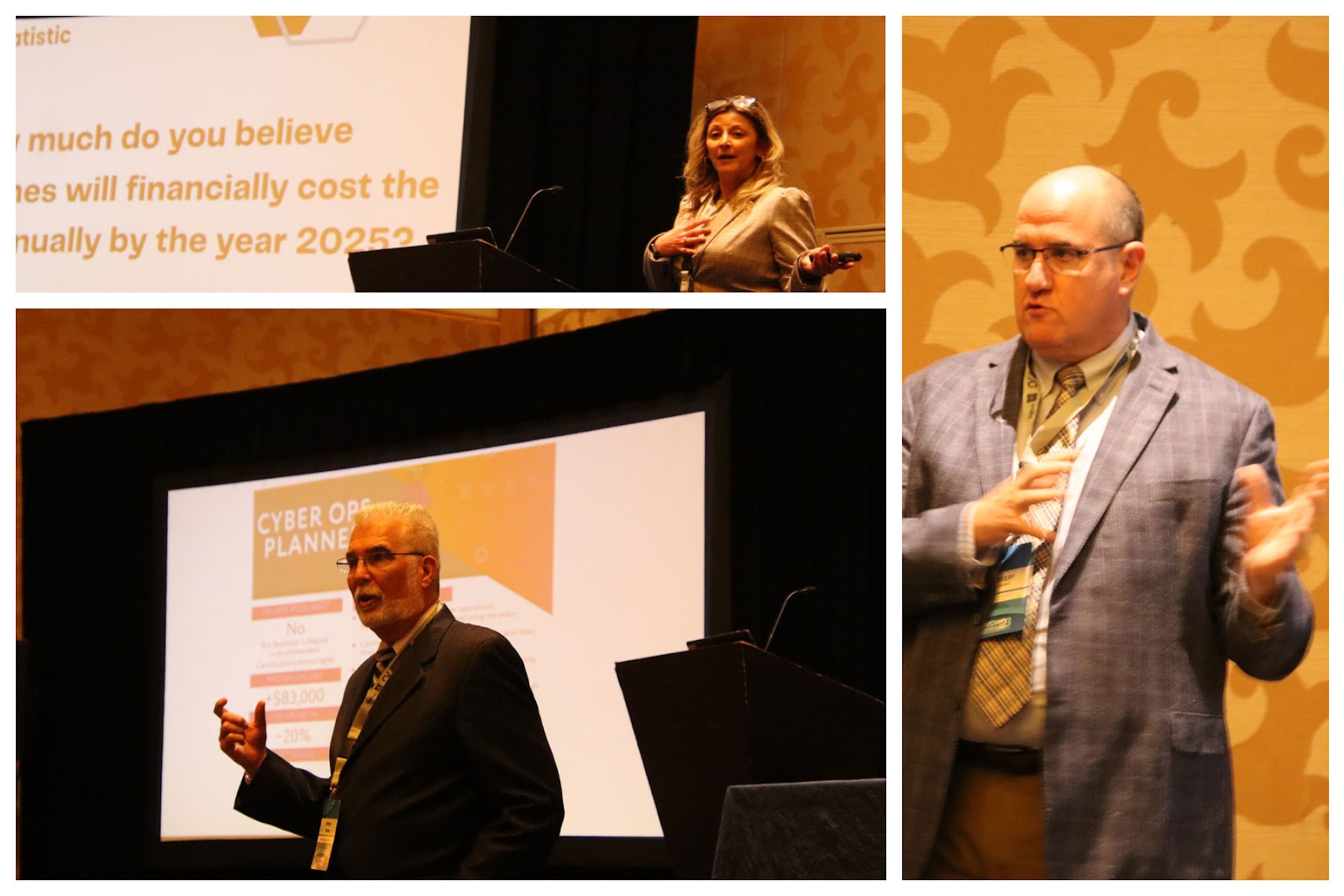
According to Philip Martell, the Superintendent of the River Valley School District, WoW gives our River Valley students exposure to career options at an early age. Students have the opportunity to learn about careers, receive hands-on experiences, meet professionals, and practice skills needed for that career.”

At the end of the afternoon the Conference moved to the Midway Aircraft Carrier docked in San Diego for a wonderful opportunity to socialize and enjoy the beauty of San Diego. I joined my colleague David Jarboe, his niece who now teaches in Cajon Valley, and Horst Schultze for a wonderful conversation.

DAY 3

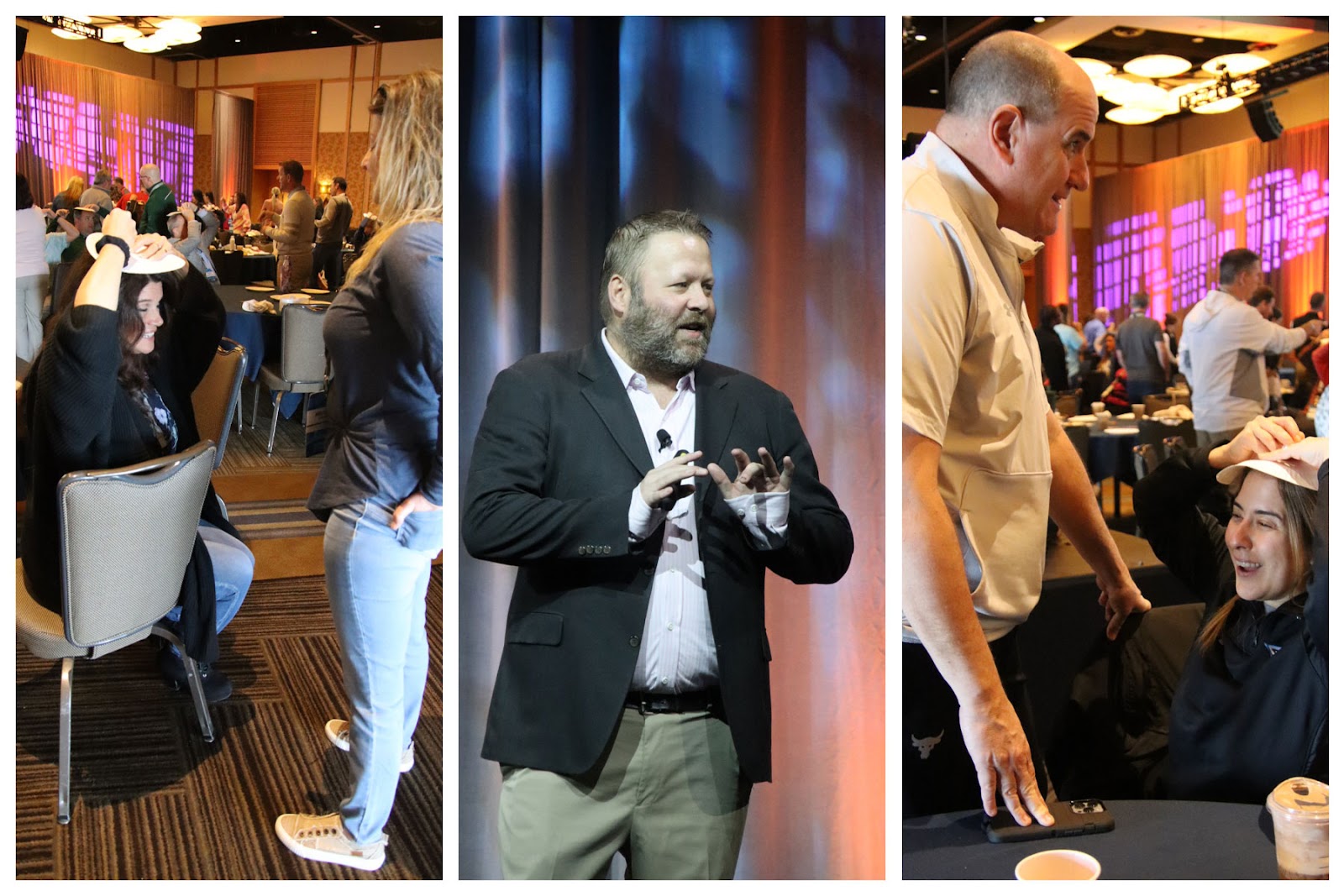
Tom Murray kicked off Day 3 with a wonderful set of interactive activities. Tom is most passionate about creating cultures of innovation where teachers are empowered to create the types of learning experiences today’s modern learners need to thrive. For his morning session, Tom had the audience “working” in pairs to draw a variety of images. The challenge: the person doing the drawing had to follow the directions of their partner and to make the challenge even more exaggerated, the drawer could not see what they were drawing. This provided a great lesson in how we, educators, need to guide learners and the degree of trust that’s required.
Final Thoughts

Jeff Geesey summarized the impact of the conference quite well, In my opinion, this conference was worth every minute! Specifically, the keynote speakers were certainly beyond informative with their collective and intriguing insights into transformative K-12 education. The inspiration of their messages certainly resonated with me.”

Jeff added, “From my perspective as an educational consultant for River Valley, it is notable that it is on a parallel, as well as a highly productive trajectory for not only today but tomorrow and the future. The district is strategically focused on outcomes that are directly correlated to students’ interest, strengths, and values. This is not the only attribute of the student’s education as it is fully integrated with workforce development on-ramps to career pathways.” 

According to Philip Martell, Visiting Cajon Valley Schools and seeing career development based on a deep understanding of each individual student was a highlight of the WoW Summit. The WoW framework makes a difference for learners because it cultivates career development and paths to gainful employment K-12.”

Phil then related the experience to how River Valley will take what it learned. “The goal is for our River Valley students to have a personalized career experience. We currently use the WoW/Beable framework along with the RIASEC model which allows students to explore different careers to see what their interests are so that we can build career opportunities within their learning path K-12.”

For me, the conference combined a great opportunity to see a real movement underway in an amazing school district with great national leaders providing context and a deeper understanding of the impact of the World of Work. When we design a learning environment based on strengths, interests, and values, we have a much greater chance to see every learner succeed and find a pathway for their future.

Ashli Detweiler summarized how the WOW Summit impacted her, “From start to finish, the World of Work Summit 2023 was another example of why now, more than ever, we must ensure success for our next generation of learners. After attending the Summit, one can only leave with a sense of excitement but also the urgency. The excitement stems from school districts, we have to come together to work alongside one another because the students in our region, in our different schools, belong to all of us.  They represent our future. With this statement, also comes urgency.  As districts, we cannot wait. We have to start the lift now of providing students with equitable opportunities to ensure each child is set for gainful employment and happiness for the years to come. So, what would school look like if we saw the school through the eyes of a child? As districts, we need to play together. As districts, we need to learn from one another. As districts, we need to put an emphasis on happiness. Most importantly, as districts, we have to love one another’s kids as if they were our own.“

For over forty years Norton Gusky has demonstrated in his teaching the power of technology as a tool for empowering kids, educators, and communities.

The post World of Work Summit 2023 appeared first on Getting Smart.

from Getting Smart https://www.gettingsmart.com/2023/04/18/world-of-work-summit-2023-2/
Santa Ynez Valley Union High: An Organic Project-Based Learning Journey

Last summer, I became the new principal of Santa Ynez Valley Union High School on California’s central coast. After a few years away from a high school campus, my goal was to make instruction – specifically deeper, inquiry-based learning – my priority.

Over the past seven years, I have been fortunate enough to dive deep into problem and project-based learning. This includes research, professional writing and professional learning facilitation all over the country. I have worked with hundreds of educators and dozens of schools on implementing project-based learning.

To get started, teachers volunteered to attend summer professional development dedicated to PBL. This was not only a great way to get buy-in and launch more inquiry-based learning, but it also served as a fantastic way for me to work with groups of teachers whom I’d be serving. We worked to not only implement more problem and project-based learning this year, but also to chronicle our work. Here is a summary of our collective experiences thus far.

The Driving Questions

Teachers designed inquiry-based projects that challenged students to not only think, but to allow their creativity and ownership to emerge. A few examples of the driving questions are:

What is something in the world that you would like to see change?

How can you use the Hero’s Journey to recognize and celebrate a local hero?

How are roles of women today similar or different from the Victorian era?

How can stress and anxiety be useful components of productivity?

How would you rank decades overall based on political, social and economic impact?

Student Voice & Choice

Teachers focused on designing projects that offered menus of options. This included various ways for students to focus on diverse approaches to the driving question, as well as unique ways to share their learning. These included podcasts, infographics, documentary films and even live theater productions.

English teacher Patrick Shattuck fully embraced the power of student choice. Shattuck not only applied this to projects but also made it an integral part of the classroom culture. He said he continually tells his students that the classroom is theirs and not his.

“We come up with class expectations, policies, and even deadlines together,” said Shattuck. “When I assign a project, students are always given the option to create their own topic as long as it meets certain criteria.”.

He said that both he and his students benefit. “It gives students a sense of autonomy and they enjoy taking the reins of their thoughts and futures,” he said. “Student voice and choice enhance my teaching by making the curriculum fluid, fresh and exciting. I learn a lot too.”

Civic Engagement

Many of the projects this year thus far have challenged students to engage with their greater community and even partner with professionals.

English Teacher Casey Reck challenged her 9th graders with the Local Hero Project. Working in self-selected groups, students chose a local hero to interview and then used the Hero’s Journey to share their story. Final products included podcasts or videos and Reck was extremely enthused about the outcomes. (see sample project here)

“Students learned how applicable the Hero’s Journey can be to real people; it isn’t just something found in literature or movies,” said Reck. “They realized that everyone has to overcome obstacles in life–whether that is moving to a new country and learning a new language or paying for grad school or switching careers.”

Social Science Teacher Greg Wolf challenged his juniors to choose a current issue of their choice in which they would like to see change. Once issues were chosen, Wolf said that students had to conduct research to both tell the story of their chosen issue and then generate a ‘call to action.’

In effect, Wolf said that students took on the role of single-issue lobbyists. Products ranged from documentaries to podcasts to websites to social media campaigns to change.org petitions, all of which were actually published (check out examples on the Social Science Dept. Instagram).

“My biggest takeaway thus far is the realization that the more I focus on what I want my students to do with the content, the more it becomes about what skills I want them to develop and how meaningful the learning experience can be,” he said.

Wolf said that his students would learn if he formed the right relationships with them, creates the right environment, and then got out of their way.

“Students have been happier this year in my class than I have ever seen, which I attribute to the new dynamic of meaningful inquiry coupled with student voice and choice,” he said.

Student Ownership

One of the most powerful projects thus far this year emerged from the Advanced Drama Class. Teacher Jeff McKinnon decided to pursue a devised theater project that uses the procedures of docu-drama to create an original, collaborative, and authentic performance piece.

McKinnon said that the students were instructed to interview one another about how stress affects their lives. He said the initial objective was to compile enough perspectives on stress in the high school culture to normalize it as a potentially useful tool, rather than an affliction to be avoided.

After some initial work, McKinnon said the unexpected happened in the process. He said what began to emerge from the transcribed student interviews was a subculture of intolerance and sexual abuse that students had experienced both on and off campus.

“This is really the key when creating a collaborative project,” said McKinnon. “That is to pivot toward what is emerging, rather than forcing the issues into an expectation of a pre-packaged result.”

McKinnon said he was reminded that process beats product. “I suppose the real revelation for me too is that something so easily generated can have such a profound impact and can be easily replicated along a variety of topics,” he said.

McKinnon said he learned more than he had originally bargained for and felt honored to have the experience. “I felt I was being given a privilege, an insider’s peek into a culture that was not mine,” he said.

For McKinnon, the result codified the power of project-based learning. “It is, at its base, collaboration on a devised and original project from start to finish,” he said. “Often at the start we have no idea what it will look like at the finish, but that is what many of us educators crave and most enjoy about the process.”

Final Reflections

This journey thus far has only reinforced to me that deeper learning is as much of a mindset as a pedagogy. As a school site instructional leader, nothing is better than creating the space and culture necessary for both teachers and students to address real-world problems in truly creative and collaborative ways.

The post Santa Ynez Valley Union High: An Organic Project-Based Learning Journey appeared first on Getting Smart.

from Getting Smart https://www.gettingsmart.com/2023/04/17/santa-ynez-valley-union-high-an-organic-project-based-learning-journey/

The Rise of the Machines

“AI is not going to replace managers but managers that use AI will replace those that do not.” – Rob Thomas, Senior Vice President at IBM

This same sentiment from the above quote can be applied to teaching. In fact, the best place for AI is probably in schools, where students are educated to live with it and are taught about their digital footprint.

The effects of generative AI on knowledge work are unprecedented and there is a radical shift in the way white-collar and analytical work is conducted. AI cuts time, improves outputs, and outsources the boring stuff so work is more enjoyable. We are increasingly algorithmically shaped, and our competitive advantage is our ability to offer value beyond an algorithm. AI will take care of the rote and mundane so we can focus on higher-order skills. Generative AI provides us with a ‘brainstorming partner’ and turbocharges our ability to focus on soft/success skills. The robots can do the robotic stuff so we can be more human.

Shifting Priorities

A predictable education system is increasingly vulnerable to automation, with students soon likely to advocate for AI to double-mark public examinations due to its accuracy and speed. While many schools are scrambling to redesign assessments to make them AI-proof, other educators are lifting expectations of what AI now makes possible – innovating instead of renovating. An example of this can be seen at Verso International School in Thailand, where Dr. Thomas Tran has designed a philosophy project inspired by the Humans of New York series. Addressing the driving question “How does the impression you want to leave influence the life you want to live?”, learners gathered perspectives and exhibited drafts of artwork using the AI image generator Midjourney through creative and descriptive writing to create their representations. The project culminates in an exhibition of artworks, photographs, and videos at the Bangkok Arts and Culture Centre.

Learning is most effective when students feel supported and form meaningful relationships. Catherine McClellan from the Australian Council for Educational Research says, “You’re never going to have a relationship with ChatGPT. You’re never going to be friends with it. It’s not going to know how they did at the football game last night. So, I believe that piece is always going to be human to human.” When the teacher-student relationship is based on collaboration and trust, with the teacher acting as a coach and the student as a producer, AI can be a powerful asset. Conversely, when the relationship is transactional and adversarial, AI can become a weapon of conflict. A punitive approach to enforcing academic integrity strains the relationship between teachers and students.

Personalized Learning

The Latin root word for assessment is ‘assidere’, which means “to sit beside”. How might AI enable us to sit beside learners and conduct powerful conversations about their thinking, so that assessment is more a conversation than a number? AI can provide personalized feedback and shift our focus from finished product to process. It could analyze student conversations, detect learning moments, and create visual representations of them, as well as identify patterns in student questions and virtually coach them to ask better questions.

By leveraging AI, artist-scientist Michelle Huang was able to create a time portal to her childhood. After keeping diaries for 10 years, she trained AI on her journal entries, allowing her to converse with her “inner child”. The AI-simulated responses felt as if they were coming from her younger self. She used it as a tool for self-insight. Envision a future in which, instead of childhood journals, the corpus is learning reflections gathered throughout schooling; the data footprint is the basis for a personal AI assistant, allowing students to have conversations about their learning experiences that help them build self-awareness and gain insights into their thinking and behavior patterns. AI could predict a young person’s future examination results and career paths, providing a powerful tool for educators to shape and guide students’ futures.

Mental Models

AI can’t yet replicate our curiosity, creativity, or critical thinking, but it will disrupt most jobs and lead to deeper social, dispositional, and pedagogical shifts. Our role is to prepare young people to live and prosper in a world increasingly run by technologies. Students need adults who will help them to understand the capabilities of modern technologies and how to utilize them safely and effectively in both their personal and professional lives. Policies should be adaptive, flexible, and responsive, prepared for a never-ending deluge of new technologies.

Professor George Siemens, director of the Centre for Change and Complexity in Learning at the University of South Australia, argues that in this era of supercomplexity and rapid change, ‘Beingness’ should be the central attribute of education. Beingness is attending to the core human condition – not what we know but who we are. The shift is from epistemology (knowing) to ontology (being).

It will be tricky while we learn to be AI compatible and rely on backup memory. Just as previous generations learned to work with different cultures and genders, the next generation will learn to work with AI and robots. Young people, who are better equipped to understand the opportunities AI provides, will lead the charge in developing new, innovative ways to utilize it. In the longer term, our view of what it means to be human is going to have to change and, at present, we don’t yet have mental models for such a shift.

The post The Rise of the Machines appeared first on Getting Smart.

from Getting Smart https://www.gettingsmart.com/2023/04/13/the-rise-of-the-machines/

Why Are New Pathways Essential?

“The American dream is really faded.  Back in the 1940s and 1950s, if you were a kid growing up in this country, you could pretty well expect that you were going to achieve the American dream as defined as upward mobility, rising up relative to where your parents were. And if you look at kids entering the labor market today, those prospects don’t look as good.” — Dr. Raj Chetty 

The American Dream — the belief that America offers everyone the opportunity of a good and successful life achieved through hard work — worked for some over the last hundred years (particularly for those born into some inherited wealth). Today, however, most feel like America’s economic mobility escalator is out of order. This is not just anecdotal. There is evidence that upward economic mobility has declined and income inequality has risen in the United States in recent decades. Sluggish wage growth over the last 50 years damped the American Dream with fewer people from lower and middle families climbing the economic ladder.

To bypass the rusty escalator, society created a number of clunky detours — a complex and inequitable function of family, economic, and education variables. The main entrance to the economic mobility escalator is high school, the end of compulsory education, and the on-ramp for work and further education. Things are changing.

In the early innings of the Fifth Industrial Revolution, diverse teams are attacking new problems with smart machines. Everything routine is being automated leaving high demand for nonroutine services, both low and high skill, and a barbell economy. Some are riding the AI escalator while others feel trapped in the economic basement. Because of this, high school is not the make-or-break entry point that it once was. The new AI-powered platform economy is making it easier to step into gig work, entrepreneurship, and into further learning. The need to rejuvenate economic mobility and the opportunities in this new era of human-machine collaboration suggests it’s time for new pathways.  

Why Are Pathways Necessary?

Across the nation, leading institutions and organizations are identifying pathways as a core component of a thriving economy and a missing piece from the K-12 experience. Alongside American Student Assistance, the Bill & Melinda Gates Foundation, the Walton Family Foundation, and Stand Together we are investigating how to better embed pathways to help all learners find success in what’s next.

We know a few things to be true:

1. Most teens leave high school unprepared for what’s next. Prepandemic, most colleges reported that students were not ready for college-level work. The pandemic made the college preparation gap worse. Most teens are not leaving high school job ready either. There are about 11 million jobs open in America — the result of a complicated COVID overhang and new economy labor shortage.

Takeaway: New pathways are meaningful sequences of learning experiences linked to opportunity. The result in experiencing success in what’s next: real work experience, college credit, and industry-recognized credentials.  

2. Many students are not engaged in school. A recent YouthTruth Survey found that about 60% of high school students are engaged. Only 52% said they enjoy coming to school and 48% said what they are learning in school helps them outside of school. The pandemic increased trauma, hopelessness, and dissatisfaction with traditional education, particularly rote one-size-fits-all learning.  

A new Populace study found that “Americans do not care if all students study the same thing compared to them getting to choose courses based on their individual interests.”  They also found that “Americans prefer an education system where all students receive the unique supports that they need throughout their learning and all students get whatever amount of time they need to learn a new concept or skill at their own pace.” Also, “Americans want to grant more control to students themselves, prioritizing a K-12 education where all students have the option to choose the courses they want to study based on interests and aspirations.”  

Takeaway: New pathways are co-authored experiences and journeys with personalized and localized guidance and support.  

3. Most teens feel unprepared for postsecondary decisions. A recent survey suggests that three-quarters of students feel less than prepared to make college and career decisions. Nearly half of those starting college leave without a credential. This suggests bad-fit decisions and results in the new worst-case scenario of debt without a degree.

Takeaway: New pathways help learners identify strengths and interests and match them with possible futures. With a growing sense of purpose, learners spot opportunities and develop an entrepreneurial mindset.  

4. More opportunities for some. The loss of traditional jobs during the pandemic and the rise of the platform economy boosted business starts to more than 5 million in 2021 and 2022 (double the rate of 10 years ago). An Adobe survey found that about 45% of Gen Z creators surveyed said they aspire to own a business and make money from content shared online. And, While millennials are experimenting with having a side hustle alongside a day job, “Gen Z is focused more on making a project into a career,” said Maria Yap, Vice President at Adobe. “They’re thinking, no — my regular job could be the thing that I’m passionate about.”

Teens have more opportunities than ever to explore possible futures, enter employment, and make a contribution using smart tools, but the visibility and access to opportunity are not equitably distributed. Social capital remains a huge obstacle to spotting and accessing opportunity for many learners.

Takeaway: New pathways provide equitable accessible, meaningful accommodation and support the development of social capital needed to access opportunity.

Or to put it more succinctly, the problems above point to each of the four design principles we have instituted for this campaign:

Problems

New Pathway Design Principles

Low levels of college and work readiness

Intentional: a meaningful sequence of powerful learning experiences back mapped from opportunity. Learners experience success in what’s next: real work experience, college credit, and industry recognized credentials

Low engagement, low depth of knowledge

Curated: co-authored experiences and journeys

Lack of direction

Purposeful:  identify strengths, interests, and values; spot opportunities and deliver value (entrepreneurial mindset)

 with personalized and localized guidance

Opportunity is uneven

Equitable accessibility & accommodation, support & social capital  

The Six Pillars of Pathways

The new job of school is to help young people figure out who they are, what they’re good at, what they care about, and how/where to begin their contribution to their communities, to themselves, and to the world.

We have structured this campaign around six pillars of New Pathways, core components of what a supported pathway vision looks like.

Unbundled Learning: Unbundled Learning removes all the barriers and allows learning to happen at school, after school, with industry partners and anywhere a learner can imagine. It is the foundation for which new learning models are built and where learners are supported and systems are scaled.

Credentialed Learning: Credentialed Learning allows students to have ownership of creating their academic selves, determine where they’re headed, and with whom they share their journey through digital credentials and learning records.

Accelerated Learning: With Accelerated Pathways, learners move past imagining success, and instead experience success through curated learning experiences such as early college, boot camps, dual enrollment, earn-and-learn ladders, technical training, and apprenticeships. These clearly, articulated pathways enable opportunities that can reduce one or even two years of college and cut costs.

New Learning Models: With New Learning Models, the learner experience is co-authored with students. Centered around personalized and competency-based learning, social-emotional learning and skill credentialing, New Learning Models link experiences to create new and emerging school architectures. New Learning Models is the heart of how pathways work.

Support and Guidance: With Support and Guidance, strong advisory systems build purpose, help learners explore careers, build their social capital and skyrockets their potential. Strong Support and Guidance systems are critical for learners to increase their agency and sense of belonging. When Support and Guidance is linked to pathways, learners know where they’re going, how to get there and who can provide support and resources along the way.

Policies and Systems: Policies and Systems allow pathways to be brought to scale without only relying on the traditional ways of learning. Whether a grant, platform, technical assistance, diploma or curriculum network, aligned Policies and Systems are necessary for pathways to thrive. This pillar plays an integral role in shaping accessible and equitable experiences for all learners so that learning can be personalized, co-authored and sustainable.

Elements of New Pathways

A new pathway would contain at least some of the following elements, while an aspirational goal would be pathways that incorporate all of them.


Traditional High School

New Pathways

Design

Inherited list of required courses

Experiences mapped from opportunity

Learner Role

Direction following recipient

Engaged co-author

Supports

Some course-specific support

Time and support to achieve mastery

Learning model

Tell, test, repeat

Community connected projects

Opportunity

Course catalog

Unbundled learning in & out of school

Feedback

Grades

Performance assessment

Guidance

Occasional and limited

Personalized and localized advice on next steps and possible futures

Community Connections

Limited

Relevant work experience and social capital

Communication

Transcript of courses and grades

Digital credentials in portable learner record

Time and cost

4+4+ years of high school and college with weak articulation and coherence

1-2 years of accelerated progress to credential with strong articulation and coherence

Inspiring Pre-Existing Pathways

While much of this work requires laying a new foundation in our models of school and assessment, pre-existing pathway exemplars do exist that demonstrate some but not all dimensions of the above table. Project Lead the Way includes effective STEM curriculum pathways. NAF and LinkedLearning exhibit the power of well-laid career pathways. AVID works towards college and career readiness.  P-TECH schools offer accelerated pathways to help young learners save time and money.

While these early efforts are helpful to orient towards, there is a great opportunity to expand these beyond being linear and course bound. An opportunity to incorporate more co-authoring with learners, an opportunity to further unbundle the learning experiences into their communities, and to include even more work-based learning and guidance experiences.

We continue to highlight exemplars, learnings, and more here — be sure to follow along.

The post Why Are New Pathways Essential? appeared first on Getting Smart.

from Getting Smart https://www.gettingsmart.com/2023/04/12/why-are-new-pathways-essential/

Embracing the DARPA Model for EdTech Innovation: Charting the Course with GPT-4 and Beyond

By: Russell Shilling, Ph.D.

“GPT-4 provides an excellent example of the need to employ additional research and development

The recent discussions about GPT-4 and related artificial intelligence technologies in recent months have been interesting, with some advocating bans in the classroom while others see opportunities to improve education. However, both positions rely primarily on opinions and anecdotes about a software platform not developed to educate. What is needed are concentrated evidence-based research efforts to explore whether and how educators can effectively use these new applications. GPT-4 and its rapidly evolving relatives are potentially disruptive technologies. GPT-4 provides an excellent example of the need to employ additional research and development models for education technologies, especially where artificial intelligence is concerned. We must test best practices for this technology in the classroom and study algorithmic effectiveness, potential bias, and other limitations and quirks. Fundamental research models typically used in education will not adequately keep up with the pace of development, innovation, and adoption.  We must adopt research models that increase the likelihood of effective technologies reaching scale and providing the equitable solutions sought by educators.

What is the DARPA Model?

During my military career, I was a program officer at the Defense Advanced Research Projects Agency (DARPA), managing programs in education, training, and psychological health. DARPA is a military research agency tasked with rapidly creating innovative new technologies by investing in high-risk, high-reward programs that push the boundaries of current scientific understanding. DARPA identifies ambitious goals or “moonshots” and creates programs to reach them in 3-4 years. In addition to major military innovations for stealth and hypersonics, DARPA programs have revolutionized our lives by developing critical technologies for the internet, mRNA vaccines, GPS, speech recognition systems, artificial intelligence, and much more. Many in the education community have been advocating for an organization that uses these same approaches to improve education outcomes for all students while radically improving equity and inclusion.

Applying the DARPA Model to Education

I’ve helped philanthropies think about how to adapt DARPA approaches for creating higher-risk, high-impact programs with an eye on equity, inclusion, and scaling. I was an early advisor for the Advanced Education Research and Development Fund (AERDF) and continue to advise on other programs currently in development. We are currently applying this model to a Gates Foundation program to improve measurement in PreK-3. I’ve also advocated for this approach in government programs. I am pleased with the recent announcement that the Institute for Education Science (IES) at the U.S. Department of Education will launch a pilot ARPA-ED program.

Let’s briefly explore how this can work in education. First, the DARPA model is not a panacea or a replacement for traditional research programs but a powerful alternative. In Pasteur’s Quadrant (1997), Donald Stokes proposed a four-quadrant research model that balances the pursuit of fundamental understanding and practical application. The four quadrants are:

  1. Bohr’s quadrant – Named for Niels Bohr, research focuses on pursuing fundamental knowledge and theory with little regard for practical applications.
  2. Edison’s quadrant – Named for Thomas Edison, creates practical applications with little concern for advancing fundamental knowledge.
  3. Pasteur’s quadrant – Named for Louis Pasteur, this quadrant conducts fundamental research towards a specific application, often resulting in significant societal impact.
  4. Sine Nomine – Stokes did not name this quadrant, but it includes routine data collection activities such as standardized testing, replication studies, field guides, etc.

First, DARPA programs uniquely live in Pasteur’s Quadrant since we often do not entirely understand how to create the proposed application. The other three quadrants, especially fundamental research, are all required for a healthy research ecosystem that feeds directly into Pasteur’s Quadrant. Fundamental research uncovers new insights into pedagogy, equity, and technology that identify and refine educational requirements. Second, no single research design or structure defines a DARPA program; instead, the program design is created to maximize success. A well-designed program often succeeds by producing highly impactful related discoveries, even when the primary goal is not achieved.

There are best practices that help maximize impact, especially in education and the social sciences. In short, funding agencies and developers must clearly define the problem they are trying to solve using a prescribed process. Once the problem is thoroughly defined, there are specific requirements for recruiting program officers, employing multidisciplinary teams, iterative development, and flexible program management. Let’s look at these processes in greater detail.

Recruiting Expert Program Officers 

Recruiting program officers who are experts in the problems to be solved is essential. Unlike many government agencies, DARPA Program officers are unique in that they are term-limited and have relatively small portfolios to allow them to give each program their focused attention. DARPA recruits top experts and innovators as program officers. In many ways, the program officer is a co-principal investigator, frequently interacting with their team as another subject matter expert. In education, program officers should be domain experts with a good understanding of the classroom, pedagogy, equity, inclusion, and technology. For a program looking at the impact of GPT-style applications, funders should recruit program officers with highly specialized knowledge about education and artificial intelligence technologies coupled with the ability to recruit world-class talent to innovate and create practical applications.

Identifying the Challenge to be Solved

At DARPA, before any program is approved, the program officer must answer seven questions, aka Heilmeier’s catechism, to define the potential program. When submitting a proposal to research programs, I often encourage researchers and developers to follow this outline.

  1. Using no jargon, describe what problem you are trying to solve.
  2. How is it done today, and what are the limitations of the current approach?
  3. What is new in your approach, and why do you think it will be successful?
  4. If you are successful, what difference will it make?
  5. What are the risks, and how will you mitigate them?
  6. How much will it cost, and how long will it take?
  7. What are the midterm and final “exams” to check for success?

I would also add two additional questions to the catechism for education programs:

  1. How does this solution scale while meeting the diversity and inclusion needs of a broad range of students?
  2. What are the ethical risks, including equity, privacy, and other sensitive issues?

Especially for education, this process assures that the program is rooted in practical solutions, is as clearly understood as possible, and demonstrates a clear understanding of the plan and associated risks.

Creating Multidisciplinary Teams 

To solve the defined problem, an excellent way to spur innovation in education is to create multidisciplinary teams, including expertise outside the traditional education community. Multidisciplinary teams are often an eclectic mix of researchers, developers, and practitioners. Education programs should always include educators and other stakeholders to help ground the program in developing practical and valuable solutions for the classroom. For my DARPA programs, I recruited a mix of academics and experts, including those who were world experts on a specific technology but had not yet applied it to the defined problem. The result is a broadening of perspectives from all involved.

Iterative Development & Program Flexibility

As stated earlier, DARPA-like programs in education live in Pasteur’s Quadrant, a process that involves conducting fundamental research toward an applied goal. At the program’s start, there may not be a clear pathway to solving the defined problem because the program goals are pushing the boundaries of what is known. The only successful way for this process to succeed is through an iterative or spiral development process of discovery, integration, and rigorous testing. At each iteration, the project’s effectiveness and scalability are evaluated. Program officers eliminate elements shown not to be effective or scalable while adding new capabilities and approaches as they are identified. In this process, it is not uncommon for the program’s goals to shift as ongoing research results clarify both the problem and the solution; the focus should be maximizing impact. P This program flexibility includes the ability to add or remove components of the program as new knowledge is gleaned instead of maintaining a fixed plan. In fact, programs are terminated early if they are shown to be nonviable.

Challenges for Implementation

This discussion is only an outline of the framework but a good starting point for applying a DARPA-like process in education, especially to develop potentially disruptive applications of technologies like GPT-4. However, there are challenges to this model in practice. For example, DARPA is successful, but it is also incredibly well-funded. This level of funding allows the agency to take considerable risks while still demonstrating high impact. DARPA programs are said to fail to reach all their primary objectives 85%-90% of the time. Although DARPA-like programs can be designed to reduce this level of risk, there is an understandable reluctance to apply this model widely in areas with less funding. The advantage of the DARPA approach is that programs that “fail fast” allow budgets to be allocated more efficiently with reduced waste.

Some educators will also argue that many reforms in the classroom do not require disruptive innovation but require more pragmatic, straightforward policy and education reforms. They are correct. Using the DARPA model to improve education outcomes is only one of many approaches we need as we move forward. 

Finally, pushing boundaries requires constant attention to the ethical implications and unintended consequences of what we are developing regarding privacy, security, equity, and impact.

These inherent risk factors, along with philosophical differences between traditional research models and a DARPA model, challenge organizations trying to implement both. When making funding decisions, it’s challenging to make a 1:1 comparison between lower-risk fundamental research and these higher-risk, potentially higher-complexity programs. 

Conclusion

The challenges to adopting a DARPA model in education R&D are not insurmountable but will require planning and constant attention. Confronting these challenges will be worth the results. By investing in rapid-cycle high-risk, high-reward programs that push the boundaries of what is possible, we can develop new, highly effective education technologies and approaches that scale. These results will potentially transform how we teach and learn, improve equity and inclusion, and prepare students for the ever-changing requirements of the 21st century.

The post Embracing the DARPA Model for EdTech Innovation: Charting the Course with GPT-4 and Beyond appeared first on Getting Smart.

from Getting Smart https://www.gettingsmart.com/2023/04/11/embracing-the-darpa-model-for-edtech-innovation-charting-the-course-with-gpt-4-and-beyond/

Human Connection in Deeper Learning

My foray into education began through storytelling. My first job in the field was as the Webmaster for an incredible K-12 independent school on Hawai’i Island. That led me to teach Digital Journalism, and eventually become the K12 Capstone Coordinator. I realized over that decade, that the most important skill to the website, the classroom, and academic programs I was co-creating was human connection. It was the competency that formed the culture. So you can imagine how overjoyed I was when I saw this same skill exemplified at scale, and at a level, I only dreamed of, in a large public school district in West Allis, Wisconsin.

In February of 2022, I sat in a cliche hotel ballroom that so many of us experienced when attending an education conference and before me was the Assistant Superintendent of West Allis, Deidre Roemer.  Her keynote highlighted the design, implementation, and many iterations of deeper learning in her school district. It was a beautiful mix of bottom-up and top-down. I had seen smaller-scale examples of this at High Tech High, Juab High School, One Stone, Kealakehe High School, Kamehameha Schools, Hillbrook, and at HPA (where I had worked). But at West-Allis School I was shocked at how, at such a large scale, this district could implement such a successful project-based structure. Central to their success was human connection.

A few months later I jumped on a Zoom with Deidre, Nathan Hale High School teachers Rocco Wells and Matt Marino, and three 10th-grade students, Cornisha, Zoe, and Carter. They were genuinely excited to talk about their school, its peaks and its valleys. The call was filled with laughter, with plenty of pauses for reflection, and was much more a joyous dialogue than an interview. I didn’t hear the forced positive responses we often hear when talking to students who are in front of their teachers and administrators. This was a dialogue rooted in authenticity.

Authenticity as a Lever For Sustainable Change

There’s that great Peter Drucker quote, “Culture eats strategy for breakfast.” I think the proclamation also applies to education in this form: culture eats pedagogy for breakfast, lunch, and dinner. What I heard over the 59-minute conversation with West Allis learners was that a culture of authenticity played a central role in the rollout and iterations of deeper learning throughout their district. The culture was that of authentic relationships between administrators, teachers, and students. To do this on a macro scale they had to carve out the necessary time during their work weeks, lesson plans, and curricular decisions. On a microscale, they decided to prioritize authentic relationship-building during opening days, PD, and in their classrooms during short-term and long-term projects. Deidre reflects,

“Always start with empathy-that includes students, staff, and families. We have to know one another well and work to create a community in order for people to feel safe enough to try something new. There were many times in the last two years when we had to slow down and give a lot of grace to staff and students to be people together and just get through each day.  However, we also know we have goals that we are determined to meet. So, we always look for the right balance of push and support and know that it looks really different school to school depending on the leader, the staff, the students, and families we get to serve at each school community.”

Through authenticity Deidre is building trust amongst learners, allowing for innovation and sustainable change. This is occurring across the school not just in an honors course or a hyped up “maker’s lab”. Rocco, a special education teacher, states, “One of my students in a traditional setting is just going to be asked to read Hamlet and write an argumentative essay, and he’ll flounder. But what we did and what more importantly he did for himself is found a way to channel his strengths in a project-based initiative, and be successful in school. Seeing those kinds of students come forward is great and finding ways for them to produce projects at the same level as their peers is a huge victory and a big part of my buy-in. We created a sense of belonging through these projects.”

In Matt’s interdisciplinary English 9 Flex class Cornisha, Zoe, and Carter were working on a project that connected empathy to architecture. Matt reflects,
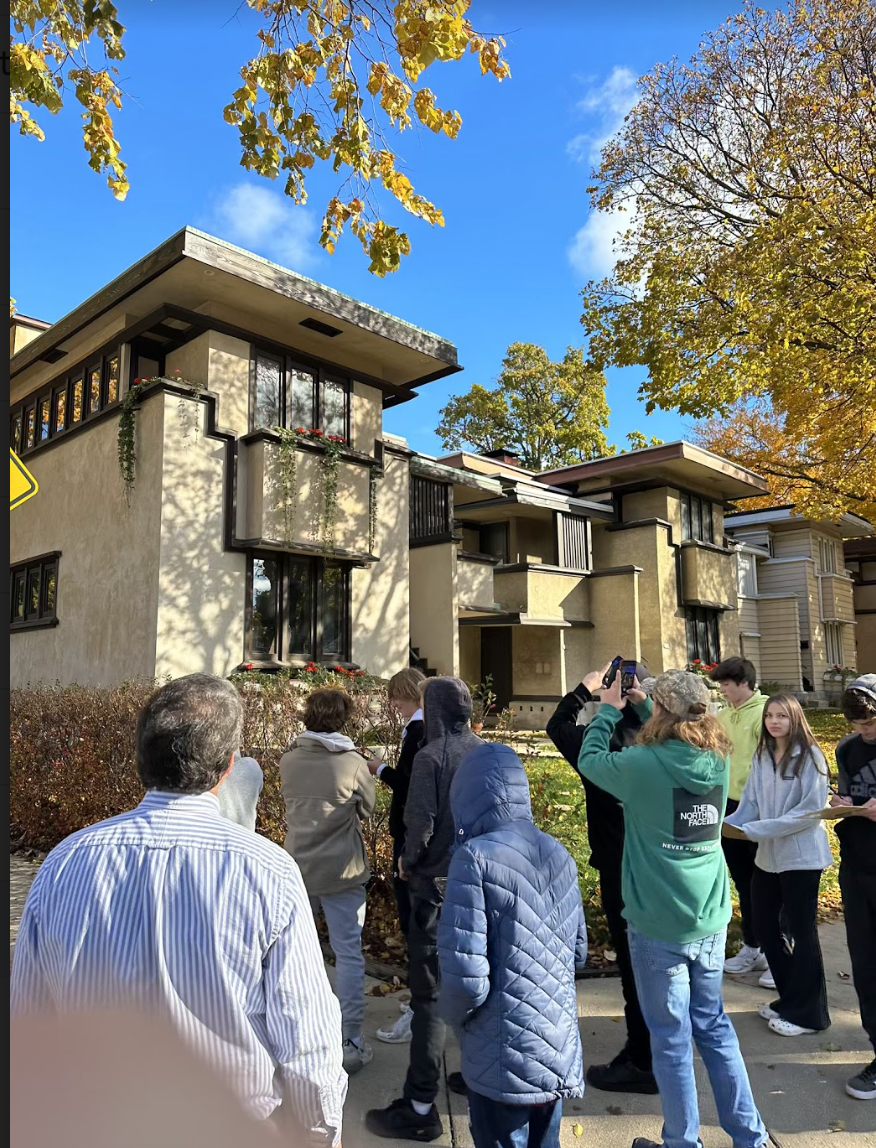
“Learning is a communal experience and that is what this was all about, we learned to work together. We took the Frank Lloyd Wright workshop model and applied it to our class. I think that’s where all these skills are built, and as a teacher, we’re more of coaches, we coach them through difficult situations. We did a lot of the front loading at the beginning of the year with mini projects and getting-to-know-you type of activities that broke the ice that established the tone and trust of moving forward and being successful.

“It all starts with building the bond, building the community, and then from there we can grow, then everything else is easy. Now you’re on a team, you’re not working alone taking notes sitting with a worksheet. You’re working on a team solving problems that adults in the business world are solving, from affordable housing, working with architects focused on this issue of how to deliver something aesthetically pleasing to everyone regardless of wealth, taking a design that would normally only be for wealthy clients and translating in a way so that somebody doesn’t get less.”

What was central to the success of this project was that students felt a sense of belonging and confidence. Cornisha quietly reflects, “I am a person who really doesn’t like talking to people because I’m shy and scared at first. But now I am more comfortable talking with other people, sharing my opinions and interacting with others. This project helped boost my confidence in sharing my ideas, because before I used to just keep them in. There wasn’t one moment that changed this for me, it happened over time.”

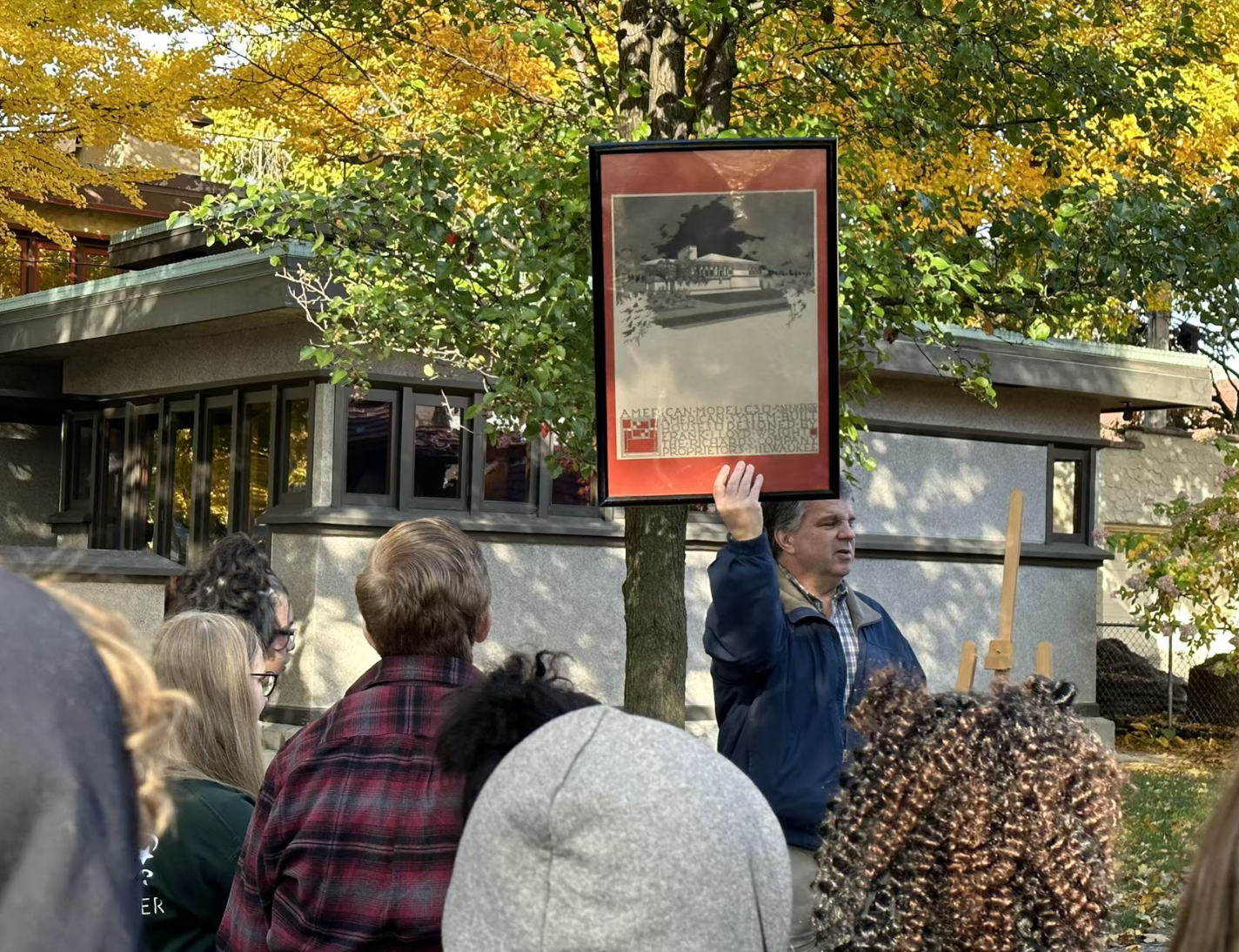
Matt wanted to demystify the working world and so he brought in subject matter experts from the world of architecture and real estate. He also took his students to Frank Lloyd Wright’s Burnham Block building and non-profit where they drew floor plans, built scale models, and developed a design board, and interior housing. This was not a one-and-done visit, and central to these experiences were the authentic relationships students were building with each other and the staff at Burnham Block. Carter states, “With this project, it opened up feeling comfortable with making connections and sharing ideas. The project helped with communication skills, we learned that instead of just debating and fighting it out we would rather consider each other’s ideas. If you have two ideas we could possibly mix them, or at least weigh the pros and cons.”
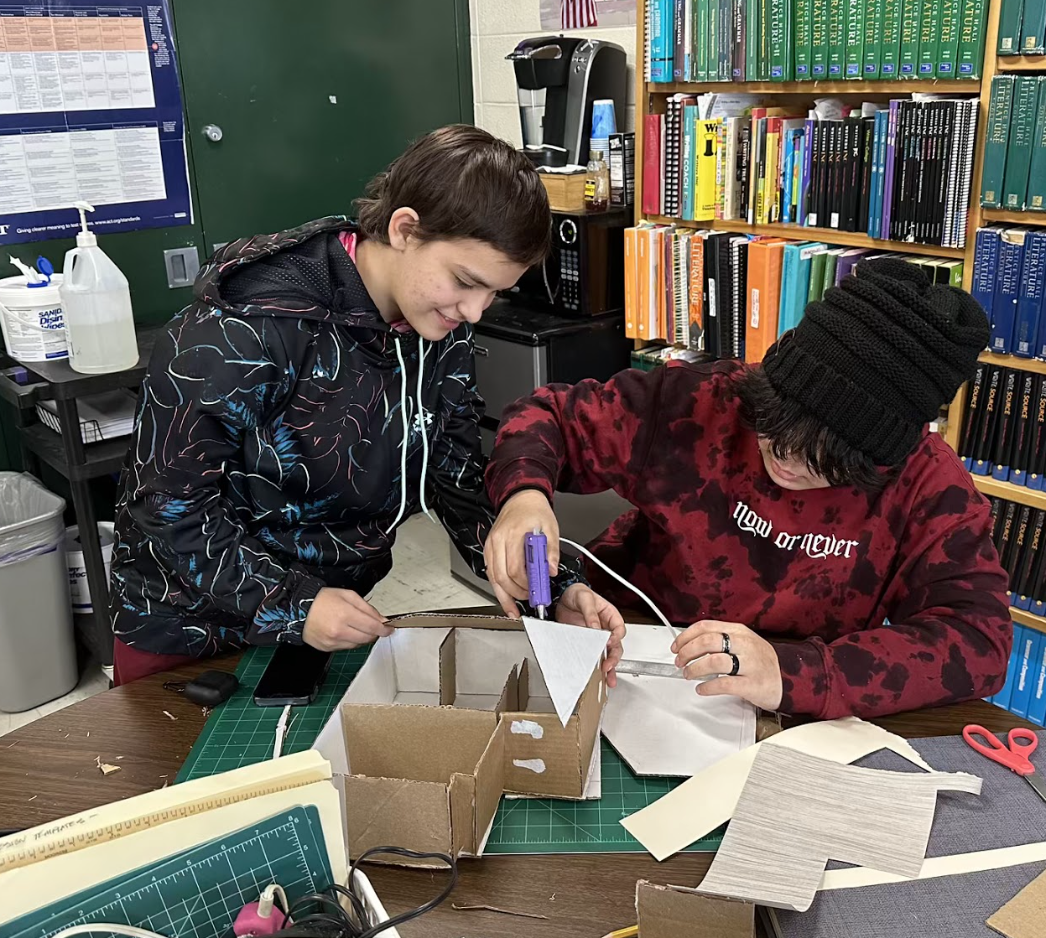
Piggybacking off of this, Zoe reflects, “This project helped with our social skills, kids these days really struggle with these, but we are now so much more open and willing to talk with each other. This project helped me realize that I can work with others, that I now know the process of working with them.” I cannot emphasize enough how much I love these statements. Through authentic relationship building these learners (Matt Included) was gaining team-building skills that are central to professional and personal success in life.

Human Connection + Purposeful Projects

One of the tenets of deeper learning is content mastery and in my work, as an educator, I have found that purposeful projects act as the fanning of a flame in skill growth because learners see the value of content acquisition as it allows them to actually do the work that progresses their project. I have witnessed teams of students get into a flow state, smiles on their faces constantly craving more time to further along their projects. The classroom now embodies a sports team, an artistic collective, and a team of entrepreneurs getting their ideas out into the world.

When talking about her group project Cornisha reflects, “The math part of the project where we had to measure our work, it was thanks to Carter and Zoe. They helped me and sat with me and worked on it, we sat down and talked about how we start by measuring, we were making scale. When they explained it to me it made more sense because they were my classmates and then when we got to building it, it was so much fun.” All of that work at the beginning centered around relationship building and trust, led to that moment Cornisha described. As a teacher and co-learner Matt reflects, “watching their process, seeing their laser focus, the perseverance was off the charts. The point where everyone had their plan, it was like bees in a hive, everyone was focused, everyone was helping each other out, and the conversations were collaborative. All of that pre-work that we did at the beginning of the year came to fruition within the project. This was the first project of the year and for this to happen only a month and a half in, was a high point for me. Wow, that was a moment that really struck me.”

Having an Identity and Living Your Culture

So many schools, public, private, and charter struggle with defining their academic identities. West Allis School District has been so cohesive because it has built a strategy and identity around Deeper Learning, in turn choosing its identity. It has been so successful because it has rooted its culture in human connection. Towards the end of our call, Deidre reflected, “Framing our work around the deeper learning competencies is essential. One of those competencies that are vital for us is an academic mindset, where you feel that sense of belonging so that you want to work hard, so you feel good about yourself so that you want to contribute. Cornisha talked about being quieter and keeping to yourself, but someone created a space that was full of trust where her ideas were welcome. The ultimate goal is that we want students on our watch to feel the kind of confidence that these three have about learning and who they are becoming as people. There was a long pause on the call, and then Cornisha stated, “Putting all of yourself into your group and being active is huge. I am proud that I am more open, wanting to do more new things.”

The post Human Connection in Deeper Learning appeared first on Getting Smart.

from Getting Smart https://www.gettingsmart.com/2023/04/10/human-connection-in-deeper-learning/

From Classroom to Career: Mastering Real-World Competencies through Alternative Learning

By: Russell Cailey

The future direction of education lies at a transition point.

As we move deeper into the 21st century, the way we think about education – and the role that it plays in our lives – must change.

The traditional approach to education has long centered around a set curriculum and standardized testing. This was valid when we sought uniformity and could accurately predict outcomes. But with the rapid advancement of technology and an ever-changing global landscape of challenges and connections, it’s clear that we need to redefine our curricula to explicitly focus on building adaptable, lifelong learners who are adaptable to constant change.

My current role is to rethink education by helping educators create a more dynamic and inclusive education system. This requires a paradigm shift in how we think about education, which is a necessary first step in order to make any long-lasting change to our education system as a whole:

Strategy 1: Portfolio-Based Learning

One way to achieve this paradigm shift is by going beyond project-based learning and highlighting the crucial component of portfolio-based learning.

In portfolio-based learning (defined here by the University of Warwick), students work collaboratively to take ownership of their learning and apply the knowledge directly within practical, real-world settings. It allows students to go beyond merely documenting findings and solving problems.

Portfolio-based learning acts as a comprehensive tool to encourage learners to constantly reflect on their learning experiences, identify their strengths and weaknesses, showcase their creativity and self-expression, and codify how they are uniquely set to respond to the world around them.

Additionally, portfolios provide evidence of a student’s learning journey. Used as a tool for evaluation and assessment, it helps educators make more informed decisions about a student’s progress and potential.

According to the Harvard Business Review, the effectiveness of an exit interview program should be measured by the positive change it generates, regardless of the method used. Upon completion of the portfolio, a purposeful exit interview presents students with an opportunity to uniquely express their learning progress to mentors, fostering valuable feedback and guidance for what lies ahead.

Strategy 2: Competency-Based Learning

Shifting to competency-based learning is another approach that prioritizes the mastery of skills over the completion of predetermined coursework.

For example, educators can utilize levels of skill mastery like novice, specialist, and master, to assess student progress and enable them to learn at their own pace, customizing to individual needs and interests to enable students to learn at their own pace. By combining portfolio-based learning, real-world competencies and mastery-based learning strategies, competency-based learning ensures that students develop the skills and knowledge required to thrive in the real world.

Strategy 3: Technology-Infused Teaching Practices

Another essential component in redefining education is for teachers to incorporate technology into their teaching strategies. Technology can provide a more interactive and engaging learning experience for students, and it can also assist in addressing other teaching challenges, such as learning differences and language acquisition. There is a growing demand for educators to keep pace with the ever-changing technological landscape and provide students with the tools they need to succeed in the future.

Educators can use project-based learning and technology-infused teaching practices to enhance and personalize the learning experience for students. Technology plays a significant role in this experience by facilitating global connections between students and peers/experts, providing remote access to information and resources, and enabling the creation and sharing of student-generated content.

It’s clear that we need to redefine our curricula to explicitly focus on building adaptable, lifelong learners who are adaptable to constant change.

Russell Cailey

Technology-infused interdisciplinary teaching practices include the use of various digital tools and platforms, such as virtual and augmented reality and social media (see a sample of students’ work from Oaxaca, Mexico). These tools allow students to engage in project-based learning experiences that challenge them to apply critical thinking, problem-solving, and creativity to real-world issues.

Strategy 4: Future-Facing Vision

To make these changes, educators and schools need to start small.

It is essential to create a vision of what the future of learning looks like and then work towards that vision. Educators also need visionary leadership to help them experiment with new design fiction, teaching strategies, and creating innovative ways of assessing and predicting the effectiveness of these strategies. Educators should collaborate with other educators to share best practices and develop a community of learners.

Conclusion

The future of education must be redefined to keep pace with the changing times. We must also be willing to imagine the futures that we have the possibility to create.

The traditional approach to education is no longer sufficient in preparing students for the complexities of the real world. Redefining education requires a paradigm shift in how we think about education as a way to empower adaptable, lifelong learners.

By redefining education, we will prepare our students for a future that is ever-changing and full of possibilities. In the process, we may also make teaching joyful again. I’m radically hopeful about the future for our learners.

Russell Cailey is the Managing Director of THINK Learning Studio, an innovative consultancy and training platform shaping modern education around the world. An England native, Russell has spent over two decades as an educator and leader in the world’s first traveling high school (Think Global School) and the Loreto network of global schools, sharing his vision of disrupting the traditional education model and promoting a new, more dynamic approach to learning.

The post From Classroom to Career: Mastering Real-World Competencies through Alternative Learning appeared first on Getting Smart.

from Getting Smart https://www.gettingsmart.com/2023/04/07/from-classroom-to-career-mastering-real-world-competencies-through-alternative-learning/

9 Ways to Explore National Poetry Month

The month of April is a time to look for new ideas for spring and celebrate opportunities for learning and growing. In April we recognize National Poetry Month, which is an annual celebration of poetry in the United States established by the Academy of American Poets in 1996. The goal of this celebration is to raise awareness of the importance and power of poetry in our lives and in the world. Poetry has the power to evoke emotions, boost imagination, and even challenge perspectives, which makes it a great medium for exploring new ideas, developing social awareness and building literacy skills.

Poetry Month is a perfect time of the year for teachers to look for ways to increase student engagement in learning. It is important to encourage our students to read and write more in our classes. Regardless of the content area or grade level taught, all teachers can offer opportunities for students to explore and write poetry.  Whether teachers find content-related poems to read to students or have students boost writing ad creativity skills and write their own poems, there are many resources to explore and ideas for sparking interest in the beauty of poetry. A special day, “Poem In Your Pocket Day” is April 27th. On this day, encourage students to choose or write a poem to share with classmates. You can also create a space in your classroom or use a digital tool to post their poems online!

Ideas to explore

When I was in the seventh grade, we had to create a book of poetry. Our task was to create a poetry book that included a variety of poems we found, a few poems that we wrote and memorize two poems to recite with classmates. I still have the yellow binder with the different poems that I hand-wrote and even added pictures to illustrate. I wrote two poems similar to some of the styles we learned about such as acrostic poems and haikus. I remember how much I enjoyed doing that project. It gave us choice, I felt creative and it led me to love poetry!

To celebrate National Poetry Month, encourage your students to write their own poems. Sometimes it helps to offer different prompts or themes or provide examples to guide students as they develop their critical thinking skills by analyzing and interpreting poems. In elementary or middle school, reading poems to students is also a great way to explore language and creativity. Depending on the grade level you teach, you could also read poetry aloud together and discuss what you like about each poem or compare poetry styles and have a discussion or a debate. In language classes, learning about different poets and styles of poetry also helps to build cultural awareness.  

Poetry has the power to evoke emotions, boost imagination, and even challenge perspectives, which makes it a great medium for exploring new ideas, developing social awareness and building literacy skills.

Rachelle Dené Poth

Some middle school students may enjoy exploring different poetic forms and techniques. Encourage students to choose a type of poem to write such as haikus, sonnets, or maybe free verse. Something fun to do is a poetry slam. Poetry slams are a fun and exciting way to celebrate National Poetry Month. They give students the opportunity to perform their own poems in front of an audience (classmates) and can help build confidence and public speaking skills. Consider organizing a poetry slam at your school or even using tools like Flip for students to record a poetry slam. Depending on your students, you might break them into small groups so that they can collaborate and challenge each other and have fun in the process!  Or divide students into groups and have them write a collaborative poem to share with classmates. Writing poetry together can be a fun and engaging way to encourage creativity and teamwork.

For older students, depending on the content area, choosing to learn about and explore the works of famous poets from different time periods and cultures can be very beneficial. In my Spanish class, we read poems throughout the year and learn about the culture and history connected to the poet and the content of the poem. Students could even participate in writing workshops or attend virtual lectures by poets.

In addition to ideas for the classroom, here are nine resources to explore that offer activities, lesson plans, and many ideas for teachers and students.

  1. Academy of American Poets is full of great resources for educators and families. Explore the site to find a variety of resources and a list of 30 ways to celebrate Poetry Month! On the site, explore Teach this poem to find ideas for students in grades K-12. It has lesson plans and shares 1 poem per week. You can also listen to the poems available on the site.
  2. Book Creator is holding a poetry contest this month that is divided into two age categories: 4-11 and 12-18. Younger students can collaborate and create a book of poetry together. Students can choose the type of poem to add to the book!  Older students can record themselves reading the poems and sharing their work with classmates.  There are even prizes for the contest!
  3. Edpuzzle which is an interactive video lesson platform has lessons available for National Poetry Month that can be quickly added into any classroom. Teachers can find a ready-to-run lesson to use and bring poetry into the classroom right away.
  4. Favorite Poem Project is a site that has people from different roles and perspectives reading their favorite poems. There is a list of famous poems available to choose from with a corresponding video of each person reading it.
  5. Listenwise offers a variety of activities for students to listen to podcasts and then engage in a variety of activities to share their learning. There are some great ideas to celebrate poetry this month!
  6. Nearpod offers a variety of activities and content that can be used to create an interactive lesson. In celebration of National Poetry Month, Nearpod has lessons to teach about poetry. You can even use the drag-and-drop feature to create magnetic poetry right in Nearpod. Also with Flocabulary, there are poetry lessons to get students up and moving.  Students can use Lyric Lab to write their own poems!
  7. Reading Rockets offers a variety of resources to boost literacy and has some poems and great ideas to celebrate the month!  
  8. Read, Write, Think for K-12 has lesson plans and libraries with resources for each grade band.  One idea is to select students to be “Poets for a Day” and share their favorite poems or maybe they can write their own poems to share.
  9. Verse By Verse uses AI to write a poem. You select up to 3 poets and the style, and a number of syllables and provide some input. It then generates a poem for you based on your selections.

Teachers can find a lot of resources from these sites and also look at the Poets.org website for more resources and activities. There are also some fun activities via the Bored Teachers site to engage students in movement and excitement for poetry. Beyond just reading the poems, students can compare poems and debate about the styles or the meaning. Students can also read poems and then design art to reflect the poem’s message. There are so many ways to celebrate National Poetry Month and develop an appreciation for the beauty of poetry. Follow #NationalPoetryMonth to learn new ideas.

The post 9 Ways to Explore National Poetry Month appeared first on Getting Smart.

from Getting Smart https://www.gettingsmart.com/2023/04/07/9-ways-to-explore-national-poetry-month/

Figuring Out What to Prioritize as a School Principal

As a school principal, figuring out what to prioritize can be a daunting task. There are so many different areas that require attention, from student achievement to staff development to school safety. In this blog, we will explore strategies for figuring out what to prioritize as a school principal.

Firstly, it’s important to understand your school’s vision and mission. This includes understanding the values and goals of your school and how they align with the needs of your community. Use this understanding to guide your decision-making and prioritize areas that support your school’s mission and vision.

Another strategy for figuring out what to prioritize is to analyze data. This includes data on student achievement, attendance, behavior, and staff performance. Analyzing this data can help identify areas of strength and weakness and prioritize areas that require improvement. Use this data to set goals and develop action plans for improving student outcomes.

Collaboration and communication are also essential for figuring out what to prioritize. Engage in regular communication with your staff, parents, and community to understand their needs and concerns. Use this feedback to prioritize areas that are most important to your stakeholders.

Effective time management is another critical component of prioritizing as a school principal. Develop a schedule that allows you to balance your responsibilities and prioritize areas that require your attention. This includes delegating tasks to your team and being efficient with your time.

Another strategy for prioritizing is to focus on the areas that have the greatest impact on student achievement. This includes focusing on areas such as curriculum development, instruction, and assessment. Ensure that your staff has the necessary resources and support to improve student outcomes in these areas.

It’s also essential to prioritize staff development and support. Provide your staff with ongoing professional development opportunities and support them in their efforts to improve student outcomes. This includes providing feedback and coaching and recognizing their successes.

Finally, prioritize school safety and security. Develop and implement policies and procedures that ensure the safety and well-being of your students and staff. This includes developing emergency plans, providing training on safety procedures, and regularly reviewing and updating policies.

Figuring out what to prioritize as a school principal can be a challenging task. To do so effectively, it’s essential to understand your school’s mission and vision, analyze data, collaborate and communicate with stakeholders, manage your time effectively, focus on areas that have the greatest impact on student achievement, prioritize staff development and support, and prioritize school safety and security. By focusing on these areas, you can guide your school towards success and improve outcomes for your students and staff.

Tips for Interviewing for a Teaching Role

Interviewing for a teaching role can be a nerve-wracking experience, especially if it’s your first time. Preparing well and projecting confidence during the interview process is essential. 

Research the school and the position

Before the interview, take some time to research the school you’re applying to and the role you’re interviewing for. Visit the school’s website, read its mission statement, and learn about its educational philosophy. Have a clear understanding of the position’s requirements and responsibilities so that you can tailor your responses accordingly.

Prepare your responses to common questions

Many teaching job interviews follow a standard format, with questions like, “Tell us about your teaching experience,” “How do you handle classroom management?” or “How do you differentiate instruction for students with diverse needs?” Preparing your responses to these questions in advance is essential, so you’re not caught off guard during the interview. Practice answering these questions with a friend or family member, make sure your responses are concise and clear, and demonstrate your teaching skills and experience.

Talk about your teaching philosophy

Teaching is a profession that requires a lot of thought and planning, so it’s crucial to be able to articulate your teaching philosophy. Be prepared to discuss your approach to education and your goals for your students. Ensure your philosophy aligns with the school’s mission and educational philosophy.

Highlight your experience working with diverse populations

Many schools seek teachers with experience working with diverse populations, including students with disabilities and students from different cultural backgrounds. Be sure to highlight any experience working with these populations and provide specific examples of how you have adapted your teaching strategies to meet their needs.

Demonstrate your technology skills

In today’s increasingly digital world, having strong technical skills as a teacher is essential. Ensure you’re familiar with the latest educational technology tools and platforms, and be prepared to discuss how you incorporate technology into your teaching. Provide specific examples of how you have used technology to enhance student learning and engagement.

Show your passion for teaching

Teaching is a challenging but rewarding profession, and schools are looking for teachers who are passionate about what they do. Be prepared to demonstrate your enthusiasm for teaching and dedication to your students. Share specific examples of how you have gone above and beyond for your students, such as staying after school to provide extra help or creating engaging lesson plans that spark student interest.

Preparing for a teaching job interview requires a lot of research, planning, and practice. By following these tips, you can present yourself as a confident and competent candidate well-suited for the position.

Design a site like this with WordPress.com
Get started