Communities Develop Their Future Workforce Through NAF Academies

NAF, a national nonprofit that began in 1980, brings education, business, and community leaders together to help students become college, career, and future ready. NAF takes a three-prong approach: industry-focused curriculum, work-based learning and real-world industry connections; all of these together help students visualize and create their future.

NAF is not extra, it is totally integrated; students go to all of their classes in small community cohorts throughout the day within a NAF Academy (this is the ideal case but they do have a flexible design that can fit into all kinds of existing public schools). It is a wall-to-wall model with five pathways: Engineering, Finance, Health Sciences, Hospitality and Tourism, and Information Technology. Essential to this design are NAF advisory boards, which are local collaborations between schools and the business community to develop the future workforce through curriculum integration, work-based learning opportunities, and mentorships. NAF created a work-based learning tracker that really looks at the outcomes of what kids get out of the experience, besides just a list of things they were involved in. Over the past five years, NAF has seen a growing group of other themes too (about 10% of academies now); sometimes student and community desires to drive more pathways to be created for specific community industries and needs.

Students can earn a NAFTrack Certification in all approved courses, a credential that signifies to employers that a student is college and career ready. There are three components: a minimum of eighty hours of a qualifying internship, four semesters of career-focused courses and meeting the district requirements for high school graduation. There is not only one pathway to a NAFTrack Certification; besides the curriculum utilized in its five academy pathways, NAF accepts third-party and state-aligned courses such as Advanced Placement (AP) and International Baccalaureate (IB), early college/dual credit, and courses through Project Lead the Way,

Students can earn a NAFTrack Certification in all approved courses, a credential which signifies to employers that a student is college and career ready.

Marissa Wicklund

NAF shifted to a district approach so that there is more community buy-in and engagement; when multiple academies are in one place resources can be shared and the most sustainable model is created. Even community business partners have decided to use NAF as their workforce development strategy because of the ability to be a tailored solution targeted towards a business partner’s needs. One such community-driven example kicked off in early 2020 in Puerto Rico, when NAF and UTC partnered to create two NAF Academies of Engineering. “UTC is incredibly proud to partner with NAF, an organization that is transforming the STEM learning environment with tangible, hands-on learning opportunities for high school students in underserved communities,” said Greg Hayes, UTC Chairman and CEO. “These academies will expose generations of students in Puerto Rico to STEM classes, mentorships and company internships, bringing to life what a future career in engineering and technology can look like.”

NAF continues to see their programs grow (even during the pandemic) and have further explored how to use technology to provide more access and opportunity for more kids in smaller or remote places where resources are more limited (this includes the idea to create more virtual internship opportunities with business partners). KnoPro, a tech-based project that NAF developed, is an internship-like experience that is totally self-guided where students are given Challenges and Skillbuilders, such as the AI For Good Challenge. It was co-designed with teachers and business partners to provide students with real-world, project-based career readiness experiences.

Coming soon! The Open Data Index for Schools (ODIS), powered by NAF in collaboration with the NYU Marron Institute of Urban Management; a resource that will more strongly clarify the challenges and stressors that communities face in order to offer more targeted support for high school students. You can sign up here to be notified when it launches and to receive more information.

The post Communities Develop Their Future Workforce Through NAF Academies appeared first on Getting Smart.

from Getting Smart https://www.gettingsmart.com/2023/05/02/communities-develop-their-future-workforce-through-naf-academies/

From Designing Project-Based Learning to Designing Professional Development

By: Matthew Leader

One of the things I most appreciate about working at High Tech High (HTH) is that, in addition to teaching middle and high school students throughout my tenure, I’ve been able to help other teachers incorporate project-based learning (PBL) into their own practice. PBL is an integral part of our approach to teaching and learning and, over the years, our organization has grown from a single high school to 16 elementary, middle, and high schools, as well as a graduate school of education (where I earned my own master’s degree).

Since 2019, I’ve had the opportunity to work with educators from the Ulster Board of Cooperative Educational Services (BOCES) as part of a partnership that has connected teachers and students from San Diego, CA, to New Paltz, NY. Here’s how it works.

From Teacher to Trainer

High Tech High is a publicly funded charter school organization centered on PBL and guided by four design principles of equity, personalization, authentic work, and collaborative design. As our organization has expanded to add more schools, I’ve worked at several of our campuses, at both the high school and middle school level, over the years.

Though our funding comes from a statewide benefit for charter schools, we are embedded in the San Diego Unified School District. Students apply to attend and are selected through a lottery. A certain percentage of students from each zip code from across San Diego County is accepted to ensure a student body with diverse demographic and socioeconomic backgrounds.

As more educators outside our school became interested in project-based learning, we began offering PBL 101 professional learning opportunities to other schools. In the beginning, these usually consisted of teachers visiting our campus and seeing how we worked with students. Over time, some of us teachers had the opportunity to visit other schools to share an overview, and later, we began offering professional development facilitation through our graduate school and coaching as a follow-up. Today, our graduate school offers a range of other in-person and online events to further project-based learning through collaboration with other educators and schools around the world.

It’s work that comes on top of my teaching time, but I love it. We have many unique opportunities at HTH, and being able to work with other schools is one of the many things that I enjoy.

Partnering with Ulster BOCES

We began working with Ulster BOCES in 2019. Having an ongoing relationship with teachers over the years, and seeing new teachers come in as ideas have been disseminated through their district, has been amazing.

The first time that we went to Ulster, we worked with a single-component district. It was productive because they had visited HTH, were familiar with how we did things and knew exactly what they wanted from us. It was a really good fit in terms of us sharing what we do and then receiving feedback. I’ve been brought out to coach there six or seven times now, and it’s definitely a two-way relationship in that I always come back with new ideas for my own practice. After seeing teachers from Ulster’s Hudson Valley Pathway Academy (P-TECH) facilitate an exhibition of student work in front of their community project partners at Viking Packaging, for example, I started implementing their format for panel discussions of student products. Their system for feedback specific to product improvement was great, with benefits to both students and community partners and I have used it ever since.

About 50-60 educators attend the professional development workshops we’ve offered at Ulster this year, which were held in October and January, with one more to go in May. In the professional development sessions, we have everyone from administrators to first-year teachers. It’s difficult to get into solving specific problems in that context, but it provides a good look at the big picture. If a school is really going to dig into PBL, getting everyone together to see how it works from a range of perspectives is useful to everyone involved, even if they’re each only going to use the information in specific ways.

Coaching sessions are attended more on a drop-in basis by teachers who feel a need for some additional support. These are held monthly and attended by different people each time. There are usually about 15 educators in each session.

One of the highlights of working with Ulster has been the freedom they give us to share what we think will be best for their teachers. Having the autonomy as a designer of professional development to be able to ask what is going to work for each specific group allows us to have workshops that are as effective as possible. We have a lot of meetings before the early sessions, especially to talk about what is happening at each new school coming in.

Hudson Valley P-TECH has been a big collaborator from 2019 to today. We’ve collaborated on projects that allowed our students to meet their students, which has been really meaningful. A great example of project collaboration came during the pandemic, when another HTH teacher, Matt Haupert, collaborated with Steve Mason, a P-TECH teacher, to start a virtual project-based summer school course in which students from classes in the Hudson Valley and San Diego worked together to create their own online media publication called Teen Voices. Students worked with a variety of professional journalists and developed everything for the site, including written content, graphic design, and website layout.

A True Collaboration

We spend a lot of time planning the professional development sessions, with the first and third taking place in New York, and the second here in California. The coaching takes place monthly, which provides a great opportunity for us to receive feedback to refine further workshops. Teachers drop into those coaching sessions to get help on whatever they’re working on, so we can plan activities that are more likely to help them further their practice in the next session or the next workshop. During these coaching sessions, we have worked on elements of PBL such as scaffolding critique and revision lessons, ideating for launch ideas and setting up plans for school exhibitions. Most recently we discussed collaboration between teachers and hospital staff at Health Alliance as part of an upcoming health project.

Coaching is collaborative work. The teachers who show up have questions about how they are implementing PBL ideas, but once the questions are out there, we shift and begin working together. It’s a process of asking how we might meet these challenges and then working together collaboratively to push it forward. It’s not me saying, “This is what I do, so you should do this.” It’s me saying, “This is what worked for me as a teacher,” and then the other educators in the room sharing ideas that might also work. We’re all teachers, all dealing with the same things, so how do we make it work? As a teacher who’s been on the other end of coaching myself, I appreciate having an outside voice that isn’t embedded in my classroom to act as a sounding board and source of feedback.

I love working at High Tech High because I get to design with and for my students, and that means we’re always doing something innovative and new. I love coaching opportunities like the one I’ve enjoyed with Ulster for the same reasons. I get to work with teachers who are trying to solve a range of challenges and it’s always exciting to see how we’ll work together to find solutions.

Matthew Leader is a biology teacher at High Tech High. A native of San Diego, he received a Bachelor of Science degree from the University of California at San Diego in General Biology and Teaching Credentials at San Diego State University. Matthew is an Americorps alumni, Socrates fellow alumni and he completed a Masters in Education in Teacher Leadership at the HTH Graduate School of Education. He can be reached at mleader@hightechhigh.org

The post From Designing Project-Based Learning to Designing Professional Development appeared first on Getting Smart.

from Getting Smart https://www.gettingsmart.com/2023/05/01/from-designing-project-based-learning-to-designing-professional-development/

Inviting Learners into Work That Matters

A few years ago, Dr. Jal Mehta, Harvard GSE, and Dr. Sarah Fine, High Tech High GSE went In Search of Deeper Learning. They didn’t find much, at least not at scale in big systems. They did find bright spots but it was usually individual teachers doing cool things often around the edges of big systems and in peripheral spaces.

Like Mehta and Fine, we’ve found pockets of excellence in three dozen high school visits this spring. And where we’ve spotted evidence of deeper learning (i.e., engagement, critical thinking, excellent public products) it’s been work that matters to the learner and their community– it’s relevant, purposeful, and consequential work.

Following are two dozen examples of work that matters in six categories (projects, public, place, purpose, pathways and possibilities).

Projects that Engage

High Tech High in San Diego is the granddaddy of project-based learning with the most interesting mashups particularly art infusions (see feature and podcast and Changing the Subject: Twenty Years of Projects from High Tech High).

Design Tech High in Redwood City arms freshmen with design thinking and prototyping skills so that, as seniors, they can complete engineering projects that benefit the community (see feature and podcast).

Iowa BIG in Cedar Rapids is a half-day option for juniors and seniors from three districts to conduct community-connected projects for core credit (see feature and podcast).

Purdue Polytechnic High School is best-in-class at client-connected projects. Students collaborate with fellow classmates, coaches and industry mentors to successfully complete projects that are designed by industry partners. These projects challenge students to dive deep into research, gather data, use design thinking to develop solutions, conduct trials, build prototypes and determine commercial viability. Examples are shown below. (See podcast.)
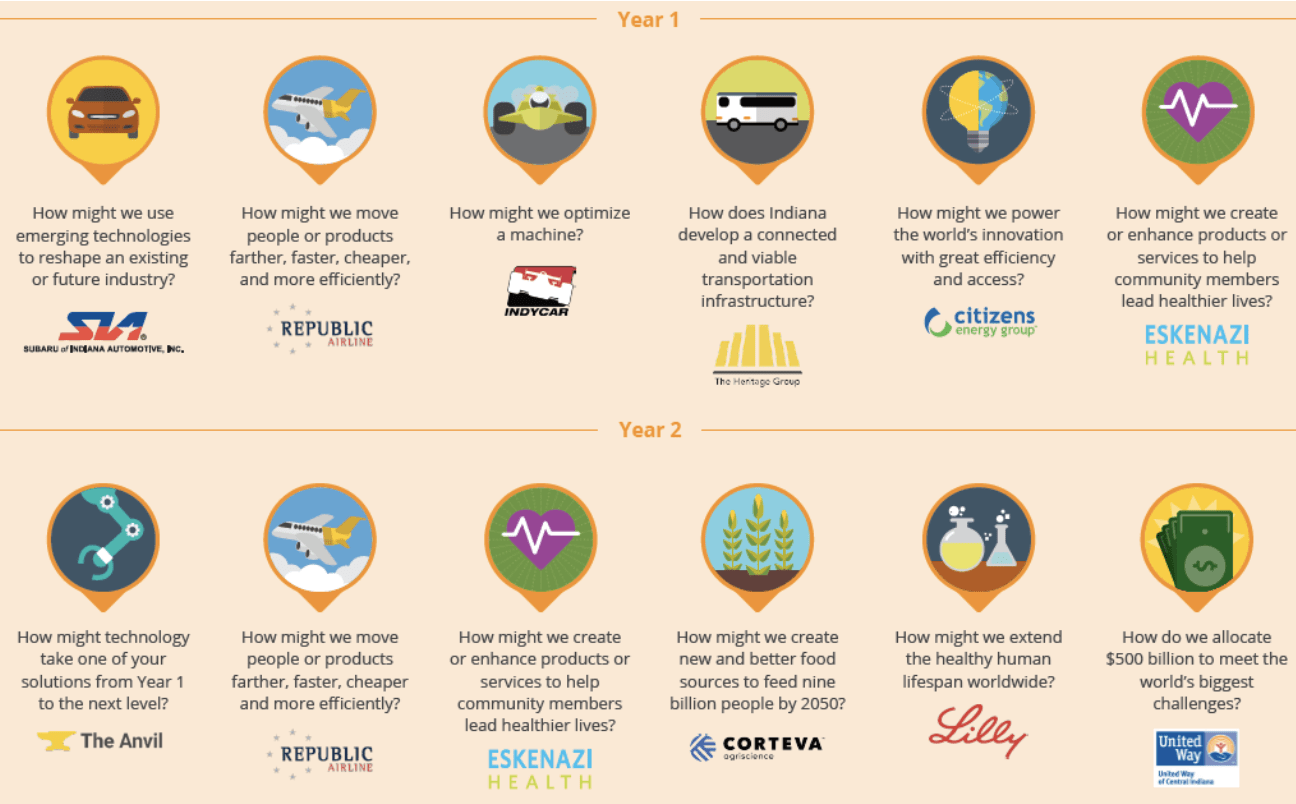
In the last three years of the Jeffco Open School in which each student demonstrates readiness to function as an adult by completing six passages. students work with their advisors to sequence, plan, and conduct passages.

  • Adventure Passage: a personal quest–the mythical hero’s journey–that involves leaving the familiar, facing challenges, and experiencing success.
  • Career Exploration Passage: explore a career related to interests, passions, talents, and experiences.
  • Creativity Passage: explore a concept, develop a design, and carry out a process to

make a unique personal final product.

  • Global Awareness Passage: the opportunity to see the world and help “create the world as it ought to be.”
  • Logical Inquiry Passage: a mental challenge, following a process to discover an answer to a question or problem of personal relevance. The process includes framing and investigating a problem.
  • Practical Skills Passage: develop a useful skill that will yield a product. It could include learning a second language, personal finance, or cooking.

Public Work

Palo Alto High School Media Arts is the biggest and best journalism program in the country with a dozen student-led publications including newspaper, online,  broadcast, yearbook, arts/culture, video, and graphic design. Each of the Paly publications is a thriving brand with a sustainable business model. A journalism incubator engages student teams in developing new publications or reformatting old publications (see feature).

Real Work Learning in Kansas City engages 35 systems and over 80,000 students in client projects and entrepreneurial experiences each with a public audience or customer group. A Great example is the DRIVE projects in English 4 at Ray-Pec High. Students use design thinking to develop a solution and build competencies. Public presentations were held on April 19. (see  RWL Case Study.)

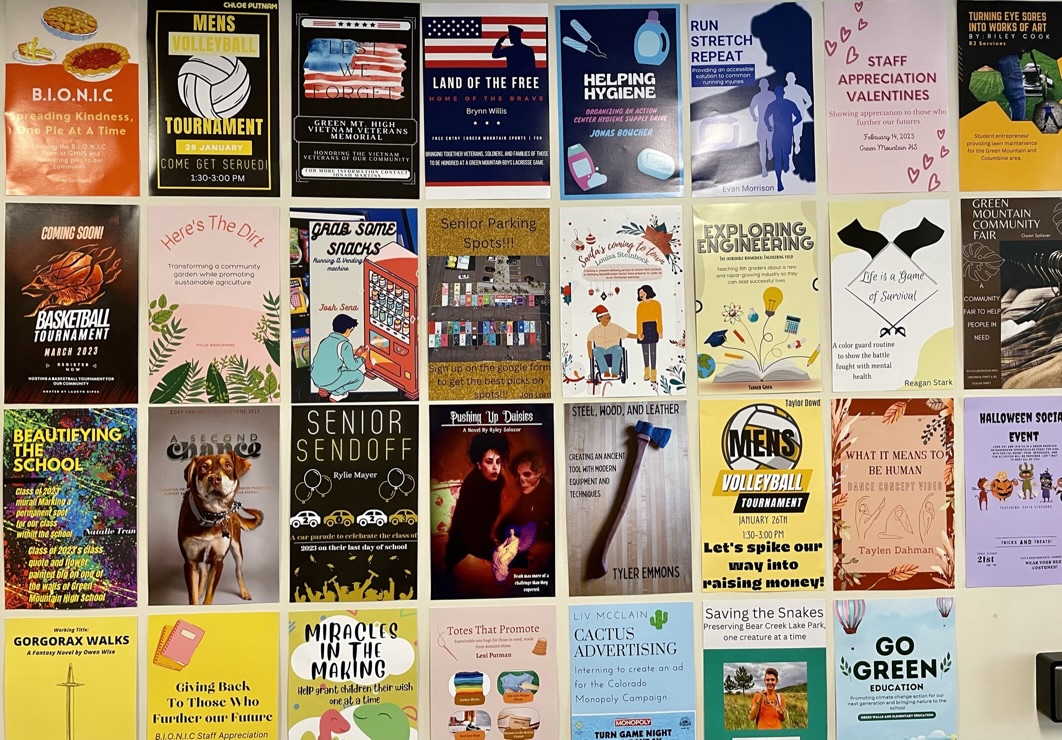
At Green Mountain High in Jefferson County, Colorado seniors complete capstone projects “designed to showcase each student’s academic achievement, enduring knowledge, and unique talents.” In preparation for their public presentation, students develop a poster summarizing their work and it makes a cool capstone collage (below).
In St Vrain Valley Schools in Longmont, Colorado 200 robotics teams from 60 schools compete in public competitions.  In June, SVVSD will host the world championships in underwater robotics

OK, we’re science fair geeks, we love how science fairs support student-driven deep dives and public products. Society for Science hosts the Regeneron International Science and Engineering Fair (ISEF) and Regeneron Science Talent Search (see June podcast and November podcast).

Last but not least in the public work category are powerful experiences in visual and performing arts culminating in public events. We saw great art classes, bands and choirs, and drama programs in Jeffco last month at Evergreen, Lakewood, Golden, Ralston Valley, and Standley Lake High Schools. (See podcast with the University of Arizona profs on why front and back-of-house roles in the performing arts are so valuable.)

Power of Place

Building on lessons from Teton Science Schools, there are a growing number of schools leveraging the power of place to personalize learning. (see Power of Place campaign and book)

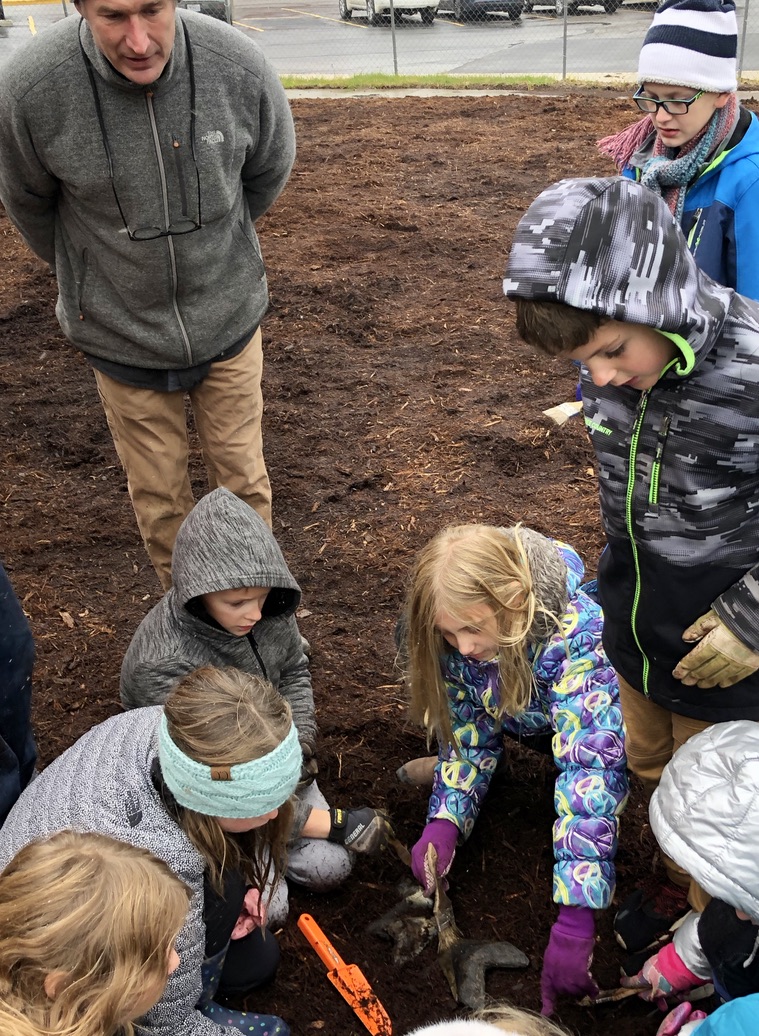
Kearney School District north of Kansas City created Learning and Exploring through Nature and Science (LENS), a middle-grade microschool inspired by paleo-artist Gary Staab (that’s him supervising a fossil dig below).
Crosstown High Project 901 is a freshman AP Geography/English block that combines local tours, problem finding, a research project, design thinking and a community impact project–a great example of work that matters because it brings voice, choice, and place into a core academic project.

Each year, teacher Rachel Bahr at The Academy of Science and Entrepreneurship invites her English 11 class to share their own sense of place in a project with a public product. The work is so compelling that it’s often shared by the local newspaper. ASE is one of  21 New Tech Network schools in Indiana committed to team-taught project-based learning.

Purpose

In diverse east San Diego County, Cajon Valley USD learners engage in 54 immersive career exploration units K-8. Each unit includes exploration, simulation, meet-a-pro, and practice. After each unit, learners reflect on their strengths, interests and values and how they lined up with the possible future. It’s the best example of systematic vocational identity development we’ve seen (see World of Work for more).

Thanks to the Cajon Valley team and sponsors for recently hosting the World of Work Summit (see recap). Delegations from Indiana, Arkansas, Colorado, and Pennsylvania described how the World of Work is Surging in their regions.

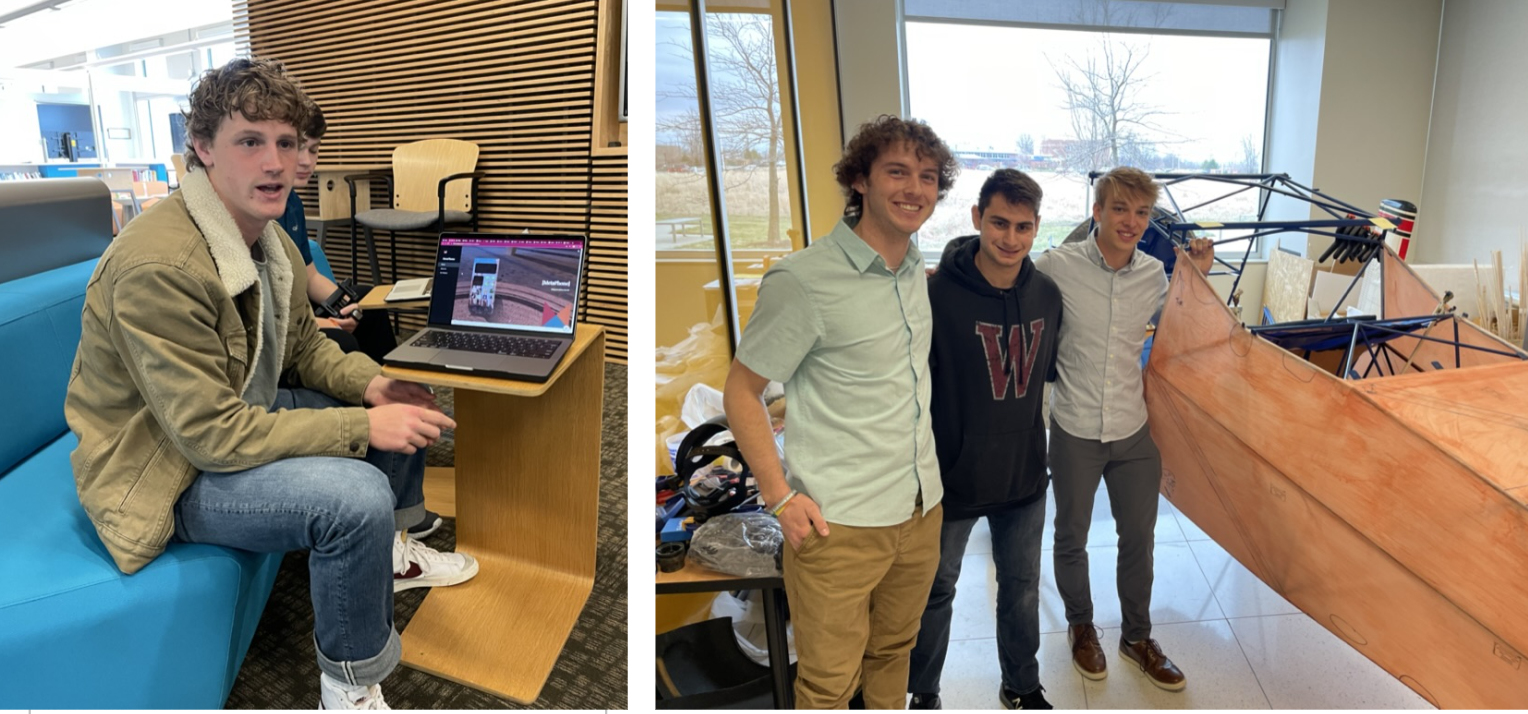
Blue Valley CAPS is a next-gen career center south of Kansas City where learners engage in purposeful professions-based learning. Through courses, projects, internships, and entrepreneurial experiences learners try on possible futures. On my last visit, right inside the front door, I met a young man building a mobile app business next to three students building an airplane (below).
Professions-based learning is catching on, there are 100 member sites (representing 200 school districts) in the CAPS Network. The network was just recognized by HundrED as a global innovation.

Pathways to Opportunity

Illinois’ District 214 is known for helping every learner find or create a pathway to opportunity. The D214 Center for Career Discovery engages with more than 1,000 industry partners to support more than 2,500 student work-based learning and career exploration opportunities annually. Each of the six comprehensive high schools supports strong community-connected pathways including the Advanced Manufacturing Lab at Elk Grove High School (below).
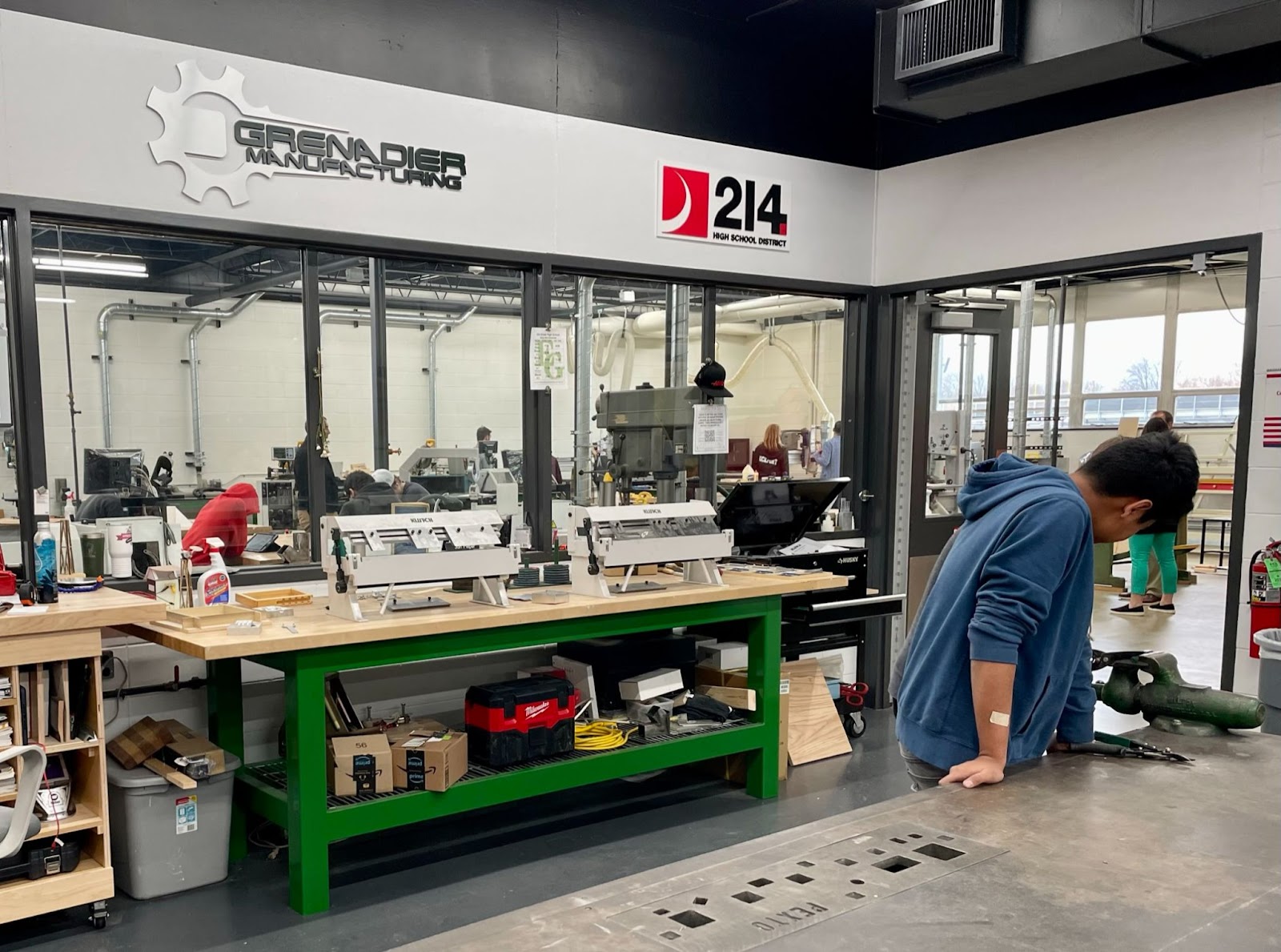
On a recent visit to D214, we observed a high degree of student engagement and a sense that students were doing work that mattered in part because they had played an active role in pathway selection/shaping.

Indiana Graduates Prepared to Succeed (GPS) is a framework that emerged from a statewide dialog in 2021. It yielded five priority skills and multiple Graduation Pathways. The Indiana class of 2023 will be the first to individualize their graduation requirements to align with their future goals of employment, enrollment, or enlistment leading to service. We think GPS will lead to more Indiana youth doing work that matters to them and their postsecondary plans.

Indiana certifies schools with STEM pathways including inquiry, project-based learning, community engagement, entrepreneurship, student-centered classrooms, integration into humanities and related arts and out-of-school STEM activities. The Metropolitan School District of Lawrence Township (Indianapolis) is all in on STEM pathways for all learners. They use PLTW Launch as the core STEM K-6 curriculum and extend it to their JumpStart summer program.

Alive with Possibility

Schools are alive with possibility value and develop an entrepreneurial mindset. In Difference Making we described dozens of schools, programs and colleges that encourage (as the KEEN network says) opportunity recognition, solution design and impact delivery (see feature).
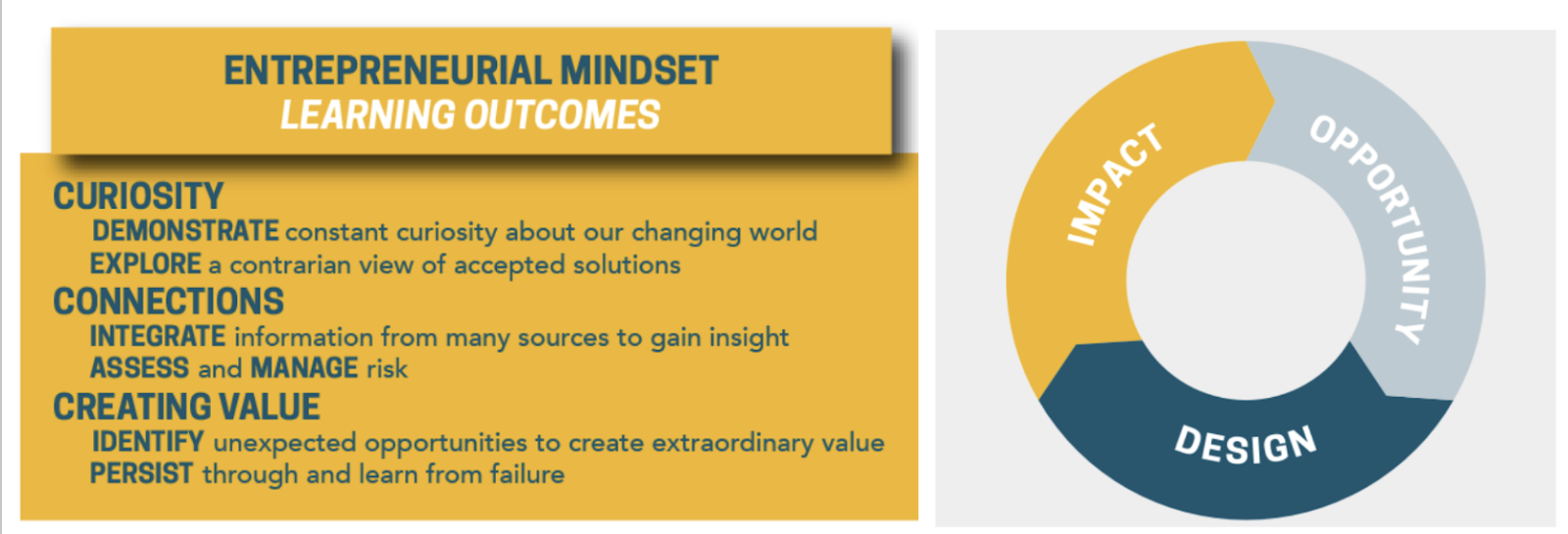
We recently visited Barrington High in suburban Chicago (featured image) and observed

INCubatoredu an entrepreneurship course from Uncharted Learning. The course was piloted at Barrington 10 years ago and it’s now used in more than 300 schools and has allowed 100,000 students to experience entrepreneurship.

And, speaking of Indiana, the biggest and best high school pitch competition in the country is Innovate withIN from StartEdUp which “empowers a generation of leaders with an ‘opportunities are everywhere’ mindset, fueling innovation and hope for our communities, country and world.”

Conclusions

Students and families want more engagement. In a variety of ways, they are asking for more work that matters.

A recent Populace study showed less interest in college as the goal of high school and more interest in developing practical skills. The study suggests “Better” is no longer the goal — “Different” is an individualized education is the future, one-size-fits-all is the past.

Recent research by American Student Assistance suggests that nearly seven in 10 high school students feel they would have benefited from more career exploration in middle or high school. Two-thirds of them believe that success is having a job aligned with their passion and, for most, that’s a career that helps others and connects with social causes. Almost half of Gen Z respondents would prefer to be an entrepreneur (a huge increase from pre-pandemic levels).

Inviting learners into work that matters (projects, public, place, purpose, pathways and possibilities) requires giving up some control, making space, and at least periodically inviting co-authored learning experiences. It means valuing broader definitions of success, developing b broader dashboards of success metrics, and equipping learners to describe their growth and capabilities (see Credentialing for All).

The post Inviting Learners into Work That Matters appeared first on Getting Smart.

from Getting Smart https://www.gettingsmart.com/2023/04/28/inviting-learners-into-work-that-matters/
High Impact Startups Spotted at ASU+GSV

The ASU+GSV Summit last week was bigger and better than ever. The premier innovations-in-learning conference launched in 2010 in a crowded admin building on the ASU campus. It graduated to the Grand Hyatt on the San Diego waterfront where 7,000 edleaders, innovators, and investors gathered. 

In addition to great keynotes and valuable sessions, ASU+GSV has become the biggest edtech pitch competition. This year, the GSV Cup brought in over 900 global applicants. The Elite 200 semifinalists were evaluated by an expert panel of more than 200 judges and included almost half founders of color, half women and more than 40% international. 

The $1 million prize package was split among the three finalists: 

  • Maro is making mental health an asset to student success instead of a roadblock, 
  • Vinco a company empowering LATAM’s workforce through education, and 
  • Luca who offers a gamified learning platform with own-made content to teachers and students) placed third in the competition.

We spoke with four startups of note 

  • Transeo manages work-based learning and learner pathways. The idea emerged from D214 in Chicago (which we visited earlier this month). 
  • LifeLab Studio is a growth-as-a-service platform spinout from ASU launched by Dr Sasha Barab. Focused on value creation, a sense of belonging, and personal life transformation, LifeLab is helping justice-involved youth (both detained and on parole) experience big gains in life skills. 
  • Thinkist supports metasocratic peer tutoring. They train college and high school students to tutor middle-grade learners making it a valuable experience for mentors and mentees and a scalable and sustainable approach to high-dose tutoring. 
  • Skillsline helps young people develop job-ready skills. After six years of leading the ASU+GSV Summit, Courtney Reilly bootstrapped Skillsline which provides learning experiences to partners including Jobs for America’s Graduates-Louisiana. 

The ASU+GSV Summit last week was bigger and better than ever.

Tom Vander Ark

Nonprofit Startups 

We also met three exciting new nonprofit startups at ASU+GSV: 

  • Flare Education provides a 36-month program skill-building pathway that includes three internship experiences at Boston-based employers. Students receive a $20 per hour stipend for every hour engaged in the program. 
  • unCommon Construction uses the build process to empower youth with the skills, network, resources, and experience to lead the workforce after high school or college.
  • Data Science 4 Everyone is a campaign launched by the University of Chicago Center for RISC. They encourage the adoption of data science standards and integration of data science learning experiences across the k-12 curriculum.    

For more on for-purpose business, check out the inaugural SMU+GSV Summit in Dallas, May 22-24. Join global leaders from across investment, government, entrepreneurship, and philanthropy communities to shape the future of business.

The post High Impact Startups Spotted at ASU+GSV appeared first on Getting Smart.

from Getting Smart https://www.gettingsmart.com/2023/04/27/high-impact-startups-spotted-at-asugsv/

Empowering Educators: The Equity for Wellness Summit

Background of Wellness for Educators 

On any given day articles related to teacher burnout, retention of educators, and staff dissatisfaction are overflowing on any media outlet. Rarely are solutions shared or silver linings highlighted, which is why the online Equity for Wellness Summit is essential. Over the course of three days, teachers, administrators, researchers, and practitioners shared perspectives and resources tailored to schools and their staff addressing those in the space of education and their wellness. Acknowledging the varied schedules and demands of attendees, the entire conference was online and recorded, demonstrating a true commitment to accessibility and equity. 

Origins of Equity in Wellness Summit 

Many recent efforts and initiatives connected to educator well-being were a direct result of the global pandemic, but Wellness for Educators planted its seed in 2018. A direct result of Wellness for Educators’ founder and executive director Kathryn Kennedy’s mental health and well-being journey the nonprofit organization started as a small effort by Kathryn and her sisters Mary and Liz who created short videos, podcasts, and articles for educators. When the pandemic hit, Kathryn knew the next few years would be vital for those in the education space to have resources that centered on mental health and well-being, so in December of 2020 Wellness for Educators expanded their offerings and started serving the field more intentionally. Members of the organization include licensed mental health practitioners, educators, and certified somatic and mind-body coaches and practitioners who embody diversity and champion the use of equitable wellness practices for the field of education.

Recently, Wellness for Educators hosted its first conference, the Equity in Wellness Summit, which served as a collaborative effort between organizations invested in the growth, development, and sustainability of healthy individuals who work in any capacity of education. The summit was co-sponsored by other advocates in the equity in education wellness space, including the University of Redlands’ Center for Educational Justice and Voice4Equity

The Equity for Wellness Summit was a three-day, virtual event that brought together inspiring educators, licensed mental health professionals, researchers, somatic professionals, and other experts who are engaging at the intersection of equity, mental health and wellbeing, and education. The summit was intentionally structured to be a collection of panel discussions, experiential wellness sessions, and community-based reflection and shared spaces. The summit also included interactive mind-body sessions, webinars, and additional informational videos for reference. All attendees were given access to recordings of each session once the summit ended.

Session Summarization/ Key Findings 

Anyone who’s attended a conference knows the keynote sets the tone. When Dr. Dena Simmons, the founder of LiberatED, embeds student voice, love, joy, and liberation in her powerful opening remarks, it’s clear the following days will contain the same notes of community, collaboration, healing, and support. Simmons launched the summit by sharing what makes her feel free and the importance of creating spaces for students to feel the same by incorporating clips of students personally expressing what makes them feel free. She then shifted to talk about social-emotional learning and wellness and even provided a caution that “If we are not careful SEL, can be white supremacy with a hug.” She reiterated that the conference focused on wellness to allow for a more inclusive definition for educators and students. Simmons concluded her message with a charge by asking participants, “How will you be an educator that fights for freedom?” 

Following the dynamic keynote from Simmons were several session offerings with themes connected to equity, community, and accountability. Defining Wellness in Equitable Ways with Shomari Jones, Dr. Rebecca Itow, Jonathan Santos Silva, and Alejandra Ramos Gomez dissected layered topics countless educators face, such as how to maintain personal values in a professional system built against them and why it’s essential to have a personal board of directors as a sense of accountability. Jones and Santos Silva reminded participants that small coalitions matter, and finding just one coconspirator is beneficial for personal wellness in the work as an educator. 

The summit continued with powerful discussions examining exactly how to create spaces for wellness. In these sessions, panelists gave perspective to the idea that wellness can be achieved by building community through courageous conversations. Vanee Smith-Matsalia, Islah Tauheed, and Sophie Teitelbaum led a thoughtful conversation about why Building Your “Homeplace” as an Educator and a Disruptor is so important to overall wellness. Sophie Teitelbaum describes the homeplace for educators through an equitable lens as being a soft place to land [stressing] “for all people, not just those that look like me.” Panelists further described how during the pandemic, people across the globe rallied to create homeplaces for their wellness. Vanee Smith-Matsalia explained how it has been soul-crushing to have done the work of humanizing [through SEL initiatives], during the pandemic, just to be erased after returning to school.

Shomari Jones, Dr. Paul Sutton, Aaron Schorn, and Dr. Kathryn Kennedy continued this discussion in a session on Building the Bridge through Courageous Conversations where panelists discussed the guidelines of how to have conversations about wellness and equity with the intention to gain wisdom, understanding, and knowledge. When teachers feel heard, understood, and respected, it can have a positive impact on their overall well-being. Aaron Schorn described how being courageous in equity conversations can look different for everyone; for him, “it is to listen more than I talk.” Panelists continued their discussion by offering examples of how to care for themselves and others in those spaces. Dr. Paul Sutton explained that the definition of care changes depending on what a person is going through and how “care is not an endpoint, it’s continual and ever-changing depending on the situation.”

Discussing equity and wellness within education can be emotionally taxing to those who are in the thick of it. This is why the creators of the summit were intentional about providing wellness breaks in between sessions. These “breaks” were still considered sessions, as they offered skills and techniques to center oneself as a way to achieve wellness. In the session Bringing Back Play with Stephanie McGary, attendees were challenged to make room for play and invited to engage in a short game. Alejandro Ramos Gomez facilitated a session on Dance Therapy where she briefly discussed its benefits and then guided attendees through 15 minutes of stretches and embodied movement of the body. Additionally, Antonia Small contributed by leading a Somatic Session of mindful movement and yoga. By design, these sessions were healing, engaging, and interactive, yet informative, leaving attendees feeling recharged and ready to dive into critical conversations. 

To dive deeper into a few of the supports mentioned, consider visiting a few of the links below: 

The post Empowering Educators: The Equity for Wellness Summit appeared first on Getting Smart.

from Getting Smart https://www.gettingsmart.com/2023/04/27/empowering-educators-the-equity-for-wellness-summit/

Closing the Opportunity Gap with Access to College-Level Courses for Every High School Learner

This is the first of a two-part series on ASU’s Universal Learner Courses.

The concept of students taking college classes while still enrolled in high school has been around for over 50 years. The benefits of dual enrollment, or concurrent enrollment, are evident with higher rates of high school graduation, college enrollment, and college completion. Dual enrollment programs have historically been more heavily utilized and offered to higher-achieving students, often with counselors as the gatekeepers for determining whether a learner is ready for the rigor of college-level work during high school. Access to dual enrollment can also be dependent on the ability of a high schooler to commute to a local community college or university, as well as be limited to the more well-resourced high schools that have instructors approved to teach college courses. 

Historically underrepresented learners participate in dual enrollment programs at lower rates, and dual enrollment programs are often less available to schools serving lower-income communities and communities of color. Many factors such as high school faculty credentialing, lack of financial resources/scholarships, transportation, etc. all contribute to this challenge.

More recently, as more colleges and universities are offering online classes with transferable college credits, access to college for high school students is broadening. Online courses remove the logistical barriers of commuting and relying on a high school’s ability to offer college courses, which in turn opens the door for all high school learners, regardless of their academic performance, to have a college course experience during high school.

One such university, Arizona State University (ASU), partners with high schools to offer the Accelerate ASU program for high school learners. In a collaborative and supportive learning environment, learners access ASU’s Universal Learner Courses (ULCs) online, designed and assessed by ASU faculty. Some high schools weave relevant college courses concurrently into their high school classrooms and offer targeted support to scaffold high school and college content. Others offer college-level coursework as an additional opportunity outside of their standard classes.

Working closely with high schools, ASU helps to ensure credit recognition and transferability, providing students with a head start in their college education. Teachers and administrators also benefit from ASU’s training and professional development opportunities, enabling them to effectively guide and support students as they navigate these courses. While specific partnerships may differ, the primary goal remains consistent: to empower high school students with accessible, flexible, and affordable college-level learning opportunities.

Working closely with high schools, ASU helps to ensure credit recognition and transferability, providing students with a head start in their college education.

Jean Liu

Why would a high school student want to take a college course?

Enhancement of High School Experience.

College courses can enhance the high school experience by allowing students to take interesting electives that may not be offered by their high school, such as ASU’s “Identity, Service and American Democracy”, “Poetry in America: The City from Whitman to Hip Hop”, or “Introduction to Sociology.” They can also provide a rigorous supplement to core high school content areas, like Math and English. College courses can also be used for those who are in need of credit recovery to help students graduate on time.

Moderate Exposure to College-Level Courses.

For high school students who are not yet sure if they want to go to college, Accelerate ASU offers an interesting opportunity for learners to have a risk-free experiment to see what a college-level course could be. It could help students from families who may have never gone to college form their own identity as future college students. Read on to learn in more depth how Friendship Public Charter School in Washington D.C. has utilized ASU’s ULCs in a systematic way to promote early college exposure in high school for 100% of their students.

More Rigorous Early College Pathway.

High school students who may already know they are college-bound could take all the common first-year general education courses to earn a full year of college credits to save money on tuition. With Accelerate ASU, high school students can feel confident about ASU college credit having high transferability to many colleges and universities that they may be interested in attending. High school students could even earn up to two full years of college credits on a path toward their college degrees.

Head Start to Career.

There are also ASU ULCs that stack up to industry certifications, such as the Google IT Support Mastery Certificate, a five-course certificate intended to prepare for a career in Information Technology. Whether a learner’s timeline to enter the workforce is after high school or post-college, industry certifications hold value and can help bridge students from the classroom to the workforce.

Accelerate ASU can open up a world of possibilities for all high school learners, in particular, because of its risk-free approach. Regardless of their original reason for taking their first college course, exposure to college-level courses during high school has the potential to propel high school students forward on a pathway to college, career, or both.

School Spotlight: Friendship Public Charter School promotes early college exposure for all high school students

Friendship Public Charter School in Washington D.C. has two Title I high schools, Friendship Tech Prep and Friendship Collegiate Academy, collectively serving over 860 students who are predominantly Black (98+%). Friendship has a strong college-going culture, with 100% of students accepted to a four-year college or university. They started using ASU ULCs more than 10 years ago, with an average of 100 students taking ULCs every school year at no cost or risk to them. Because Friendship believes that every student has the potential to go to college, they encourage all of their students starting in 9th grade, regardless of GPA or academic achievement, to take a college course, one of their most popular being ASU’s “Introduction to Health and Wellness.” Nearly every Friendship graduate takes at least one college course throughout their time in high school, with about a 65% passing rate for ASU ULCs.

Every high school student in the country deserves the opportunity to try a college course in high school. Think about what that can do to the mindset of a high school student when in ninth grade they are given the ability to believe that they can go to and succeed in college!

Stay tuned for the second blog post in this series on how high schools can succeed using ASU ULCs to experience college in high school!

The post Closing the Opportunity Gap with Access to College-Level Courses for Every High School Learner appeared first on Getting Smart.

from Getting Smart https://www.gettingsmart.com/2023/04/26/closing-the-opportunity-gap-with-access-to-college-level-courses-for-every-high-school-learner/

An Unexpected Pathway: How Life’s Design For Life Changed Mine

In eighth grade, I was asked to do a research project. It could be anything, but it needed to result in some artifact of learning. At the time, I was an aspiring songwriter and I dabbled with the idea of writing a song from the perspective of a character in some eighth-grade required reading. This idea quickly lost intrigue as it devolved rapidly into writing about my heartbreaking middle school love life. I needed a new idea.

We had just read Thomas Moore’s Utopia in class and my mind was full of the possibility of “What if…?”. I went to my parents, the bearers of good ideas, and asked them if they had any ideas of what I should learn about. (What a question.)

Fortunately, my dad told me about something that set me on a journey of discovery – one that is finding renewed and even more vibrant relevance in my life today.

My dad, an architect, told me about the concept of biomimicry—how wind turbines were often shaped after the designs and curvatures of bird wings and dolphin fins, how termite hills were uniquely well adapted for cooling structures through their systems of tunneling and how materials sciences were bound for a breakthrough. He softly encouraged me to learn more.

I went to my local library and checked out Biomimicry: Innovation Inspired by Nature by Janine M. Benyus. Over the course of my research (aka looking at pictures, diagrams and bolded words), I began to see things through a new lens off the page. I started spotting places where our world rubbed with friction against nature’s design and places where they met in harmony. It would not be a surprise to me if this project, and others like it, are why I get so energized around interrogating society’s status quo. Is it by design? Is it arbitrary? Have we been paying attention?

In a recent episode of On Being, Janine was interviewed by Krista Tippet, bringing rushes of this project back to the fore. In this conversation, she says one of the more miraculous things: “[life] creates conditions conducive to life.” It’s a simple sentiment, but incredibly complex. I began wondering if that’s how I live my life—if that’s how we design schools and communities.

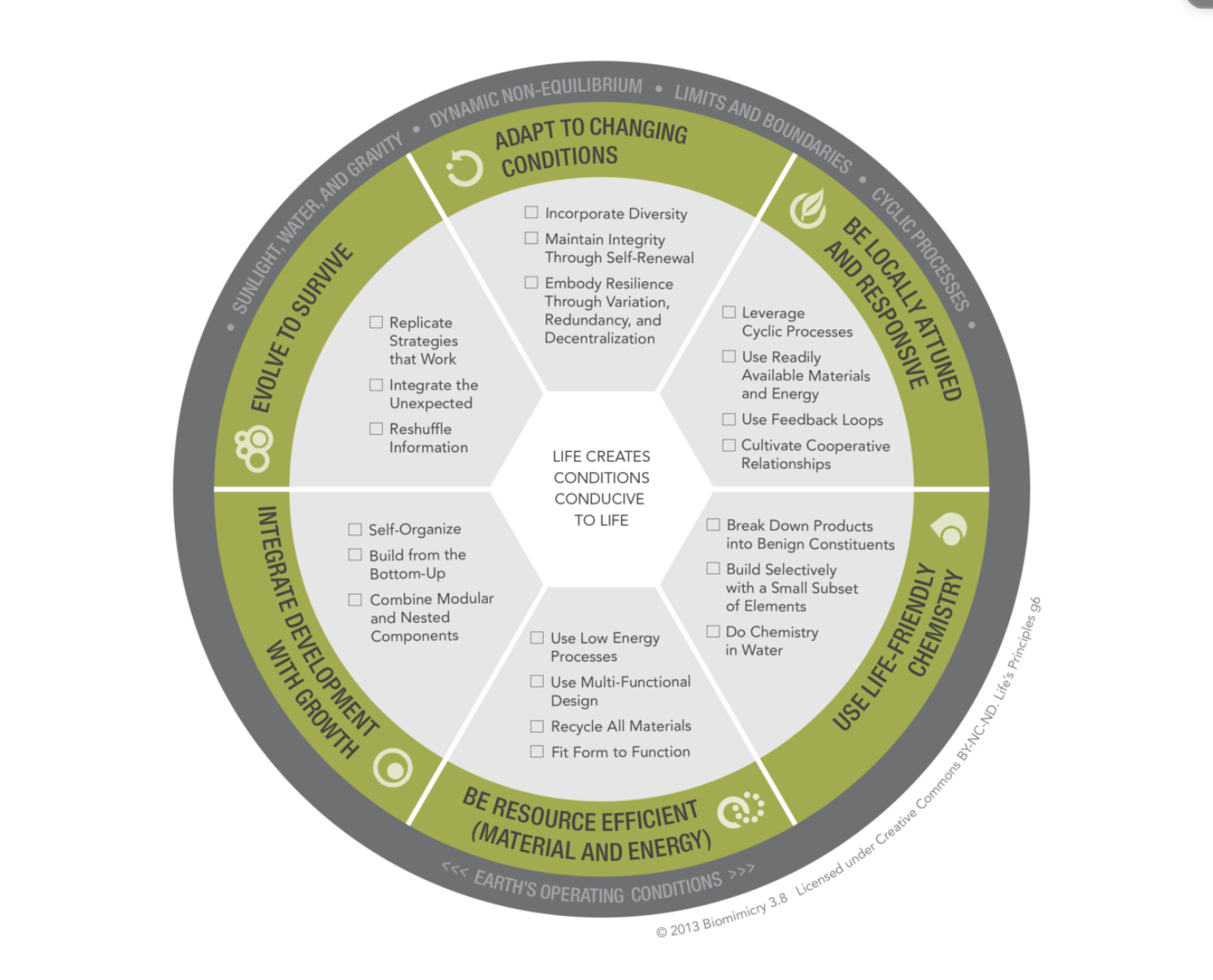
Janine also alluded to the revised design principles of biomimicry. Her book was the first time I saw a replicable blueprint for design. Since then I’ve seen many more (design thinking, etc.), but this one stuck with me. The revised 26 Principles of Life are:

Adapt to Changing Conditions

  • Incorporate Diversity
  • Maintain Integrity Through Self-Renewal
  • Embody Resilience Through Variation, Redundancy and Decentralization

Be Locally Attuned and Responsive

  • Leverage Cyclic Processes
  • Use Readily Available Materials and Energy
  • Use Feedback Loops
  • Cultivate Cooperative Relationships

Use Life-Friendly Chemistry

  • Break Down Products into Benign Constituents
  • Build Selectively with a Small Subset of Elements
  • Do Chemistry in Water

Be Resource Efficient (Material and Energy)

  • Use Low Energy Processes
  • Use Multi-Functional Design
  • Recycle All Materials
  • Fit Form to Function

Integrate Development With Growth

  • Self Organize
  • Build From the Bottom-Up
  • Combine Modular and Nested Components

Evolve to Survive

  • Replicate Strategies that Work
  • Integrate the Unexpected
  • Reshuffle Information

My eighth-grade self wound up designing a rough blueprint of an electricity-free microphone modeled after the body of a cicada, one of the loudest creatures I knew of on a decibel-to-centimeter scale. To this day I have no idea if it would work. The learnings from this project ran much deeper than a product. It shaped the way I navigate and see the world today.

Imagine a world in which these principles were core teachings of school and projects. What if the purpose of school is and always has been, to quote Janine, to “create conditions conducive to life?”

The post An Unexpected Pathway: How Life’s Design For Life Changed Mine appeared first on Getting Smart.

from Getting Smart https://www.gettingsmart.com/2023/04/25/an-unexpected-pathway-how-lifes-design-for-life-changed-mine/

Pathways With a Purpose: Supporting Students in Revealing Meaning

Difference-making, social innovation, social entrepreneurship – there’s a thread that unites these various themes. They are purpose-driven. As we look at career pathways for students we might do more to support students to find meaningful work. Data suggests young people care about having jobs that make an impact. They want to do something that contributes positively to society, and the environment while earning a paycheck. This is something that we must nurture as educators.

Entrepreneurial skills support students to see possibilities in problems. Whether this supports an entrepreneurial pathway where they might create their own venture or intrapreneurial opportunities where they reimagine existing professions or operations within a company or organization – these skills help students rethink the world of work so that the profession they choose drives more meaning/impact. Traditionally, when we talk about entrepreneurial skills, we think about skills like leadership, design thinking, finance, marketing, and creativity. However, we wonder if we might do more to focus on the purpose component. The ‘Why’. How do we help students to tap into their own ‘why’ to drive purpose and meaning out of the seemingly ordinary?

The OECD defines social innovation as “the design and implementation of new solutions that imply conceptual, process, product, or organizational change, which ultimately aim to improve the welfare and wellbeing of individuals and communities.” It’s something that doesn’t necessarily get much focus in the education space, but easily could by making minor adjustments through our pedagogy and practice.

Every educator has the opportunity to support students as social innovators. By putting the purpose into the tasks we ask of our students, impact can become a more natural part of the innovation process. Therefore, how do we help students practice tapping into their ingenuity to create new products and new ways of doing things that solve challenges while also adding value?

Define Purpose-Driven

When we talk about purpose students might need a north star to understand what makes an innovation impactful. Organizations like Compass Education have simple tools to help students navigate the link between nature, society, well-being, and the economy. Other organizations like the Doughnut Economics Action Lab encourage us to explore human prosperity with a social foundation, so no one gets left behind, as well as an ecological ceiling so that we don’t overshoot our planetary boundaries. Each offers a simple-to-use graphic to generate a dialogue around purpose and goals. Once students have a lens through which to think about the impact they would like to generate, it makes their efforts more intentional.

As educators, many are already working to spark problem-solving, critical thinking, creativity,  and innovation through hands-on pedagogy. We have a variety of built-in pathways to facilitate social innovation and impactful learning. Whether you’re engaging in STEAM, creating maker spaces, designing project-based learning (PBL), facilitating entrepreneurship or business classes, or embarking on place-based learning there are ample opportunities to spark meaningful innovation. Our job is usually to provide questions, and constraints that help students design for impact.

For instance, if students are designing, building, and creating – we might put some constraints on their work. Encourage them to think about things like their footprint:

  • How can we reduce waste?
  • How might we rethink the materials we use (e.g. for fashion or construction?
  • How might we ensure workers are treated well, and paid fairly?
  • How might we rethink how we package goods and services?
  • How might we rethink spaces?
  • How might we upcycle old products?
  • How might we apply nature-based solutions in new ways or in new places?
  • How might we rethink supply chains to reduce distance (transport massive cause of emissions)?
  • How might we rethink movement of goods and services?
  • How might we apply technology to do good?
  • How might we use policy to incentivize new (positive)behaviors (e.g. composting)?
  • How might we leverage community partnerships to strengthen our communities?
  • How might we apply science to solve challenges (e.g. how might we clean water or keep soil quality high?)?

Without encouragement from adults, young learners might not find opportunities to solve real-world problems, especially with regard to climate science and medicine.  One of the oldest examples that builds both innovation and entrepreneurial skills in K-12 education is the science fair. Over the years, as technology has become more and more accessible, these science projects have turned from observational insight to true experimentation and hypothesis testing. Science fairs have the potential to form real pathways for learners – connecting them with core research labs, policymakers and more.

Purpose-Driven Pedagogy

Beyond adapting lessons, we can take purpose-driven ideas and pedagogy to the next level. One Stone’s Living in Beta advisory program “provides a deep community connected opportunity to explore their passions through meaningful and relevant experiences” during the purpose phase. This program provides a scaffolded approach that supports students to unlock their purpose and passions through hands-on exploration.  The Purpose Lab, led by Belle Liang, at Boston College’s Lynch School of Education and Human Development, has a “True North” exercise to create meaningful dialogues that help students thoughtfully navigate their future and goals as they transition from school to college or career.  Joseph South is thinking about “purpose-driven expertise,” expertise that must be meaningful to the self and the world. He goes on to discuss how this means engaging learner voice early in their learning journey and reflecting on the importance of community-connected projects.

The B-Corp School program InventoLab provides a wonderful example of bridging social innovation and social entrepreneurship together by creating a program that encourages students to use business to do good. Students have the opportunity to learn about sustainability and entrepreneurship through training, their own venture creation, or by connecting with and learning from local social businesses. Platforms like the YCM Challenge create community and spaces for youth to develop and implement solutions towards the challenges they care about. These sorts of opportunities provide ideal pathways to bridge purpose with innovation and entrepreneurship.

Social innovation is not necessarily a complicated art to practice.  As long as we are intentional about setting the scope, students can learn to design for impact through a variety of measures. Whether it’s driving meaning from the activities and experiences we do with our students, to engaging in programs that facilitate wayfinding or social entrepreneurship we have the power to help students uncover how they can make a positive impact. In doing so, we are setting our students up for success by equipping them with a  lens that they will carry throughout their personal and professional lives, and ultimately make the world better.

The post Pathways With a Purpose: Supporting Students in Revealing Meaning appeared first on Getting Smart.

from Getting Smart https://www.gettingsmart.com/2023/04/24/pathways-with-a-purpose-supporting-students-in-revealing-meaning/

Celebrating Earth Day

Earth Day is a worldwide event celebrated annually on April 22nd. It was first celebrated in 1970, and since then, it has become a significant global event, with over 1 billion people from more than 190 countries around the world taking part each year. Earth Day serves as a reminder of the importance of protecting and preserving the environment and our need to take action to address climate change and other environmental issues. It helps to raise awareness about the importance of environmental conservation and is a special time to show appreciation for Earth and learn how to take steps to protect it. The recognition on Earth Day can inspire everyone to take action throughout the year and find ways to promote sustainability.

The theme of Earth Day this year is “Invest in Our Planet” which focuses on efforts to rebuild ecosystems, combat climate change, and reduce waste and pollution to improve our environment and secure a better and safer future. Earth Day provides an opportunity for individuals, communities, and governments to take action toward addressing these challenges and creating a more sustainable future.

Earth Day is also closely tied to the United Nations’ 17 Sustainable Development Goals (SDGs), which serve as a blueprint for working towards a better and more sustainable future for all. The celebration of Earth Day helps us to focus on several of the SDGs, including Goal 13 (Climate Action), Goal 14 (Life Below Water), Goal 15 (Life On Land), and Goal 17 (Partnerships for the Goals). The event has been instrumental in shaping environmental policy, with the first Earth Day leading to the creation of the Environmental Protection Agency in the United States.

There are many activities that can be organized to raise awareness among students and the school community about the importance of environmental sustainability. Here are 4 ways to celebrate Earth Day in our schools:

  1. Community Clean-Up Day: Organize a school-wide clean-up day to work in the community to clean and beautify the surrounding areas. This activity will teach students about the importance of keeping our environment clean and the impact of litter on our ecosystems.
  2. Plant a School Garden or a Tree: Planting a school garden can be a fun and educational way to engage students in environmental conservation and also focus on place-based learning. Students will learn about the importance of plants in the ecosystem, and develop a sense of responsibility and ownership over the garden that they plant. It can also be an opportunity to teach students about healthy eating and sustainability. Another idea is to organize a tree-planting event on school grounds and involve students in planting trees.
  3. Reduce, Reuse, and Recycle: Encourage students to reduce waste by bringing reusable water bottles, lunch boxes, and bags. Teach them about the importance of recycling and composting and organize a school-wide recycling program.
  4. Environmental Science Fair: Organize an environmental science fair where students can showcase their projects related to environmental sustainability. Through this activity, students can learn about different environmental issues and solutions. It is also beneficial to find a speaker to come in and share ideas with students and the school community.
  5. Sustainable Art Projects: Encourage students to create art projects using recycled materials or objects they find and can repurpose. These opportunities will help students to express their creativity while also learning about the importance of sustainable materials.

Here are seven websites and resources to find additional ideas and materials for Earth Day:

  1. Earth Day Network – provides a wealth of resources for educators, including lesson plans, videos, and activity guides. They offer a list of activities for Earth Day 2023 and ideas to explore for hosting a successful Earth Day event in your school or community. Teachers can get the Action Toolkit which is full of ideas for schools and has ideas for 14 different communities!
  2. The Environmental Protection Agency (EPA) provides many resources for teaching about the importance of environmental sustainability. The website has lesson plans, interactive tools, and other materials that can help educators teach about the environment. It also has a coloring sheet and more for students to participate in this year’s recognition.
  3. National Environmental Education Foundation (NEEF) – There are a lot of resources available for everyone to learn about ideas to focus on lifelong environmental learning. NEEF offers a variety of resources not just for educators, but for everyone to find ways to take actions that will protect our planet. For teachers, there are blogs, lesson plans, and activity guides. Find ideas for creating a garden in the spring to celebrate Earth Day. The Education resources page offers links to STEM ideas, projects for students, and other ways to focus on place-based learning.
  4. National Geographic Education – National Geographic offers a variety of resources for educators, including lesson plans, activities, and virtual field trips. Their Earth Day Toolkit provides resources and ideas for teaching about environmental issues and taking action to protect the planet.
  5. NASA Earth Day provides a wealth of information on the environment and its preservation. It has interactive games, educational resources, downloadable posters and images of the Earth from space. Through their resources, people will understand the importance of taking care of the planet and be inspired to take action to protect the environment.
  6. PBS LearningMedia PBS offers thousands of free digital resources for educators, including videos, lesson plans, and interactive activities. Their Earth Day Collection includes topics such as climate change, conservation, and sustainability and materials for students in all grade levels.
  7. Teach the Earth is a site created by the National Association of Geoscience Teachers that provides a variety of resources for teaching about the environment. You can search their site to find other earth education websites and also find teaching activities and other resources.

There are many options and resources that help us all to celebrate Earth Day, not just in April but throughout the year.

The post Celebrating Earth Day appeared first on Getting Smart.

from Getting Smart https://www.gettingsmart.com/2023/04/21/celebrating-earth-day/

A Culture of No: How to Get Past Fear and Risk-Aversion to Make Things Happen

I’ve had the unique privilege of moving between business and education throughout my career, including getting to work with some highly dynamic and influential business leaders in my community. One of the biggest differences between business leaders and school and district leaders has been how quickly and easily business gets to “yes” while education seems to wallow in the purgatory of the “yeah but…” and the “no.”

Some of the reasons behind this are quite easy to recognize. Schools as public entities have to appeal to a wide, and often vocal, constituency. Boards made up of lay people, not experts in important-to-the-business fields like a for-profit board, are working for free. These caring public servants are faced with critical decisions about both money and programming. They experience constant pressure from a variety of interest groups wanting or not wanting specific things. Add to the fact that every decision that is made is open to public scrutiny and debate, made easier due to the pervasive existence of social media.

Superintendents, who hold the power to make major changes as well, are always just one Board election away from being out of a job if they make a “mistake” or move too quickly. The typical implicit Board directive is, “Make us great, be innovative, but don’t really change anything.” Parents, teachers, principals, city government, and local businesses all have an opinion about what should and shouldn’t happen and aren’t afraid to leverage their political power to move things their way.

These contextual realities create a pervasive and long-standing culture that is highly risk-averse and often driven by fear-based decisions. What will happen to us if we say yes? In systems like education, there is virtually no immediate or visible cost to saying “no.”  It’s almost as if there is no opportunity cost to saying “no” (a huge faulty assumption). Saying “yes,” however comes with lots of very visible “costs” and a very public eye with people waiting for any reason to point out why it doesn’t work.

Here’s a recent example that illuminates this issue. Over the past few months, I’ve been involved with both district leadership and two influential CEOs of large, locally-based companies to find a home downtown for a new magnet high school. This high school focused on getting students out into the community to work on real problems, building real skills, and applying academic standards in messy, contextualized situations. The lead administrator is very supportive of this effort and wants it to work. This example isn’t about any individual and instead about how a system shapes a leader’s behavior.

We immediately ran into all sorts of barriers and challenges from being able to afford a downtown space, to code issues, to design challenges. At each turn, the two CEOs opened with, “Okay, so how do we solve it? How much money do we need to raise? Who can we contact to help us navigate code issues to get what we want? How can we think about this on different scales? What can we do right now? etc.” This immediately led to some creative and exciting solutions. The district’s focus? “We can only spend X. I’m not sure if the Board will like this idea. I don’t think we can make that happen. I don’t think we have internal support for this. We need more people looking at this, etc.” After about the 2nd meeting, our administrator turned to the group with a smile on his face and said, “I just realized after these meetings that I am the bureaucracy.” It was like the fish recognizing he was swimming in water.

Schools as public entities have to appeal to a wide, and often vocal, constituency.

Trace Pickering

So what does all of this mean? Is the culture of education simply too deep and unmovable to be creative and move forward? Well, it is certainly a big challenge, but enough examples around the country show us it is not unsurmountable. It can all start with that one administrator recognizing they are inadvertently seeking a “no” answer. Since that meeting, I’ve seen this administrator make a subtle but powerful shift in his approach. I now hear him saying things like, “We need to make this happen. What are the big barriers you see now? Let’s identify them and rally around to get them removed.” I see him leading upward more now, making sure the people above him in the organization understand what we’re doing and why. He’s asking for forgiveness now a lot more than he’s asking for permission.

What are a few other straightforward moves an educational leader can make to ensure they can push break-the-mold, innovative changes needed in education today?  

1. Find key leaders in your community and engage them.

Don’t focus on your needs, focus on theirs. They want and need a more skilled workforce and they don’t see schools as listening and responding. Listen, go talk to the Chamber. Take your Board president with you. Then, use the things they say they need and center that in any design you put together. You can then blend in the things we know need to happen to free up students to do these things. Like, rethinking course offerings that are more student-interest-based, interdisciplinary, and focused on the application of skills. Like, For bringing staff on board whose sole job is to connect with the community to find students interesting projects and job experiences.

Now, you not only have a Board President who sees what you’re doing and why, but you also have key, vocal leaders in the community willing and able to stand with you as you push forward these innovations.

2. Simply change your language.

Listen carefully to how you speak of things. Is your first response a question with undertones of “no”? (E.g. “Where would the funding come for this?” “Do you have all the details worked out?”). Instead, approach it with positive curiosity. (E.g. “Nice! What sorts of opportunities would this open up for students?” “Interesting, tell me what you’ve already thought through.”)

3. Quit demanding that all the details be worked out first.

Quickest way to kill anything? Demand all details be worked out ahead of time. First, this is impossible. Second, while seeming counterintuitive, the more you have worked out ahead of time, the more you’re going to find yourself defending the decision when lots of it crashes and burns with the realities of practice. Demand a clear vision and basic direction. Speak in terms of “first iterations.” Help the designers focus on a few key things to get clarity around and allow them to learn on the fly once implementation starts.

4. Be honest with the public.

Make a strong case for the why and make it crystal clear that this won’t go smoothly because we won’t know what we need to know until we get started. Promise that while there will be missteps in the work, the well-being and success of the students will remain at the center.

5. Don’t let the “system” determine all the success measures.

Any substantive change is likely to cause the system’s definition of success to not be immediately met. Have other critical outcomes and measures. Student engagement and sense of joy. Students’ sense of belonging and worth. A number of community projects, job shadows, etc completed. Get students in front of the Board and community talking about how this school/program is changing their trajectories and feelings of accomplishment and belonging. The system’s measures will come with a bit of time – often no worse than what the current system is producing.

The post A Culture of No: How to Get Past Fear and Risk-Aversion to Make Things Happen appeared first on Getting Smart.

from Getting Smart https://www.gettingsmart.com/2023/04/20/a-culture-of-no-how-to-get-past-fear-and-risk-aversion-to-make-things-happen/

Design a site like this with WordPress.com
Get started