Today, I’ve asked Seth J. Gillihan to share his Tip of the Week.
Earlier this year, I was so excited to get together with my youngest brother and his family for the first time since the pandemic—and to meet my new nephew. So when we settled into the living room to catch up, I couldn’t understand why I suddenly wanted to flee. My brother and I have a close relationship, and I love his wife.
As this fear washed over me, I realized I hadn’t shared extended time in person with anyone outside my household in over three years. I’m prone to social anxiety in this kind of situation, and it had grown since I’d been out of practice facing it.
It turns out, my reaction was exactly what research would predict. In a classic three-phase study, participants were shown pictures, some of which were followed by an “annoying but not painful” electric shock. Not surprisingly, the participants developed a fear response to the shock-paired pictures.
Next, participants were shown the same pictures without any shocks, and their fear responses went way down. In the absence of harm, they learned not to be afraid.
When you haven’t confronted a fear in a while, your brain defaults to the safest assumption—which means being on guard for danger.
Seth J. Gillihan
What happened in the final phase, when participants were tested again without being shocked? You might expect that they would show little fear since they had learned that the pictures don’t mean they’re about to get an annoying zap. But that’s not what happened. Instead, their fear returned.
When you face what you’re afraid of and nothing bad happens, you feel less afraid. But that doesn’t mean your anxieties are erased, never to return. When you haven’t confronted a fear in a while, your brain defaults to the safest assumption—which means being on guard for danger.
Don’t react to others’ unexpected fear with criticism, such as “I thought you were over this already!”
Do face your fears consistently and in multiple contexts, which minimizes an anxious response—and help the young people in your life do the same. Conquering fear doesn’t mean getting rid of it once and for all. It means deciding to face it as often as you need to so nothing gets in the way of living the life you want.
Time is one of the most precious commodities for teachers. With so many things to get done, there’s just not enough time during the typical school day to accomplish it all.
Helping teachers get their jobs done is one of the most concrete examples of how artificial intelligence (AI) will continue to impact education. Just think: If teachers can use AI to save just five percent of their time they would essentially get back an extra workday per month!
This time savings isn’t something teachers have to strive for in the future. There are a number of AI-enabled tools available now to help them effectively facilitate student learning, assess students, and reflect on their professional learning.
Below are three ways AI can support teachers, as well as three examples of tools that help teachers get important work done more efficiently.
AI helps teachers facilitate self-guided student learning
With rare exceptions, there’s usually only one teacher per classroom. As such, enabling students to learn independently is good for both students and teachers.
Independent practice helps students build their skills around self-guided learning and have more ownership over their own learning. It also enables teachers to use their time to help students who may need more personalized support or a bit of extra help.
One tool that can help students practice on their own isPressto. The AI-poweredBing chatbotsays Pressto uses generative AI to create writing prompts and help teachers with lesson plans. It helps students see themselves as authors and it aligns standard-based content to the writing process which results in stronger writers.
The Google Classroom-integrated tool, which can be used in physical or virtual classrooms, has many AI capabilities. It can deliver real-time personalized feedback on writing assignments, monitor student progress, and recommend educational content and subject topics for writing assignments.
Helping teachers get their jobs done is one of the most concrete examples of how artificial intelligence (AI) will continue to impact education.
Adam Geller
Instructional AI tools such as this one free up more time for teachers to discuss students’ work with them, collaborate with students in 1:1 or small group settings, and offer additional feedback as needed.
AI helps teachers learn about themselves
Whether we are talking about it in the context of athletes or teachers, coaching (and, in turn, improvement) takes time. Individuals must analyze their performance and commit to small and measurable changes for growth and development to take place.
It can be hard for teachers to find time to meet with their instructional coaches, however. And, in some cases, school leaders may be filling the role of the coach which limits their own availability and capacity.
In steps the power of AI. TheAI Coach platform, for example, guides teachers through goal-setting and action-planning cycles focused on specific areas of instructional practices.
Using the platform, teachers reflect on their classroom teaching and set near-term goals as part of a self-paced module that mirrors an instructional coaching process. Teachers have an interactive conversation with a computerized coach, who asks probing, open-ended questions and offers personalized tips for improvement.
This process, which is designed to supplement the in-person observations already taking place, helps teachers receive more support at the times most convenient to them. Now, time and scheduling restraints are no longer barriers to ongoing professional learning.
AI helps teachers teach more effectively
Student assessment is an important aspect of teaching. It provides teachers with the data they need to understand how students are performing and areas of growth.
But, just like everything else, assessing students (and then creating lesson plans based on those assessment results) is time-consuming.
AI-powered technology, such asAmira Learning, can give teachers some time back. Bing summarizes the tool as an AI-powered literacy tutor that provides 1:1 reading tutoring, oral reading fluency assessment, and dyslexia risk screening in English and Spanish. It additionally recommends appropriately challenging stories, listens as a student reads aloud, and creates transcripts, audio recordings, metrics, and reports for teachers and parents to review.
According to Amira Learning’s website, the program saves teachers 90-plus hours across the school year…that’s a lot.
Other AI apps designed to save teachers time includeGraide andGradescope, among others.
Just as I advocate forteaching students how to use AI tools to help navigate today’s world, I encourage teachers to use AI for their own benefit as well. The number of AI technologies available today can help teachers be more time-efficient, effective, and informed.
The future with AI is here. Let’s help teachers reap the benefits.
Disclaimer: I wrote part of this article using minimally-edited, AI-generated excerpts from the Bing chatbot…because it saved me time!
Adam Geller is the author of “Evidence of Practice: Playbook for Video-Powered Professional Learning” and the founder ofEdthena, a company that builds video-powered professional learning tools for teachers. He started his career in education as a science teacher in St. Louis, Missouri. Since 2011, Adam has overseen the evolution of Edthena tools from paper-based prototypes into a research-informed and patented platforms used by schools, districts, teacher training programs, and professional development providers.In 2022, Edthena announced the first-of-its-kind AI Coach platform for teachers which enables teachers to complete guided reflection and action-planning cycles with a virtual, computerized coach.
Interest in the metaverse has spiked and waned over the past two years. As we cycle through phases of interest it gives us an opportunity to look at the implications of immersive technologies on learning.
The Ready Player One Test
In his book Failure to Disrupt MIT educator and researcher Justin Reich says that we need to be “oriented toward innovative pedagogy and a commitment to educational equity.” He adds that in order to align ourselves with these things–innovative pedagogy and educational equity, we need some guidelines. This is what inspired me to create this list of guidelines. These are intended to be used as a framework for educators as we introduce fully immersive digital environments into our modes of delivering learning experiences.
The title of this “test” is the “Ready Player One” test. This was chosen to remind us of the dystopian future that is possible if we do not correctly navigate these next 20 years. The parts of the Ready Player One Test are listed below, with proceeding sections that will expand on each item in more detail.
Does it allow learners to immerse themselves in environments that would be too expensive or dangerous to experience otherwise?
Can the learning be personalized by the student?
Is it regenerative?
Does it allow for learning to happen non-linearly, at any time and any place?
Does it allow learners to immerse themselves in environments that would be too expensive or dangerous to experience otherwise?
The policy brief by the Brookings Institute starts with a potential vision of our future classrooms. It describes a scene with students moving from real-life storytelling of Greek myths to a three-dimensional timeline projected onto the floor. Students enter an immersive metaverse in which they are placed in the center of a busy marketplace from 2500 years ago.
Research is emerging supporting the idea that students learn better when placed in immersive environments.
Dagan Bernstein
Research is emerging supporting the idea that students learn better when placed in immersive environments. Dynamic direct instruction coupled with immersive experiences and well-crafted student-led projects helps students engage with content at a deeper level. But how exactly is this possible? How can a student in Gary, Indiana, or Bangalore, India, immerse themselves in an ancient market of Greece, or the far-away streets of Baghdad?
What about enabling students to experience the horrors of a live battle in World War 2 or contemporary conflicts in Ukraine, or feeling the fear and confusion of a raid by Ghengis Khan’s army? This can all be made possible through an immersive metaverse.
Platforms such as Gathertown and Zep are a great transition between web2 platforms like Zoom, but does it qualify as “deep absorption”? To truly experience learning that allows us to transcend space and time we need to go further.
In Dr. Mark van Rijmenam’s article6 Characteristics of an Open Metaverse he states, “Mimicking the real world in the virtual world does not make sense. In the metaverse, there is infinite space. Users can quickly teleport from one experience to another.” This concept helps us move from three-dimensional to four-dimensional spaces.
Focusing on one of Dr. van Rijmenam’s six characteristics, spatiality, presents a clearer picture of full immersion. “A metaverse that is not spatial is a metaverse with limited opportunities. Any virtual world, space, or experience should incorporate spatial anchors to make objects inside those virtual or augmented experiences persistent so people can find them and provide an experience that is more akin to the real world, which can be further reinforced using spatial audio.”
Audio, haptics, and the ability to smell and touch will all become possible as this technology evolves. This will allow the user to experience the deep absorption that immersion is all about. The possibilities with teaching and learning here will be 10x or even 100x with this technology. Imagine a fully immersive cooking class in which you can compare spices from around the world. Comparing fabrics as you learn about fashion design or interior architecture. There are hundreds of examples that could be generated when we see the metaverse as a fully immersive experience rather than “mimicking the real world.”
Students could descend into the crater of Halemauʻumaʻu on Hawaiʻi Island to learn about the creative power of Pele through a geologic or cultural lens. A science curriculum could be augmented with an examination of butterfly wings under a microscope and then complemented with an immersive experience of becoming a butterfly and flying over a field of wildflowers. A mathematics lesson on completing the square could have students settling a land swap in ancient Babylonia.
All of these immersive experiences when combined with effective lesson design provide learning that is deep and effective. They can all be enabled by AR/VR, the metaverse, and haptic technologies.
Dagan Bernstein is an educator from Hawai’i who believes in each child’s human right to realize their true self.
In recent years, bipartisan support for career-connected learning has blossomed among education advocates, policymakers, and philanthropists. With it, a growing supply of work experiences, like internships, are on offer to high school students.
But that enthusiasm has fallen into an all-too-common trap in education reform: indexing progress based on inputs, rather than outcomes.
Pathways or dead ends?
Career education policies are partly to blame. Under the Perkins Act, for example, states report the number and percentage of students participating in work-based learning. Access indicators say little about the skills or connections students are (or aren’t) developing through a given experience.
At the same time, schools focus far more energy on the logistics of implementation than on outcomes, managing a dizzying array of scheduling, forging employer partnerships, and documenting credit hours. That leaves little room for considering how students are faring. “It’s pretty rare for schools to have the staff capacity to support caring about quality,” said Wilson Platt, a product manager for Big Picture Learning’s internship management platform, ImBlaze. When Platt’s team partners with school districts, headcount is the most common indicator schools track.
A recent Bellwether report, “Expanding Opportunity”, confirmed why leaders shouldn’t count on headcount. Program quality, even in states heralded for expanding their career pathways, remains a veritable mystery:
“One administrator in Texas said that the lack of data about program outcomes in their district meant that it took them years to realize that a prominent pathways program for military services was not actually preparing students for the careers the district intended. A former state policymaker in Ohio explained that ineffective programs can grow alongside effective ones because there is such little data about which programs are effective and which are not. Advocates in Colorado shared frustrations about the inefficient and often conflicting data systems used by different state and local agencies, which monitor pathways program outcomes in a piecemeal fashion that does not yield useful information.”
Anecdotes like these are the canary in the coal mine. Without measuring efficacy alongside scaling access, career pathways will be yet another failed, expensive edu-fad marked by good intentions and hollow outcomes.
Measure connections to close opportunity gaps
Luckily, a number of initiatives are bringing greater rigor to measuring the durable skills and industry credentials students are gaining through work-based learning.
That’s one important piece of the quality picture. But it doesn’t tell the whole story.
Social capital, not just skills, is a leading predictor of economic mobility. An estimated half of college internships and full-time jobs come through networks. To gauge quality, schools must ask: are interns forming connections who can serve as role models, channels to job information, and references down the line?
Measuring networks–alongside skills–will be the differentiator between good-enough initiatives for some students and those that level the economic playing field for all students.
A few years ago, FFE set out to understand whether the interns they support were growing their social capital. Their survey used what sociologists call “name generator” questions, prompting students to consider the number of people they’d met during their experience:
Without measuring efficacy alongside scaling access, career pathways will be yet another failed, expensive edu-fad marked by good intentions and hollow outcomes.
Julia Freeland Fisher
“When you think of all the people that you worked with during your internship experience, how many could you tell us about? Please consider including teachers or staff, internship mentors, internship coworkers, X3 or NeXt Coach, and peer interns.”
From there, students were asked to describe the quality of each connection, including:
“They helped me learn from setbacks; They worked with me to solve problems and reach goals; They inspired me to see possibilities in my future; They introduced me to people who can help me learn and grow” on a scale from “almost never true” to “often true” (these items draw heavily on the Search Institute’s developmental relationships framework).
Finally, students were asked about the comfort and durability of each connection: “How likely would you be to ask this person for help with your career in the future?”
The resulting data painted a multi-dimensional portrait of interns’ networks. It also gave valuable information in aggregate: on average, interns reported forming 3.3 developmental relationships. And greater numbers of new relationships were statistically related to greater overall mastery of skills.
Unlocking formative relationship data
FFE’s is the most comprehensive measure of interns’ networks that we’ve found in the field to date. But it isn’t without drawbacks. Collecting social network data is time-intensive, crowding post-internship surveys.
That challenge highlights one upside of Big Picture Learning’s internship management platform, ImBlaze. The platform includes a “dynamic survey tool,” allowing schools to ask interns and supervisors brief questions throughout the day, week, or semester.
One school, Ken-Ton Big Picture, used the functionality to ask students3 questions repeatedly over the course of a year gauging their comfort, level of connection to their on-site mentor, and likelihood to work in the career area.85% of their students felt ‘very comfortable’ and ‘well connected’ at some point in their experience. “That then led them to wonder about the 15% that never reached that point,” explained Platt.
A dynamic approach can mitigate lengthy surveys and also yield more reliable, actionable relationship data. “For example, an internship advisor can do a quick glance at the data at the end of the day. If a student says they were uncomfortable at their work site, that advisor can check in and problem solve,” said Platt.
Both FFE and Big Picture Learning are proving it’s possible to understand the social side of work-based learning. Both organizations’ commitment to equity has led them down that path.
More education leaders should share that commitment. When it comes to traditional academics, measuring inputs alone would hardly pass the sniff test. “You’d never proudly say that 100 of your 150 students took a math class this year. But that’s what many do when it comes to internships,” said Platt. As career-connected learning expands at an impressive clip, schools must stop measuring participation alone, and start measuring career connections.
Julia Freeland Fisher is the Director of Education at Clayton Christensen Institute.
An integral part of K-12 education is preparing students to shape their own lives beyond high school, whether they choose college, technical school, or the workforce. And while there is no single recipe for this, there just might be a secret sauce.
The State of College and Career Readiness in K–12: 2022 Report, which surveyed 170 K–12 U.S. educators (including 122 teachers, 27 education leaders and administrators, and seven school counselors), revealed a significant factor, or secret sauce, in successful College and Career Readiness Programs (CCR). Eighty-nine percent of the respondents indicated that community involvement was critical to their CCR program.
Who, specifically, needs to make up this involvement? Families, local employers, and local higher education institutions all need to be invested in helping prepare students for their future – and it is ideal when all parties collaborate together to ensure the next generation’s future success.
Businesses Supporting Students: A Synergistic Relationship
It is mutually beneficial when local businesses engage with high school students: businesses can use this relationship as an opportunity to engage and assess potential future employees, and students can use this relationship as an opportunity to gain valuable knowledge of an industry and decide if it is the right fit for them career-wise.
There are many ways companies proactively and creatively work with schools to support students – some businesses coordinate with schools to facilitate industry exposure through summer internship opportunities, and others participate in co-op programs where students work in local businesses for a portion of the school day, to name a few examples. Exposure to these businesses benefits students, whether college-bound, interested in learning a trade or choosing to work immediately after high school. More specifically, many high school students engaged in the Career and Technical Education (CTE) curriculum can see how their experiential learning in the classroom translates to the real world through an internship opportunity or a co-op program. Additionally, college-bound students can envision themselves in the workforce during a summer internship, which may help them solidify their major.
And over the long term, students – through these experiences – also further solidify essential life skills that many schools start teaching as early as middle school, including lessons in:
Time management
Self-advocacy
Workplace skills and attitudes
Work values
Career-life balance
Entrepreneurial skills
Defining success
Job interviews
What about under-resourced communities that do not have as much access to a variety of thriving businesses? Schools can connect with organizations such asINROADS to gain pathways to internships for high school students. Another avenue would be to locate companies in theUrban Business Initiatives, who may be willing to work with schools for a co-op program or internship opportunity. There are also many companies such as PWC that have internships for high school students from underrepresented minority groups in the professional services industry.
Local Higher Education Institutions Helping Build the Pipeline
Four-year local institutions and community colleges are also part of the secret sauce and benefit from having incoming, well-prepared students who will thrive and graduate on track towards their future careers.
Because they face ongoing enrollment challenges, many higher education institutions are reaching out to students more often, and directly, than ever through presentations at local high schools and campus visits. According to the National Student Clearinghouse Research Center, postsecondary enrollment remains well below pre-pandemic levels – down by approximately 1.23 million undergraduates, and 1.11 million in total enrollment, as compared with fall 2019.
Families, local employers, and local higher education institutions all need to be invested in helping prepare students for their future – and it is ideal when all parties collaborate together to ensure the next generation’s future success.
Matt McQuillen
Dual enrollment programs are gaining in popularity because they allow students to earn college credits while they are still in high school, and are helpful economically for students because their tuition is generally covered by their local school district. This allows students to earn an associate degree or certification rather inexpensively, and also builds a pipeline of prospective students for the participating colleges. As for students that live in areas that do not have easily available access to local colleges and universities, organizations like QuestBridge offer full scholarships for juniors to participate in a college summer program at institutions like Yale University, Emory University, etc.
Support From Home Cultivates More Positive Outcomes
Furthermore, the report found the secret sauce also contains another ingredient: engaging the student’s family. Districts with higher-rated CCR programs tend to have more commitment from families in the process, indicating the importance of family involvement in positive outcomes. Districts that use CCR software also reported a higher percentage of engaged families.
What are the most effective strategies for districts to engage families? One is to encourage open dialogue, whether through virtual parent meetings, in-person conversations or email exchanges discussing opportunities for students.
Motivating families to discuss future interests with their children is also essential. This may not easily happen organically in family life, so making time for this discussion is a significant first step. Additionally, students who have CCR software and have matched their interests with their career choices can share those results with their parents to aid in the conversation.
Engaging parents and other caregivers are also a perfect time for school districts to tap into larger community networks – perhaps some families are familiar with companies that would be open to co-ops, internships, or job shadowing opportunities for students. Allowing parents to utilize their networks involves them in the process and creates more opportunities for students at the school.
So, the secret sauce? The joint efforts of the whole community: schools, families, local businesses, and local higher education institutions working collaboratively to assist students with their future endeavors and, thus, help guide and lead our students to a path of post-secondary success. We are all in this together.
Matt McQuillen is the CEO and Co-Founder of Xello, the award-winning K-12 college, career, and future readiness program.
Young Men United is an opportunity to keep more of our young Black men on track by providing them with the crucial support they need to develop bright futures. This initiative was launched to ensure that 25,000 young Black men successfully complete college and are career-ready, ready to fuel the pipeline for jobs that corporations are looking to fill, and ready to take their place as business leaders and entrepreneurs in the 21st-century economy. It is data-driven, informed by what works, and executed locally with a comprehensive approach.
Young Men United (YMU) is an evidence-based initiative that provides wrap-around services to college-ready high school students beginning in the tenth or eleventh year to develop barrier-free pathways for young Black men to achieve their academic and career goals.
YMU supports individuals as they complete high school, enter and progress through their chosen post-secondary track, and transition from their post-secondary pathway to the workforce.
Young Men United was founded in 2020 as an extension of the revitalized Milwaukee Fellows program, in collaboration with United Way Worldwide. The project boasts an 85% college graduation rate for Black males, compared to the national average of 40%. The program is presently in thirty-one pilot cities, with an emphasis on the five Core Pillars that comprise a YMU Fellow. These five fundamental pillars are as follows:
Mentorship
Career and Professional Development
Scholarship Opportunities
Internships and Job Experiences
Civic Engagement
Whether it is technology, coaching, or a financial donation, YMU is committed to assisting our young Black men in thriving, from internships and college readiness to career certainty.
In my community, the United Way of the Midlandsruns the program, which will scale up to 200 total students by the conclusion of its fifth year. The current goal is to be at 75 total students by December 2023. The effort will establish new collaborations with four local Historically Black Colleges and Universities, as well as other institutions of higher learning in the Midlands. The program’s purpose is to boost postsecondary education attainment while also improving retention and workforce development.
Dr. Jabari Bodrick, Director of Education and Resiliency at my local United Way, spoke with me about the YMU program and his hopes for its influence on young black men in my community. “Young Men United gives us another avenue to create generational change throughout the Midlands,” he said. We are excited to collaborate with school systems across the Midlands to offer young Black men with the vital support they require to create bright futures.”
Jabari received his Ph.D. in College Student Counseling and Personnel Services from the University of Georgia. He wishes for other young men to have the same opportunity he did to attend college. Jabari worked in higher education before being asked to run YMU. Jabari said, “I witnessed firsthand how difficult it is for young Black men to navigate the educational system.” He worked at the University of South Carolina, the University of Maryland, and Elon University with the athletic program. Most PWIs have less than 5% African American male students, and Jabari stated that “these young men are looking for help and support that is not readily available.” “Neither do these young men find many faculty members who look like them.” YMU will offer campus and workplace tours to provide these young men with early exposure and information. “Young men who are prepared for college and careers feel ownership and feel comfortable networking to support them in life in general,” according to Jabari. “We will provide comprehensive services, free computer software, and even family support services.”
Why should young Black males be mentored?
Why should you support programs like Young Men United?
Black mentors serve as constructive influences that may confront any negative internalized attitudes about their own race that underprivileged youngsters may have. Black male mentors give Black adolescents a revitalized sense of worth, which influences their attitude and conduct.
The Top Reasons Why Black Male Mentors Are Important:
#1: They are culturally aware.
It is well recognized that black boys face many challenges growing up, including the failure of critical structures that are designed to aid in their development. Given that Black males have a particular set of experiences growing up that frequently effects their development, it is critical that their mentors have had those experiences as well. To fully address those difficulties, they must first be recognized. Relationships between a mentor and a mentee might be prone to cultural misunderstandings and mistrust if the mentor has not dealt with these problems as a Black man. Like any other connection, a good mentorship is built on empathy and trust.
#2: They help to strengthen healthy racial identification.
While discussing race is not always easy, it eventually leads to a stronger racial identity and emotions of connectedness within the community. Underserved adolescents who once felt isolated and misunderstood can now use the common ground they share with their mentor to increase their own self-esteem. Black mentors serve as constructive influences that may confront any negative internalized attitudes about their own race that underprivileged youngsters may have.
Black male mentors provide Black adolescents a revitalized sense of worth, which influences their attitude and conduct. Furthermore, research indicates that positive racial identification is substantially connected with higher levels of academic motivation in African American middle and high school students. When youth can define themselves in terms of their race, they feel more group pride and perform better academically.
#3: They are critical thinkers.
Black male mentors and young Black men can have genuine interactions because they share a common understanding. By discussing the effects of race and socioeconomic class, the mentee will see how they affect their daily lives and develop a critical mind. The ability to notice and comprehend social, political, and economic oppressions is referred to as critical consciousness. With critical consciousness, we can address these challenges and take corrective action that will result in visible change for our underserved youth.
If under-served youth have the tools to discuss and understand racial and socioeconomic issues, they can position themselves to not be conquered by it. This empowerment gives young Black men the capacity to understand their strengths and have a respect for the perseverance and resilience of their community, which will then help them persevere through the challenges they may face growing up.
#4: They help in closing opportunity gaps.
Because of the special problems that young Black men may endure, they may face disproportionate economic and social disadvantages. Over-referralfor school disciplinary action and special education, as well as impediments to college enrollmentand completion, can all have significant and long-term ramifications for their future earning potential. Mentoring, on the other hand, can serve as both an intervention and a networking connection to help turn those obstacles into possibilities. Black male mentors offer Black youth proactive supports to help them succeed as well as a second chance to reconnect with the critical structures that will help them realize their full potential.
The constantly supportive character of mentorship provides a secure space for young Black males to work through their issues and problems in completing crucial milestones in academic and interpersonal relationships. Mentoring lets the mentor share their personal and professional knowledge and experience, which can help young Black men get through these milestones and think about their futures more broadly. For example, to do well in the job market today, Black professionals have had to develop skills that make them independent and stand out. They can share these methods and provide crucial advice to their mentees as a Black mentor.
As a mentor, I am enthused about the potential of Young Men United. The capacity to expose these young men to job and college opportunities, as well as to empower them to make informed decisions with the help of a caring adult, has been demonstrated to be critical to their success.
As we approach the end of the third school year impacted by the COVID-19 pandemic, disruptions to schools and communities continue to have lasting effects on students. To help address the challenges of the pandemic, the National Partnership for Student Success (NPSS) was launched by the Biden-Harris Administration in July 2022, through a partnership between the U.S. Department of Education, AmeriCorps, and the Everyone Graduates Center at Johns Hopkins University. In collaboration with a diverse network of over 135 organizations committed to providing academic, social-emotional, and other supports that foster student success, the NPSS is working to meet the Administration’s goal of getting an additional 250,000 people into evidence-based, high-impact, NPSS-aligned roles as tutors, mentors, student success coaches, post-secondary transition coaches, and wraparound/integrated student support coordinators.
Knowing that recruitment and staffing are among the most significant challenges facing schools and youth-serving organizations today, the NPSS has focused much of its recent strategy on identifying groups of people who – if provided the right opportunities, training, and ongoing support – might be motivated and well-suited to work or volunteer in NPSS-aligned roles in their communities. Considering many potential sources of people-power for this work, the NPSS is exploring how college students, older adults and retirees, corporate volunteers, caregivers and families, and older high school students in near-peer roles might have a role in this national effort.
National Efforts to Engage College Students in High-Impact Roles
To engage college students and the higher education community, the U.S. Department of Education recently released a call to action in the form of a Dear Colleague Letter, encouraging colleges and universities to place more of their students in crucial P-12 student support roles, focusing on tutoring, mentoring, and college advising or postsecondary transition work.
Specifically, the Department has called on colleges and universities to set a public goal to either:
Use at least 15% of their FWS funds to compensate college students employed in community service activities, devoting any increase in FWS compensation for community service employment in NPSS roles located in schools or out-of-school time programs by June 2025,
Significantly increase the number of college students their institution will place in NPSS roles regardless of the funding source supporting them by June 2025.
In answering the call to action, higher education institutions are encouraged to build on their existing partnerships, resources, and program infrastructure, while continuing to grow with the field by aligning their work with quality standards and best practices. Strong models of colleges and universities partnering with schools and non-profits to provide tutors, mentors, success coaches, and college advisors to P-12 students already exist in a range of diverse institutions and communities. College and university leaders who participated in focus groups hosted by the NPSS Hub expressed a desire for opportunities to learn from one another’s expertise, explore shared challenges, and troubleshoot barriers to implementation. With collaboration and support, higher education leaders can make an even more significant impact in their communities by devoting a greater portion of their institutions’ Federal Work-Study funds to provide additional high-impact, people-powered support to P-12 students in schools and out-of-school time settings.
College students – including those employed in Federal Work-Study programs and others – have enormous potential to support P-12 students to recover from the impacts of the pandemic and thrive. While balancing college coursework and employment can be challenging for students, research shows that meaningful Federal Work-Study job opportunities can positively impact student academic performance and early career outcomes. When college students deliver evidence-based student supports such as tutoring or mentoring, it is mutually beneficial for the students and those providing services. Experience working with children and youth in these roles can also offer valuable pre-service experiences to college students interested in pursuing careers in education, youth development, social services, and more.
To engage college students and the higher education community, the U.S. Department of Education recently released a call to action in the form of a Dear Colleague Letter…
Mariko Yoshisato Cavey and Kate Cochran
Concerted action is now needed to:
Garner commitments from colleges and universities to place more of their students in high-impact P-12 student support roles;
Connect higher education institutions with local schools and non-profit organizations that can help train, place, and/or support college students in impactful positions; and
Elevate these meaningful community-engaged work opportunities to college students.
Many campuses have already committed to this national pandemic recovery effort by joining the NPSS Higher Education Coalition and setting a public goal as part of the U.S. Department of Education’s call to action. The Coalition’s growing membership comprises a geographically and demographically diverse group of public, private, 2-year, 4-year, and graduate/professional institutions.
The NPSS Hub is poised to support these colleges and universities and their local P-12 school and non-profit partners, by providing resources to help organizations move from commitment to action. To smooth the path for implementation, the NPSS Hub is offering guidance and toolkits, providing free technical assistance, uplifting examples of progress, and convening professional learning communities and working groups to foster collaboration and information-sharing.
Will your higher education institution, P-12 school, or organization join the NPSS in this national effort to support the P-12 pandemic recovery? To learn more, connect with others doing this work, access resources, and be considered for recognition opportunities, visit partnershipstudentsuccess.org/colleges.
Mariko Yoshisato Cavey is Senior Program Officer and Director of Higher Education Partnerships with the National Partnership for Student Success, a public-private partnership between the U.S. Department of Education, AmeriCorps, and the Everyone Graduates Center at Johns Hopkins University. Her work supports university-school-community partnerships for equity in education research, policy, and practice.
Kate Cochran is Managing Director of the National Partnership for Student Success, a public-private partnership between the U.S. Department of Education, AmeriCorps, and the Everyone Graduates Center at Johns Hopkins University. Kate served as Chief of Staff and a founding team member at InnovateEDU.
On one of our most recent town halls, Next Generation Learning Goals: What Should Students Know we focused much of the conversation on skills frameworks, portraits of a graduate and conversations about the VUCA future. We also discussed that when learners develop skills, they simultaneously need to develop the confidence to articulate their strengths and areas for improvement to aid the job interview process. Skillsline helps to bridge this gap by supporting young people in developing job-ready skills
Used by Jobs for America’s Graduates- Louisiana (JAG-LA), the platform offers a scaffolded learning experience, grounded in learning and behavioral science that teaches students the essential human skills they need for workforce success. With an engaging mobile-first learning platform, Skillsline meets learners where they are, lifting the burden from facilitators.
Courtney Reilly launched Skillsline in 2020 after six years leading the ASU+GSV Summit. Reilly also spent four years leading growth initiatives for Phyllis Lockett at LEAP Innovations in Chicago.
While other startups were accepting big venture checks in the gogo days of ‘21 (and are now saddled with ridiculous valuations), Reilly and co-founder Chris Mackey bootstrapped Skillsline by living on contracts and delivering value through teaching the fundamentals of durable human skills.
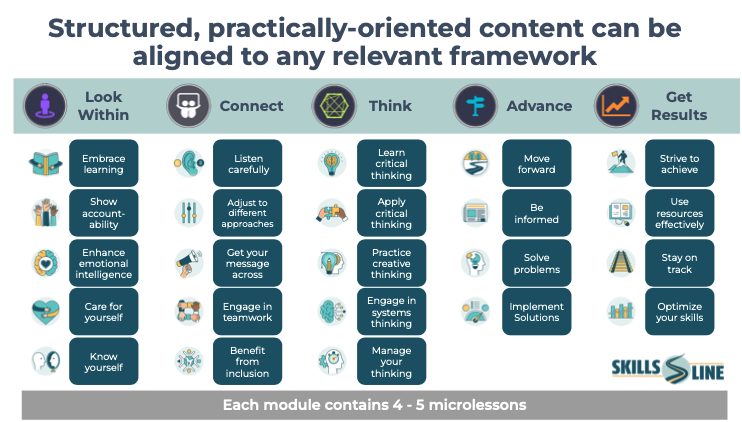
The Skillsline learning model is based on an online suite of 10-minute micro-lessons using a Socratic learning method, with wrap-around acilitation supports such as instructor guides, discussion questions, and journal prompts. The platform is also equipped with assessment tools that allow learners to track their progress with knowledge-based assessments and surveys of learner confidence.
The learning content is organized around 35 skills that commonly appear in various “soft” or “21st century” skill frameworks, ensuring that it can be easily aligned to any organization’s existing framework or set of standards. Already available are alignment guides to Jobs for America’s Graduates (JAG) competencies and Indiana’s employability and work ethic skills.
Skillsline is the skills-building partner of American Student Assistance and their new EvolveMe platform which helps middle and high school students explore careers and develop job-ready skills. It emphasizes the importance of teaching learners the language of durable human skills and how to recognize them in the context of work–enabling students to be more intentional when practicing and building skills, while also developing the ability to advocate for their capabilities.
Communities play a significant role in providing support and guidance to students as they explore who they are and the impact they want to make in the world. Developing connections between education, businesses, organizations, and other community stakeholders promote student success and can meet the workforce needs of a region. Students who participate in work-based learning experiences, internships, apprenticeships and other opportunities in local businesses and industries may choose to stay in their communities and boost the local economy.
ConnectED partners with schools, districts, and community leaders to support students in leading fulfilling college, career, and civic lives. Starting in 2006, ConnectED designed and led the Linked Learning initiative in nine large school districts in California to build systems in college and career pathways (see this blog we published in 2019).
They since have expanded nationally and continue to partner with communities to design pathways for college and career (not one or the other but both) including these four core components: college preparatory academics taught differently (more emphasis on project-based learning, real-world learning, and performance assessment), linked to a cluster of career courses, a continuum of work-based learning (job shadowing and internships), and personalized student support (social-emotional learning, college and career counseling, and accelerated instruction in reading, writing, math).
ConnectED is fundamentally about changing teaching and learning so that what students experience inside and outside of the classroom is different from traditional high school. Focusing on district-wide pathways, with a big emphasis on long-term systemic change, they go beyond the classroom to join with community partners in a local context. The education ecosystem, as ConnectED refers to it, is interconnected and the entire infrastructure of the community must collaborate to support and guide the next generation.
ConnectED partners with schools, districts, and community leaders to support students in leading fulfilling college, career, and civic lives.
Marissa Wicklund
In the Fall of 2021, in partnership with ConnectED, North Kansas City Schools (NKC) transformed their high schools into wall-to-wall career academies. The same four pathway programs are offered at all four comprehensive high schools in the district in Health and Wellness, Public and Commercial Services, Business, Leadership and Entrepreneurship, and Design, Innovation and Technology. Starting in ninth grade, every student selects a four-year program of study in one of these pathways.
Designed to prepare students for both college and career readiness, these programs are closely aligned with the local industry and provide students with opportunities to explore careers and gain transferable skills. The Real World Learning initiative in Kansas City supports over 30 districts in the region with the shared vision that by 2030 all students will graduate with at least one market-value asset (MVA); industry-valued experiences.
Chad Sutton,Deputy Superintendent of Academics in North Kansas City Schools says, “One of the keys to expanding partnerships has been our Industry Executive Council and our Pathway Advisory Boards. Each of these boards is facilitated by business leaders, each with a series of clearly articulated goals centered on providing students with work-based learning experiences. These leaders in turn go out and recruit their colleagues within their industry to partner with us and provide our students with authentic work-based learning experiences. We have reached a point in which our business leaders are doing as much recruiting as we are.”
A college and career-ready student develops from the care of their educators, their pathway/industry program, their school and district, and their community; like concentric circles with a common center. The gain is not only to the student, however; the community can benefit greatly from a student who has been exposed to career awareness and exploration throughout their education, built the technical and durable skills necessary for employment, and created a network of people in their community.
“One of the biggest positive changes we have seen is a more engaged community and I think a lot of that is we have a better way to engage community and business partners,” says Mark Maus, Executive Director of Academic Services in North Kansas City Schools. “Our partners have significantly expanded over the last several years and number nearly 500 partners when previously we were at a little over 200 partners. Our partners appreciate and enjoy working with our kids. It is changing the network of connections our students are leaving with!”
Designing a district-wide pathways system ensures that the majority of students get to participate in a pathways program, creating more options and opportunities to establish equity for all learners. NKC Schools, with the support of ConnectED, are making certain this is the case for all students in their district beginning with the graduating class of 2025.
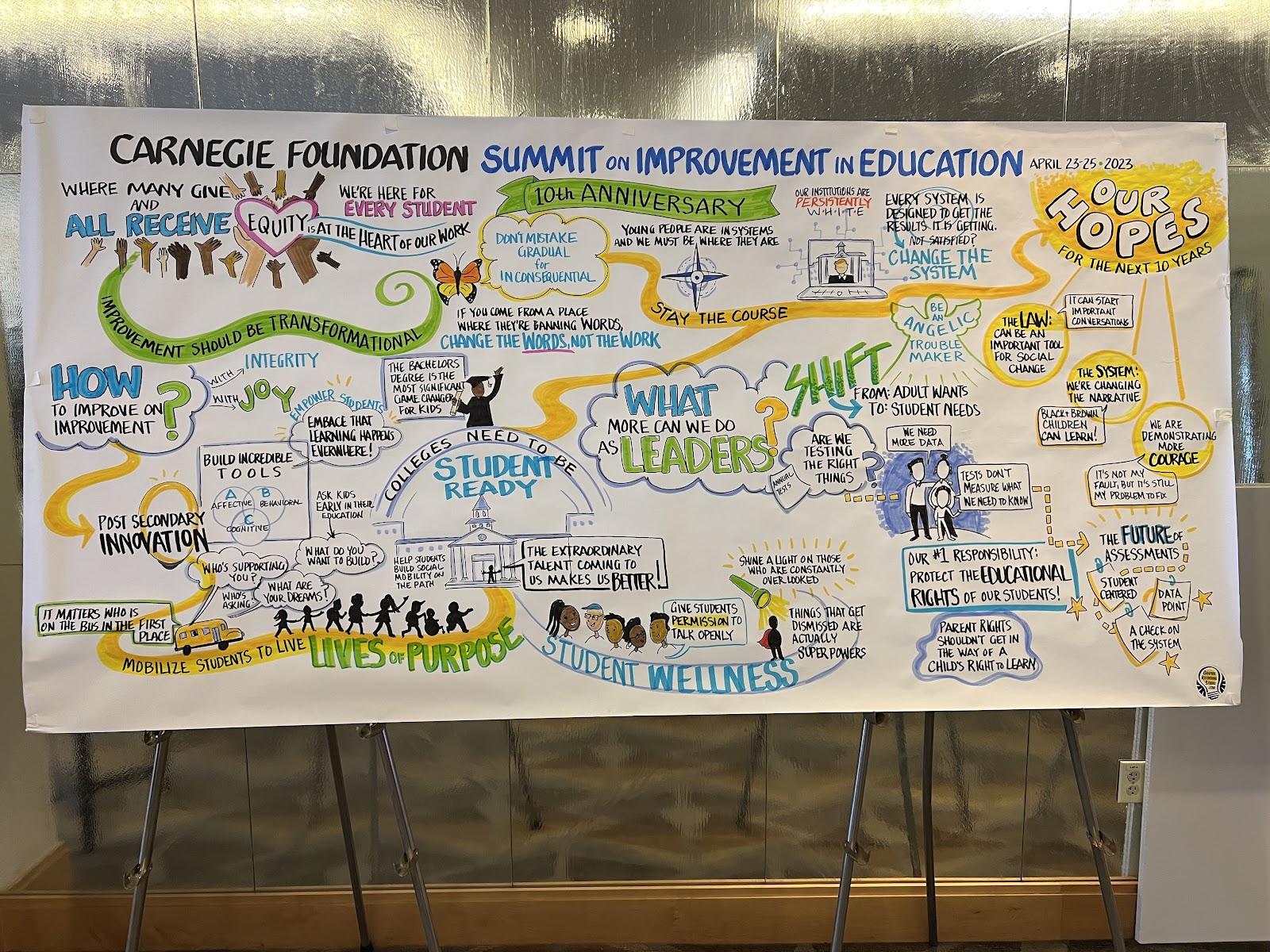
On April 23-25, 2023, 2000 people from 47 states and 12 nations spanning five continents came together as one community at the Carnegie Summit 2023 in San Diego. This event marked the 10th anniversary of the Carnegie Summit on Improvement in Education, an annual convening of a community of improvers to connect, share work, learn, and be inspired by each other. It is a place to belong to a larger movement for continuously improving our education system to close opportunity gaps for all our nation’s young people.
The focus of this 10th Summit centered around the joining of improvement and equity. Tim Knowles, the president of the Carnegie Foundation, opened the event with these powerful words: “Improvement must be about the pursuit of economic and racial justice. Improvement without equity means that achievement gaps don’t close. Improvement with equity means that they can and do.”
Historically, the Carnegie Summit has been the place for educators passionate about improvement in science. The community’s collective goals include finding better ways to learn how to improve in general and how to learn fast to achieve quality outcomes reliably at scale, centered around these six core principles of improvement:
Identify the specific problem we are trying to solve.
Specify what works, for whom, and under what set of conditions.
Understand how the current system produces the current outcomes.
Measure improvement by tracking key outcomes and processes.
Engage in rapid cycles to learn fast, fail fast, and improve quickly, embracing failures as opportunities to learn.
Embrace the wisdom of networked communities to accelerate improvements.
There were over 100 sessions and over 50 posters of schools and districts sharing their improvement journeys to engaged audiences.
In recent years, the Carnegie Summit has broadened its tent to include visionary, transformative change for the education sector. With Tim Knowles’ announcement in December about dismantling the Carnegie Unit to shift focus away from ‘seat time’ toward ‘skills’ and Carnegie’s newly announced partnership with Educational Testing Service (ETS) to radically transform assessment, it is clear that the time for a bold and ambitious transformation to our nation’s education system is now.
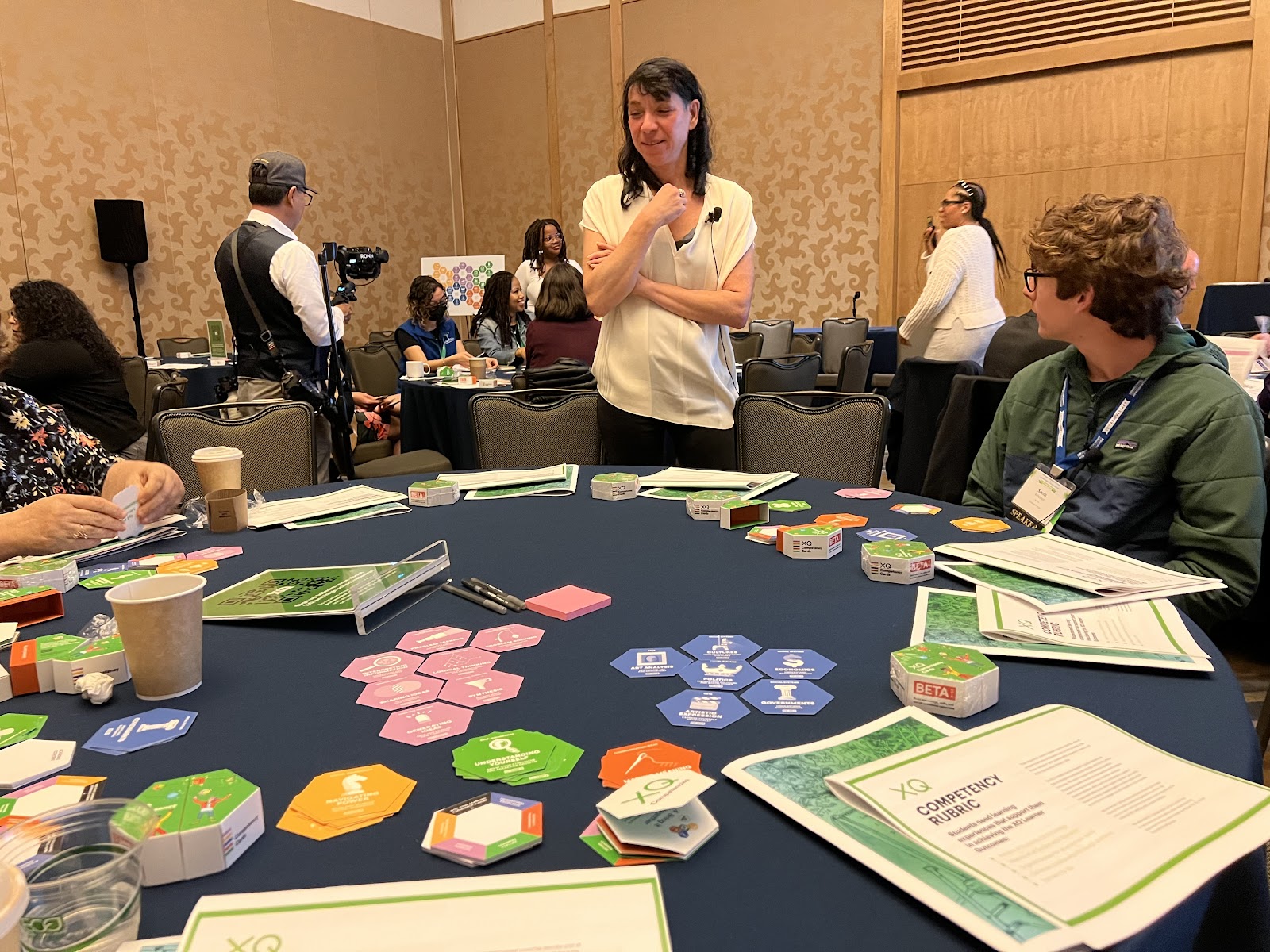
The XQ Institute joined the Carnegie Summit in 2022 with a vision to improve and reimagine the American high school experience. During the 2023 Summit, XQ hosted two sessions where conference-goers learned about the design journey for two XQ high schools in DC Public Schools and gained hands-on exposure to the XQ Competencies, a comprehensive collection of skills for XQ’s vision of what every American young person should demonstrate mastery of by the time they graduate from high school. The XQ Café was also a popular place to enjoy coffee and chat with other conference-goers about their shared vision for the future of our nation’s education system.
The 10th anniversary Carnegie Summit was a place where like-minded educators came together to be enriched and inspired by each other’s experiences. The education community’s journey from the Summit is toward equity, belonging, connection, joy, and improvement.


 Jeff Horton | Blog Site