As educators, we’ve been through countless waves of innovation, but none compare to the transformative power of Artificial Intelligence (AI). While many focus on how AI can personalize instruction or raise concerns about cheating, the truth is that AI changes everything. It challenges not only what we teach but also how we teach and how we prepare students for the future. To keep pace with this monumental shift, we need to rethink our approach to education.
From “How to Answer” to “How to Ask” the Right Questions
For generations, education has been centered on helping students find the right answers. Standardized tests, worksheets, and even grading have all reinforced this pattern: success meant identifying the correct solution. However, in the age of AI, which can provide answers instantly, the true skill isn’t knowing the answer—it’s knowing how to ask the right question.
For years, coding was seen as the key to future job security, with schools heavily investing in coding initiatives. However, AI can now perform coding tasks faster than most humans. As a result, the essential skill has shifted from coding to asking the right questions and crafting effective prompts. AI thrives on user input, and students must learn how to guide these systems thoughtfully, generating refined and specific outputs. The ability to iterate, prompt, refine, and curate AI’s output is now crucial.
Douglas Adams’ The Hitchhiker’s Guide to the Galaxy humorously illustrates this concept with the answer to the ultimate question of life being “42”—but as the story reveals, it’s meaningless without understanding the right question. The same holds true for AI: without targeted questions, even the most powerful systems can generate irrelevant or shallow responses.
Schools must now take inspiration from fields that prioritize critical thinking and editing skills. Journalism courses, once thought to be fading, are crucial in this new AI world. They teach students to curate information, sift through vast amounts of content, ask thought-provoking questions, and piece together meaningful stories. These skills apply directly to engaging with AI—students must act like editors, shaping the information AI provides rather than passively accepting it.
The New “How”: Refining Outputs and Developing Creativity
Being able to refine AI-generated outputs is a skill in itself. Students must not only evaluate what AI produces but also learn to add their own creative flair. A great example comes from the field of fashion design. Designers don’t just take a basic concept and leave it untouched; they elevate it into something glamorous, distinctive, and often groundbreaking. Similarly, students need to take AI outputs and transform them—whether they are essays, images, or datasets—into something that reflects their own vision.
In this way, fashion designers teach us how to enhance a simple AI-generated product, making it beautiful and compelling. The lesson here is clear: AI can provide the base, but the final product requires a human touch to make it truly unique.
Odyssey of The Mind (OM) – Helping Prepare Students in Many Ways
Odyssey of the Mind (OM) is an international creative problem-solving competition that challenges students from kindergarten through college to tackle open-ended problems, ranging from building mechanical devices to creating performances based on literature or historical themes. Hosted in states across the U.S., including Colorado, Kentucky, Pennsylvania, Virginia, and Florida, OM emphasizes critical skills such as teamwork, innovation, and critical thinking—skills that are increasingly important in the age of AI.
While AI can assist with generating ideas and performing technical tasks, creativity, voice, and the ability to refine outputs are uniquely human. OM participants develop these very skills, as they learn to think outside the box, collaborate with peers, and present their own unique solutions. These experiences prepare students to interact effectively with AI, teaching them how to shape and improve AI-generated content and add their own creative flair—something AI, for all its capabilities, cannot replicate.
Developing Student Voice: Socratic Seminars to Art Projects
In a world dominated by AI-generated content, it’s critical that learners are empowered to find their unique voice. Because of this, Socratic Seminars have newfound relevance. These seminars, which are rooted in dialogue, encourage students to develop their own voices, ask probing questions, and engage in deep, thoughtful discourse. While AI is increasingly capable of producing surface-level answers, the value of student voice—their ability to push past initial outputs and seek deeper meaning—will become more important than ever.
Additionally, we might look to pre-existing art forms as an example of what it’s like to conduct and curate AI. We may benefit by thinking of how we use AI more like sampling or collage than full-fledged composition. Letting students combine disparate elements of images, audio, video and more is an effective way to help them build skills as an editor and a curator in service of finding and honing their own unique ways. Projects like these teach students how to refine and improve AI outputs by continuing to prompt and modify the system’s output, adding personal, cultural, or musical touches that make the final product truly their own. In many ways, refining AI outputs is like creating a playlist—you start with a base, but your personal preferences and creative choices make it distinctively yours.
Conclusion: Embracing AI by Teaching Students to Curate, Refine, and Edit
AI is a transformative force, and to prepare students for the future, we need to focus less on technical proficiency and more on teaching them to become curators, editors, and innovators. Whether it’s through Socratic Seminars, journalism courses, fashion design, Odyssey of the Mind, or even HIP-HOP production, we must help students refine AI outputs, ask the right questions, and develop their own unique voices.
The future of education lies not in what students can do better than machines but in what they can do with them. By teaching students to prompt, refine, and transform AI outputs, we empower them to thrive in a world where human creativity and perspective are what truly set us apart.
As we continue to integrate AI into education, it’s important to recognize that these tools, while powerful, are only as effective as the minds that guide them. By equipping students with the skills to critically engage with AI—whether through refining outputs, curating content, or adding their own personal voice and style—we empower them to take ownership of their learning and creativity. The next generation of learners will not only need to master AI, but also transcend it by applying uniquely human insights, empathy, and originality to the challenges of tomorrow. As Albert Einstein once said, “Imagination is more important than knowledge. For knowledge is limited, whereas imagination embraces the entire world.” In this way, the partnership between human and machine becomes a vehicle for deeper understanding, innovation, and artistic expression.
Dr. Amy Swann is the Chief of Strategy and Compliance at Matchbook Learning, with over 20 years of experience innovating and improving schools across the U.S. Her work in change management and personalized learning has been featured in various publications, including the Harvard Letter and PBS News Hour. Connect with her on LinkedIn:Amy Swann.
30 miles east of Indianapolis sits the charming little town of Greenfield—a few hundred buildings at the intersection of Highway 40 and State Route 9 including a grain silo converted into a popular local restaurant. Another 15 minutes east between tall rows of corn, you’ll come to the campus of Eastern Hancock Schools where you’ll find remarkably engaged learners.
When Dr. George Philhower joined this small school community four years ago, he found a place where “Each student is able to experience school in a tight-knit school community where nearly everyone knows their name and is able to challenge them to learn, grow, and achieve each day.” He spotted four distinctive benefits of Eastern Hancock Schools and posted them at the top of the website: a place kids want to be, hands-on learning, community involvement, and advanced technology. (It’s an effective website that leads with the benefits of enrolling, one of the reasons 40% of the enrollment comes from out of district).
The Four Promises
The strategic framework of Eastern Hancock Schools is organized around four promises that we have included verbatim below:
JOY: We make magical moments
“What can we do today to make everyone want to come back tomorrow?”
We go out of our way to make learning fun. That’s why we intentionally plan “peak moments” throughout the year that students will remember. As educators, we believe joy is a choice and an invitation, and is the best way to strengthen the personal connections that bind us together.
We believe:
School should be fun
Learning moments become stories kids want to share
Joy is contagious and can be shared
Joy is a choice
Joy can be taught and learned
CONNECTION: We prioritize people
“How can we help each person feel valued and that they belong here?”
We want each member of our community to feel heard, valued, and loved. While our smaller size makes it easier to provide a family-like atmosphere, our intentional focus on building community, making connections, and making sure everyone feels like they belong and are loved is what truly makes Eastern Hancock such a special place.
We believe:
All people have a desire to be connected
People do well when they can
We need collaborative, ongoing effort to truly address the needs of all learners
We build confidence by talking to and learning from each other
We change best when we feel safe and connected
We can best modify behavior by connecting and correcting
GROWTH: We inspire extraordinary growth
“What can we inspire growth each and every day?”
We believe all students are not only capable of learning but also capable of extraordinary growth. That’s why our educators work hard to impact that learning for each student every day.
We believe:
Learning connects the known to the unknown
Teaching should impact learning in measurable ways
All students can learn when they are able to understand their learning targets
Learning improves when students are able to persevere in their learning
Students need adequate time to learn
The best way to know what students need and how they are growing is to be curious and watch what they do
We inspire growth when we listen to what students say, and look closely at what they make
SUCCESS: We are future-focused
“How can we prepare each student for success now and in the future?”
We measure our success not by test scores but by the amazing things our Royals do once they leave us. That’s why we invest so much in making sure each student is prepared to feel confident and ready for the next phase of their lives.
We believe:
Student success is the primary priority
The best way to prepare students for their future is to give them real-life experiences
Students should leave Eastern Hancock confident about their next steps
Experiencing ‘productive struggle’ is an important part of the progress
East Hancock Schools (Photo Credit: Tom Vander Ark)
Joy as a Promise
Philhower came to appreciate the power of joy as a teacher and coach. As a learning leader, he spotted systems that made joy and engagement a priority and implemented these learnings. He was inspired by the Cajon Valley USD Vision: “to develop happy kids, living in healthy relationships on a path to gainful employment.” Philhower also appreciated how Cajon Valley stated their community commitments as 8 promises.
He was inspired by the Highline Public Schools Promise developed about 10 years ago under Dr Susan Enfiled’s leadership: “Every student in Highline Public Schools is known by name, strength and need, and graduates prepared for the future they choose.” He appreciated the commitment to belonging and made it prominent in Promise #2 Connection.
Philhower co-hosted the 2023 World of Work Summit with Cajon Valley superintendent Dr. David Miyashiro. They are two of the best examples of system leaders prioritizing joyful learning in pathways to opportunity—local leaders with a national impact. Their work inspired the Getting Smart Design Principles: accessible, personalized, purposeful, joyful, authentic, and challenging. (For more on leading with joy, watch George on #FutureReady podcast with Tom Murray.)
Leading Real World Learning
All four EHS promises point to the importance of community-connected, real-world learning because it is engaging, connecting, future-focused, and all about growth.
To continue progressing, Philhower has been studying career pathways and work-based learning in Switzerland this year. “The Swiss approach is grounded in the belief that there are three primary purposes of education: self-actualization, equity, and the need for human capital development,” explains Philhower. “In turn, these principles drive three primary pillars—career exploration integration, industry-led credential development, and a permeable education system with no dead ends.”
Eastern Hancock schools have integrated pathways programming that provides students a head-start on their careers, such as vet tech science classes and a future-educator pathway. More than half of Eastern Hancock’s students are enrolled in a hybrid schedule, which allows them to gain real-world experiences. Many attend half-day classes at career centers and engage in work-based learning. An entrepreneurship course provides high school students the opportunity to plan and launch a business
Observations and Leadership Lessons
There are many things to learn from EHS, but below are a few of the lessons that I continue to think about.
Small systems can improve the student experience fast.
Responsive leaders can update small system goals, design principles, culture, community connections, and public profile quickly with the potential for improved student learning experience, teacher satisfaction, higher attendance, and enrollment.
EHS Lesson:
Connect with and serve the community
Market distinct benefits–give families a reason to enroll and engage
Lead with urgency, humility, and joy
Inherited infrastructure is sticky
Buildings, schedules, systems, budgets, and staffing are all still based on age cohorts and required secondary courses. It’s particularly difficult for a small system to achieve structural innovation alone.
EHS Lesson:
Support state initiatives like Indiana’s new diploma pathway
Support Indiana’s participation in the Carnegie/ETS pilot to create new skill assessments
Change trajectories with new pathways.
EHS gives students opportunities to explore various career paths while still being able to adjust and adapt their learning trajectories.
EHS Lesson:
Pathways to meaningful credentials can be created with intentional leadership and community involvement
Add work-based learning in and out of the schedule
A few years ago, as the world was grappling with COVID-19 and its aftermath, two developments in teaching and learning occurred that, in retrospect, were not only revolutionary but interconnected. The first took place in March 2021, when the federal government earmarked $13.2 billion in pandemic relief funds, the Elementary and Secondary School Emergency Relief (ESSER) Act, for K-12 schools across the country, which sunset at the end of this year. In the three years since, school districts have been able to use these dollars to help students recover from the extended periods of ineffective schooling they endured during the pandemic.
The second happened in 2022, when UNESCO’s Mahatma Gandhi Institute of Education for Peace and Sustainable Development released a groundbreaking report on teaching and learning in the 21st century. It noted the intricate web of biological, environmental and socio-political factors that influence how each person learns. Because of that, the report’s authors reasoned, “receiving a personalized learning experience is an entitlement and a human right for every learner.”
The link between these seemingly unrelated events is tutoring. American public schools have used more than $4 billion in ESSER funds to tutor students who fell behind during the pandemic. Some of that has been devoted to high-dosage tutoring, which is defined as intensive, relationship-based, individualized instruction. Research has shown that high-dosage tutoring, in the words of Brown University researcher Matt Kraft, is “the most effective education intervention ever subjected to rigorous evaluation.” In a paper released by the Annenberg Institute at Brown, Kraft presents convincing evidence that high-dosage tutoring is significantly more impactful on student achievement than other investments being made by school districts, including class size reductions, extending the school day/year, and summer school.
In the U.S., high-dosage tutoring became the great educational equalizer during the COVID era. Wealthy Americans have long had access to private tutors, making it a $115 billion industry in 2023. For a brief moment, ESSER dollars helped democratize access to a tutor, making tutors available to students whose families otherwise never would have been able to afford one.
Other countries have embraced this emphasis on personalized instruction. Take Kunskapsskolan, a Swedish network of public schools that has also supported schools in the UK, the Netherlands, the Middle East, and India. Kunskapsskolan requires every student to set long-term goals for themselves and then provides students with a coach to help them achieve progress. “All people are different and learn in different ways and at different rates.” according to Christian Wetell, a senior academic leader at Kunskapsskolan. “It is our task to meet this challenge. Regardless of his or her ability, each student has the right to a personal challenge every day.”
In India, neuroscientist Nandini Singh’s study of the brain shaped her understanding of each person’s unique, distinct cognitive processes — and propelled her belief in the importance of personalized instruction. That understanding prompted Singh and other authors of the UNESCO report to note that “… educational expenditure requires closer scrutiny of what, where, and when most investments are made to maximize returns on educational outcomes and contribute to the betterment of society.”
In the U.S., ESSER funds run out at the end of this year, and many districts believe they have no choice but to pull the plug on their high-dosage tutoring programs despite their documented successes. However, UNESCO’s imperative that personalized instruction is a fundamental human right, has no expiration date. The report issued a clear call to action: “A massive shift in mindset is needed in which education must play a key role. We must unlearn many of our current practices; practices that have been shaped over three centuries by education systems designed for an industrial age.”
The infusion of federal dollars over the past several years effectively freed school leaders in the US from having to make difficult budgetary choices. The challenge now is rethinking their budgets and investing in what works. District school leaders may argue that it’s easier said than done to change the way schools are staffed and how students spend their time during the school day. It doesn’t require an extraordinary injection of new dollars to continue to provide students with individualized instruction. It simply takes a commitment to making high-dosage tutoring a regular line item in annual public school budgets.
The old industrial model of K-12 education, where kids are seen as interchangeable widgets on an assembly line that moves at 60-minute intervals triggered by the ringing of a bell, is no longer useful or relevant. Research is clear: every kid learns at a different pace and in a different way. The best way to reach them is by tailoring lessons individually. Every school board has a chance to make tutoring a fundamental right for every learner, not an entitlement only for the privileged or a stop-gap measure to make up for instructional time lost during a global health crisis.
Michael Thomas Duffy is president of the GO Tutors Corps, a nonprofit with a mission to provide public school students with access to quality education through high-dosage tutoring.
By: Kathleen Osta, LaShawn Routé Chatmon, Tom Malarkey
What kind of leadership is needed to design and sustain new approaches to public education that are personalized, purposeful, joyful, authentic and challenging – and consistently and equitably meet the developmental needs of every young person in every community?
At the National Equity Project, we believe a caring, equitable, and innovative education ecosystem is possible.Examples of H3 learning environments exist today, but too few young people have access to them, and children, families, and educators who are most marginalized in our current systems are least likely to have access to innovative options or be invited to co-design new approaches.
How can we ensure that efforts to “re-architect public education” don’t reproduce or exacerbate existing inequities? How might our work to transform public education be done in ways that increase belonging, interrupt us/them narratives, and activate collective agency to create change? Antonia Rudenstine speaks to what “young people [should] get really good at” to prepare them to respond to this volatile, uncertain, complex, and ambiguous (VUCA) moment. Likewise, we need equity leaders to get really good at leading in VUCA conditions.
H3 Leaders
How we lead change is the change;the creation of Horizon 3 learning environments requires Horizon 3 leaders. If Horizon 2 leadership creates cultures of innovation within the basic paradigm of the current system, Horizon 3 leaders create the conditions for diverse teams of people in and across systems to imagine something different, believe that it’s possible, and catalyze energy, commitment and strategy to move in a new direction.
Our experience working with educators for the last 30 years tells us that leaders need to be equipped with mindsets and practices to help them lead for equity in conditions of complexity and uncertainty. The greatest challenges to creating ecosystems of care in which every young person thrives will not be technical. Instead, the challenge before us ishow to intentionally design change efforts in ways that weave people—their fears and pain as well as their hopes and dreams—together in service of a shared vision for youth thriving.
Leadership Mindsets
While knowledge of innovative school designs is important, the most impactful leaders we’ve seen are the ones who know themselves and understand how their lived experiences and identities shape how they see the world, and impact how people experience their leadership. Equity leaders show up with humility and possess the emotional intelligence and fortitude necessary to take people’s concerns seriously, but not personally. They make room for the stories of the teacher who feels undervalued, the parent whose trust was broken, the young people who feel silenced or pushed out, and the community leader who feels disrespected. They show up as hosts (not heroes) and build containers strong enough to hold divergent perspectives, attend to healing, and nurture relational trust. Equity leaders prioritize co-design, intentionally involving students, families, and communities in shaping educational solutions.
NEP utilizes a set of twelve Liberatory Design Mindsets, drawn from Liberatory Design, that provide helpful guidance about how leaders will need to see, engage, and act differently to bring an equitable H3 vision to life. All change efforts sit in a historical and social context. In the United States, access to power and opportunity is shaped by race, class, gender, and other social factors. These mindsets articulate intentions that explicitly acknowledge and counter the effects of systemic oppression, transform power, and invite more humanizing and liberatory ways of collaborating and designing.
We invite you to explore the Liberatory Design mindsets with your teams and communities. Review the full set and see which mindsets feel especially important in your context, which feel challenging, and which ones you want to try on.
In addition to working with these mindsets, we propose a short set of leadership practices that can help leaders respond more skillfully to the complexity and uncertainty of the moment and design change processes consistent with what we know about equity and complex systems.
Distinguish between complicated and complex problems. There is a significant difference between these two types of problems and each requires different leadership moves.
Complicated problems may be challenging, but known solutions exist and can be reliably applied across contexts. With complex challenges, there are no reliable predetermined solutions that work in every context, and no expert can tell us exactly what to do. When leaders respond to complex challenges with predetermined “solutions”, the result is often frustration and blame. In complexity, the leader’s role is to foster a culture and establish processes that promote collective sensemaking, where people are encouraged to generate and test many ideas—understanding that some will fail—and continuously learn and adapt along the way. Learning to work effectively with complex challenges will be critical for leaders working to create equitable H3 approaches to education.
Example:
For leaders working to move a school or system towards a real Horizon 3 approach, some aspects of their work will lie in the complicated domain. For example, installing a new HVAC system in a school may be challenging and require expert input but can be reliably executed. However, when a problem is complex, like chronic absenteeism among high school students, there are multiple variables at play and the contributing factors are too entangled to discern a clear cause and effect relationship. Here, sensemaking, safe-to-fail experimentation, learning, and adaptation are key.
Consider:
Which aspects of this challenge or situation are predictable? Which aspects have too many moving parts to know what might happen next?
How can you foster an environment that embraces emergence and adaptation while maintaining a shared sense of direction and purpose?
Expand our mental models. We all make sense of the world through mental models that we have inherited or gained through experience or study. Leaders working to create new designs for education will need to increase their self-awareness and intentionally and continuously expand their mental models to incorporate new ways of seeing and understanding. Leaders need to challenge their own assumptions about, for example, where and how learning happens, the purpose and practice of public education, what ‘good leadership’ looks and sounds like, the role of young people in shaping their own future, how change happens, and who gets to decide. Here, the role of the leader is to rigorously challenge their own and others’ entrained ways of seeing, engaging, and acting.
Example:
H3 leaders will need to expand their mental models about educational equity, moving well beyond a focus on eliminating disparate outcomes based on race or other identity markers, toward imagining and co-creating joyful, liberating learning environments that reflect and nurture the brilliance that every young person possesses. Expanding mental models means pushing beyond success within the existing paradigm to imagine what truly vibrant equitable learning systems might look like.
Consider:
Where do we notice our assumptions about the ‘givens’ of education or leadership constraining our ability to embrace new possibilities?
What is the equity opportunity that might be on the flip side of an equity challenge? How might we give ourselves the chance to imagine liberatory possibilities?
Hold the problem space open. The paradox of the times we are in is that the changes we seek are urgently needed and yet, rushing to quick solutions will likely not yield truly transformative or durable change. The practice of holding the problem space open challenges the way most leaders have been socialized. Rather than jumping quickly to solutions, this practice asks leaders to keep the problem space open long enough to engage multiple perspectives and make new meaning about why particular challenges are playing out – long enough for deeper insight to emerge and ultimately for new, unexpected and innovative ideas to be generated.
Doing this will require us to resist our socialization to rush to “fix” or “solve” and instead work with the fear and discomfort that may arise when we don’t have, or can’t provide an immediate answer or solution. As Dr. Bayo Akomolafe reminds us, “The times are urgent; let us slow down.”
Example:
Consider a scenario where out-of-school leaders collaborate with district leaders to reimagine powerful learning opportunities in various community settings. Instead of rushing to solutions, the leaders might first focus on developing a shared understanding of the challenges at hand. They could explore questions together like: Which students are most adversely affected by the lack of powerful in-school learning experiences? What obstacles do community-based organizations face when designing or credentialing impactful learning programs for young people? What has hindered our collaborative efforts in the past? By taking the time to examine these questions together, leaders gain deeper shared insights into the complexities of the situation and pave the way for more innovative and effective solutions that address the nuanced needs of their community and surface the opportunities and barriers in both in-school and out-of-school learning environments.
Consider:
How can we resist the urge to prematurely narrow our focus and instead invite divergent perspectives to further illuminate the full complexity of this challenge?
Whose voices or perspectives are we missing that could provide new insights into this issue if we take more time to listen?
Manage the anxiety that naturally arises when we are uncertain. The process of creating Horizon 3 learning ecosystems is full of possibility and uncertainty. As humans, we are wired for both survival and connection. Our brains and nervous systems like predictability. Even if we are consciously excited about a change process, uncertainty can activate a physiological threat response in which our body prepares to fight or flee. When our survival physiology kicks in, it is more difficult to be socially engaged or think creatively. As leaders working in complexity, it is important that we recognize this natural neurobiological response to change in ourselves and the people around us and have practices in place that help us pause, notice, and connect. Learning to anticipate and work with fear and discomfort – both our own and other peoples’ – is key to leading complex change processes. Leaders who are prepared in this way can be a steadying resource, recognizing that connection and belonging are key antidotes to fear, and creating cultures where all feelings are acknowledged, support is abundant, and a shared vision holds people together through the fear and discomfort of change.
Example:
A district is launching a new student-led, project-based learning program that deeply engages with local environmental and economic challenges. This represents a significant shift from traditional teaching methods, and many teachers feel unprepared and anxious about their new roles as facilitators rather than lecturers. Students feel a mix of excitement and apprehension and parents feel similarly conflicted; excited about the new approach, but worried about how this will be perceived by colleges and future employers. Instead of pushing forward, and minimizing these concerns, district leaders organize a series of sharing circles for the community to voice their hopes, fears and uncertainties. The purpose of the listening is not to find solutions for the concerns but to acknowledge and normalize the discomfort in a way that helps people feel heard and supported through the transition.
Consider:
In what ways can I model vulnerability and openness about my own anxieties to create a culture where it’s safe for others to do the same?
What rituals and routines can I introduce to help my team and community feel more grounded and connected as we navigate this uncertain terrain?
Conclusion
The journey towards Horizon 3 education is not a predetermined path, but a dynamic web of possibilities that demands new forms of leadership. New structures and innovative technologies are necessary, but insufficient to the creation of H3 education. The leaders we need are not just architects of new systems, but cultivators of shared visions and collective agency. H3 leaders embrace uncertainty as a catalyst for innovation, hold space for diverse and divergent perspectives and nurture cultures of belonging and innovation in service of co-creating learning environments where all young people thrive.
Kathleen Osta, LCSW, is a Managing Director at the National Equity Project. She currently leads the organization’s field impact work, contributing to national networks exploring the intersection of liberatory practices, the science of learning and development, youth-centered approaches, and social emotional well-being in schools and communities.
LaShawn Routé Chatmon, as the founding Executive Director of the National Equity Project, has dedicated her career to inspiring, coaching and orchestrating leaders to transform educational experiences, conditions and outcomes in schools and communities, with a specific focus on racial equity in education.
Tom Malarkey is a Director at the National Equity Project and specializes in equity-centered inquiry and design practices for educators and school systems. Tom was a co-creator of the Liberatory Design and Learning Partnerships frameworks.
This blog series is sponsored by LearnerStudio, a non-profit organization accelerating progress towards a future of learning where young people are inspired and prepared to thrive in the Age of AI – as individuals, in careers, in their communities and our democracy.
Curation of this series is led by Sujata Bhatt, founder of Incubate Learning, which is focused on reconnecting humans to their love of learning and creating.
Over the last five years, significant efforts emerged around the importance of durable or transferable skills. These durable skills (also called transferable skills or competencies) balance out the skills triangle (with core skills – reading, writing, math, and technical skills – skills particular to an industry or field comprise the other two sides of the triangle). Whether in school, district, or state efforts around Portraits of a Graduate or the increasing importance of these skills across higher education and the workplace, these skills are proving to be of high value for learners. National organizations have built durable skills and competency frameworks to help support and accelerate these efforts (XQ Competencies by XQ Institute, Future9 Competencies by ReDesign, America Success Durable Skills Advantage).
Yet, despite these efforts, evaluation of these skills is elusive and difficult. At the classroom level, schools with high-quality implementation of durable skills have skilled educators who can embed performance assessments across learning experiences. Ideally, the results of these assessments roll up into a signal for higher education or future employment in the form of a transcript (ex. Mastery Transcript) or credential stored in a digital wallet. However, typical Learning Management Systems built on legacy models are challenged by the assessment and roll-up of durable skills evaluation across multiple courses.
External evaluation of durable skills becomes a possible tool to address the complexity of internal evaluation. The landscape for performance assessments on these skills is sparse in the K-12 sector given the more recent emergence of competency-based approaches focused on transferable skills. Most broad-scale solutions focus on performance assessments to replace traditional standardized assessments, while others are focused on a set of organizationally defined competencies. The fastest growth is observed in the AI/VR-driven workplace upskilling sector. And this might be the most efficient way to build and evaluate these durable skills. As emphasized in Tim Dasey’s book Wisdom Factories, we can use simulation and games as a way to increase the practice repetitions for individuals to develop durable skills – especially when it is difficult to design and implement real-world experiences at high frequency.
Broad-Scale Public Initiatives
Early efforts in evaluating skills include public initiatives that pioneered this shift towards performance assessments (critical elements to the evaluation of durable skills). While these efforts primarily addressed standards, they emphasized the need for more authentic assessment.
New York Performance Standards Consortium (NYPAC): The NYPAC is a comprehensive and long-standing Performance Assessment Consortium. Teacher and learner-directed learning experiences, professional development, performance assessment tasks, and external/internal validation via rubrics across all discipline areas.
California Performance Assessment Collaborative (CPAC): This California initiative convenes educators, policymakers, and researchers to develop authentic assessments that support student learning. CPAC uses performance assessments, such as projects and portfolios, to measure applied knowledge and 21st-century skills.
Performance Assessment of Competency-based Education (PACE): New Hampshire’s PACE focuses on deeper learning through a competency-based approach. It blends local, common, and state-level assessments to promote critical knowledge and skills.
Performance Assessment Resource Bank: Hosted by Envision Learning Partners, the resource bank is a database of performance assessment examples built through a collaboration of the Educational Policy Improvement Center (EPIC), the Center for Collaborative Education (CCE), the Literacy Design Collaborative (LDC), Envision Schools, Summit Public Schools, and others.
A number of organizations focus on assessing specific durable skills as discrete measures separate from the learning experiences of the student.
NAFTrack Certification: Measures student performance through a multi-method approach, including work-based learning activities. Students must demonstrate mastery of Future Ready Skills validated by internship supervisors.
Education Design Lab: Uses the predetermined algorithms in a virtual reality online learning platform (VSBL) to assess a set of durable skills, including critical thinking, collaboration, and creative problem-solving. It involves co-designing and validating micro-credentials with input from institutions and employers.
America Succeeds Durable Skills Advantage Framework: America Succeeds scanned millions of job descriptions to produce a comprehensive list of durable skills. A subsequent effort validated these skills and created performance criteria around them with future efforts aimed at evaluation.
ACT WorkKeys: Provides assessments that measure both technical and durable skills, reflecting actual workplace demands. This approach extends beyond reading and writing competencies to evaluate a broader range of relevant skills.
Competency-Based Education Network (C-BEN: The Center for Skills by C-BEN promotes efforts to build tools for skills validation, assessment, and verification. The Center brings together leaders from education, workforce, and employer hiring systems to guide the field in developing quality talent assessments.
CAE: The Council for Aid to Education offers printable resources submitted online and externally evaluated focused on data literacy, critical reading/evaluation, critiquing an argument, writing effectiveness, and writing mechanics.
ETS/Carnegie: A new partnership between ETS and Carnegie emerged in 2023 to redesign competency-based performance assessment around the ETS Skills for the Future Taxonomy.
Junior Achievement Career Ready Credential: Junior Achievement credentials are shared with employers or colleges and demonstrate that a learner is proficient across durable skills. The JA resources include learning modules and skills tests to help earn microcredentials.
Employers seek candidates who not only possess technical skills but also exhibit transferable skills critical to job performance. However, they often lack the time to thoroughly evaluate these skills, underscoring the need for straightforward and reliable assessment systems. While many agree on what these skills are, the language and explanations must remain accessible. SHRM’s toolkit offers insights into a skills-first approach to hiring. This skills-based hiring and upskilling sector is robust, growing, and beyond the scope of this particular blog. However, driven by the needs of companies and their human resource departments to find and develop the best talent possible, K-16 solutions should pay attention to possible collaborations, insights, and learnings from these solutions.
Mursion: Uses immersive training simulations with human-powered avatars, allowing learners to practice difficult conversations and build impactful skills safely.
BodySwaps: Offers an immersive training platform that focuses on durable skills development and is accessible via VR, PC, and mobile devices.
AstrumU: Uses AI and machine learning to create validated skills profiles by compiling data from a learner’s education, credentials, and employment history. This skills extraction concept provides an alternative to the direct assessment of durable skills (or technical and core skills).
Global Skills X-Change: Provides credentialing services for the workplace, emphasizing skills-based assessments and multiple tools for evaluating employee skills.
Other Initiatives
In completing this review, a few other interesting initiatives emerged that seek to develop innovative ways to evaluate durable skills.
OECD: As the administrator of PISA, the OECD assessed creative thinking for 15-year-old students in more than 60 countries (but not in the United States) in 2022 via the PISA Creative Thinking assessment, which included interactive items that allow students to submit drawings with a digital tool. Comprehensive results help uncover how large-scale evaluations of durable skills might produce useful insights for educators.
The move towards competency-based assessment represents a significant shift in education and workforce development. The growing emphasis on durable and transferable skills, alongside innovative assessment methods, points to a future where students and workers are evaluated on a more holistic set of capabilities.
Young people are the voice of our next generation, and their role in shaping the world cannot be overstated. Among these critical voices is the Student Voice in Education, a driving force in elevating a school district. In July of 2022, Yakima School District brought together a group of students who would become leaders in advocating for student voices within our system. You may wonder why student voice in education is so important. To that, we ask: “Who do you serve in your district?” The only correct answer is students. Teachers should be invested in their students and their success, otherwise, why teach?
Each year, as school resumes, we see new faces in our district and, with that, new ideas that often escape adults in the system. It is the responsibility of a district to create the conditions where children can become change-makers, leaders, and creators of the future. What better way to achieve this than to integrate student voices into the decision-making processes within your district? We must remember that the primary goal of every adult working in education is to equip students with the knowledge and skills they need to confidently take on the world upon leaving the district.
With this in mind, we would share with you how we, as students, have led to ensure long-term student voice structures for our district.
What We Have Created in the Yakima School District
Our role as student leaders is diverse, encompassing everything from policy development to hosting events on critical issues like mental health. Our first major project, which brought together our team, was the development of a Yakima School District Student Voice Policy. Initially, our team consisted of five members. We spent long summers and sacrificed many Sunday afternoons for two years straight to discuss, plan, and create policy points that were deeply important to us.
Throughout the process, we gathered feedback from administrators, staff, teachers, students, and community members inside and outside of our town. We had also rebranded the Superintendent Student Advisory Council to become the Student Voice Council (SVC), a group of approximately 30 students who joined us each month to work on various student-identified issues such as mental health, nutrition, voting, and credits required to graduate.
One of the council’s significant achievements was the creation of Mental Health Week. Our team prepared a Mental Health Proclamation that was recognized by our school board. It dedicates the first full week of May to mental health awareness. Each day of that week in 2024, we hosted events addressing different mental health issues such as depression, anxiety, drug use, eating disorders, and much more. We had activities that included Kahoots, a mental health walk at the park, and we even had guest speakers come talk to students about mental health and how to regulate it. This entire week was the work of our council and team. Our goal was not merely to “do something” but to show our community that, as students, we were there for them, and we wanted our students to feel seen and heard.
Another crucial initiative was the Board Town Hall, which we organized during the school board election cycle. We invited board members to our town hall, hosted at the Capitol Theater in Yakima, to address questions from our community. We ensured the event was recorded so that others who couldn’t join us wouldn’t miss out. This engagement with the board isn’t just a one-time thing; we also make sure to intentionally attend board meetings to ensure consistent student voice.
We are also preparing the next generation of students and empowering them to create something that they care about. Our goal is to establish a lasting system that supports students to be the change they want to see.
How to Do it Right
In our experience, it’s proven important that student voice be a two-way partnership, rather than a one-way feedback channel. Our Student Voice Council, for example, is entirely student-driven, allowing students to steer the conversation in the direction of what is important to them. Agendas are created with space for brainstorming and open dialogue, rather than existing as singular opportunities for students to give input on district-selected issues. It’s a step in the right direction for districts to listen to their students, but trusting your students to make the change where they think it’s important is an actionable leap that few districts embrace. For example, our Mental Health Awareness Week sprouted from simply surveying students on what they thought were important educational issues that needed solving. It then evolved into a plan for a district week, which became an official School Board proclamation.
At this point, many districts around the nation have added space on their Board for one or two non-voting, student members. Again, it’s great that they’ve added a seat for students to share their opinions; however, school boards may believe that this symbolic action is representative of a wide swath of students. It is not…. . It’s easy to check the box, to say, “We’ve realized student voice.” There are a few issues that arise when one or two student board members represent student perspectives across a district. It is incredibly difficult for one or two students to represent the thinking and opinions of thousands. In our model, our Lead Fellow students have access to the wider student voice council. The structure to meet and speak with a diverse body of students from across the district allows us to inform what we take to Board meetings. Furthermore, when students drive the change that they want to see, it empowers them to take initiative, grow in their skills, and realize their change-making potential on a scale that’s impossible in a feedback position.
One issue that we’ve faced, and currently face, is that of student interest and retention. It’s difficult to gather and keep passionate students, especially when they’re only around for four short years. That being said, we have a few tips to overcome this obstacle:
Get started. The system will not fully make sense in the beginning. We joined this work as freshmen because we were curious and passionate about making change. We didn’t have a clue about policy governance, we didn’t know our Board and district leadership by name, and we certainly didn’t think we had the capacity to write and pass a district policy. It would be difficult to find young high schoolers who are policy experts; it’s not nearly as difficult to find dedicated, curious high schoolers who are eager to make it happen.
Look everywhere. The young leaders that you’re looking for might not be where you expect them to be. When we recruit students for the Student Voice Council, we go everywhere. Instead of presenting only to the student government and honors classrooms, we advertise in the lunchroom, hallways, and by posters online. This ensures that we’re able to reach any student who is eager to be a part of this work. When we look for students to lead the Student Voice Council (SVC), we look for students who’ve shined in the SVC.
Incentivize intentionally. When the Student Voice Council is recruiting, we advertise the opportunity for personal growth, the power to make real, lasting change, and the space to discuss issues and rectify issues that students care about. By doing this, we attract students who will make the most of the opportunity.
Create lasting change. Our Student Lead Fellows engaged over 1,000 people in our district to pass the Student Voice Policy that will outlive our tenure and those of the adults in our district. The Yakima School District Policy 0580 now holds the superintendent, and therefore the system, accountable for engaging student voices authentically over time. You can read our policy here, and we’d love to talk with you about how to bring this work to reality in your district!
We’d like to make a special thank you to our incredible Yakima School Board – Norm Walker, Graciela Villanueva, Martha Rice, Ryan Beckett, and Raymond Navarro. We also thank our Superintendent, Dr. Trevor Greene, and College Spark Washington for investing in our work. They are incredible examples of what it looks like when adults truly value student voice and let students lead!
Conclusion
Luanna: Working in student voice has been a rare and transformative opportunity, one that not every student receives. I am so thankful to have had the opportunity to support other students by ensuring that their voices in education are heard. As our generation advances, I see education as a crucial force in enabling students to take charge of their futures. I have always held the belief that education is what propels you forward. I admire that this district took on the initiative to push for student voices in shaping our district and what we as students are capable of learning.
My involvement in Student Government has been a constant throughout my life, but making an impact across the entire district has been a unique honor. This experience not only deepened my understanding of leadership but also shaped my vision for the future. I now know that my work in student voice has inspired a lifelong commitment to education and philanthropy. I aspire to build schools in underserved regions like the Congo and Cambodia because I believe education should be a right for all children, regardless of where they are born. My journey as a student leader has shown that even small actions can create global change.
Ezra: I truly believe that within the next 10 years, there will be students all over the nation who’ve risen up to make changes in their school community. It will be normal for districts and schools to encourage and empower their students to be partner decision-makers. I hope that the work Yakima has started continues to spread and impact this future.
By getting hands-on experience working with policy and local government, I’ve confirmed my interest in public policy/law and gained skills I’ll use in the future. I’ll be much more prepared for college and my career afterward. By working to represent students within district structures, I have improved as a speaker and become a better listener. By presenting this work to hundreds of people at a time, I’ve ditched my stage fright and gained confidence. By going out and doing this work, I’ve become a better student, speaker, leader, and person.
Luanna Huang and Ezra Rottman are students in Yakima School District.
In September, the inaugural GSVxPenn State: The Global Impact Forum brought together over 500 students and global changemakers from education, entrepreneurship, investment, and AI/ed-tech for more than 100 dynamic sessions at the Pennsylvania Convention Center in Philadelphia. The 2024 theme, “Accelerating AI for Good,” wasn’t just a tagline; it was the heartbeat of a movement aimed at fostering meaningful global change that reverberated throughout the entirety of the event
With regional academic institutions in Pennsylvania, such as Penn State, the University of Pennsylvania, the University of Pittsburgh, Carnegie Mellon University, Drexel University, Thaddeus Stevens College of Technology, and more, joining forces with national universities like Stanford University, the University of Southern California, Arizona State University, Rice University, and others, the forum underscored the importance of economic development, social mobility, and positive impact through education and innovation. Together, they positioned AI as a central force for reshaping our world for the better. Leading industry players like Deloitte, Accenture, Comcast, Google, KPMG, Microsoft, Boston Consulting Group, and more joined the conversation as attendees, exploring how AI can supercharge economic development and social mobility.
Big Ideas and Bold Visions
The forum began with an inspiring keynote by Michael Moe, Founder & CEO of Global Silicon Valley (GSV), who highlighted AI’s transformative potential in tackling today’s most pressing challenges, from climate change to educational inequity. Moe’s message was clear: AI isn’t just a tool; it’s a powerful catalyst for global good.
Here are a few key takeaways from the event:
Collaboration among government, education, and industry is critical to ensure the benefits of AI are shared equitably. (Penn State President Neeli Bendapudi, Abby Smith, President & CEO of Team Pennsylvania, and Rick Siger, Secretary of the Pennsylvania Department of Community and Economic Development)
A world free from racism, poverty, and violence is possible. (Arndrea King, President of the Drum Major Institute for Public Policy.)
The human-centered nature of technology (namely video) would enable more businesses and creators to share impactful stories, breaking down barriers along the way. (Philip Moyer, CEO of Vimeo)
Ethical considerations, cross-sector collaboration, and preparing for emerging AI innovations must be done responsibly to ensure positive and impactful outcomes for society. (Grace Evans, Professor at the College of William and Mary, featured experts like Devon Diaz, Ethics Officer at the Army Artificial Intelligence Task Force, Alka Patel, Director of Technology Strategy at the Cyberspace & Digital Policy Bureau, U.S. State Department, Vic Vuchic, Advisor to the Gates Foundation, and Lance Lindauer, Co-founder & Executive Director of the Partnership to Advance Responsible Technology.)
Access to computer science education must be universal as students will become creators of technology rather than mere consumers. (Hadi Partovi, Founder of Code.org)
We need an educational renaissance that embraces AI while holding onto core values like care, inclusion, and curiosity. (Gregg Behr, Executive Director of The Grable Foundation, invoking the legacy of Fred “Mister” Rogers)
AI is empowering the next generation of entrepreneurial leaders. (Amen Rahh, Yazmin Padilla, Ryan Oliver, Regional Executive DirectorBUILD.org, Mo Foster, Danae Mobley)
Artificial intelligence reflects and reinforces gender stereotypes. There is an urgent need for diversity in AI development to empower the next generation of women and challenge pervasive algorithmic biases. (Nayli Russo, PharmD, MBA, Strategist & Success Coach)
Enhancing Student Success: The Future is Bright
One of the most exciting aspects of the forum was witnessing over 80 high school and college students spotlighted in the Student Spotlight, showcasing their creativity, innovation, and problem-solving skills to a wide audience of entrepreneurs, innovators, industry professionals, and higher education institutions. Stephen Clark, a student from Lankenau High School, presented his AI project to Martin Luther King III and Arndrea Waters King—a powerful reminder of just how important the next generation will be in shaping the future of AI.
The Nittany AI Alliance and its keynote panel “Outcomes that Matter” further spotlighted Penn State students working with industry partners to create meaningful student engagement opportunities. Daren Coudriet, Executive Director of Penn State’s Nittany AI Alliance, along with students Zachary Walnok, Javier Pozo, Vishnu Venugopal, and Tony Bifano, Lead AI Readiness Lab Innovation Director, discussed their collaborative projects focused on advancing AI solutions for education and industry.
Shaping the Future of AI
Interactive workshops like Laura McBain’s “I Love Algorithms: A Design Workshop to Shape the Future of AI” encouraged participants to rethink AI’s role in society. Linsey Covert, Founder of TEAMology, led a session on enhancing student mental wellness through personalized AI resources, highlighting the multifaceted applications of this technology.
In the “Empowering Futures: Humanizing AI in Education” session, Ken Shelton, Founder & CEO of Elevate Education, and Tom Murray, Director of Innovation at Future Ready Schools (All4Ed), discussed how AI can create more inclusive and equitable learning environments. They focused on the importance of using AI to enhance educational experiences while prioritizing student well-being and human connections.
At the “Driving K-12 Innovation” session, educational leaders explored how AI can reshape education by addressing challenges and scaling solutions. Based on the CoSN 2024 report, speakers Edward McKaveney, Director of Technology at Hampton Township School District, Richard Platts, Director of Technology at Carlisle Area School District, and Norton Gusky, Educational Technology Consultant, shared insights on key AI trends and policies, helping participants develop strategies for effective AI integration in schools. Here’s Norton Gusky on this workshop:
“We designed a workshop for educational leaders on AI in Education using the CoSN K-12 Driving Innovation findings from 2024 as our framework. We used AI to generate our prompts and developed an interactive session that allowed participants to reflect on the Hurdles, Accelerators and Tech Enablers in the report based on their experience at the conference. I wanted to highlight the importance of “metacognition,” a human process that AI cannot do.
As the conference was underway, we listened for emerging themes and modified the prompts adding language that we heard at the conference. We divided people into four groups and had each group tackle one of the prompts. Then we tapped into a strategy I had not used before, “World Cafe.” Instead of the entire group rotating to the next prompt, this strategy requires one person to remain and update the new group on what the previous group had discussed. In the past I observed people starting from scratch and not elaborating on previous ideas. With the Global Cafe, it was fascinating to see how each group took the original ideas, added details, and then moved on to new ideas. This method resulted in deeper conversations and high engagement among participants.
Following, we asked an AI agent to summarize the conversation from the notes that were collected at each table: Even though we didn’t directly use #3 as a prompt, ChatGPT helped us identify common themes that were present across the prompted conversations.
1. How can the CoSN framework be integrated into a K-12 curriculum?
Data Ecosystem Evaluation: Incorporate systems for evaluating new technologies and using AI for analyzing contracts and terms of service, enhancing teacher workflows and decision-making.
Bridging Content and Pedagogy: Use AI tools to critique, evaluate, and review educational content, improving subject domain accuracy in areas like biology and economics.
Standardized Integration: Develop standardized methods for integrating AI tools into the curriculum to ensure consistency and effectiveness.
Personalized Tutoring: Implement AI as personalized tutors to cater to individual student needs, enhancing learning outcomes.
Human Element: Balance AI integration with the human element in teaching, ensuring that technology supports rather than replaces teacher-student interactions.
2. What hurdles at your school/institution do AI tools help to overcome (enablers), or accelerate solutions?
Legal and Privacy Concerns: Address legal challenges and privacy concerns by updating policies and contracts to protect stakeholders.
Stakeholder Discomfort: Manage discomfort among stakeholders by increasing awareness and access to information about AI benefits.
Teacher Overwhelm: Use AI to reduce teacher workload, such as grading, to improve retention and focus on teaching.
Language and Neurodiversity: Leverage AI for translation and support for neurodiverse students, enhancing inclusivity.
Data Analytics: Utilize data analytics to facilitate learning conversations and inform pedagogical choices.
3. What ethical concerns are you thinking about in your schools/institutions?
Privacy and Data Security: Ensure robust privacy measures to protect student data.
Bias and Fairness: Address potential biases in AI algorithms to ensure fair treatment of all students.
Transparency: Maintain transparency in AI usage and decision-making processes.
Student Work Authenticity: Redefine what constitutes student work and assessment in the age of AI.
Teacher Roles: Consider the evolving role of teachers as AI becomes more integrated into education.
4. What are the potential long-term impacts on teachers and students?
Enhanced Teacher-Student Interaction: AI can free up time for teachers to engage more with students individually.
Resource Support: AI provides personalized learning resources, supporting student inquiry and a student-centered classroom.
Professional Development: Continuous professional development for teachers to adapt to AI-enhanced teaching methods.
Classroom Management: AI impacts classroom management, lesson design, and group work dynamics.
Critical Thinking: Encourage students to ask better questions and develop critical thinking skills, despite reduced emphasis on traditional research skills.
5. How will you balance the benefits of AI with the need to develop student growth?
Selective AI Use: Exclude AI from activities like conflict resolution to foster empathy and emotional intelligence.
Empathy Development: Integrate empathy and emotional intelligence into AI-related activities and prompts.
Case Studies and Discussions: Use AI to facilitate literature discussions and case studies that promote empathy.
Teacher Support: AI can help teachers improve their own social-emotional learning (SEL) skills.
Coaching for SEL: Provide coaching for teachers to enhance their ability to teach SEL effectively.”
Looking Ahead: The Journey Continues
The inaugural GSVxPenn State: The Global Impact Forum wasn’t just a success—it marked the beginning of a transformative journey in Pennsylvania and beyond. Conversations around AI ethics, education, and mental health emphasized that the future of AI must be inclusive and equitable.
Key local contributions came from figures like David Gindhart, Assistant Vice President for Outreach at Penn State, Soundar Kumara, Allen E. & Allen M. Pearce Professor of Industrial Engineering at Penn State, Marylyn Ritchie, Associate Director of the Institute for Biomedical Informatics at the University of Pennsylvania, Lilach Mollick, Associate Professor of Education at the University of Pennsylvania, Bo Powers, Professor of Electrical & Computer Engineering at Carnegie Mellon University, and Joe Yun, Director of the Idea Foundry at the University of Pittsburgh. Collaborations among top educational institutions, alongside participation from the U.S. State Department and Philadelphia City Council, highlighted the state’s leadership in AI research and development.
A special thanks to our Founding Sponsors—Cranium AI, American Student Assistance, Genius Group, HiLife, KINBER, Philanthropi, and The AI Revolution Company—whose support was crucial in making TGIF 2024 a resounding success. Their commitment to advancing education and innovation was evident throughout the event, creating an environment where ideas could flourish and collaborations could thrive.
Justin W. Aglio, Ed.D., Associate Vice President, Penn State Outreach & Executive Director, Readiness Institute at Penn State | @JustinAglio (X)
America’s education system was a groundbreaking effort to help a growing nation thrive in the 19th century. Now, 200 years later, the world has changed; the horizon looks drastically different. Collectively, we need to redesign our education system to enable all of our children — and, by extension, our nation — to thrive today and tomorrow. “Horizon Three” or “H3” names the future-ready system we need, one that is grounded in equity serving learners’ individual strengths and needs as well as the common good. This series provides a glimpse of where H3 is already being designed and built. It also includes provocations about how we might fundamentally reimagine learning for the future ahead. You can learn more about the horizons framing here.
By: Collective Shift
An audio podcast version of this blog, created by Notebook LM.
In the first article in this series, Tom Vander Ark outlined three opportunities for shifting education from a traditional, efficiency-based industrial model to a future-ready, learner-centered “Horizon 3” model: new school development, the creation of learner experience networks, and school transformation. School transformation is in many ways the most complex, as evidenced by the fact that we’ve historically struggled to do it at scale. Although the world has changed vastly, the majority of the U.S.’s 54 million K12 students and four million teachers still spend six or more hours per day in schools reflecting the “Horizon 1” model, where teaching and learning don’t look significantly different than they did half a century ago. Finding ways to transform the collective educational experience is critical.
H3 Graphic from Learner Studio
Collective Shift – an alliance of eight organizations that combined have over a century of experience envisioning, designing, and building competency-based, learner-centered classrooms, schools, and systems – believes that today’s advances in generative AI present a unique accelerant to successfully transforming schools and school systems.
What is Generative AI and How Might It Change the Game?
Generative AI refers to artificial intelligence technology capable of creating new content, ideas, or solutions by learning from vast amounts of existing data.People naturally use AI to make their work easier, and they build what they know. If the majority of educators are in Horizon 1 schools, the sorts of AI uses they’re likely to envision will perpetuate the practices of a Horizon 1 education system: more multiple choice tests and assignments, worksheets, and lesson plans. There’s plenty of that out there, with or without AI support..
Our classrooms are diverse, and students have differing needs, something educators struggle with supporting, given the many demands on them. Creative educators are using generative AI to:
differentiate teaching (to meet some of the needs of small groups of students)
individualize teaching (meet some of the needs of an individual learner)
personalize teaching (think, the barista putting your name on your Starbucks latte).
For example, at a recent AI event we attended, an educator was deeply excited to build a chatbot that could generate new multiple-choice quizzes for the group of students who were absent on the day of the in-class quiz. Another educator created a chatbot that improves textbook math problems by taking inputs about grade level, content standards, geographical location, and comfort with the topic. On the left is a problem the AI chatbot generated for a teacher to use with 6th graders in Los Angeles, while on the right is a classic textbook-style problem. The AI version spices the problem with local context and personalization. You can imagine an AI chatbot that could instantaneously generate a different word problem for each child using their name – Starbucks on steroids.
Mia, a sixth-grader at a Los Angeles middle school, is designing a poster for her school’s upcoming film festival. She wants to create a rectangular poster with a star-shaped cutout in the center, representing the Hollywood Walk of Fame. The poster’s dimensions are 24 inches by 18 inches, and the star cutout is a regular pentagon with each side measuring 6 inches. a) Calculate the area of the rectangular poster. b) Find the perimeter of the star-shaped cutout. c) Determine the total area of the poster, excluding the star-shaped cutout.
These are all powerful uses of GenAI, but they aren’t moving us to the horizon of student-centered learning, student agency, competency-development, or more fluid boundaries between school and the world outside. GenAI is currently primarily serving as an accelerant of the Horizon 1 to Horizon 2 shift. Think the math problem above, or instant development of lesson plans that take into account learners’ interests, or access to unlimited AI-powered one-to-one tutoring. The majority of AI tools currently being built and deployed in schools fall into this shift towards more responsive teaching. AI companies in education, whether nonprofit or for-profit, go where the market is, so they promote products and practices that perpetuate and even entrench H1 and H2, both of which focus first and foremost on mass or small-group teaching.
You will note that the left column in the chart above is the only one not focused on teaching – on what the teacher will do; it’s focused on what the learner does. We believe that GenAi can accelerate the transformation of school to personalized learning. Below are a few examples of how.
Lowering the Barriers to H3 Practices
A core element of Horizon 3 is a different set of responsive, reciprocal behaviors and relationships: between educators and students, between students, between school and families, between school and communities. School is no longer about teachers stuffing content into willing or unwilling students but rather about growing the competence of young people to become fulfilled, thriving, contributing, self-sustaining members of society.
Competency-based education (CBE) is a shorthand for the set of teaching & learning practices at H3’s foundation. In a recent EdWeek Research Center survey, a majority of educators said they are interested in learning more about these practices, but 51% said they don’t know how to do them. For school transformation at scale, extensive educator professional learning will be needed.
Generative AI cannot replace professional learning, but it can greatly accelerate access to H3 for everyone. In the sections below, we give examples of how AI can support school transformation across two domains – personalized learning (as opposed to teaching) and personalized coaching as support for personalized learning. We’ll explore examples for three different levels of experience:
Those who have no access to H3 professional development
Those dipping their toes into H3 practices
Those with moderate to significant experience with H3 practices
Localization and Personalization: Tailoring Education to Local Needs and H3 Design Experience
One of the most compelling applications of generative AI in education is its ability to personalize learning experiences to local contexts and resources. This means that adults and students can develop curricula and tools that resonate with their specific community values, cultures, and needs — and their Portrait of a Graduate, where many schools and districts start in their transformation journey.
Once a community has created a Portrait of a Graduate (or Learner), they often don’t know what to do next. It’s all well and good to say we as a community want our students (and adults) to be ‘Capable Communicators’ – but what does that mean and how is a student or classroom teacher or school leader to work with this? This is one place where GenAI can accelerate change.
Take the Grad Portrait Rubric & Progression Builderapp developed on Playlab by the team at Building 21 (both of whom are members of Collective Shift). This tool enables schools to create competency-based progressions and rubrics aligned with their unique Portrait of a Graduate. A school or system can input their community-designed set of competencies, and the app generates customized frameworks that young people and adults can use to assess their learning progress. Without the help of such an AI tool, progressions would take tens of hours of human time to build; the AI tool creates an excellent working draft in less than 30 seconds. Here you can see the conversation we had with the GenAi tool to build out what ‘Capable Communicators’ means from ages 4 to adulthood. It took less than a minute. For coherent school transformation, Collective Shift strongly recommends that Grad Portrait-aligned progressions be used at a school-wide (if not district-wide) level, rather than each educator creating their own version.
For education to be relevant to young people, they need to explore issues and solve problems in their local context that matter to them personally. Consider a school aiming to incorporate local history and community issues into their learning design. Teachers just getting started with H3 transformation can use Playlab to create a chatbot that is “trained” to reflect these local elements and embed it into their learning experiences. Or, they could use a project-builder AI that lets adults or students design a local context project in a fraction of the time it would take to build by hand. Each student could, if they desired, build their own personally compelling exploration of their community.
This level of personalization empowers students to see themselves and their communities in their education at a much deeper level than before and allows them to take full advantage of the community engagement work that goes into the development of a local Portrait of a Graduate.
Horizon 3 transformation doesn’t mean that students do everything. Teachers, in fact, have an even more active role in building a strong relationship between students, communities, knowledge, and knowledge application processes: they become designers, co-designers (along with students and often community members), coaches, and facilitators of learning experiences (projects). As Antonia Rudenstine described in a previous article in this series, helping students develop future-ready competencies requires “relevant, meaningful projects, designs, products, artifacts, and more”. Doing this well takes a lot of time and effort – and GenAI can serve as a powerful co-pilot.
For example, Inkwire, also a member of Collective Shift, has developed an AI-powered tool designed to assist teachers in crafting transformative educational experiences. As hurricane after hurricane hits the US, imagine a classroom of young people curious about exploring what’s going on. Their curiosity inspires their teacher to develop a project-based unit on topic but she feels overwhelmed by the planning involved. With a tool like Inkwire, she can input her goals, go through an AI-assisted brainstorming process, and come out on the other side with a scaffolded plan complete with resources, timelines, and assessment strategies. This is a very different approach to the math problems showcased above.
Screenshot from InkWire
Additionally, as teachers interact with these tools, they naturally upskill—learning new methodologies and strategies simply from their day-to-day use of the tools. For example, Inkwire partnered with the Professional Learning team at the High Tech High Graduate School of Education to embed their Deeper Learning design framework into the tool itself. This allows educators to “carry” these professional learning resources with them in their everyday tools. The AI doesn’t replace the teacher’s expertise but enhances it, making the adoption of H3 practices more attainable. Teachers, in the best future-ready way, learn what project-based learning is by doing it – rather than being told about it.
Scaling Coaching: Making Expert Guidance Accessible
Professional coaching is instrumental in driving school transformation, but it’s often resource-intensive and inaccessible to many educators. Generative AI offers a solution by encapsulating coaching expertise into scalable tools that educators can access anytime, anywhere.
Ask Gabby is a thoughtful AI coach developed by Sujata Bhatt of Incubate Learning (also a Collective Shift member). Bhatt has decades of experience as a teacher, and as coach for school and district leaders, educators, and students. Designed to help users build their learning identities and based on the science of learning and development, Gabby provides personalized guidance, reflective prompts, and actionable feedback– for young people and adults. Through the process of designing Gabby, Bhatt was able to translate her expertise as well as research into an interactive, conversational tool that is accessible anytime, anywhere, in private and anonymously.
Picture an educator in a remote district with limited access to instructional coaches. Through Ask Gabby or other AI-powered coaches, they can engage in reflective practices, set professional goals, and receive tailored advice to improve their teaching. They can role-play or debrief an experience or situation in real-time in private – as often as they’d like, 24/7. This not only democratizes access to high-quality coaching but also fosters a culture of growth mindset and continuous improvement. It fosters a culture of professional learning. Here is a sample conversation with Gabby.
As the technology develops further, these AI coaches will be able to analyze patterns over time, providing insights into common challenges and areas for growth for individuals and across a school or district. This data-driven approach will enable leaders to make informed decisions about where to allocate resources and how to support their staff effectively in service of a Horizon 3 learning model.
Moving Forward: An Invitation to Transform
Collective Shift believes if we take collective action to identify, design, build, test (and fund) a suite of tools that enable the shift to the behaviors on the left of the table above, then Generative AI will be able to transform education by accelerating the personalization of learning.
Actionable Steps for Education Leaders:
Pilot AI Tools in Your Context: Begin by integrating AI tools in a small setting to assess their impact.
Foster a Growth Mindset Among Staff: Encourage educators to view AI as a partner or co-pilot in innovation rather than a replacement, promoting openness to new technologies.
Engage with Stakeholders: Involve students, parents, and community members in conversations about how AI can enhance learning, addressing any concerns and setting shared goals.
Collaborate Across Networks:Join or form networks with other education leaders exploring AI to share best practices, challenges, and successes.
Join the Conversation
The integration of generative AI in education is more than an opportunity to simply save time or automate workflows; it’s a call to action to redefine what education can be. It’s about creating learning environments that are as dynamic and diverse as the students they serve.
We invite you to be part of this journey; together, we can push the boundaries of what’s possible.
Collective Shift is an alliance of eight organizations working together to put the human back into AI. And put AI to work to help us redesign education. They are Building 21, NGLC, Incubate Learning, InkWire, National Equity Project, Learner-Centered Collaborative, Playlab, and reDesign.
This blog series is sponsored by LearnerStudio, a non-profit organization accelerating progress towards a future of learning where young people are inspired and prepared to thrive in the Age of AI – as individuals, in careers, in their communities and our democracy. Curation of this series is led by Sujata Bhatt, founder of Incubate Learning, which is focused on reconnecting humans to their love of learning and creating.
“Welcome to Garden City School, perhaps an unsuspecting place for a radical leap forward in what school can be.”
In the heart of Cranston, Rhode Island, Garden City School is redefining what it means to attend a public school. At the heart of this transformation is a commitment to meet the diverse needs and talents of today’s students, fostering an environment where holistic wellness, joy, and exploration are at the forefront.
Several years ago, the Cranston community rallied around a visionary idea: to create a school that not only adapts to the evolving needs of its students but also serves as a beacon of what 21st-century learning can achieve. The call was clear—develop a learning space that students are excited to attend, one that sparks joy and a sense of empowerment among its learners and educators alike.
Partnering with Fielding International, renowned architects and educators, Garden City School underwent a transformation. The result? A state-of-the-art facility that opened its doors in the fall of 2023, embodying the very essence of a future-ready school. This new space supports meaningful collaboration among teachers and encourages the development of authentic learning experiences that extend beyond traditional classroom boundaries.
Through a series of short films, you can go on a virtual tour of Garden City School, showcasing its five distinct learning communities. Each segment aims to highlight how their innovative design and educational philosophy create a nurturing environment tailored to personal growth and academic excellence.
Film 1: Life of a Future-Ready School
See it for yourself. Experience the spirit of Garden City School and witness the fluidity of space as it adapts to the needs of every learner. Soar through the hallways and classrooms in action, capturing every angle of its innovative design in this introductory video to the “Welcome to Garden City: The Future of Education” film series. This one-of-a-kind fly-through perspective offers an intimate look at how modern design fosters connection, creativity, and community.
Film 2: How Does the Building Improve Teaching and Learning?
In this film, hear directly from the Principal, Bryan Byerlee, and his team of educators on how Garden City School’s unique layout creates a powerful learning environment that fosters collaboration, creativity, and success. Discover how carefully crafted spaces and a strong Learning Community model come together to create an environment where every student thrives and reshapes itself is reshape education for the better.
Film 3: A Day in the Life: The Student Experience
Hear directly from those who live it every day—experience Garden City School through the eyes of two of its fourth graders, Andre and Avnita. Discover how flexible learning spaces, student choice, and strong teacher relationships create an engaging and dynamic educational experience.
Film 4: A Day in the Life: The Teacher Experience
Follow second-grade teachers, Holly Chittim and Kristie Cipalone, as they take you inside Garden City School to reveal how a flexible, learner-focused environment transforms their teaching. Experience firsthand how they navigate a day in a space designed for collaboration, creativity, and student success. See how this unique environment, with its innovative design and student-centered approach, enhances their teaching methods and supports every learner.
Film 5: Leveraging Time and Space in a Learning Community
See the optimization of time and space at Garden City School, where learning is reimagined through fluid, student-centered environments. Animated diagrams and educator insights reveal how this innovative approach fosters creativity, autonomy, and enhanced engagement within a cohesive learning environment.
Film 6: Shifting from the Traditional Classroom to a Learning Community
Witness the transformation at Garden City School through the eyes of its teachers as they navigate the shift to a Learning Community model. Discover the challenges they faced, the lessons learned, and the support from Fielding International that revitalized their teaching practices and enhanced student learning.
Film 7: Student Voices: What Makes Our School Special
Want to know what makes Garden City School so special? Let the students tell you! In their own words, discover how this new school environment fuels their love for learning, creativity, and community. Their perspectives will show you why this place is so unique and allows you to experience the excitement of learning in a space designed just for them.
Film 8: Bringing the World to Cranston
Step into Garden City School with the Global Learning Commons, a networking initiative hosted by Fielding International. This in-person tour brings together educational leaders to witness firsthand how a cutting-edge school design can revolutionize learning, providing ideas that could shape the future of education worldwide.
For the last 20 months, generative AI has forced a redo of how educators approach curriculum design, assessment, and instructional support. Textbooks, your time has come.
Beginning this spring, the world’s first large-scale AI-powered textbook implementation will take place in Korean third-, fourth-, and seventh-grade grade classrooms. It is the latest technology-infused attempt to keep the $10-billion textbook industry relevant. This is perhaps the last stage in a long journey.
In 1993, my first year as a sixth-grade social studies teacher, both I and my students were dazzled by Encarta, an interactive encyclopedia CD-ROM that offered a wealth of information, including multimedia content and search capabilities.
A few years later I gaped when I received my Holt textbook (Holt Social Studies: World History). The accompanying CD-ROM included interactive activities, multimedia content, and additional resources to enhance the learning experience. I painstakingly attached a Macintosh Quadra computer to a large-screen (36 inches – can you believe it?) classroom TV, inserted the disc, and pressed play.
Infrastructure development – the e-rate for high-speed wifi as well as mass-produced devices – pushed the next wave of innovation: ebooks. One of the first examples in my subject area was My World 6 from Scholastic in 2004.This digital/etextbook featured multimedia content, including videos, maps, and interactive timelines via a web interface.
The newest development in textbook evolution arrived this year. For the first time, because of Large Language Models such as ChatGPT, Claude, CoPilot, and Gemini, the new etextbooks are customizable down to a granular level. What is the grain size? Individual students.
The Korean Experiment
To find out more about the Korean initiative I contacted the office of Education Minister Lee Ju-Ho. We crossed paths multiple times when he was an economics professor at the Korea Development Institute, where I consulted for years on a project-based learning professional development program.
Mr. Lee’s staff responded to my long list of questions with PowerPoints and detailed PDFs, which form the basis for the analysis that follows.
The goal of the Korean initiative fits on one PowerPoint slide: ”By creating an individualized and tailored learning environment, we seek to empower all students to take the lead in their own growth. Our goal is to nurture every student into a talented individual through personalized education.”
According to the Ministry, the benefit for the students comes down to the effective use of real-time data to deliver personalized instruction tailored to both needs and interests. The benefits to the teacher accrue from that data as well, empowering the teacher (via an AI “teaching assistant) to diagnose learning paths, deliver content recommendations, and provide personalized learning support (see accompanying screenshots of the data dashboard draft version).
While the AI textbooks will include formative assessments built on comprehension questions, that data will not be used to generate grades. Instead, the assessments will be used to diagnose students’ learning characteristics and generate AI-powered support.
The rollout will occur over a multi-year period, launching first with etextbooks in math, English, information, and communication technology, as well as Korean for Special Education Students. Between 2026-2028, additional subjects (Korean, Social Studies, Science, History, Technology/ Homemaking) and grade levels will be added to the system.
The Ministry realizes that the technical rollout needs to be accompanied by a massive professional development program. The training covers the process and methods of understanding the functions of AI digital textbooks and utilizing them for innovation in the classroom. About 10,000 teacher leaders completed the training from May to August this year. Another 150,000 teachers will be trained onsite in the second half of the year.
As you can imagine, Korean parents have reacted with trepidation to the launch of such a comprehensive change to the nation’s education system. The primary fear in dozens of news articles has focused on the additional screen time. The Ministry has a ready response: “Issues such as excessive device use may stem from students not being adequately taught proper device usage. To address this, we plan to strengthen digital citizenship education, ensuring that students use digital technology safely, responsibly, and productively, thereby enhancing their own competitiveness.”
U.S. Initiatives
While the scope and ambition of the Korean AI-powered textbook initiative dwarfs anything being implemented in the U.S. or Europe, there is movement in that direction in the States.
Google, via simple prompts to Gemini, allows college students to access the library of free textbooks offered by OpenStax, Rice University’s 12-year-old educational technology initiative. The organization published its first textbook in 2012 and now offers textbooks in anthropology, English composition, finance, political science, computer applications, contemporary math, and world history.
Pearson, one of the largest educational publishers in the world, began phasing out hard-copy textbooks in 2019 to focus on digital textbooks.
Pearson recently launched three-gen AI tools, including two that will be embedded in digital textbooks. Students using Pearson AI textbooks can highlight challenging sections and receive tailored, simplified explanations from the AI tool. Additionally, the AI can generate quizzes, flashcards, and questions based on the highlighted content.
Beyond the AI features in the textbooks, Pearson has introduced AI chatbots designed to give students immediate feedback as they work on assignments. If a student answers incorrectly, the chatbot can explain the mistake and suggest how to correct it.
U.S.-based McGraw Hill announced in July that it’s launching two AI tools for students, including one that will be incorporated into a number of ebooks. McGraw Hill’s eBook platform features AI Reader, which allows students to highlight text and request alternative explanations or simpler language. AI Reader is intended to create flexible, open-ended learning experiences that develop deep understanding.
Outlook
I like textbooks. I was, as you can surmise, one of the weird kids in school – a profound underachiever who scored in the 99th percentile on state and national assessments. That success was mostly because I was born with a “Jeopardy brain,” or as my wife explains, “an endless repository of useless information.”
If AI-powered textbooks bring learning to life for all students via the long-sought process of customizable delivery, process, media, tone, pace, and support, then the Korean kids who encounter them next March will be the first wave of learners who experience one of the powerful impacts of generative AI.


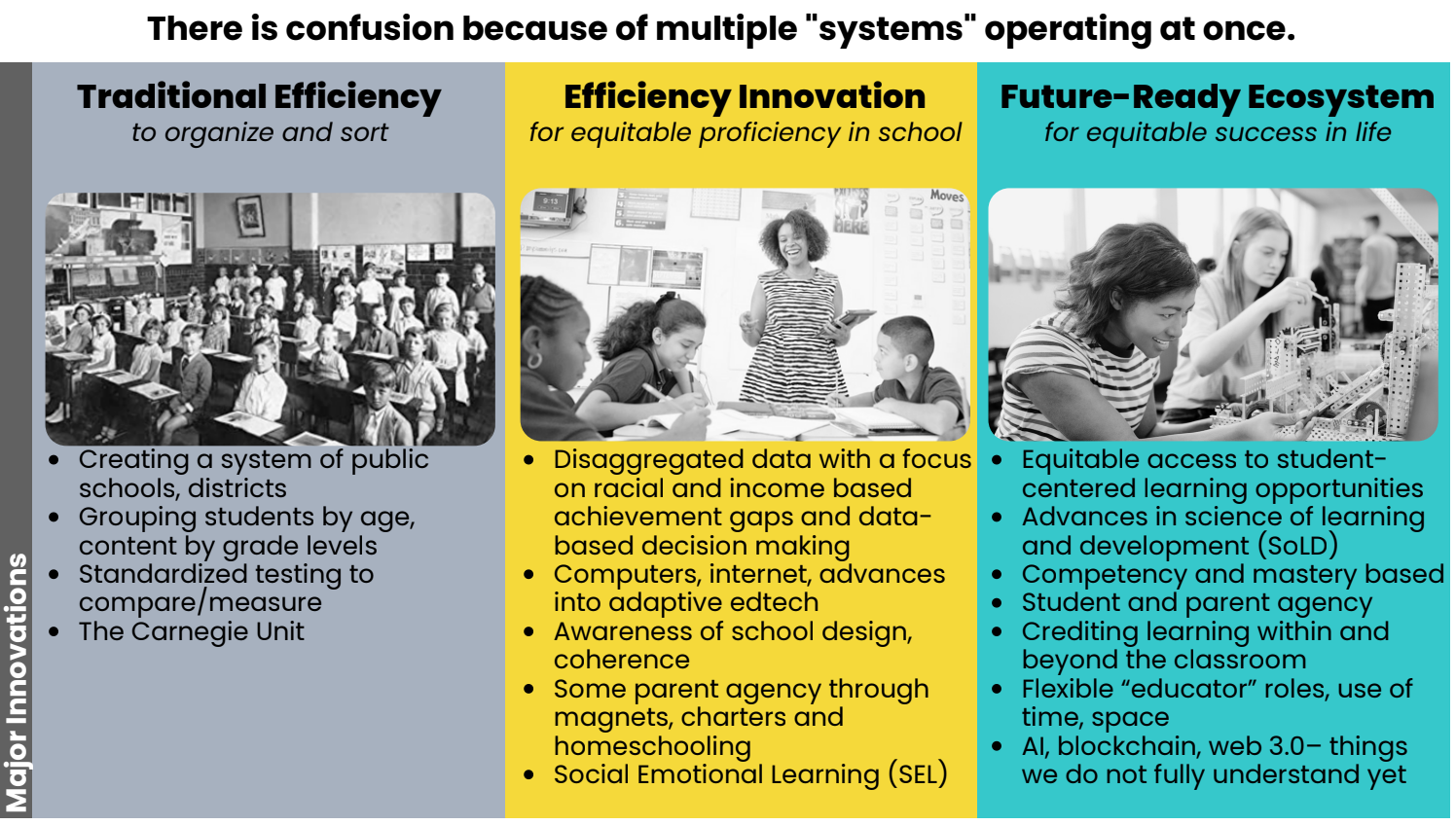
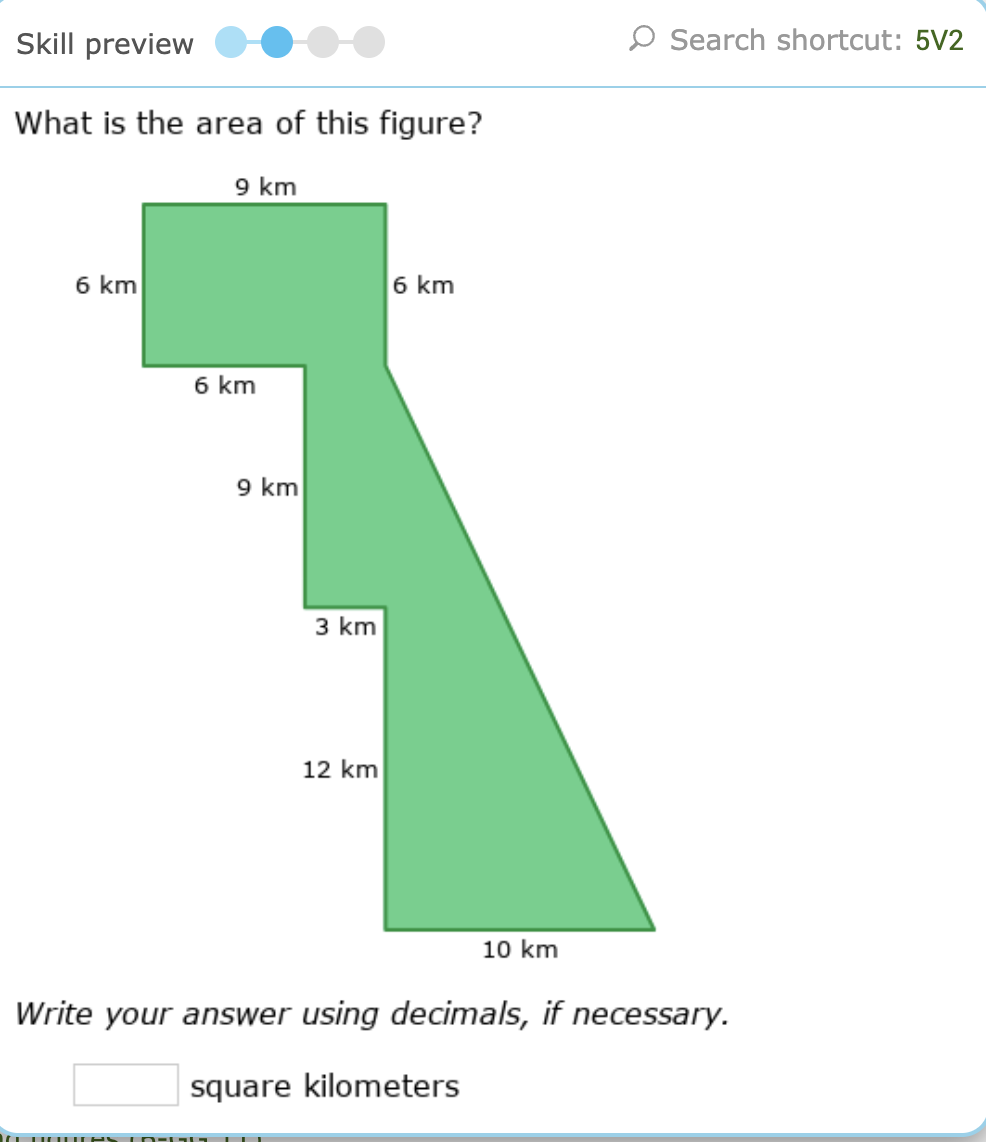
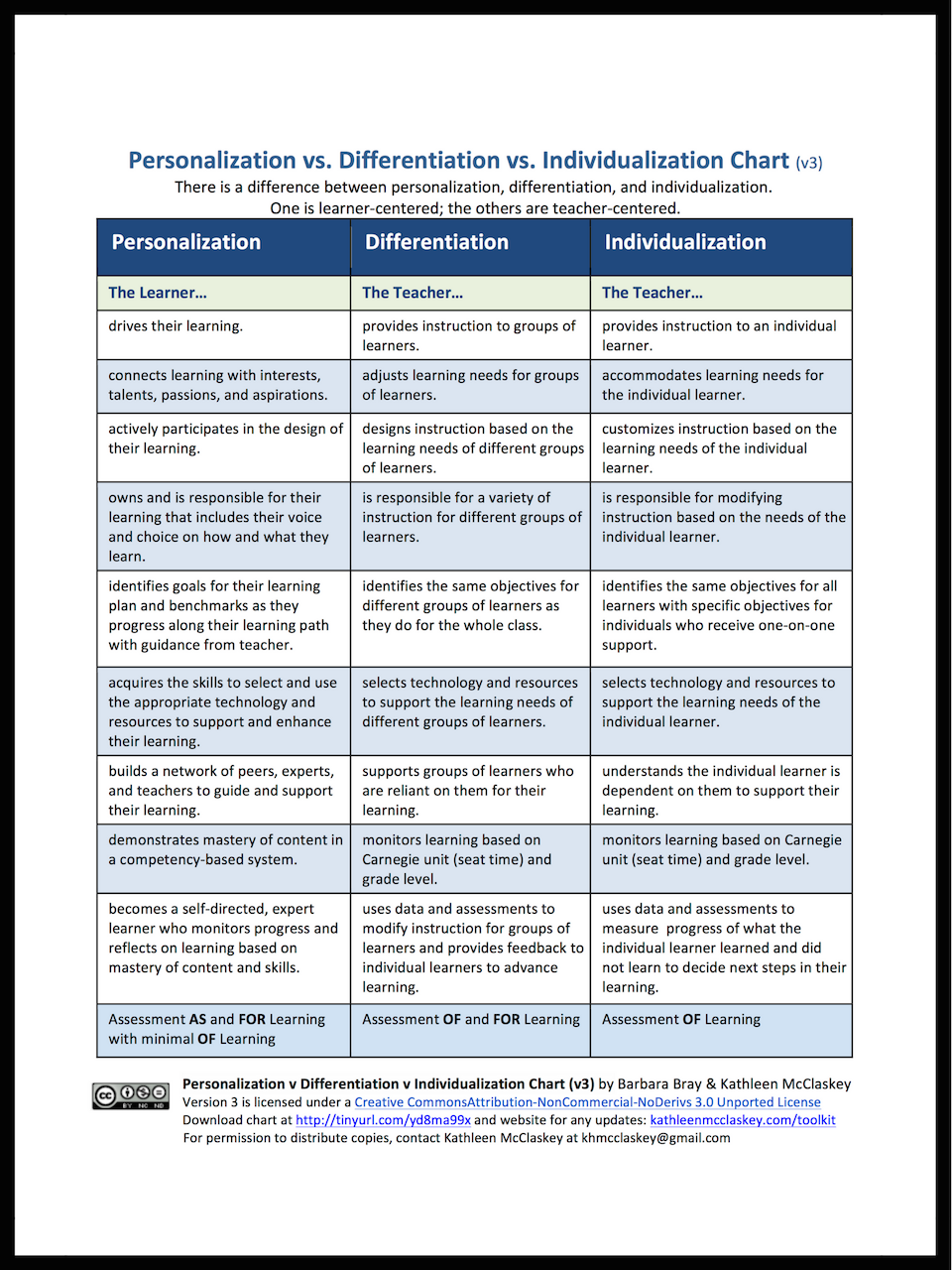
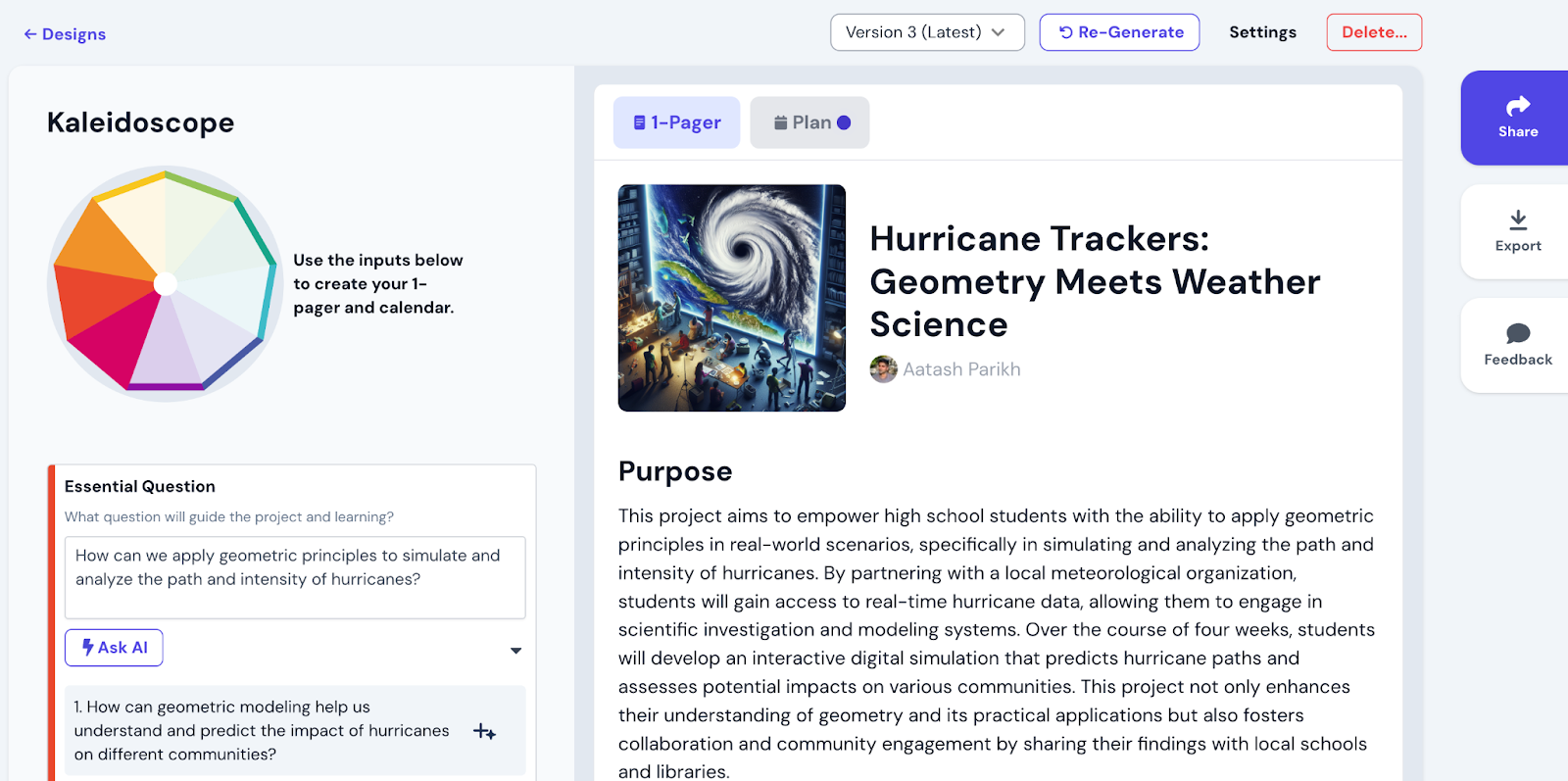


 Jeff Horton | Blog Site