Schools of the Future: Creating the Entrepreneurial Education Model

Our economy is changing. Globalization, emergent technologies, and data analytics integration are all environmental signs of rapid and profound societal change. Despite the clear signs, our education systems and experiences are not responding and certainly not preparing young people for the complex and changing future. Still, our foundational practices in education underscore an archaic model that continues to exacerbate performance and opportunity gaps in the ecosystem. 

Despite current debates and stark policy adoption for additional resources in the ecosystem (i.e., American Rescue Plan Act of 2021), outputs merely reflect micro-improvements to the factory model of education. We must be intentional and bold to design future-focused learning organizations that prioritize skills like entrepreneurship as a core aspect of the PreK-12 pathway. Designing “Schools of the Future” in alignment to the entrepreneurial demand of society is a necessity for 2030 and beyond. How do we achieve this serial transformation with a business model anchored in factory rudiments? Below I highlight and define an entrepreneurial education model that will guarantee agency, voice, and coherence for Generation Z and Generation Alpha. 

Defining the Entrepreneurial Education Model for Generation Z and Generation Alpha

Because the education model is static by design (i.e., industrialization), creating operational structures and instructional systems rooted in entrepreneurship will accelerate readiness for the demand of Delta 2030. It will not be easy. Creating learning experiences that prominently feature opportunity and problem-solving is the antithesis of our existing education model realms – labor development. On the contrary, an entrepreneurial education model encourages a diverse agency set with students. Voice and agency empower students to understand their perspectives in-depth and exercise intrapersonal strengths to solve complexities in the global economy. Agency in the context of social and societal equity is building confidence among students to address emergent issues in our communities.

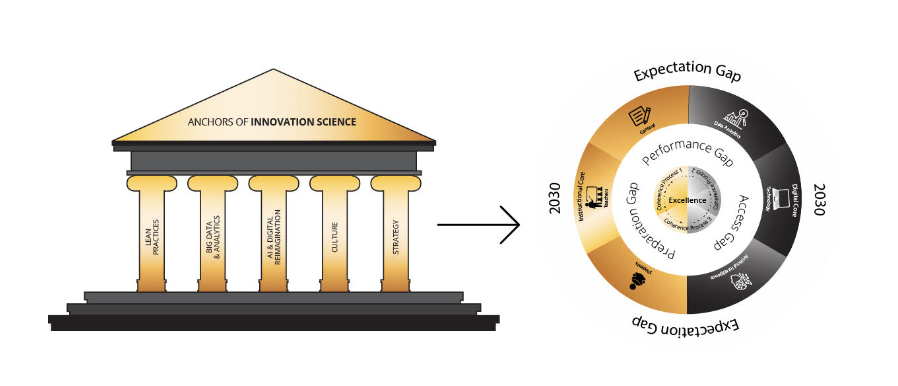
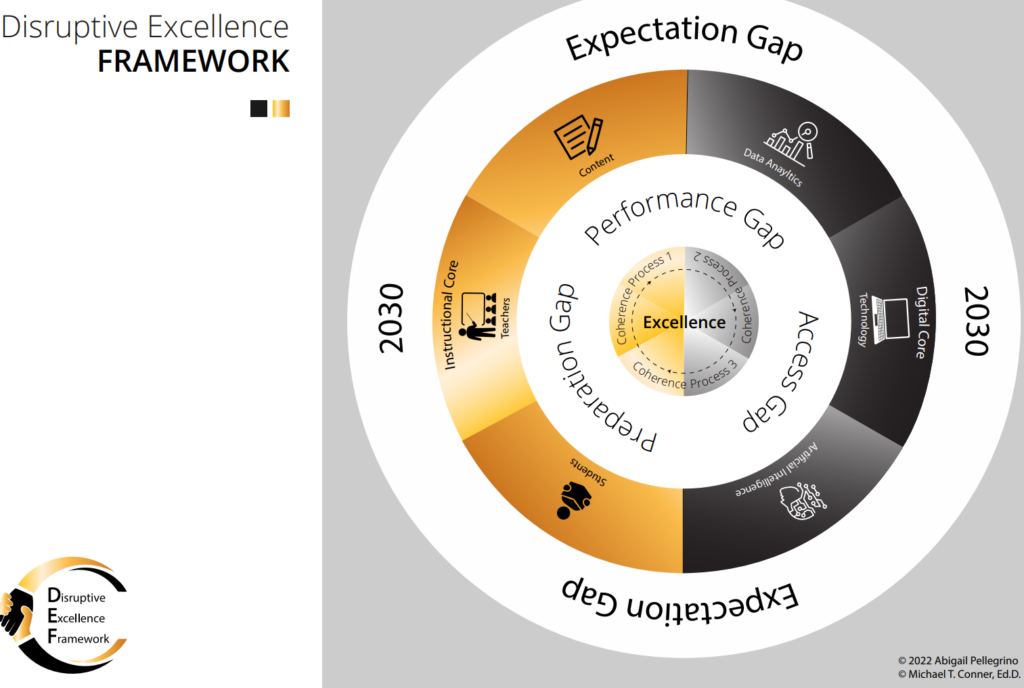
Disruptive framework

The Design and Strategy Outline to Create an Entrepreneurial Education Model in the AC-Stage of Education

An entrepreneurial education model can be contextualized as a “short cut” to synthetically develop competencies for the 22nd century. In alignment with this evolutionary transformation of learning experiences for Generation Z and Generation Alpha, we must underpin strategic approaches to form a shared mental model in the learning organization (i.e., intentional to culture changes). In essence, the ecosystem must learn, unlearn, and relearn roles, responsibilities, and new cultural norms to implement strategies of a disruptive model rooted in entrepreneurship ideologies. Leaders must become iterative architects that create organizational constructs where adaptive learning through problem-based, problem-seeking, project-based sequences are the core threads in all integrated systems. Classroom teachers must become a hybrid of practitioners and facilitators where the universal acceptance of “we do not know” is the learning experience in lieu of binary answers rooted in static pedagogy. Core programs and curriculum will include investigation and inquiry activities where instructional practices support cycles of new learning. Yes, these shifts will enable Generation Z and Generation Alpha to be co-authors of their learning and personalize rigor for ALL. It will facilitate student competencies that do not focus on the linear business development aspects of entrepreneurship but reimagines a future that impacts society holistically. 

Agency, choice, and elevating the voice of the next two generations require innovation and creativity. Designing a new education model requires the multiple perspectives of our families and students. We have to accept being comfortably uncomfortable in the AC-Stage of Education. As a moral imperative, education must respond with vitality to leverage excellence and equity for ALL.

Michael Conner, Ed.D., is the CEO/Founder of Agile Evolutionary Group, Corp., Pathways Fellow for Getting Smart, and former Superintendent of Schools. He is the creator of the Disruptive Effect Model and author of Intentional, Bold, and Unapologetic: A Guide in Transforming Schools in the AC-Stage of Education.

The post Schools of the Future: Creating the Entrepreneurial Education Model appeared first on Getting Smart.

from Getting Smart https://www.gettingsmart.com/2023/09/21/schools-of-the-future-creating-the-entrepreneurial-education-model/

From the State House to the Classroom: How Policymakers Can Help Bring Competency-Based Education Into Reality

By: Antonia Rudenstine

What has been described as a “monumental remake” of public education in Wyoming is now underway–and it’s a transformation journey to watch. 

In April, Wyoming’s top state education leaders announced a joint commitment to support a competency-based approach to transforming teaching and learning across the state–an exciting development for advocates of competency-based education. Just weeks later, the “Wyoming’s Future of Learning” collaborative formalized a remarkable partnership among these key leaders, and announced the launch of its first pilot programs.

Wyoming’s decision to leverage a competency-based approach to support its transformation efforts reflects a national milestone: it is now true that every state in the nation allows competency-based learning in some form as an alternative to time-based advancement. 

What is also noteworthy is its particular approach to leading transformation–one that places it in a very select group of states. 

Here are three stand-out features to celebrate in Wyoming’s approach that make it a promising transformation journey to follow.

Wyoming’s state education leaders are modeling the power and possibility of aligned partnerships in unprecedented ways.

The Wyoming Future of Learning collaborative is an alliance among highly influential educational leaders that is simply unheard of. Can you recall a time when the governor, superintendent, state board of education, and university leaders all signed on to a shared vision for transformation, and then organized programming and resources to move it forward collaboratively? In a remarkable signal of commitment to making the education system better for young people and their families and communities, Governor Mark Gordon, Superintendent Megan Degenfelder and the Wyoming Department of Education, the State Board of Education, and the University of Wyoming College of Education have all announced their commitment to work collaboratively to support student-centered innovations across the state. This collaboration represents a powerful opportunity for accelerating transformation and streamlining policy changes that stand for what’s best for young people.

Arguably, when investing at the state level in ground-up innovation, establishing a clear focus doesn’t limit innovation; rather, it provides the participating learning community with clarity and a shared overall direction that can support prioritization and real-time decision-making. 

Antonia Rudenstine

Wyoming state leaders are reimagining their own role in the transformation effort, replacing top-down accountability models for an approach that focuses on learning alongside educators.

Rather than leading with mandates or major policy changes, Wyoming’s education leaders are positioning themselves as learners alongside practitioners, resourcing pilot programs to help determine the most effective approaches to supporting student centered learning. In effect, they’re creating learning and feedback loops among practitioners–a strategic move that will help ensure future policy decisions are not abstractions or largely anecdote-driven decisions, but decisions informed by on-the-ground realities and local knowledge.

There are other noteworthy state leaders who have also taken a learning partnership approach to engaging practitioners. One such example comes from reDesign’s work with South Carolina’s Department of Education. Under the leadership of Stephanie DiStasio, Director of Personalized Learning, the state facilitated multiple user feedback cycles with “early adopter” teachers to improve the newly developed competency framework. DiStasio also gathered routine input from school and district leaders on how to address barriers to implementation, which then informed new opportunities for educators to capitalize on policy flexibilities and access a robust array of professional learning offerings. 

Wyoming’s pilot programs are poised to support high levels of engagement and meaningful learning, by design.

Pilot programs can be an exciting way to foster engagement, learning, and innovation–but not all pilot programs are equal. Model design matters very much. Wyoming has strategically identified four focus areas for its pilot programs–Competency-Based Learning, Flexible Pathways, Personalized Learning, and Student Choice– all in response to community voices advocating for student-centered approaches. Arguably, when investing at the state level in ground-up innovation, establishing a clear focus doesn’t limit innovation; rather, it provides the participating learning community with clarity and a shared overall direction that can support prioritization and real-time decision-making. It also provides a simple, pre-determined framework for capturing and codifying learning. This is another noteworthy strength of the Wyoming pilot programs: its proactive plan to invest in both adult learning and institutional learning. The governor’s office has announced that state-sponsored professional learning will be provided to participating districts, and the Wyoming School-University Partnership, made up of school districts, community colleges, the University of Wyoming, and others, will serve as a hub for sharing their work and learning.

Drew St. Lawrence, an Adult Learning Designer with reDesign, champions competency-based education with educators this summer in Kansas City.
Drew St. Lawrence, an Adult Learning Designer with reDesign, champions competency-based education with educators this summer in Kansas City.

The importance of investing in adult development to support innovative pilot programs, or any transformation effort, cannot be overstated. Consider the pilot program currently sponsored by the state department of education in Massachusetts. The focus: How to reimagine grading and advancement policies. The partnerships: State department leaders, participating schools, higher education institutions, policy and research stakeholders, and design and capacity-building partners. The adult learning approach: Embedded school leadership coaching, policy and practice redesign support, teacher coaching to support shifts in practice that are essential to the new policies (e.g., When introducing a new policy related to revision, make sure instructional practices around feedback are clear, evidence-based, and implemented effectively), and opportunities for cross-pollination among schools to learn from their diverse models of implementation, while working from a shared roadmap for rethinking grading. Policy change implicates practice. Redesigning policies without investments in adult learning is like showing up for a marathon without training. 

When we put it all together–thoughtful pilot program design, reimagined state-level roles, unparalleled levels of partnership to help maximize the potential for real transformation–we see a clear message from Wyoming: This enterprise is fundamentally about learners and learning, nothing less. From the state house to the classroom, Wyoming educators are leading a transformation journey to watch, as they truly center their efforts on what’s best for young people. They deserve nothing less.

Antonia Rudenstine is the founder and creative director of reDesign, an education design and consulting organization with deep expertise in change leadership and strategy, curriculum and assessment design, competency-based learning, and pedagogy.

The post From the State House to the Classroom: How Policymakers Can Help Bring Competency-Based Education Into Reality appeared first on Getting Smart.

from Getting Smart https://www.gettingsmart.com/2023/09/19/from-the-state-house-to-the-classroom-how-policymakers-can-help-bring-competency-based-education-into-reality/

Purpose and Process to Ignite Intentional Conversations

By: Darcy Bakkegard

You ask a question. You commit to wait time. You scan the room.  A pin drops. You hear it. A few twitches and the general lack of eye contact tell you this isn’t going anywhere. 

If you’re battling discussion apathy, ignite authentic conversations with two ingredients: A clear process and a specific purpose. 

Utilize a Process

The ideal discussion group, according to researchers at Oxford and Arizona State Universities, is four people. Four. While multiple conversations may feel disjointed or harder to track, establishing a discussion process ensures you can maintain accountability while increasing participation and diversity of thought. No-tech, low-tech, and tech-fueled options abound, ensuring you have fresh but safely familiar approaches for any topic. Best of all, when you prime the pump with strategic small-group discussions, you can dedicate whole-group discussions to higher-level synthesis. 

Curated Conversations

Christy Torres and Erin Holland of Onslow County Schools modeled at ISTE 2023 how they use Wakelet to curate meaningful class discussions. The team had two goals: change a preexisting reading comprehension task from the basic “answering questions on a worksheet” to something more engaging and authentic; and incorporate and increase student discourse. 

Working in small groups, students discuss a set of 6-8 questions, recording their responses on paper. They then post their BEST 4-5 answers on the class Wakelet (Padlet, Jamboard, Slides- choose your favorite curation tool). The Wakelet is set up in columns, with one question per column and students post answers in the corresponding column. The class then compares all the answers, stimulating a whole class discussion -at times a debate- of what makes an answer particularly effective. Finally, groups review their answers, comparing those they did NOT post to the answers that were posted. At every level, all students are engaged: creating the answers, deciding which of their responses are particularly “good;” and analyzing how their responses compare to others. 

Holland shared that the curated conversations addressed both of their goals and “enabled us to extend the student discourse beyond the table groups to include everyone in the class. Rather than completing a worksheet where there is no conversation or a traditional call-and-response activity where the same few students always answer aloud, the discussions at the tables and column response format helped ensure all students had the opportunity to participate in the discussion.”

Furthermore, Torres noted two additional benefits of the method: students “were more likely to reference the text, especially if there was a difference of opinion” and since groups were working together, the teacher was able to “listen to the discussions around the room and address any misunderstandings or point the groups back to particular areas of the rest to reread.” 

Similarly, a Conversation Menu can help teachers/facilitators organize and build conversation concepts. Prime the pump with a tempting appetizer, provide groups with rich main dish choices, then wrap up with savory and sweet dessert options. 

Poster Rotation Group Discussions

Like curated conversations, poster discussions allow small groups to collaborate while still seeing and learning from the thinking happening in other groups. Divide “posters” into small tasks focusing on the content you want students to discuss or skills you want them to cultivate. Students work together and dig in while you rotate to support, nudge, and assist. For six groups, have six posters with five tasks per poster; that way, each group ends up with their original poster. Students work as a team to answer/complete the first task. Rotate posters. Groups discuss what the previous group wrote, then complete task two. Rotate and continue until each group has seen every poster and groups have their original poster back. (Note: You could have smaller groups and make two sets of each poster.) The groups then synthesized what everyone else wrote. 

The hands-on nature of creating the poster stimulates discussion and forces students to be succinct in their responses. The focused tasks require groups to utilize key resources while reviewing what others have added to the posters. Like the curated conversations, the poster process frees the teacher to circulate, guiding groups when needed and pushing for deeper connections. 

Once complete -especially if used for more than one class period- posters can be displayed and used for an additional gallery walk discussion. Give students post-its or paper and guide them to compare a set of posters on the same topic: What do all the posters have in common? What did one or two posters emphasize that was unique? Use the post-its to facilitate a small or whole group discussion.

World Cafe 

This interactive discussion format blends solo reflection with small group discussion over three rounds, building to group synthesis. While you can use this to discuss any topic, it’s particularly effective to brainstorm solutions to challenges. 

First, identify what you want to solve, figure out, or otherwise make better. Devise three questions to guide the discussion. The first question is often framed in a negative way. It should allow people to discuss the barriers that cause the challenge to persist. It may sound like a ‘venting’ session in action, but this is an important first step. It allows people to see patterns and identify which challenges are the most persistent. The second question should be framed in a positive, forward-thinking manner. This question should allow participants to brainstorm their vision for the future. In an ideal world, what would they want to see happen? Finally, question three should allow participants to get proactive. It should enable people to brainstorm how they can overcome their challenges so that they can best get to their ideal solution. 

There will be three rounds, one question per round. Everyone will answer the same question. Each round has a 1-minute solo brainstorm during which each person writes down as many responses to the question as they can. Groups then have 8-10 minutes to do group brainstorming, sharing, and organizing their solo reflections. One person acts as the ‘secretary,’ writing down all ideas on the flip chart paper. When time is up, all but the secretary switches groups. The secretary for each group summarizes that team’s ideas for the new table mates. Repeat the process for questions 2 and 3.

From all of this data,  you can now harvest the ideas. As a whole group or in smaller teams, identify the key challenges (question 1), the strengths to draw on (question 2), and possible solutions (question 3). This is a great way to launch PBLs, tackle challenges, and empower students to design their own solutions. 

Central to all of these methods: the teacher/facilitator gets out of the way and allows students/participants to talk. While the teacher circulates and supports, they must act as a trusted, neutral facilitator. It has to be safe for people to share without judgment or worry about right/wrong answers. So put on a poker face, play referee when necessary, and get out of the way.

Define the Purpose

No matter who is in the room, the discussion will falter without a clear goal, a goal that must be more authentic than just a mark in a grade book or a completion of staff hours. Are you on a quest to unlock knowledge? To synthesize data? Are you problem-finding or goal-setting? Is the task at hand about developing conversation and collaboration skills? Clearly identifying the purpose will help build trust and -hopefully- generate more participation. 

Start with Good Questions 

Short answers, right/wrong, and yes/no questions won’t stimulate anything. If the facilitator already has “an answer” in mind, the discussion will die. To get started, tap into the abundance of question-writing resources available. RightQuestions.org and its Question Formulation Technique provide practical, proven strategies to help cultivate thinkers and build a climate of inquiry. As you implement the strategies outlined above, you will start to see what types of questions work for your learners/audience. 

Make it Authentic

Does it matter to students? The strategies outlined above will certainly spark conversations around any classroom content, but the desire to foster intentional conversations should also be part of a greater shift away from set content to skills-based learning. Allow students to discuss topics that impact them: the future of work, prosperity for all, the environment and being solutionaries, global citizenship. In every classroom, in every subject, we have opportunities to make learning magical by connecting it to the actual needs of students. When students see that we are actively listening to their ideas, their concerns, their needs, they will engage in intentional conversations. 

Conclusion

If these strategies aren’t working for you, you have a classroom culture issue. The thing about intentional conversations: they are predicated on intentional relationships. Intentional relationships fuel intentional conversations; intentional conversations bolster intentional relationships. The two are interdependent. As classroom and school leaders, you cannot hope to have truly meaningful conversations on subjects of import without relationships -teacher to student; student to student- grounded in trust, honesty, forgiveness, lack of judgment, and transparency.

Darcy Bakkegard is a change consultant, co-founder of The Educators’ Lab, and co-author of The Startup Teacher Playbook. After more than a decade in the classroom teaching English and theatre, Darcy now creates the type of PD she always wanted, driving change in education and empowering teachers as changemakers. Through her work, teachers reconnect with their purpose, rekindle their spark for teaching, and reignite the JOY of teaching and learning.

The post Purpose and Process to Ignite Intentional Conversations appeared first on Getting Smart.

from Getting Smart https://www.gettingsmart.com/2023/09/18/purpose-and-process-to-ignite-intentional-conversations/
CAPS Network Students Gain Skills and Scholarships 

Fifteen years ago, the Blue Valley Schools leadership team concluded they could do more to connect young people in Overland Park, Kansas to meaningful work. They developed the Blue Valley Center for Advanced Professional Studies (CAPS) in 2009 and operated in community spaces for the first year. The spectacular CAPS campus opened in 2010.

CAPS, as a next-generation career accelerator, serves five suburban high schools in the Kansas City area, offering profession-based learning opportunities. Here, students embark on a journey into their future, immersing themselves in a professional culture where they actively tackle real-world challenges, utilize industry-standard tools, and benefit from mentorship by actual employers—all while earning high school and college credits. Within the six career strands encompassing bioscience, accelerator, business technology and media, engineering, human services, medicine and health care, CAPS students engage in client-connected projects and cultivate self-directed entrepreneurial experiences.

One of the remarkable benefits of participating in CAPS is the significant increase in social capital for students. As they actively engage with professionals, employers, and mentors from various industries, students expand their networks and establish valuable connections within their communities. These connections not only provide them with insights into potential career paths but also serve as a source of support and guidance.

The success of the CAPS model quickly gained recognition. In 2014, the increasing number of visitors signaled widespread interest in this innovative approach that seamlessly blends career education with college preparation, creating personalized pathways deeply connected to the community. By 2018, dozens of affiliated programs had sprouted regionally and across the nation.

The CAPS Network community shares core values that underpin its success: Profession-based Learning, Responsiveness, Self-Discovery and Exploration, Professional Skills Development, and Entrepreneurial Mindset.

CAPS success inspired the Kauffman Foundation sponsored Real World Learning initiative. As a result, there are 85 high schools in metro Kansas City adding internships, client projects and entrepreneurial experiences.  

In 2021, the CAPS Network became an independent nonprofit supporting profession-based learning. With more than 100 affiliate locations in 2023, CAPS Network was recognized by HundrED as a leading global innovation. 

CAPS Graduates Experiencing Benefit 

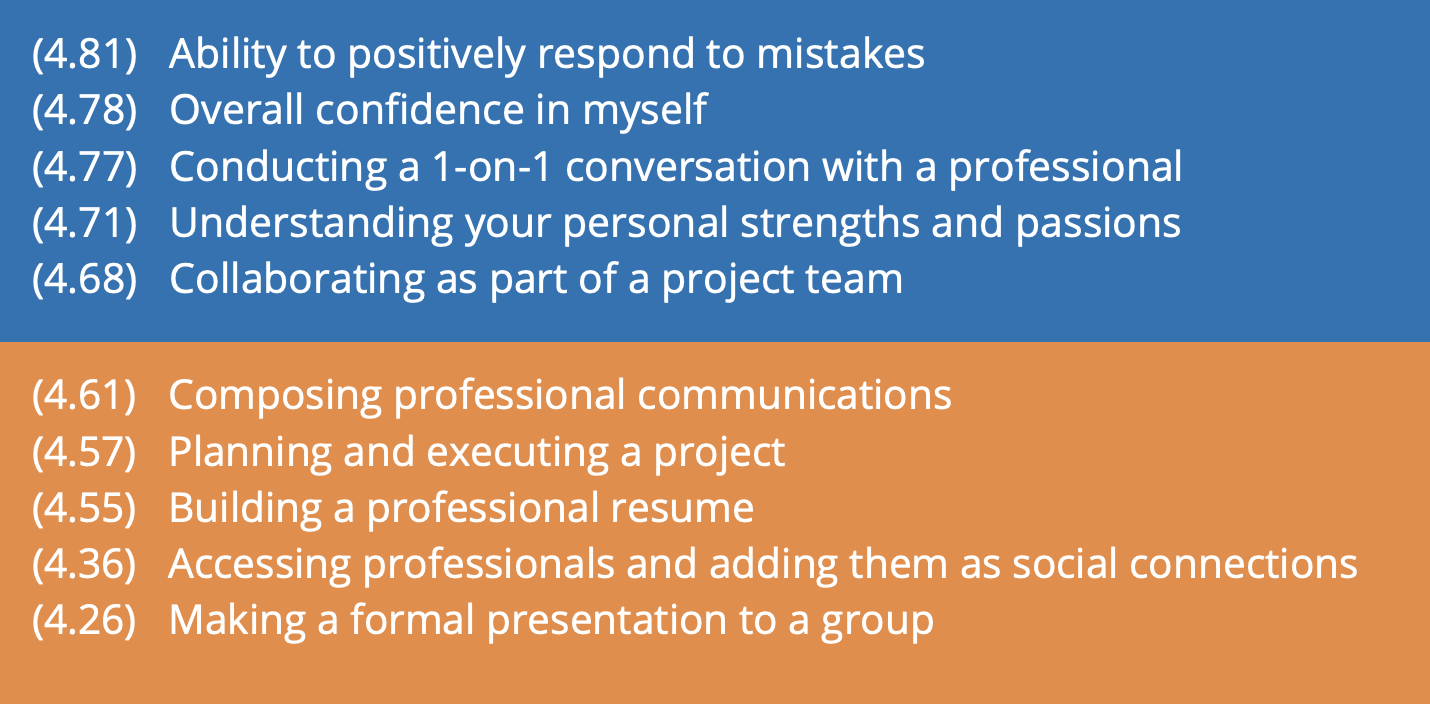
There are more than 40,000 CAPS network graduates. Last fall, a survey of more than 1,000 of them showed that CAPS programs have significant influence on students’ professional growth. Over three-fourths reported an overwhelmingly positive experience. CAPS alumni are equally bullish on the role that their programs had in preparing them to find a job or enter college. And more than 7 of 10 said their CAPS experience directly contributed to their current success 

CAPS Alumni highly agree that they learned essential and durable skills and built confidence. The top ten reported benefits of the CAPS program are shown below (on a scale of 1 to 5).  

CAPS alumni appreciated experimenting with careers before investing in college. They appreciated being encouraged “to step out of their comfort zone” and “find themselves” through their exploration. More than 8 of 10 alumni said they were currently receiving scholarships and almost a third were receiving honors/awards. 

The survey unequivocally demonstrates that CAPS has played a pivotal role in helping learners not only find their professional paths but also build connections and community ties that continue to fuel their growth and success, significantly increasing their social capital along the way.

The post CAPS Network Students Gain Skills and Scholarships  appeared first on Getting Smart.

from Getting Smart https://www.gettingsmart.com/2023/09/15/caps-network-students-gain-skills-and-scholarships/

Video Insights – Start the School Year Strong

By: Nathan Strenge

Before reading this blog, watch the 5-minute video below in which Eden Park Elementary School teachers share their wisdom about starting strong in a Learning Community. Trust me it’s worth it.  

When talking to the Eden Park teachers to understand what they do to start each school year strong, it became clear how much they lean into student voices to create shared expectations. It’s a compassionate approach. They invest the time to co-create expectations at the start because they recognize the level of trust it builds allows them to do extraordinary things throughout the entire year, including trusting students with a lot of freedom. When teachers were talking about how they start the year strong in a Learning Community, I realized many of their practices apply to conventional school environments, as well. 

Here are some of the teachers’ key insights, with an angle of how they might apply to conventional settings:

Facilitate A Project to Start the Year: It’s about collaboration, connecting students, teachers, and staff in a cohesive project, thereby fostering unity and creativity. A classroom teacher can start the year with a “How might we…” question that gets their class engaged in a design challenge about making their room feel welcoming and comfortable. Consider giving students opportunities to engage with community members in hospitality to elicit advice, feedback, donations, etc. for their project.

Map Out Spaces: This involves planning and coordinating spaces to facilitate learning, ensuring that everyone is on the same page, and each space is utilized effectively. In a conventional school, go on a learning walk with students throughout the campus where they document places that are uninviting and/or underutilized. Have them map their favorite spaces and brainstorm ways to overcome the uninviting, underutilized environments.

Create Expectations For Furniture and Zero Space: Kids love choices to sit, stand, and move around their learning environment. A classroom teacher can advocate for a variety of furniture that gives students the freedom to have agency. Zero Space is the idea that kids can move furniture around to meet their needs, but before they leave the room it gets reset back to its base layout.

Establish a Culture That Is “OUR” Space: Eden Park Elementary School takes great pride in building a culture where every space is seen as co-owned and operated as a community. Teachers in classrooms can give this sense of co-ownership to their students, starting with minimal decorations and no clutter at the start of the year, and then working with students to transform the room into their own unique oasis. 

Emphasize Community Values: In a Learning Community, knowing that sharing space can cause conflict, the instincts to give grace and learn from mistakes are remarkable de-escalators. Helping young people develop these instincts through practice can be achieved no matter the environment. Identify possible points of conflict in your environment (i.e. some kids prefer the lights off for part of the day) and give students time to come up with solutions to propose and discuss with each other. Fostering this sense of collaborative problem-solving will help make the values you espouse become instinctive habits.  

As a video producer, I was inspired by the commitment of the teachers and the enthusiasm of the students. As I’ve observed the Eden Park team, I’ve seen firsthand how these principles aren’t mere words but living practices that shape everyday life at Eden Park Elementary School, which over time manifests as a holistically vibrant learner-centered culture. I hope this short film serves as a case study for anyone, regardless of their environment, to start every school year with compassion and relationships at the center.

Nathan Strenge is a Senior Learning Designer at Fielding International, where he works with school communities around the world to create environments that foster creativity, collaboration, wellness, and belonging.

The post Video Insights – Start the School Year Strong appeared first on Getting Smart.

from Getting Smart https://www.gettingsmart.com/2023/09/14/video-insights-start-the-school-year-strong/

Stop Playing: Your Campus Needs an Esports Program  

By: Victoria Andrews and Brittney Seals

Level Up – Pathways in Schools

One size has never fit all; not in the free shirt you receive at a conference or in options for learning. 

Similarly, young people vary widely in interest and passion, and campuses often have to facilitate opportunities for students to connect and find their people. One option that not only provides connection, but also provides an environment for skill development, and prepares students for life beyond school is esports. While the world of esports was once considered ancillary to other programs, districts and campuses that have embraced this new pathway for students have found it to be vital.  

According to a student engagement survey, only 65% of students agreed with the statement, “I go to school because of what I learn in classes.” and 54% participate in 4 hours or more of school-sponsored activities. Esports is a great way for students to become engaged and connected during and after school. 

Stackable – Skills Development

No. Students aren’t just wasting their time gaming. 

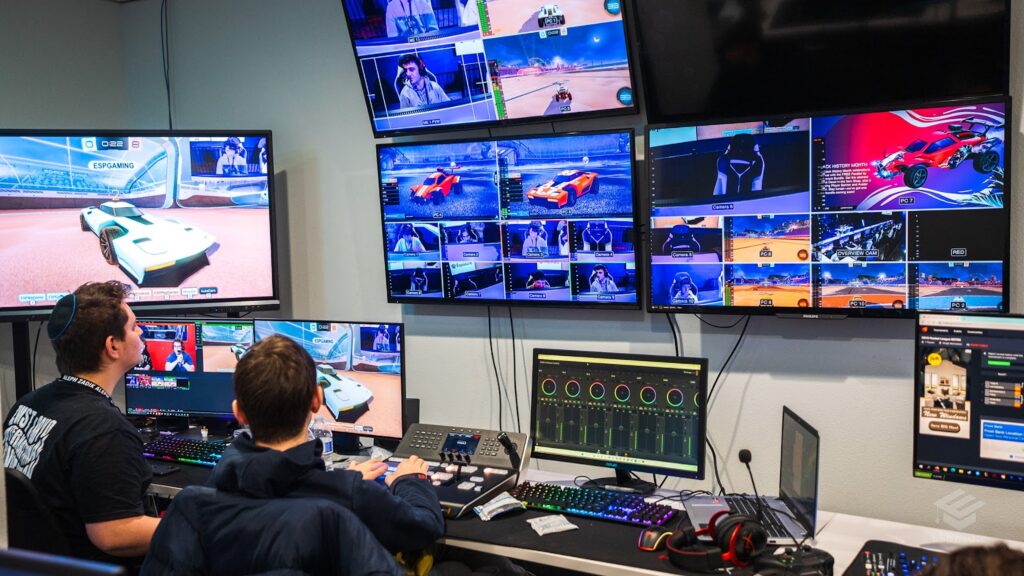
As scholars put on their headsets, turn on their game, and spend countless hours rising through the ranks, they are forming teams, creating strategies, and persevering against some of the best players globally. Through gaming, students gain durable skills (as defined by America Succeeds) which are high demand skills that allow youth to demonstrate their knowledge and stretch their character. Esports (competitions, challenges, tournaments) allows participants to strengthen leadership, collaboration, critical thinking, and fortitude skills. Relying on teammates, developing strategy plans, and persevering against the odds are a few of the ways players develop transferable skills through gameplay and why esports teams are essential on any campus.

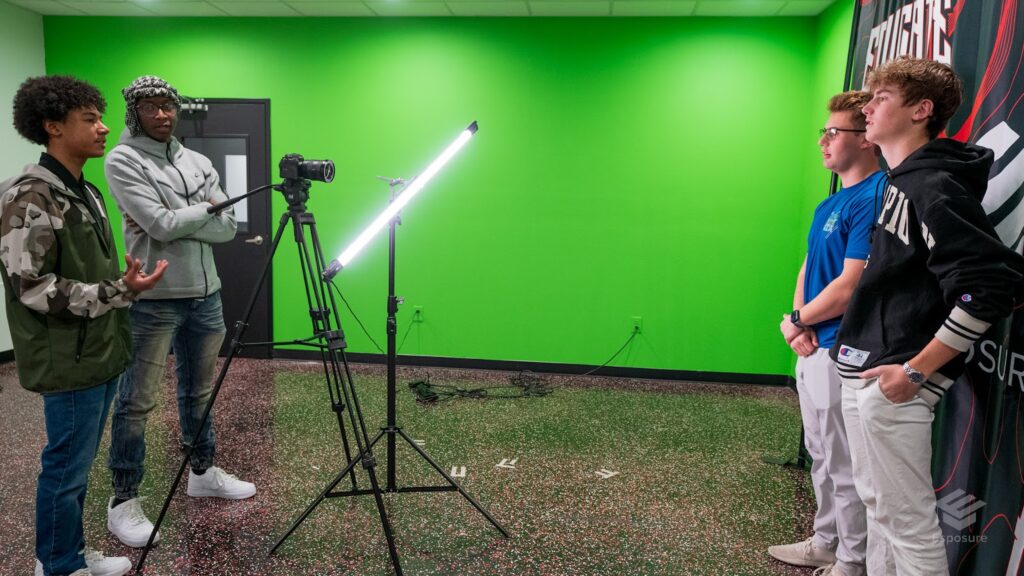
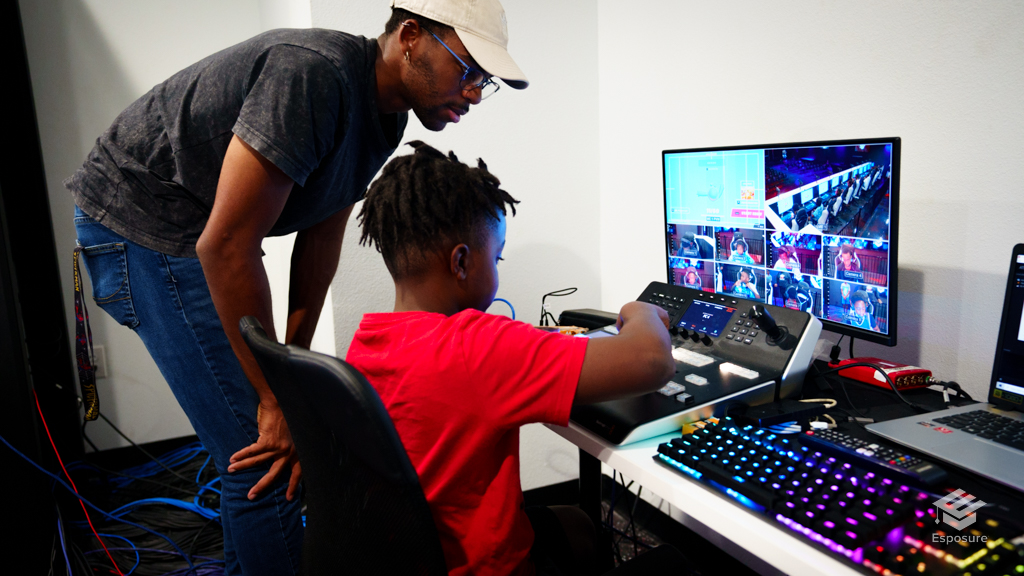
As with the competitive side of esports, operations are primarily fueled by technology. Esposure4All, a summer internship program,  trains high school students with limited incoming experience to run esports events focusing on the software incorporated into these experiences. Over the course of two months, students are introduced to the Adobe Suite, Obsidian, Blackmagic’s ATEM software, VMIX, and professional photography and videography skills. One intern said the experience “opened up new doors and opportunities that I wouldn’t have by learning to use these new software”. 

During the internship, students learned the importance of professional communication, proactively managing client scope, and event management and execution. Interns also learned the value of professional branding by creating their LinkedIn profiles, headshots, and portfolios as well as the elements of self-directed learning and critical thinking skills as they were provided access to the resources and were challenged to learn the necessary information to execute their goals. One intern stated the process forced him to “dig deep into [his] brain and find ways to solve the simplest tasks.”  If this progress occurred during two months of esports training, what level of impact would this provide over a school year or more?

Ready Player One – Future Career Options

Not a gamer, not a problem. 

While the obvious career option in esports may be professional gamer, that only accounts for a fraction of the jobs in the billion-dollar industry and provides an average salary of $60,000/year. A robust esports program can introduce young people to almost 200 careers in the esports industry according to Hitmarker, a job recruitment platform specifically for the video gaming world. From research to art design to event planning, the possibilities are abundant for those involved. As career exploration continues to expand and commence earlier than high school, the options in esports can’t be neglected. A recent study conducted by America Student Assistance showed over two-thirds of high school students would have benefited from career exploration: the time is now to view esports programs as an additional avenue to lucrative jobs before it’s game over. There are robust esports programs budding across the country on college universities and campuses like Full Sail that are fully committed to careers in the gaming industry. 

Additionally, there are paths to entrepreneurship that esports carves out as was the case for Ryan ‘Dayfri’ Conger who moved from college baseball player to gamer to professional gamer to esports intern to entrepreneur.  Conger once had his eyes on becoming a pro baseball player until his college career was sidetracked due to an injury. Once he shifted his focus to gaming and continued to learn about potential career opportunities he pivoted to gaming and, eventually, esports coaching. He is now the coach for the Dallas Mavericks esports team which also allowed him to support his parents’ pathway to entrepreneurship. 

Teamwork + Community = Belonging

Squad up!

Yes, most campuses have a football, basketball, band, cheerleading and dance team, but is there a student demographic these organizations are missing? Perhaps, esports is the perfect solution to provide a community for a group of young people who may be overlooked by traditional sports programming. The world of esports is an accessible platform for students to gain recognition for their level of gameplay. The need to belong is ingrained in young people and is tied to student academic performance in school as well. Regardless of the console or video game, esports allows students to make connections, build community, feel seen and share experiences with other students with similar interests. A study from 2019 noted that while the majority of middle and high school students feel a sense of belonging, close to 30% are missing the vital aspect of belonging that could be solved through esports.  

As Epulze COO, Frank Sliwka stated, “With the rise of scholastic esports, educators now have a unique opportunity to validate their students’ interests, support their social-emotional learning, and connect them with future workforce aspirations.” It’s imperative that campuses and out-of-school opportunities expand offerings that include esports and the countless students who may find their crew through gaming.

Project-Based Learning 

Esports is the embodiment of project-based learning.

Through esports programs, students are finding and following their passions as Videographers, Photographers, Production Technicians, Production Managers, Light & AV Technicians, Discord Engineers, Stream Moderators, Graphic Designers, Animators, and many other roles. As students learn about different pathways, they are consistently facing challenges and troubleshooting to succeed in their job. 

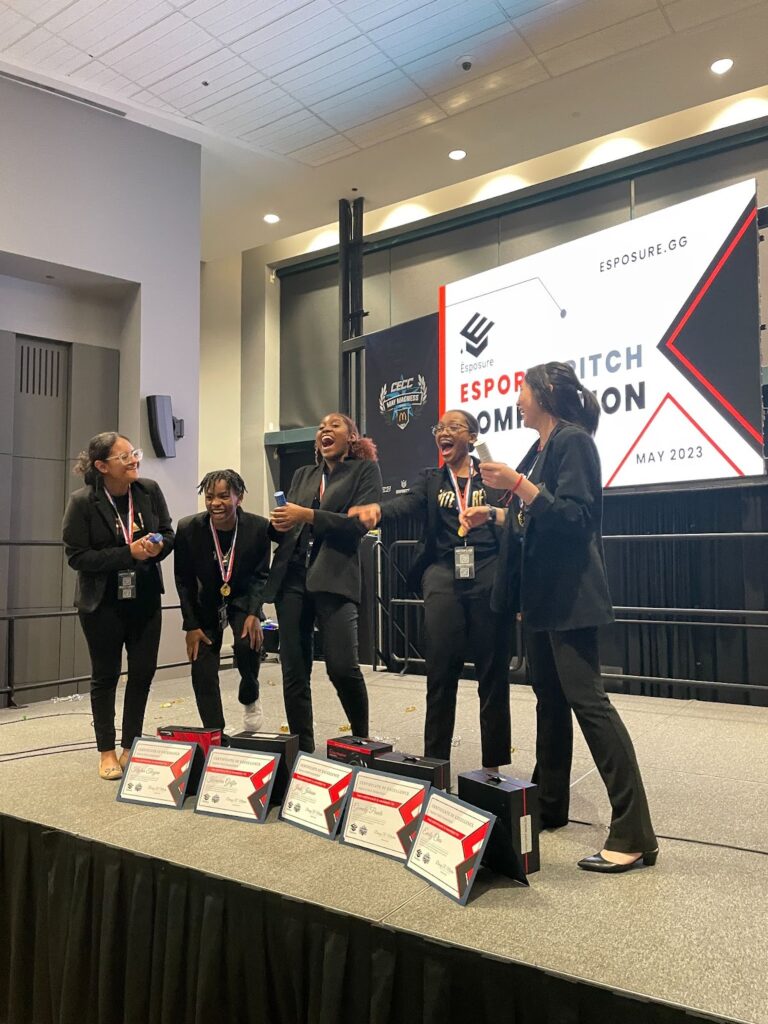
As students take on their roles, they are learning how to “own” their positions and gain self-agency to grow within those roles. A simplified version of this is Esposure’s Esports Business Pitch Competition. Through this experience, Esposure works with schools physically or virtually to break students into teams of five and provides them with a mock budget to produce the best esports event out of their class. Each of the team members lead the divisions of Management, Marketing, Production, Technology, and Competition. These roles include the following responsibilities:

  • Manager – Ensures the team is moving with a unified vision and within the given timeline 
  • Marketer – Creates social media campaign and pages in addition to analyzing marketing spend
  • Production – Creates reels from the stream of a simulated tournament
  • Technology – Creates the company’s website
  • Competition – Creates brackets and uses the budget to determine players to be selected for the mock draft.

Opportunities such as this give students the opportunity to learn independently while contributing to a larger group. This culminates in a “Shark-Tank” style pitch competition where teams are provided with 5 minutes to pitch their event, with the best one being crowned the winner.

This is just one example of how esports can bring students together. On a grander scale, esports programs can recruit from and contribute to a variety of other programs and clubs with the various soft and hard skills learned providing your campus with a student-run community of innovative leaders. 

As the education system embraces scholastic esports, it empowers educators to support students’ emotional growth, align their passions with their future aspirations, and facilitate project-based learning that mirrors real-world challenges. The story of esports in schools is a testament to the power of innovation, inclusion, and adaptable learning, shaping the next generation of agile, skilled, and self-assured leaders ready to excel in any field they choose to pursue.

The post Stop Playing: Your Campus Needs an Esports Program   appeared first on Getting Smart.

from Getting Smart https://www.gettingsmart.com/2023/09/12/stop-playing-your-campus-needs-an-esports-program/

AI in Conservation: How Would this Change Our Interactions with Wildlife?

By: Mary Margaret Perkins

Artificial Intelligence is taking hold in our society. From Chat GPT to TikTok algorithms to Tesla Autopilot, we are seeing a much more public representation of what these systems are capable of. This is a pretty big deal to a high school student, who was just googling “How can I get my math homework done without having to do any actual math,” for fun when they realized, somebody actually invented it. Finally. It felt like the turning point my younger self had been waiting for, the day all the robots take over and I became the main character of a dystopian franchise. 

But, I was still in high school, and facing an even greater issue. I needed to brainstorm and draft a research project, complete with an annotated bibliography, a literature review, and a methodology analysis. 

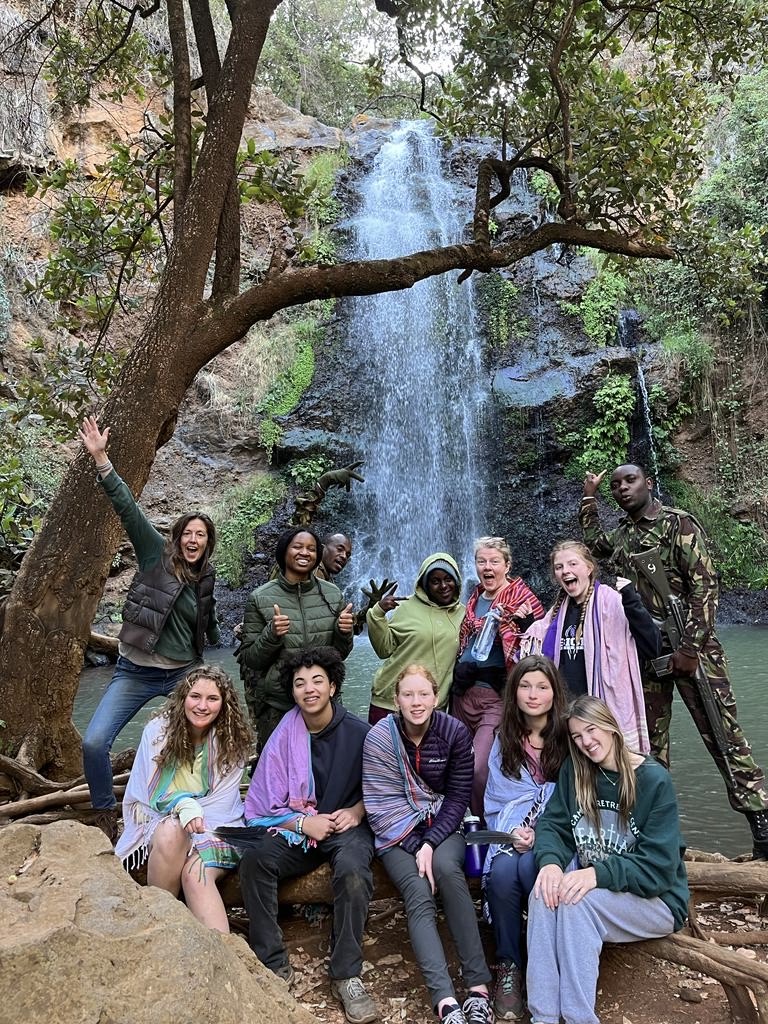
My Global Impacts Microschool classmates and I were preparing these projects for when we took a 2-week-long research expedition to Kenya in February of 2023. We were traveling there to visit Lewa Wildlife Reserve and were expected to find a problem based on one of the UN Sustainable Development Goals. And then create a solution to that problem. It was overwhelming, I’ll admit it, but it was also the first time I was able to take a new interest I had, AI in conservation, and actually use my class time to research it. And what I found was that AI in Conservation could open up new pathways for Lewa – but, it was leading to a data trap globally that could push countries like Kenya further and further behind. How could AI in conservation be used to increase biodiversity in Lewa Wildlife Reserve in Kenya?

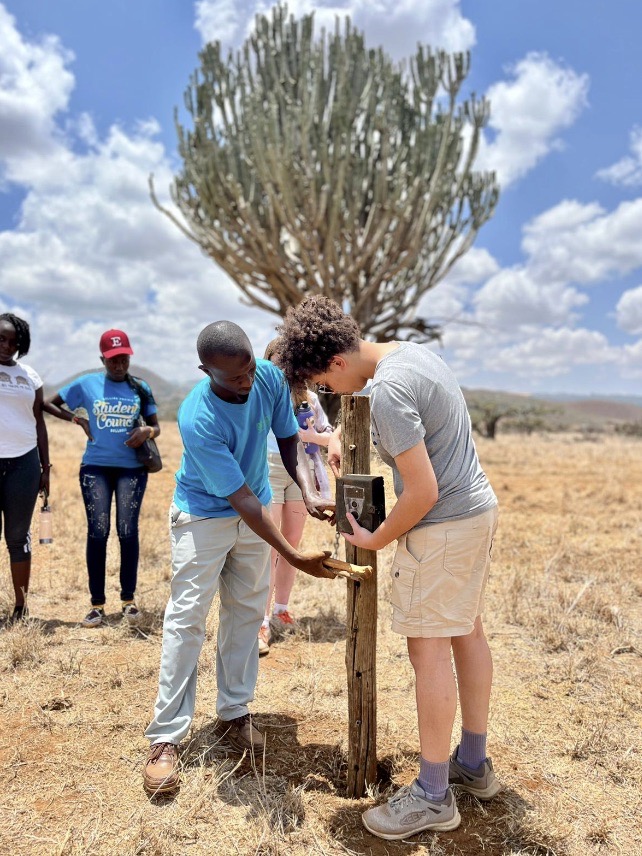
Many wildlife conservation reserves, such as Lewa Wildlife Conservancy, monitor animals through manual data collection and analysis. This requires individuals to go out, collect data, analyze it, and synthesize results in order to serve as a valuable conservation tool. Artificial intelligence (AI) provides a sharper edge to the conservation data collection and analysis tool.  Using AI sorting systems to analyze data from camera traps, audio recordings, and satellite images can decrease conservationists’ workload by a large amount. 

We visited the Rhino Monitoring and OPS rooms on Lewa, as well as a nearby research station called Natural State. These visits helped us familiarize ourselves with the systems Lewa uses to track its animals, such as satellite imaging, audio monitoring, and camera traps.

It soon became evident that these systems lacked an automatic sorting system or even an efficient way to move the images and audio clips from the actual cameras to the rooms where the research analysis took place. 

Lewa specialist Eunice Kamau noted that the problems stopping them from implementing these new systems were a lack of IT support and a reliable internet connection, as well as a community fear of job loss. Those at Natural State had begun to use and train AI sorting systems, but their issues stemmed more from the lack of a renewable energy source for their camera traps and audio mods, as they used battery-powered devices. All of these issues are taken into place when considering whether AI would be a good tool for Lewa to implement. 

My proposed solution for the AI in conservation question is a mock EarthRanger system, EarthRanger Jr., that is angled towards children 6+ in Lewa’s Digital Literacy Program. This would provide these children with the context they need to understand how large and bountiful the Lewa landscape is. It would also be a good way to encourage and measure interest in the conservation and computer science fields. 

This would be an open-world map game, have a downloadable format, and would be compatible with Android IOS. The game could have a variety of entities, especially the animals that live on Lewa. The game could also have a mock AI sorting system, where the students could begin to get a grasp on the AI world in conservation.

If the proposal went through to Lewa, they could bring it up to the EarthRanger and AI2’s teams when they meet with them, to see if this is a program they would be interested in. I have designed a proposal document, and that is the finalized product created from this research. This research answered many questions about the development of AI on Lewa, and it is exciting to be pushing for updates as the world of AI conservation blooms worldwide.

It was incredible to experience the challenges and opportunities given by the Global Impacts Microschool. Personally, I hadn’t felt this engaged during a lesson since I was young, getting to feel, build, and imagine things was transformative. I had never been out of the country before this trip, and the fact that my teachers were so dedicated to making this happen for us makes me extremely grateful. 

Writing the research paper made me feel like I was actually creating something meaningful for the first time in high school. It honestly, added some pressure to my school day, which was something I realized I NEEDED by the time I was done with this course. 

This course didn’t just affect my interest and excitement about school in one area, my grades in all my classes improved a ton. I needed a challenge during school, because of the way I learn, if I’m not being challenged or interested I immediately lose all my drive. This course gave me a push in many aspects of my life and allowed me to feel satisfied after completing work that actually mattered. This lets me see my own place in the world – which is an experience that all young people should be able to feel. I could check back in a few years and let y’all know, but, I guarantee it will continue to be life-changing for me. 

To learn more about microschool impact and opportunities, visit the Learning Innovation Fund.

Mary Margaret Perkins is a student at Notre Dame de Sion High School and served as a 2023 Getting Smart Summer Intern.

The post AI in Conservation: How Would this Change Our Interactions with Wildlife? appeared first on Getting Smart.

from Getting Smart https://www.gettingsmart.com/2023/09/11/ai-in-conservation-how-would-this-change-our-interactions-with-wildlife/

Six Steps to Build AI Accountability

By: Art Kleiner and Juliette Powell

Accountability with AI is critical, especially in schools and especially right now. Many educators are skeptical of AI in general and in particular, generative AI (GenAI). They may even see firsthand the biases and inaccuracies inherent in chatbots and content creation tools. However, the push to use the tools in schools is real – and alarming. No matter how pressed for money schools may be, GenAI is not a substitute for any level of human contact. The idea that the tools will evolve and improve is not a valid argument because they do not always improve, and we do not know how they will change.  

Why, then, pay attention to Generative AI at all? Because, in the right context and with the right guardrails, it may bring productivity gains for teachers, and some level of personalized learning for students. It will give young learners new tools with which to express themselves and connect constructively. It will also be misused: in bullying, false identification, plagiarism, and many other ways. These tools reflect and amplify all the positive and negative qualities of the people who use them. Finally, they are going to be part of every student’s environment, and using them in schools will provide a safer way to learn them and some more thoughtful habits for using them. 

The U.S. Department of Education recently released its own principles for “AI and the Future of Teaching and Learning.” Based on those and on our own research for The AI Dilemma: 7 Principles for Responsible Technology — here are five points that school leaders can use to develop their approach to responsible AI. 

In the right context and with the right guardrails, it may bring productivity gains for teachers, and some level of personalized learning for students.

Art Kleiner and Juliette Powell

  1. Emphasize humans in the loop. Above all, don’t delegate teaching to AI; don’t shut kids in with a chatbot as their primary teacher. AI provides a seductive illusion of control, but real education requires consistent human-to-human contact. Use the tools, and work with the tools, but always with human presence and awareness. 
  2. Embrace “creative friction.” Digital technology is typically designed to reduce mental tedium, but that frictionlessness can backfire, especially in a school setting. Quality use of GenAI in education requires conscious attention to its practices. Bring together groups of people with diverse perspectives (ideally including students) to decide what you will and will not do. 
  3. Prioritize trust – especially with data. In schools, this means learning how to verify that data is used in trustworthy ways. Digital systems for student evaluation are often mistrusted because they reflect long-standing biases. The “cold data” – quantitative statistics about student performance – can often place students from vulnerable groups into special ed paths which they don’t fit, and which short-change their future. “Warm data,” as Nora Bateson calls it, should be part of every decision. This might include stories and observations that can be used to truly see children and help them realize their potential. 
  4. Open the closed box. Aim for AI projects to be explainable, so that other people can question and learn from them. Provide visibility into the logic of the algorithm and the model of any student data project, including why the data was collected, and how it could be safeguarded. Train students and teachers until explainability becomes second nature. It won’t always be easy, because machine learning, by its nature, doesn’t always track its sources or reasoning. Learn to recognize how different assumptions, reflected in the model, can lead to different outcomes. 
  5. Hold stakeholders accountable. As we’ve seen with social media, digital technology can be used to bully others. Students (and sometimes teachers) can use AI to create deepfakes and false information; some will be tempted to plagiarize. Make it clear why boundaries are necessary. Point out that the same GenAI program used for a class assignment may deliver the same draft to others. Misusers of AI may not always be caught, but they should know that these are high-stakes tools, to be handled with at least as much care as a car. 
  6. Reclaim data rights for students and parents. This will be difficult. Like all institutions and organizations, schools are used to collecting personal data and choosing how they use it – within legal guidelines. With GenAI tools, students will create and collect their own data: about who they are, where they go, who they spend time with, what they look up, and what they think and feel. They should have control over how this data is used and be conscious about how it is shared. 

In developing practices like these for GenAI in K-12 schools, educators are not just creating safeguards for particular applications. They are establishing risk awareness and safe innovation as a way of life for a generation of young people. 

Juliette Powell and Art Kleiner are co-authors of The AI Dilemma: 7 Principles for Responsible Technology.

Juliette Powell is an author, a television creator with 9,000 live shows under her belt, and a technologist and sociologist. She is also a commentator on Bloomberg TV/ Business News Networks and a speaker at conferences organized by the Economist and the International Finance Corporation.

Art Kleiner is a writer, editor and futurist. His books include The Age of Heretics, Who Really Matters, Privilege and Success, and The Wise. He was editor of strategy+business, the award-winning magazine published by PwC.

The post Six Steps to Build AI Accountability appeared first on Getting Smart.

from Getting Smart https://www.gettingsmart.com/2023/09/07/six-steps-to-build-ai-accountability/

Innovative High School Schedules 

High school schedules are a grand bargain–a Rubik’s cube of compromise. They signal priorities, define opportunities, allocate resources, and influence culture.  

Recognizing the important foundational role of schedules, a new administrator asked for examples of schedules that allow for flexibility and innovation yet support teacher time. Following are five sets of examples of innovative high school schedules that expand student opportunities while providing more collaborative time for teachers. 

1. Double blocks. Schools in the New Tech Network organize the day into team-taught project-based double blocks with some math courses being taught separately at times. Teachers assess agency, collaboration, and oral and written communication with each project. Double blocks increase team planning time and provide rich cross-curricular projects for students.

2. Varied blocks. Summit Learning campuses use three big project blocks with two smaller blocks for advisory and support (see Summit Atlas for example). The Summit Learning platform allows for a high degree of self-directed learning. They also have 2-week expeditions between quarters (8 weeks/year). 

Building 21 is a network of competency-based high schools. Their central unit of design is a studio–a 6-12 week learning experience designed around a set of competencies. Each studio starts with a problem frame and ends with a culminating performance-based assessment. (See Aurora blog).   

Double blocks increase team planning time and provide rich cross-curricular projects for students.

Tom Vander Ark

Microschools often use a studio model of scheduling with goal-setting at the start and reflection at the end for accountability. Examples include One Stone and NuVu. 

Instructional learning blocks allow for more flexibility with the schedule and increase personalized student schedules.

3. Individualized schedules. The three campuses of Purdue Polytechnic High School in Indiana develop individualized schedules. Students work with their advisory coach to create a schedule that can vary from week to week depending on their individual educational needs. The course of study combines individual personalized learning with client projects. The new PPHS microschool offers even more flexibility. Founder Scott Bess said smaller units facilitate schedule flexibility.  

In the last three years of the Jeffco Open School, each student demonstrated readiness to function as an adult by completing six passages. Students work with their advisors to sequence, plan, and conduct passages.  

4. Half-time structures. The 100 affiliates of the CAPS Network offer professions-based learning in half-time opportunities for juniors and seniors that retain course transferability but frequently offer more block flexibility for community-connected projects. Iowa BIG in Cedar Rapids is another example of a half-day program for juniors and seniors.  

5. Small alternative schools with big blocks. Many small alternative schools use big blocks to facilitate project-based learning. Liberty Academy, north of Kansas City, organizes learning in six-week bursts of interest-based learning often connected to one of 100 community partners. Students set goals in about four success skills during each burst. Teachers in this competency-based school help students to document their growth weekly.

Students in Big Picture Learning schools typically spend two days a week in internships.  

Other Resources: 

The post Innovative High School Schedules  appeared first on Getting Smart.

from Getting Smart https://www.gettingsmart.com/2023/09/06/innovative-high-school-schedules/

Addressing the Reluctancy to Transform Learning Environments

By: Nathan Strenge

While planning this short film below in partnership with the dedicated educators at Eden Park Elementary School, a resonant theme emerged – the importance of preserving existing best teaching practices even as we innovate. As a classroom teacher of a decade, this insight instilled in me a profound hope for the evolution and expansion of future Learning Communities. 

Knowing how many teachers are struggling with the weight of teaching in an isolated environment and feeling overwhelmed to engage kids in an age where mental health needs are vast, Learning Communities offer a more collaborative and holistically supportive environment for kids and adults alike.

So why is their insight about preserving existing best teaching practices so important? It has to do with the reluctance some communities have to move away from a classroom-based spatial model, even if they see its limitations. 

There’s little question why a classroom-based approach to schooling has had such a profound staying power (hint: it’s not because it’s best for kids). To put it simply: it’s what we know. Here in the United States, the vast majority of adults alive today went to schools using a classroom model. Today’s teachers were trained to teach in a classroom and have a lifetime of experiences in a classroom. Because of this familiarity and its effects on operating a school building, classroom-based models continue to be designed and built.

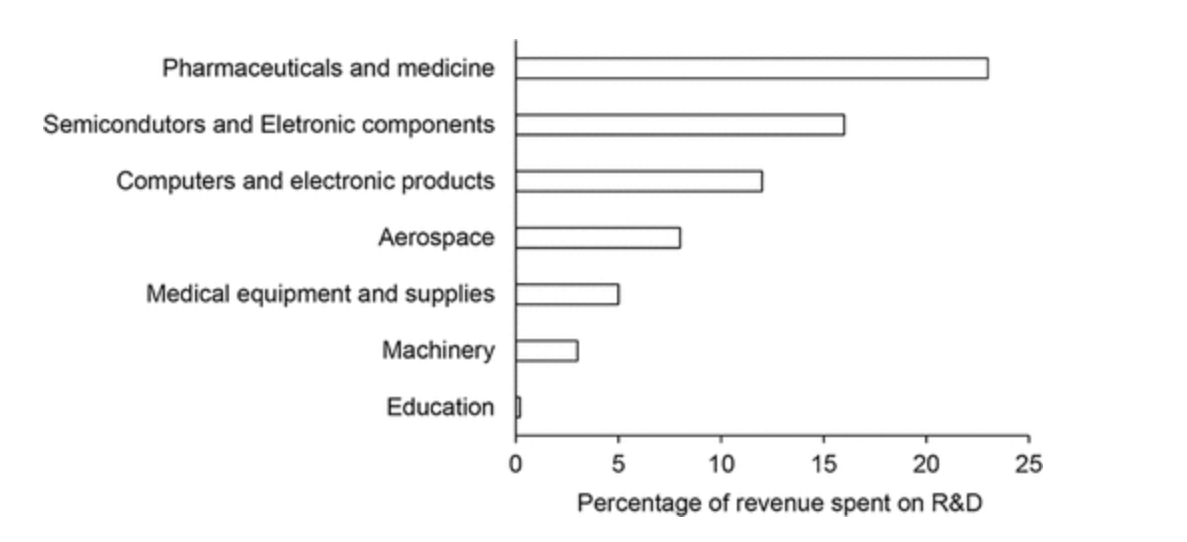
Compounding the “it’s what we know” problem is how little the K-12 education industry has invested in research and development. From a report by Aaron K. Chatterji at Duke University,  “Research and development (R&D) accounts for a tiny share of total expenditures in K–12 education, around 0.2%, or 1/50 the rate of the most innovative industries” 

Caption: Research & Development Spending (from Chatterji report)

Despite these historical factors, many communities recognize the power of place and the limitations of a classroom-based approach. Schools are becoming aware that giving young people more agency to move around to find the right place at the right time is essential to wellness and student-centered learning. That level of authentic student agency requires a variety of safe, desirable environments that are highly accessible. Creating a diverse array of environments that meet the spectrum of needs of any group of kids is practically impossible within the four walls of a classroom, but it’s what defines a well-designed Learning Community.

As more and more schools embrace different spatial models, it has to be very reassuring for classroom-based teachers to hear from Eden Park educators that maintaining existing best teaching practices is important. I am hopeful that hearing this insight will alleviate some of the fear caused when considering transitioning to Learning Communities.

Nathan Strenge is a Senior Learning Designer at Fielding International, where he works with school communities around the world to create environments that foster creativity, collaboration, wellness, and belonging.

The post Addressing the Reluctancy to Transform Learning Environments appeared first on Getting Smart.

from Getting Smart https://www.gettingsmart.com/2023/09/05/addressing-the-reluctancy-to-transform-learning-environments/

Design a site like this with WordPress.com
Get started