It is hard to understand the changes we should make in education without considering how life and work might evolve. If school is meant to prepare students for adulthood, and if education is meant to equip them with the tools needed to shape their lives and our future, it seems worthwhile they would understand the systems at play that dictate their day-to-day lives.
Many who critique our current education model are quick to cite the lack of practical skills and know-how in many formal curriculums. Topics like financial literacy, understanding how insurance works, or basic health and wellness advice can prove wanting, and might impact personal choices. In addition, we often fail to provide access to courses that facilitate systems thinking so that students are able to connect their daily life to the larger system at play. This lack of understanding at both the macro and micro level as to how things work can deter students from having agency over their lives. If we want students to thrive – we need to help them to understand the system we currently live in while providing a grander vision of what that system could look like (as well as the practical skills to get there).
Only 25 states currently require students to take an economics course. This signifies that many students never really have the opportunity to explore how our free-market system works – and the challenges and opportunities we have to improve how we do things. The lack of understanding towards economics makes it hard for many to reimagine the world of work, and the possible changes we can make to our systems to improve quality of life and protect our planet.
It also impacts career pathways as students might struggle to see how their professional and consumer choices are part of a larger whole. When students have a more holistic way to make sense of the flow of goods and services it can generate greater insights into how society functions. From understanding purchasing power (past and present), to the housing market, to instruments that measure the health of a society (e.g the gini coefficient for inequality, the Human Development Index (HDI) for standard of living, or Gross Domestic Product (GDP) for wealth). Without some sort of sensemaking framework it can be hard for students to grasp other concepts like career awareness or financial literacy because it’s unclear how these pieces fit into the larger picture.
Students should be encouraged to not only learn about our economic system, but to critically think about the different levers we have in place to grow wealth yet still do good for the world. Economic systems are something that can evolve to positively shape how we live and work. In fact, in many places the dialogue has already started on what our economy might look like, and it seems time to bring our youth into those conversations.
How are people discussing the economy?
The United Nations developed the Sustainable Development Goals (SDGs) as “a blueprint to achieve peace and prosperity for people and for the planet.” In order to achieve the seventeen goals, there has been ample dialogue around how we can rethink our systems so that we can achieve these goals. How we exchange goods and services, the way we do business, and policies that incentivize good practice have encouraged conversations about how we reshape our economies.
Social Economy – The social economy often refers to the array of business structures that strive to be economically viable, but with a socially driven mission. This concept is important because recognizing the value of social businesses is a first step in understanding the power of using business to do good. It can help us rethink how we blend the mission of the non-profit with the self-sufficiency of a for-profit to both solve problems and generate wealth.
Circular Economy – The circular economy model questions how we use our resources and eliminate waste. In traditional economics courses we are usually taught a very linear approach towards how we produce and consume goods and services. Instead of taking materials from the earth, producing them into a good, using them as a consumer, and then throwing that good away, the circular economy asks how we create a more continuous flow of materials and resources.
Regenerative Economy – Regenerative capitalism revolves around the idea that capitalism doesn’t need to be extractive, but can rather restore so that we live within our bounds. This approach encourages us to see nature as a core part of what we do, an element we work with so that people and the planet can continue to thrive. It’s a more thoughtful approach as to how we can still have free-market principles, but applied in a way that replenishes the earth instead of depleting it.
Making Economic Systems Practical for Youth
One of the best ways to engage students in the world of economics is through doughnut economics. This model has already been adapted for a classroom setting to help engage students in the many questions we have about how we might rethink our economic systems to solve the challenges of our time. It’s digestible and actionable – something we can use to provide students with a lens for the big picture of how our systems work (or could work).
When students understand that economic systems are indeed malleable, it helps them to understand their power as consumers (and employers) to drive change and achieve impact. Learning about economics might help them to realize their power as consumers, and their decisions about the companies and organizations where they choose to work or do their business. It may help them to differentiate when a policy should be geared for consumers versus producers (e.g. should it be up to the individual consumer to bring a reusable bag to the store or should producers be banned from offering unsustainable disposable bags? Which makes a greater impact?). It can help them look for signs that the companies they work for or buy from are socially responsible. For instance, B-Corp certification is a way for youth to identify if a business operates in a way that is socially and environmentally friendly.
Understanding both the macro and micro layers of our economic system can benefit students on many levels. Of course, without any knowledge around our current system, how can we ask students to reimagine our current model? If we want students to live a more purposeful life – one in which they make an impact – perhaps we need to provide more of a vision for how that can be achieved. Students want meaningful work and a more just world. This requires we don’t leave them in the dark on how the world works, but rather open them up to new possibilities on how it could work.
If you’ve done any amount of innovation and redesign work you’ve inevitably had experiences with skeptics. The doubt can come in the form of snide comments about plausibility, subtle questions about data, or outright rejection of any possibilities that don’t fit into a comfortable, already-held narrative about the future. While it might be easier to just dismiss the skeptics and work with like-minded folks only, doing so is often impractical; and frankly defeats the purpose of futures thinking.
At its core, futures thinking, and true innovation, should help people make decisions today that lay the foundation for better futures. If we leave skeptics behind, we’ll end up focusing on the most naturally receptive audiences, ones who are already most likely to make forward-leaning decisions. While overcoming skepticism does make for harder work, it also makes for more rewarding work. More importantly, it often needs to be one of the goals of your futures work because motivating more people to think and take actions for the long-term will have greater impact.
The question is though, how can we productively address skepticism in our audiences?
Push People Past Their Comfort Zones
At a high level, I see my job as a “futurist” as finding the edge of my audience’s comfort zone and helping push them just past that. This means that what is provocative for one group may not be for another, and vice versa. Part of our work as futurists is to discover that comfort limit and help people cross that boundary line into more imaginative possibilities. The bigger the group and the more diverse the audience, the more complicated this task might be.
Balance Fear and Hope
On the other hand, I think there are really just two fundamental emotions pushing people towards action. One is belief or faith in an opportunity (hope), the other is recognition of risk (fear). Ironically, both can lead to inaction as well as action. For instance, techno-optimists might have hope (unfounded or not) that all of our most intractable problems will inevitably be addressed by some as-of-yet un-invented technology—giving them an excuse to not take the difficult actions they might otherwise need to do today. Likewise, too much fear can lead to fatalism or paralysis. If we’re doomed anyway, why take action?
Like yin and yang, the answer is almost always balance. Overoptimism in a future fix can be dampened with a bit of well-placed fear. Similarly, fatalism requires a healthy dose of optimism, often in the form of well-considered opportunities or pathways out of that risk. Part of the job of the futurist is to find that balance and support the best way to motivate change.
I was once working with a client to explore the future of their industry. We identified a number of possible, plausible, and probable visions of the future for them to consider. One of the senior leaders in the room, while reading one of those visions, shook her head. “I don’t like it,” she said. Curious (and a bit anxious) I asked her why. “Because in this future, we don’t exist,” she replied. That story, taken alone, could have been paralyzing—but when we combined potential pathways into the future with plausible pivots so that the company COULD exist, even in that scary future, the work transformed risk into motivation.
We often can’t afford to ignore our skeptics. Bring them along your futures journey by balancing their fears and hopes for change.
– Ayça Güralp
Tools to Motivate Skeptics
Any good futures process will focus on including skeptics on the parts of the journey that will give them the greatest sense of ownership. For some that will be the entire process—seeing how data and signals from today come together to form the basis of plausible and possible narratives of tomorrow. For others that will be stepping in to identify preferable futures or describe aspirations. The goal is to share both hope and fear with stakeholders at the moments when they can catalyze the most action. The tools we use at the Institute, when used creatively and at the right moments, can help this process along—once you better understand how to motivate those in your organization.
The futures wheel of “Draw Out Consequences” is a simple tool with immediate impact. Described simply, Draw Out Consequences plays out like a series of “if…then…” statements, helping people think through first, second, third (and beyond) order consequences of some change or disruption. With the right prompting, practice, and diversity of perspectives, it can guide teams to think about how the systems they work within are interconnected. It’s a tool that is easy for people to get into quickly, but robust enough to really help unearth provocative insights. Because of this, it can be deployed with skeptics to allow them to identify the far-ranging consequences of future change themselves—creating “aha” moments that deepen the emotional connection to the work.
Our proprietary “Ride Two Curves” tool is a nice way to systematically think through how a system can switch from one present way of working to a new way in the future—and what the implications and results for your organization might be. Companies, for instance, concerned about disruptive players in their core businesses often find this type of thinking very valuable as they consider how to shift their strategies and how quickly to do it.
Finally, adopting a robust and regular signals gathering practice—complimented by regular debate and consideration of the disruptive possibilities implied by those signals – is a core practice which provides the concrete evidence that some people need to see. It can be especially impactful to show skeptical leaders signals of competitors wading in, when innovators in analogous sectors are experimenting, or when disruptions caused contemporaries to falter.
While dealing with skeptics might not be easy, it is almost unavoidable in any futures process. Rather than seeing it as an obstacle, I’d encourage you to see it as an opportunity (see how I applied that idea of balance there?). Skeptics will drive you to design better processes, create better content, and be better focused on driving change. Putting in the time up front to understand your audiences, identify where skepticism is coming from, and applying the right tools in the right places will position you well to turn skeptics into champions.
This post was originally published on IFTF.org. You can learn future-ready skills by enrolling in an IFTF Foresight Essentials training based on 50+ years of time-tested and proven foresight tools and methods today.
Wayne Pan is a Research Director at Institute for the Future (IFTF).
Over the past 20 years, competing ideological agendas have challenged public education in almost every arena: in state legislatures, on school boards, and across local communities. However, there is reason for optimism, because the current education ecosystem is circling around that rare thing that everyone agrees on: the importance of career-connected learning. While some education trends are quick to fizzle, this one has staying power. This newest trend is one that we should all embrace, as career-connected learning gives students hope and motivation for their future and brings relevance to foundational academic skill building.
However, scaling effective career-connected learning, particularly work-based learning experiences, has proved challenging. It is one thing to create two or three career pathways, or a dozen internships. It is quite another to provide career-connected learning to thousands of students across a large district like St. Vrain Valley Schools, which educates 33,000 students in 60 schools and programs, across 411 square miles in four Colorado counties. With nearly 15 years of experience in building and leading career-connected learning initiatives, St. Vrain offers a roadmap for districts of all sizes who are beginning the journey to create their own pathways of opportunity for students.
Over the past decade, St. Vrain Valley Schools has launched more than two dozen career pathways and now has a goal to offer quality work-based learning experiences for every graduate. As staff have developed these opportunities, St. Vrain has seen significant increases in graduation rates – approximately 94 percent of St. Vrain students graduate high school in four years – and a significant decrease in dropout rates to less than one percent of students. Graduation rates among our Hispanic students have increased by 30 percentage points, almost completely eliminating graduation rate gaps between all students and students of color. St. Vrain’s post-pandemic achievement has also accelerated at a remarkable pace. Building career-connected programming, and offering it as early and broadly as possible, has demonstrated a compelling case for the effectiveness of career pathways in accelerating achievement and student success.
Building a career-connected education system needs to begin in elementary school, where teachers and counselors help students discover new areas of interest. To engage students, effective counseling begins with an Individual Career and Academic Plan (ICAP), where students explore their passions and future prospects from fifth grade onwards. Beginning in middle school, an annual districtwide ICAP survey identifies which students are interested in each career pathway, along with the work-based learning experiences that interest them most.
Middle school and early high school is a period of exploration. Through interactive classroom sessions, motivational career talks, and immersive industry visits, students are exposed to diverse career opportunities. The apex of this journey, however, lies in work-based learning, career pathway programs, and career/technical education (CTE) – including internships, apprenticeships, job shadowing, and collaborative projects – all of which are available beginning in the ninth grade.
A cornerstone of St. Vrain’s dedication to career-connected education is its over 70 focus programs offered throughout the district. At the high school level, these programs intertwine academic learning with hands-on experiences across seven distinct career pathways (including aerospace, business/leadership, medical and biosciences, and energy), effectively bridging the gap between education and practical skills. In addition, St. Vrain offers four Pathways in Technology Early College High School (P-TECH) programs, which empower students to earn an industry-aligned Associate degree alongside their high school diploma, preparing them for a competitive job market, all at no cost to the student. Simultaneously, St. Vrain’s CTE programming, which is available to all students in grades 9-12, equips students with practical skills and industry certifications across 24 pathways, offering viable routes to in-demand, high-earning professions that may not require higher education, such as underwater welding and advanced manufacturing.
All of these approaches require a commitment to the success of all students, and a willingness to ensure rigorous graduation standards and coursework options for every student. The absence of academic prerequisites for career pathways programming – from culinary arts to artificial intelligence – ensures accessibility for all students, promoting inclusivity for learners with disabilities, English language learners, low-income families, and other underserved groups. Open enrollment ensures that students can enroll in any high school with a career pathway that appeals to them, regardless of zipcode. Further, free transportation is provided from every high school to the district’s CTE centers. Students can also access a new synchronous remote learning platform called AGILE, where students can enroll in numerous Advanced Placement and rigorous courses that may be offered at another school in the district, all from their home high school. As a result of these commitments, St. Vrain’s enrollment in career pathways programs has surged from 26 percent in 2018-19 to over 50 percent in 2023-24.
Central to the district’s success are high levels of community support and strong partnerships with industry and non-profit partners. A pivotal milestone was the 2008 mill levy override that bolstered career pathways and focus programs, paving the way for their expansion across different educational levels. In 2016, collaboration with Front Range Community College and IBM resulted in the inception of St. Vrain’s first P-TECH program in Computer Information Systems, followed by dozens of industry partners working in St. Vrain’s other P-TECH programs in cybersecurity, business, and biotechnology, as well as the Innovation Center (which offers CTE and concurrent enrollment coursework in emerging technologies), Career Elevation and Technology Center, school-based focus programs, and other CTE options.
While rigorous academics are critical, hands-on experiences and mentoring from industry professionals are the difference-makers. As St. Vrain continues to scale work-based learning opportunities in alignment with its existing career pathways work, the district has identified ways to make rigorous work-based learning opportunities accessible to more students. For example, St. Vrain’s Innovation Center employs more than 200 students to work on real-world, paid, industry projects in small groups with support from an industry mentor and a teacher. Whether designing chatbots, building robots, flying drone missions, raising endangered fish and toads, or filming videos for businesses to use on social media, St. Vrain student project teams are engaging in real work for real businesses, while also collaborating with a team of peers, closely mirroring a real job.
The next step in St. Vrain’s vision is the establishment of a Workforce Futures Center, which will serve as a central hub for internships and apprenticeships in northern Colorado, funded in-part through a $7 million Opportunity Now Grant from the Colorado Office of Economic Development and International Trade. Partnerships are a critical element of all career pathways work, with more than 100 industry partners currently serving on St. Vrain’s CTE advisory boards, offering work-based learning experiences, providing mentoring to students, and hiring students after they graduate. Collaborations with groups like CareerWise, Workforce Boulder County, the Longmont Economic Development Partnership, the Longmont and Boulder Chambers, and the Colorado Business Roundtable bring additional support and opportunities to students.
There has never been a more exciting time to foster stronger career pathways in K-12 education. This is a dynamic, shifting landscape, influenced by talent shortfalls, evolving technologies such as generative AI, and rapidly changing workforce needs, all of which require constant adaptation of curricula. If public education wants to serve as a highly effective workforce pipeline, districts need to work closely alongside industry to co-create pathways to higher education and careers.
Districts beginning to explore career-connected learning should ask themselves these questions, which St. Vrain has had to answer many times over its 15 years creating career pathways and work-based learning opportunities:
How do we ensure that every student benefits from career-connected learning, and that all students continue to have all opportunities available to them, including postsecondary education, high-wage jobs, entrepreneurship, and/or public service? How do all of our pathways provide different entry and exit points, providing entry to high-wage jobs and/or postsecondary education?
What data will we use, and what partnerships will we create, to ensure that our programming meets both the interests of students and the needs of our local community?
How will we ensure that our strategies center the needs of students who have historically had the least amount of access to high-wage, high-growth careers? How do we support students who are still learning English, or those with disabilities, to ensure that they can see a hopeful and purposeful future for themselves?
What is the viability of scaling any strategy that we pursue, so we don’t inadvertently build opportunities that can only be accessed by a small fraction of our students?
How do we create a culture of openness, collective responsibility, community engagement, and partnership in our district? How does our community know what we are doing, and how do they engage in our work?
Hilary Sontag is the Executive Director of Advancement & Strategic Partnerships at St. Vrain Valley Schools.
Kerri McDermid is the Chief Communications and Global Impact Officer at St. Vrain Valley Schools.
“What we need to do is actually get out there and talk to people, gain their trust, and understand from their point of view what they need, not assume what they need. It’s not about us, it’s like you got to de-center your ego.”
4.0 Alumnus
Textbooks. IQ tests. SAT tests. Classrooms with rows of desks.
What these all have in common is that they were designed to serve a mythical “average” student for standardized jobs and careers. However, such standardization fails to serve most students, particularly those from marginalized communities such as students of color, students with disabilities, and students from low-income families.
Instead, systems ought to acknowledge individuals’ differences and their “jagged” learning profiles and design schools in ways that accommodate variability not only across students but within them, argues Harvard University professor Todd Rose in his book The End of Average. “If you design those learning environments on average, odds are you’re designing for nobody,” Rose says in his accompanying TED Talk.
Rather than design for the average and come up short, we can instead design for the margins and develop something extraordinary. As the brilliant education and social change leaders behind the equityXdesign framework advise, “Designing at the margin means that those in privileged positions do not solve for those experiencing oppression; rather, in true community, both the privileged and marginalized build collective responsibility and innovative solutions for our most intractable problems.”
At 4.0, this means we put communities and individuals historically marginalized at the center of our work by selecting them to participate in our Fellowship programs and tapping into their insights as alumni to develop and carry out our programming. It also means ensuring that those selected founders place the needs of community members at the forefront of their efforts. In our fellowship programs, 4.0 leads founder participants through identity-affirming activities designed to heighten their awareness of self, and through empathy interviews that focus on deeply understanding the complexities of their communities rather than focusing on a narrow solution. We encourage our founders not to attach to the initial idea they joined the fellowship to explore. Instead, we challenge them to embrace adrienne maree brown’s emergent strategy of interdependence and decentralization by immersing themselves in their communities.
We believe this leads to more effective founders who can do more robust equity work over time and develop more impactful solutions that respond to the needs of the community – and often to others as well. The curb-cut effect drives our work at the margins. This effect illustrates how designing for some leads to more access for all. Building sloped curbs that accommodate wheelchairs rather than those with hard edges benefits many others, including those with strollers, bikes, skateboards, and even pedestrians. Social and educational change work should be this way too: creating schools that work better for vulnerable students or systems that support individuals who are historically marginalized can improve the lives of all members of the community.
How to Design at the Margins
A study conducted by the University of Delaware’s Center for Research in Education and Social Policy (CRESP) concluded that 4.0 emphasized “viewing venture ideas from community perspectives, challenge alumni to abandon ego, dedicate efforts to the problem and not the solution, and advance thinking, all in order to engage stakeholders in an equity-focused, design thinking-based approach.” The philosophy that underpins 4.0’s approach is social reconstruction. We genuinely believe a better society can be realized by creating programming that engages leaders in the process of:
Analyzing themselves in relation to their community;
Understanding the community’s equity challenges and their lived experiences;
Conceptualizing a better world – or as we often call it, being (un)real; and
Actualizing that vision.
Practically speaking, for 4.0, designing at the margins means engaging founders in the hard work of reflecting on the ways their own identity intersects with the equity challenges they seek to address and centering the unique needs of the community they wish to serve through empathy interviews.
See Yourself, See The Systems: Reflect on Proximity and Power
Before founders attend 4.0’s fellowship “camps,” they complete online exercises. These exercises guide them through identifying potential equity challenges in their communities, reflecting on what systems are at play in producing those inequities, and generating a list of things they will need to learn more about as they engage in empathy work.
Questions include:
What inequitable patterns of experience and outcomes are playing out in your community? How do we know?
What structures and system dynamics are contributing to these inequitable patterns?
What has been emerging in your community relative to these patterns?
In what ways have interpersonal, ideological, institutional, and internalized oppression impacted you as an individual?
How might your venture be aiming to disrupt and fight against oppression on each of these layers?
As part of this process, founders consider their place on the wheel of privilege and interrogate their proximity to power (see below). This deep self-reflection is pivotal in helping founders acknowledge any personal bias and blind spots that influence how they are viewing and attempting to address the equity challenges of the communities they seek to serve. This identity work leads to deeper reflection about who is uniquely situated in the community to offer alternative views and potential solutions through empathy interviewing.
Other organizations explore these same ideas through different mechanisms, such as the Paseo or Circles of Identity protocol from the National School Reform Faculty used to facilitate an identity-mapping activity. Harvard Project Implicit tests also aim to surface unconscious ideas and preferences.
What is most important to 4.0 is that the founders we support are aware of their own identities and biases, so that they become more wedded to the community than to their ideas for solutions. Developing this mindset increases founders’ willingness to pivot in response to what they learn about the community’s needs.
See the Community, See the Challenges: Conducting Empathy Interviews
Next, founders in 4.0 Fellowship programs turn to designing and conducting 3-5 empathy interviews to understand the experiences, emotions, and motivations of the members of the community members they are designing alongside. The community members interviewed should include other leaders and educators as well as young people impacted by schools and schooling, and elders whose wisdom might be otherwise overlooked. During the empathy interview, founders seek to truly understand the needs of the individual, the community, and the work needed to dismantle unjust systems that lead to marginalization.
There is no set list of interview questions, as these are designed to reflect both the unique community and the specific challenges that the founder is exploring. However, it is essential to spend a significant amount of time genuinely listening to the interviewee and empathizing with their experiences, needs, and desired solutions – while also being mindful of their time. Although founder Destiny Shantell Woodbury had spent decades as an educator and school leader in Houston, her project shifted dramatically in response to her empathy interviews with students, teachers, school leaders, and community members during a 4.0 fellowship in 2018. “I live in this community and thought I knew what they wanted and needed,” says Woodbury, who had planned to create a professional development organization related to equity, restorative practices, and trauma-informed instruction that would support schools.
But based on the data she gathered via empathy interviews and her Essentials pop-up, she shifted her focus to the mental health and wellness of students and educators, piloting this program during another 4.0 fellowship in 2019. She now plans to launch The Anchor School – a charter school district focused on achieving educational equity through a focus on individual student identity and a healing school environment – with the first school opening in Houston in 2024.
Over the course of the last four years, Woodbury estimates she has conducted more than 150 empathy interviews and tapped several of these participants as part of the school’s design team. “4.0 took the time to teach us the processes and to understand the why,” she reflects. “Students said they didn’t talk about who they are, just what they needed to learn, but felt like they needed to talk about mental health and wellness well before they leave for college. Between that and hearing parents say their children don’t express emotions – that helped me realize I needed to create a school that focuses on this.”
Other programs use empathy interviews as a part of their work. For example, the Washington, D.C.-based CityBridge Education programs also use empathy interviews. The leaders of Chinese immersion elementary school Yu Ying Public Charter School participated in CityBridge’s School Design Fellowship in 2019-2020. They wanted to close achievement gaps between Black and Latinx learners and students who were Asian or white and to build a more inclusive school culture. Their design team identified students of color across four grade levels – including multilingual learners, those who had experienced trauma, those who lived far from campus, and those receiving interventions already – and conducted empathy interviews and student “shadowing” to understand their lived experience in school.
This process led Yu Ying leaders to understand the problem better. The result was more robust solutions, such as a student-designed play. This play would offer students an opportunity to express themselves outside of academics in ways that allowed them to be fully seen and valued.
The practice of empathy interviewing and student shadowing is not new, of course. In fact, other organizations have several tools and resources available to support innovators in honing these skills. Transcend has a great primer on conducting empathy interviews for school design and one on shadowing a student. IDEO and the Stanford d.school also have a primer and a broader toolkit for student shadowing.
At 4.0, after founders conduct their empathy interviews, they share those results with their alumni coach and other founders in their coaching group to investigate how they might test a solution through a pop-up or pilot. Founder Laura Thomas first came to 4.0 as a participant in a 2018 fellowship program. She had been working for nearly a year on a social-emotional wellness curriculum and wanted to develop a technology product that students could use to practice those interpersonal skills. “Many kids are struggling with how to manage emotions and how to deal with the ups and downs, which can really hit hard when you’re trying to grow,” says Thomas.
As a result of her empathy interviews with students and teachers, Thomas shifted away from developing a student-facing app in favor of testing pieces of the curriculum within a school community, by adding social-emotional lessons during a yoga class at Stanton Elementary and later Garfield Elementary, both in Washington D.C.’s Ward 8. She eventually built her app while participating in 4.0’s New Normal Fellowships of 2020 and 2021, when Thomas could not go inside classrooms to deliver curriculum in person, with feedback gathered from teachers and students who had used the curriculum and lessons as well as prototypes of the technology. Rather than serving students directly, the app allows teachers to design lessons for students based on their needs and to access professional development. She also launched a separate nonprofit organization designed to build social-emotional curricula for those schools and communities that aren’t likely to use the app.
“4.0 really pushed me on co-designing from the very beginning,” says Thomas. “That has made me into a research startup designing a truly universal solution that really responds to what different students and schools need.”
As a result of activities like identity exercises and empathy interviews, CRESP researchers found that many 4.0 alumni are “forever changed” by this focus on designing at the margins. “It’s just important from an equity lens that you have someone from the ground floor that you’re designing with, and not for, a community,” said one founder. “They [4.0 staff] are able to put you in the shoes of your students, to put you in a place where you can understand what your students want, what the families of your students want, what the teachers want if you’re working with a teacher venture,” reflected another.
Many commented on the long-term impact the program has had on the ways in which they address equity challenges. Several continue to use empathy interviews long after the training and work to include conversations about lived experiences and needs in their design of potential solutions. “What we need to do is actually get out there and talk to people, gain their trust, and understand from their point of view what they need, not assume what they need,” said one founder. “It’s not about us, it’s like you got to de-center your ego.”
4.0 fellowship alumnus Pranati Kumar says she has used what she learned at 4.0 about empathy interviews to start her current venture, Rohi’s Readery, a social justice-driven children’s bookstore and learning center dedicated to critical literacy that promotes inclusivity and diversity. As a former educator, “4.0 was my first experience in seeing ideas come to life that supported liberating outcomes for marginalized communities,” Kumar reflects. “When I started the Readery, I used the content and supports from 4.0.”
Kumar also joined a local entrepreneurship accelerator in her West Palm Beach, Florida community and shared the empathy interview construct that could be used in place of “customer interviews” suggested by the accelerator. “‘Customer’ can feel very transactional, but ‘empathy’ is consciously about that person as a whole,” says Kumar. “I learned to see the need of the community and get really strong data about the way that people from marginalized communities in the downtown West Palm area feel and the way that children feel a sense of belonging.”
Conclusion
Increasingly, we believe that the best way to ensure that communities develop schools and learning environments that work for them is for them to design those solutions themselves. We are encouraged by efforts like Moonshot edVentures’ fellowship program for diverse leaders ready to start a new school in Denver and Building Excellent Schools’ fellowship programs for established school leaders ready to start their own school. But we also want to encourage more parents, educators, community leaders, and even students to step forward to rethink and redesign learning in new and more equitable ways that meet them where they are and help them achieve their dreams. Hassan Hassan is the Chief Executive Officer at 4.0.
It was the end of the school day, and I was tired. I grabbed a stack of about 130 equation worksheets to grade on the train ride home and picked up the dry-erase markers (that I bought myself) and put them in my purse. I’d bring the pens back in the morning, but I didn’t want to risk someone taking them after I left for the day.
My principal poked her head into my classroom and said with a wink, “Friendly reminder! You need to make sure your word wall is up by tomorrow morning.” She then moved on to the next classroom to repeat the message.
I sighed and thought, “Are you kidding me? What a waste of my time.”
My principal was passionate about making our school beautiful.
I was passionate about getting my students to pass the New York State Algebra Regents Exam.
My principal wanted every classroom to have a word wall, where important subject-area concepts would be defined and displayed on colorful paper. She wanted bulletin boards showing student work on creative projects that demonstrated high levels of thinking. She brought in large, beautiful planters that lined the hallways with greenery. She found money to buy new wood-veneer tables for half the school’s classrooms to replace the old-fashioned single desks.
Meanwhile, I just wanted printer paper, dry-erase markers, and calculator batteries.
To me, the time and money spent on making our school and classrooms beautiful was just a distraction. Those things don’t help my students learn math. Or do they?
After three years of teaching, I went to graduate school in part to study how resources—from basic supplies to new furniture—affect teachers and students. What my research found surprised me: When teachers had their requests for classroom environment resources (like rugs, seating, or shelving) fulfilled on the crowdfunding platform DonorsChoose, their students did better on standardized tests, and (in new research) the teachers were less likely to leave the teaching profession.
The small, basic supplies I needed still matter, but they can only help so much. My principal was right. She was creating more than just a beautiful space—she was building a welcoming and positive environment for students to learn and teachers to work.
Don’t assume that classroom appearances aren’t important when it comes to learning.
Do help principals and teachers create the schools of their dreams. Volunteer to beautify your school or bring in a plant for an empty windowsill or hallway. Donate to fulfill teachers’ wish lists if you can. Supporting what educators want—not just what they need—can make all the difference.
With humility and gratitude,
Samantha Keppler is an assistant professor of technology and operations at the University of Michigan’s Ross School of Business. Before graduate school, she was a public school math teacher in New York City. Previously published on Character Lab.
It was in the Spring of 2015 while walking with a junior high teacher from the private Montessori school my children attended that I asked a simple question whose answer would fundamentally alter the trajectory of my professional and personal life.
“Has anyone thought about adding a high school to our school?” I asked as we walked together up a path at a local educational farm, kicking muck off our boots as we went. Behind us followed a train of junior high (grade 7-8) Montessori students who had just finished helping a group of Primary (age 3-5) students do an exploratory “swamp walk” through the farm’s marsh to experience first-hand the features of this vital ecosystem. I had joined them as a parent volunteer for the day. The teacher shrugged and said, “It’s been talked about, but it hasn’t really gone anywhere.”
“Huh,” I replied. “Well, if you want to start one, I think I’d be interested in teaching in it.”
Just a few short months later being “interested in teaching” at a Montessori high school morphed into resigning my tenured faculty position at a local university and radically altering my career path to design and launch an urban, community-centered Montessori high school.
Fast forward 5 years to August 13, 2020. On that hot August morning, I found myself standing in a parking lot outside the education wing of a church in downtown South Bend along with my co-founder, Eileen Mariani, taking the temperature of – and handing masks to – the first students to walk through the doors of River Montessori High School (RMHS). In between a couple of arrivals, I looked at her, pulled down my mask, and quietly mouthed the words, “we did it.”
But how? RMHS is an improbable aberration, right? I mean, how did a former professor and elementary teacher go from the notion of starting a school in 2015 to actually opening one in 2020 and standing next to its first graduates in 2023? It’s a question I reflect on quite a bit as I guide others through the process of launching new private schools in my current role as the Director of the Founders Program at the Drexel Fund. Every startup journey is unique, but I’ve noticed three interconnected themes that are a part of each success story.
You ask questions. Lots of them.
Asking questions – and not being afraid of where the answers lead you – is a key part of walking the road to designing and opening a new school. When we see something “not right” in the educational environments around us we can intuitively feel that things need to be different, but we have to interrogate those feelings to get at the core reality that needs to be changed.
Why are students dropping out? What is it about their current environment that seems to be holding them back? What should a graduate be able to do? Who needs this school (i.e., what does my proposed school offer that no one else is doing or not doing well?)
These are important academic model and market demand questions, but there are also a number of vital, non-academic questions to ask, especially if your motivation is to start a school to meet your own child’s needs.
What if the school I start ends up not working for my child? Am I committed to doing this even if things don’t work out for my own family? What if the school’s needs run counter to what my child needs? Am I willing to fail?
While building a school to serve one’s own child is a powerful motivation that can sustain a person through the inevitable challenges of founding a school, it is also a dangerous one. The important takeaway is that when founding a school you need to constantly be asking – and seeking answers to – questions, and not just ones about the academic model. But where do you get your answers or even figure out the questions you need to be asking?
You build a community of supporters…and skeptics.
At a very early stage we invited supporters andskeptics into our visioning and planning process. Hearing answers to our questions from just our “cheerleaders” or our own brains wasn’t enough. We needed to know the questions and concerns of others because honestly, we didn’t know what we didn’t know.
In our case, this first took the form of spending 5 months in early 2016 meeting regularly with a group of individuals who were lovingly skeptical of what was being proposed. That gave us a chance to try out different responses and explore novel ideas. It also forced us to repeatedly narrow our focus and hone in on the core identity of our school. This moved us from general notions of what we wanted the school to look like to very specific principles for how we were going to educate students. It also created a critical mass of individuals who years later would become some of the first board members and parents.
I won’t sugarcoat it though. Hearing people push back against our ideas for innovation was hard, as was making peace with the fact that there would always be people who weren’t going to see the merit in what we were doing. But I’m glad we had so many voices – both supportive and critical – as together they kept us moving forward.
But how does a launch team move from questioning and planning to actually being able to set an opening date and recruit families?
You get your big break(s).
What do I mean by a “big break?” Well, it looks different for every startup journey. It might take the form of someone overhearing you talk about your proposed school and later coming up to you saying, “Hey, I heard you are looking for a school location. I have a place you should look at which has been vacant for the last four years.” Or, maybe a friend of yours is talking with another friend about your school idea at a wedding and as a result of that conversation this “friend of a friend” ends up becoming your school’s first major donor and board president. It could even look like getting an email out of the blue from someone you haven’t talked to in more than a year saying, “Have you heard of the Drexel Fund?”
Turns out, none of the above are hypotheticals: each was one of our “big breaks” (yes, plural). None of these are things we could have scripted or planned, and one might say we were “lucky.” But to quote Seneca, “Luck is what happens when preparation meets opportunity.” By relentlessly asking and answering questions and continually building a community of supporters and skeptics, we positioned ourselves for these moments of opportunity. If you talk to anyone who has successfully launched a school, I’m sure they would tell you similar stories.
So…what now?
If you have a passion for bringing a new private school to your community you might be wondering what some concrete next steps might be.
One option is to attend one of the Drexel Fund’s upcoming information sessions for private school entrepreneurs. At these sessions, you will learn about the pillars of school startup and hear about how The Drexel Fund supports the launch of new private schools. You could also apply for the 2024-25 Drexel Fund Founders Program. Even just completing the application will help you clarify your proposed school model and identify what questions you need to ask during your startup process.
Whether or not you take any of the above next steps, there is one thing I encourage everyone to do who is considering launching a school: talk about it. All the time. Let people know what you are thinking. No one does this alone, and the sooner you get your idea out of your head, build your launch team, and create awareness in your community, the more likely you are to be successful.
Dr. Eric Oglesbee is the director of the Founders Program at the Drexel Fund, a venture philanthropy organization dedicated to increasing access to high-quality private education for low-income families. He is also the co-founder and board president of River Montessori High School (RMHS) in South Bend, Indiana.
Facilitating a transformative journey starts with a comprehensive visioning and strategic process that revolves around four interconnected and dynamic portraits: the Portrait of a Learner, the Portrait of a System, the Portrait of an Educator and the Portrait of a Leader. These adaptable frameworks exhibit interconnections tailored to the specific context of each role. For example, an educator is expected to demonstrate collaborative skills, but the expectations for this quality may diverge within the broader educational organization.
The Portrait of a Graduate is a unique and locally tailored vision that outlines the competencies and transferable skills that support a learner’s long-term success. It serves as the guiding North Star for systemic transformation. This collective vision not only defines the essential knowledge, skills, and mindsets desired for students upon graduation but also rekindles engagement and enthusiasm among students, teachers, administrators, and community stakeholders. It provides strategic direction for a thorough redesign of the overall educational experience, ensuring the growth, adaptability, and ultimate success of every learner in our ever-evolving world.
Simultaneously, the Portrait of a System elevates this vision beyond aspiration, underscoring the need for a deliberate focus and alignment throughout the entire school district. Collaborating closely with dedicated district leaders cultivates a strategic shift by establishing new conditions, processes, and practices that promote equitable and enduring 21st-century experiences for both educators and students alike. This alignment ensures seamless integration of the vision at every level of the educational ecosystem, fostering a cohesive and purposeful transformation. Districts and schools support these with codesigned learning models, curriculum frameworks, and instructional models.
At the core of this transformative process lies the Portrait of an Educator, recognizing that educators’ competence and dedication can shape the overall learning experience for every student. By purposefully integrating rigorous academic content with 21st-century skills, mindsets, and literacies, educators play a pivotal role in bringing the vision to life. The Portrait of an Educator framework guides the identification and design of essential tools, resources, and support systems, empowering educators to effectively deliver on the district’s new vision with passion and proficiency. Leadership within this systemic design requires more than traditional management traits.
The Portrait of a Leader describes the optimal competencies required by leaders (both at the governance and administrative levels) to support educators in implementing the learning model and helping every student achieve the Portrait of a Graduate.
This nested approach paves the way for a truly transformative path that upholds the hopes and dreams of a community. It nurtures a generation of students equipped with the essential skills and mindsets to thrive in a dynamic, ever-changing world. The intentional system-wide shift fosters an inclusive, forward-thinking, and learner-centered education, empowering students to become future-ready leaders and active contributors to a flourishing society.
Student at Gibson Ek
Step 1: Engage with the Broader Community
As school system leaders, there is a responsibility to nurture the education and well-being of every child. To prepare students as lifelong learners and contributors, it’s critical to begin by engaging with the broader community to identify shared aspirations and address essential questions:
What are the hopes, dreams, and aspirations of our community for its young people?
In the face of a rapidly changing, complex world, what specific skills and mindsets do our children need to succeed?
How can we design equitable learning experiences within our school systems, considering all relevant factors?
Step 2: Define the Portrait of a Graduate
Uniquely tailored to each district yet globally relevant, the Portrait of a Graduate acts as the guiding North Star for systemic transformation. This collective vision defines the knowledge, skills, and mindsets desired for students upon graduation, reinvigorating and re-engaging students, teachers, administrators, and community stakeholders. It provides strategic direction for redesigning the overall educational experience, ensuring every student’s growth and success.
Step 3: Align the System with the Portrait of a Graduate
Beyond merely an inspiring vision, a school district must intentionally focus on shifting and aligning the entire system to make the Portrait of a Graduate a tangible reality. Districts must work alongside dedicated school district leaders to facilitate a strategic shift, establishing new conditions, processes, and practices that foster equitable and enduring 21st-century experiences for both educators and students. This alignment ensures the vision’s seamless integration throughout all levels of the system.
Step 4: Empower Educators with the Portrait of a Educator
At the heart of this transformative journey lies the overall learning experience provided to every student. By purposefully integrating rigorous academic content with 21st-century skills, mindsets, and literacies, educators play a vital role in bringing the vision to life. The Portrait of an Educator framework guides the identification and design of essential tools, resources, and support to empower educators to deliver on the district’s new vision effectively.
Sketch of the interconnectedness of the Portrait of a System
Step 5: Equip Leaders with the Portrait of a Leader
A Portrait of a Leader serves as a blueprint, outlining the essential competencies and qualities necessary for leaders across different levels of the educational ecosystem. Beyond establishing clear expectations, this portrait offers guidance for navigating of the complex landscape of modern education. In this context, leadership goes beyond conventional management traits. The Portrait of a Leader empowers educational leaders to effectively inspire, guide and empower their teams, fostering a culture of innovation, adaptability, and continuous improvement. It equips leaders to champion and steer the roadmap for systemic change, ultimately leading to more equitable, learner-centered, and forward thinking educational environments.
Review, Refine, and Celebrate
As we collaborate with system leaders to align their aspirations with daily practices, it can be overwhelming to consider the multitude of shifts required. To continue growing and evolving, it is crucial to acknowledge what is working and build from there. Celebrate progress, growth, and successes within your team and beyond. Recognize systems and teachers who are open to sharing their practices, receiving feedback, and collaborating. This commitment is how networks are formed, allowing us all to learn and grow together. Embrace the transformation, continue learning, and celebrate each step of the journey as you create and implement a Graduate Learning Profile that enriches the lives of your students and prepares them for a thriving future.
NAF, a national network of high school career academies, launched a free work-based learning platform called KnoPro. In partnership with industry leaders and corporations, the interactive platform offers any high school students the opportunity to tackle real-world problems faced by business leaders, receive expert feedback from industry mentors, grow their professional skills and resumes, and more – with the chance to win cash and other prizes!
High school students on NAF’s Student Advisory Council collaborated on the design and playtesting of KnoPro. From the very beginning, student and teacher voices have been at the center of what makes KnoPro so unique and effective for high schools across the country.
NAF Chief Executive Officer, Lisa Dughi, said, “After a year of successfully piloting and iterating with our network and partners to bring KnoPro to life, the time has finally come! We know that the future is now, and we are thrilled to celebrate this launch. The world today is technology- driven and it is critical for NAF to be at the forefront of innovative thinking in support of all students. We can’t wait to witness the impact that KnoPro will have on the next generation of talent on their journey to becoming Future Ready.”
KnoPro includes monthly challenges where students participate on a team or solo by helping solve a pressing industry or community problem. The first challenge, sponsored by NAF partner, Lenovo, called the Future Ready Tech Challenge kicks off on October 2.
Daily SkillBuilders are 10-15 minute real-world activities designed to increase students’ “future ready” skills, including critical thinking, collaboration, and communication, and earn them points and prizes.
NAF works with large corporations, small businesses, and nonprofits, to identify real problems their industry is facing, build engaging content, and tap into the creativity of young minds to be a part of the solution. Business partners can become a KnoPro mentor or competition judge. These KnoPro experiences help students build both technical and future ready skills that continue to be requested by employers across industry lines and are not only important for high school students, but for other employees to be exposed to potential job opportunities within their organization, and to continue as lifelong learners.
A KnoPro pilot teacher shared, “I would recommend KnoPro 100%. I like that it’s open to everybody. I love that KnoPro provides my students with creative ways to solve problems. I appreciate how they could incorporate technology into other fields like Health or Finance. KnoPro enables students to explore their career ambitions.”
KnoPro is the latest development in client projects, a trend in work-based learning:
The Real World Learning initiative, sponsored by the Kauffman Foundation, sponsored in metro Kansas City includes 85 high schools in 35 systems that are adding client projects and entrepreneurial experiences.
Purdue Polytechnic High School prepares learners for STEM-related postsecondary programs and high-tech careers through a series of client projects. Every eight weeks, PPHS students are presented with a real-world challenge. Project challenges are designed by staff in partnership with industry partners in the areas of healthcare, energy, transportation and philanthropy. Students team up with fellow classmates and work together through a five-step design thinking process to develop a solution. Partners provide guidance on project prototypes, serve as panelists for student presentations and provide feedback on project pitches.
The U.S. Chamber of Commerce Foundation will be launching the Employer-Provided Innovation Challenges (EPIC) initiative this fall. EPIC aspires to scale high-quality work-based learning experiences through a national network of partners that provide authentic, employer-led problem-based learning experiences to high school and postsecondary learners.
The Knowledge Society is a 10-month youth accelerator program operating in six cities and online. TKS learners work on real problems with global companies and are supported by mentorship, internships, hackathons and a resource-rich platform.
When it comes to providing equal opportunities in STEM fields, I am always searching for organizations and individuals who are making a positive impact. Dr. Anthony Depass and Understanding Interventions (UI) are among these significant changemakers. UI acknowledges the lack of representation of certain groups in STEM education and careers and aims to address this issue.
Understanding Interventions has three main goals:
First, to provide new insights into teaching, learning, and training through research.
Second, to enhance the community that understands and utilizes the results of educational interventions, by sharing information and fostering collaborations.
Third, to provide training and professional development for all STEM personnel, with the goal of increasing diversity in the field.
Nearly a decade ago, Understanding Interventions was born out of a workshop funded by the National Institute for General Medical Sciences. Its mission is to translate insights for those responsible for educating students in STEM, to equip them with the skills and resilience needed to succeed in their careers and contribute to society. UI seeks to develop strategies and offer tools that aid practitioners in serving students and accumulating knowledge.
Currently, black, and Latino students face high dropout rates in STEM Ph.D. programs, with 46% leaving before completion and 45% taking up to seven years to finish. Understanding Interventions is working towards changing these statistics by innovating programs that educate and empower students. Patrick Valdez, of the American Association of Hispanics in Higher Education, believes that “our programs must also be innovative” to shape the next generation of innovators.
I had the opportunity to ask Dr. Anthony Depass, one of the founders of UI, a few questions about the organization and its goals:
What was the impetus to start Understanding Interventions?
While there has been a long history of developing opportunities and programs to address broadening participation in science careers, much of this has been fueled by intuition and not necessarily by empirical research. This is not to say that research has not been conducted in this area. However much of this research is academically focused and not necessarily looking at translational implications. In other words, much of the research has not necessarily been sufficiently informed by practice and is often published in journals that practitioners do not read, and even if they were to read it the language can be impenetrable. In 2006, Clif Poodry, the former leader of the National Institutes of Health’s division for Training, Workforce Development, partnered with the National Research Council to investigate this issue. Clif joined the NIH back in the mid-1990s, and his efforts really pushed the idea of accountability where programs or the grant proposals to fund programs needed to start having mechanism by which they would set clear objectives and do the proper assessment to see if those objectives are being met. The next step that Clif from this foundation of accountability was to do work on the scholarship of interventions- moving from the “what,” to asking the “why” questions.
The need for such an effort was demonstrated when a program set up to fund this type of work and disappointingly, many of the proposals failed to pose the kind of questions or employ the appropriate methodologies were appropriate to gain deeper understanding the interventions that were being utilized. These approaches and methodologies required deeper integration of those used in the social and behavioral sciences, while most practitioners and emerging researchers in this translational space were in the basic sciences like biology chemistry and math. The research involved the study of non-cognitive aspects and psychosocial factors that would be predictive or significantly influence decision and performance outcomes for individuals pursuing STEM and STEM-related careers.
This collaboration resulted in the formation of a committee that was Co-Chaired by me and Larry Hedges distinguished professor at Northwestern University, I was a professor at Long Island University at the time, where I ran several programs, and served as program evaluator and grant reviewer for many programs targeting diversity in STEM. At the end of the year, the work of the committee culminated in a workshop in Washington DC. That workshop brought together individuals from communities of practice and research, and it was clear that an area of research that is more translational needed to be defined, with venues set for collaboration across communities, and dissemination of this work.
How has Understanding Interventions changed the STEM landscape for students?
Understanding Interventions stands to significantly impact the STEM landscape as it creates opportunities for many to develop deeper understanding of the components and factors that impact decision making and performance outcomes as it relates to STEM, especially from those individuals from underserved and marginalized communities. We see not only the generation of scholarship in this area, but that translation of the scholarship into interventions in the classroom and in the laboratory, as well as in other spaces where we train the next generation for the STEM workforce. It is through informed approaches related to STEM teaching, learning and engagement that we will more effectively expand diversity in our STEM pathways, as well as significantly integrate the careers that by necessity requires deeper understanding of STEM and quality training in STEM areas.
How has it helped STEM practitioners?
Understanding Interventions, through its training activities, dissemination of research, and the provision of resources facilitate informed practices leading to more productive outcomes related to broadening participation in STEM. There is significant evidence that some of what we see as positive outcomes from several programs and activities might have been through selection and cherry picking, rather than development of talent in individuals who otherwise would not be in STEM. We see Understanding Interventions and the work that comes out of the conferences the journal and the other resources in terms of access to the literature as helping to inform practitioners and inform activities so we can be much more effective not only in training individuals, but also bringing in communities that have been previously marginalized and minoritized and frankly excluded from this space.
What is the most significant challenge for students and practitioners of color in STEM careers?
Unfortunately, we have disproportionate numbers of students of color who also are from lower socioeconomic classes in this country, and many others in the world. Consequently, there are issues of access and not only to equipment and facilities but also to qualified teachers in this space. Success in STEM often means early access and early interventions. The realities would make it lacking for certain aspects of the population and as a result make it challenging for members of these minoritized and marginalized communities to successfully pursue STEM in ways that reflect their representation in the general population.
What do you hope Understanding Interventions will accomplish in the next five years?
Understanding Interventions since 2007 has developed a strong community spanning several areas. We have not only trained emerging scholars and practitioners, but we have also curated scholarships in this area. We have launched an Understanding Interventions Journal that serves as a venue for published work in this area. We have also developed the UI Index that is a curated database of articles and other information that individuals who want to perform scholarship in this area or are practitioners who are looking to locate aggregated published work on Interventions. Our annual conferences provide venues for dissemination, and in finding and networking with colleagues in the areas of scholarship, practice, and evaluation. These opportunities facilitate collaboration and discourse.
This year, we released UI IMPACTS (Inclusive Matching for Professional Advancement and Inclusion in Science) that serves as a public square for STEM. This is a social media platform that allows individuals in all areas of STEM at all levels to interact, find opportunities for mentoring, locate opportunities for post-secondary STEM training and adds a social context that STEM has lacked historically. Here is where individuals can network, form groups based on interests, recruit and provide relevant information to be recruited as users can develop and maintain a portfolio of the work that they have done across several media. There are also opportunities to include information on prior training, personal statements, and other information useful such that venues training and academic programs as well those for potential employment to identify potential candidates. This is especially valuable for those from minorities and marginalized communities. We are potential employers and programs have struggled with recruitment.
We see the Understanding Interventions community growing significantly over the next five years. Our last meeting had nearly 250 registrants we see that significantly increasing as we embark on broader collaborations with programs and the National Institutes of Health the National Science Foundation and many other agencies that provide funding that could leverage the information and training that understanding interventions provides.“Finding information about women in science and engineering, as well as underrepresented minorities in these fields, is not a challenge. However, it can be difficult to locate information about the intersection of both.” This statement was made by Mahlet Mesfinfrom the American Association for the Advancement of Science.Understanding Interventions is broadening the impact of science by bridging these gaps and igniting innovation!
At a conference in Malaysia in the spring of 2023, I heard keynote speaker Todd Shy, author of Teaching Life: Life Lessons for Aspiring (and Inspiring) Teachers (2021) and head of upper school at Avenues in New York, refer to education as a “human event” that changes lives for the better. He shared beautiful stories about students impacted permanently and positively by an adult who saw them, who “claimed them,” as Shy put it, and who lifted them to be their best selves and pursue a life they perhaps hadn’t envisioned for themselves before. He invited us to remember who those people were for us as children, and it took me back to those educators who really saw me, adults who extended kindness and grace when I stumbled, who challenged me to work harder and supported my whole self even as I figured out who that was. It was a beautiful way to start the conference.
But I can’t shake the questions Todd’s words raised for me. Seeking to have a positive impact on our students is what we educate for, no question, and I highly recommend his book, which I found deeply poetic and moving. But what about those moments of accidental harm an educator can create as well, moments when students feel seen only for their deficits, or are held back from their aspirations because an adult suggests their goals somehow don’t make sense? We all have memories of those teachers, too—and the use of “accidental” is me giving educators the benefit of the doubt, as I certainly hope it’s never intentional. Sadly, there are still teachers out there who revel in how many students fail their classes, who enjoy wielding power over young people and may even cause intentional harm. But I believe they are few, and that most cases of harm are in fact unintentional.
In The Landscape Model of Learning(2022),my coauthor Kapono Ciotti and I share stories of such harm: Astronaut Mae Jemison being told by a kindergarten teacher that she should become a nurse instead of a doctor; my hija de corazón feeling seen only for her deficits for five years of her education, who gave up on higher education partly because a teacher made her feel like a hard luck case to get into college; the boy in a special education program who didn’t think he had any gifts until he was a senior in high school. Many of us have these stories from our childhoods as well, and some of us teach to erase the accidental harm once done to us by opening doors and avoiding such harm for our own students.
Mine was a humanities teacher I had for 4th through 6th grade. I loved the humanities and still do, but this teacher could easily have pushed me away from my future as a writer and thinker. I have no memory of what preceded her comment, only that this teacher told me I needed to learn to think before I spoke. My parents had chosen an alternative school for me, a place where every child was supposed to feel seen, a place where I fit in because we were all a little outside the box. And most of the time I did. But on this day, an educator turned my mind into my enemy, and she broke something in me that I spent years trying to repair.
I remember bits of the aftermath. Honestly, I was confused at first, and maybe a little angry. Surely I did think before I spoke—I was always thinking. But I rarely saw anything the way other people did. Did she mean I should think before saying something different than what she was looking for? Did she mean I needed to learn to filter my thoughts differently, censor myself instead of being forthright about my ideas? I struggle to remember what I said that precipitated the comment, but I remember how it sealed my lips for months. This encounter was the moment I began to lose confidence in my ideas, and to question my right to share them. And I’ve had to fight those demons my entire life.
While accidental harm may be impossible to avoid completely, there are myriad strategies we can use to help prevent acts of accidental harm and to restore wellbeing after harm occurs in our classrooms and schoolhouses.
Establish a classroom culture that is safe and encouraging for every child.
I often invite teachers to create a Y chart on this topic before they start their school year: If we have built a classroom space where every individual can thrive and no harm should occur, what should we see, hear and feel? A safe and encouraging culture isn’t just a place where students don’t hurt each other physically; it’s a place that encourages intellectual risk taking, honest self reflection, and all the messy complexity of growth, without fear of judgement or failure. It can be a chaotic space, too, but it’s a sort of productive chaos anyone can recognize when it’s happening—the classroom comes alive with a buzz of activity, curiosity, and collaboration. It’s not a space where there are no disagreements; it’s a space where disagreements are an opportunity to understand each other better. And it’s not a space where we avoid frustration; instead, it’s a space where we work our way through our frustrations and learn from them. This requires effort on the part of both educators and students, to ensure that frustrations and challenges don’t explode into accidental harm, instead offering opportunities for growth and safe connection.
When we stop focusing on quiet, compliant classrooms and start focusing on showing every child that we see their talents and interests, and believe in them as learners and humans, we can motivate growth in their areas of need as well.
Jennifer D. Klein
Build asset-based relationships with every student.
There’s plenty of science to support the importance of every student having at least one “trusted adult” in school. But it has to be the right sort of relationship to be considered one that leans on assets and supports learning. In our research for The Landscape Model of Learning, Kapono and I encountered research (Victoria Theisen-Homer, 2022) that found a prevalence of instrumentally focused relationships with students among educators in low-income schools (a one-way relationship designed to ensure a specific outcome, usually student compliance), and a tendency for reciprocally focused relationships among educators in more affluent schools (an affirming, two-way relationship designed to encourage students to think for themselves). Impulsed by implicit bias, instrumentally focused relationships are a clear source of accidental harm for students in low-income contexts, as they do not encourage the growth of students’ whole selves so much as compliance with the demands of the teacher.
Having the right sort of relationship with students is essential to avoiding accidental harm, and asset-based relationships are essential to students feeling seen and honored for who they are and what they’re good at. When we stop focusing on quiet, compliant classrooms and start focusing on showing every child that we see their talents and interests, and believe in them as learners and humans, we can motivate growth in their areas of need as well.
Use different forms of self reflection regularly to help students explore their identities and understand themselves.
Students’ self knowledge doesn’t develop because of an activity or two; identity develops and coalesces over years through the consistent practice of self reflection. Unfortunately, classroom teachers often feel they don’t have time to pause and let students reflect, which isn’t suprising given the demands of the classroom. But the science is clear: self reflection and metacognition are essential to human growth and wellbeing, and the better students know themselves, the more comfortably they will self advocate if an accidental harm occurs. Similarly, educators who create space for safe self reflection in class get to know their students far better, which helps reduce the likelihood of accidental harm and increase the likelihood that they will help spark students’ growth and nurture their wellbeing. I strongly recommend that at least some forms of reflection be private if students choose, as a private journal can motivate deeper, more honest self knowledge than one students know will be read by the teacher.
Offer thoughtful feedback that encourages and even sparks growth.
We have all received less-than-helpful feedback at some point in our lives, and we know how easily it can stop growth rather than catalyzing it. I learned early in my teaching career to start from compliments and then offer constructive feedback, what my friend and colleague Jill Ackers always calls “growth-producing feedback.” By starting with compliments, we show every student that we do see what they’re doing well, that we know they are capable of excellence and growth. And when students know that their teachers believe in them, in their ability to grow from where they are to where they could be, they are more able to learn from and apply the feedback received, less likely to get defensive or just give up. In my opinion, the whole point of feedback is not judgement or grading—it’s about nurturing our students and encouraging their growth. Whereas judgemental feedback can make students feel incapable of improvement, thoughtful and supportive feedback makes students feel good about themselves and capable of incredible growth.
Apologize and repair when an accident occurs.
Sometimes, accidents do occur; no educator is perfect, and bad things can happen when we’re undertrained, overstressed, or rushing to meet expectations. In my experience, teachers can also get nervous about regulations and restrictions on what they’re allowed to say or do to support students, which is a recipe for a whole lot of anxiety and even more accidental harm. So part of the solution is simply to notice when harm has occurred, as quickly as possible, and to respond immediately in ways that help to restore wellbeing for the student. That might look like something as simple and personal as a sincere apology, or something as complex and collaborative as a restorative circle or other restorative practices. And yes, admitting our mistakes is hard for most people, but if we never take the time to say we are sorry, our students may carry that accidental harm in their hearts for days, months, or even years.
I reflect often that what my teacher saw in me at 10 turned out to be my superpower, not my downfall. People read my work today because of my frank honesty and unfiltered perspectives. I always think before I speak, and I say what I mean; I make a living by being direct and unapologetic while nurturing change. What might it look like if educators were to help students recognize that their most core tendencies, even those that challenge others, might actually be their superpowers? What sort of “human event” might we create if we help students hone those assets and talents into even more effective skills? I believe it is possible for educators not just to avoid accidental harm, but to teach intentionally toward the needs and identities of every child, and to help students recognize and hone their superpowers not just for a good life, but for a better world.
Jennifer D. Klein is a product of experiential project-based education herself, and she lives and breathes the student-centered pedagogies used to educate her. She is a former head of school with extensive international experience and over thirty years in education, including nineteen in the classroom.
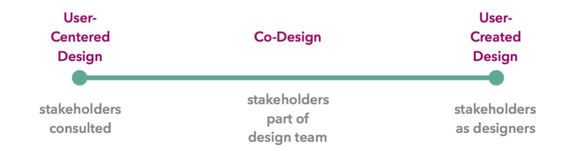
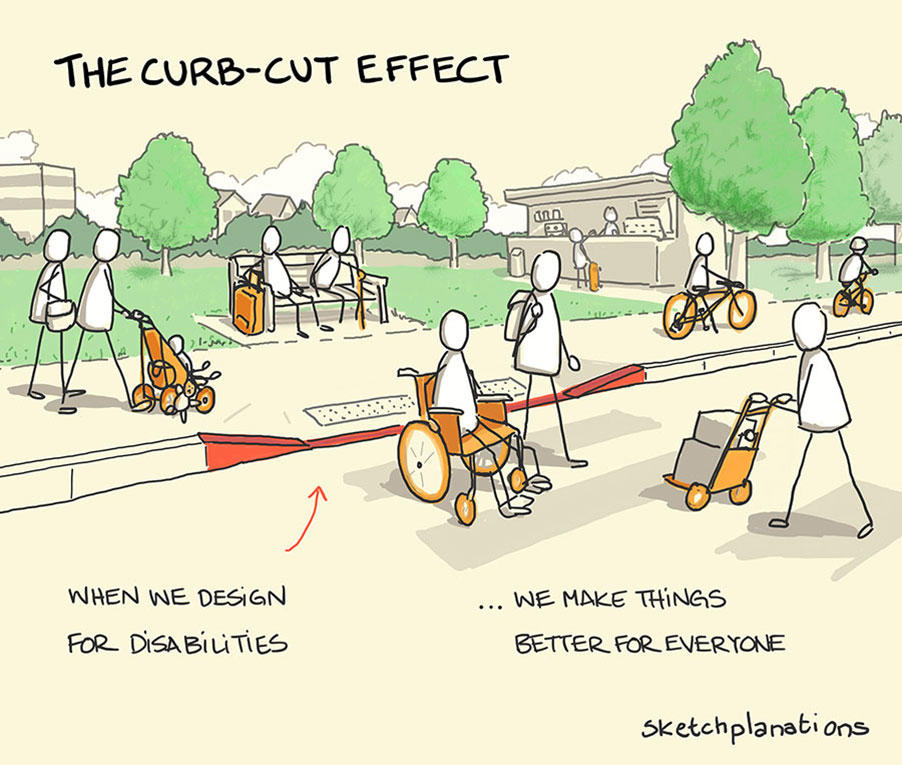
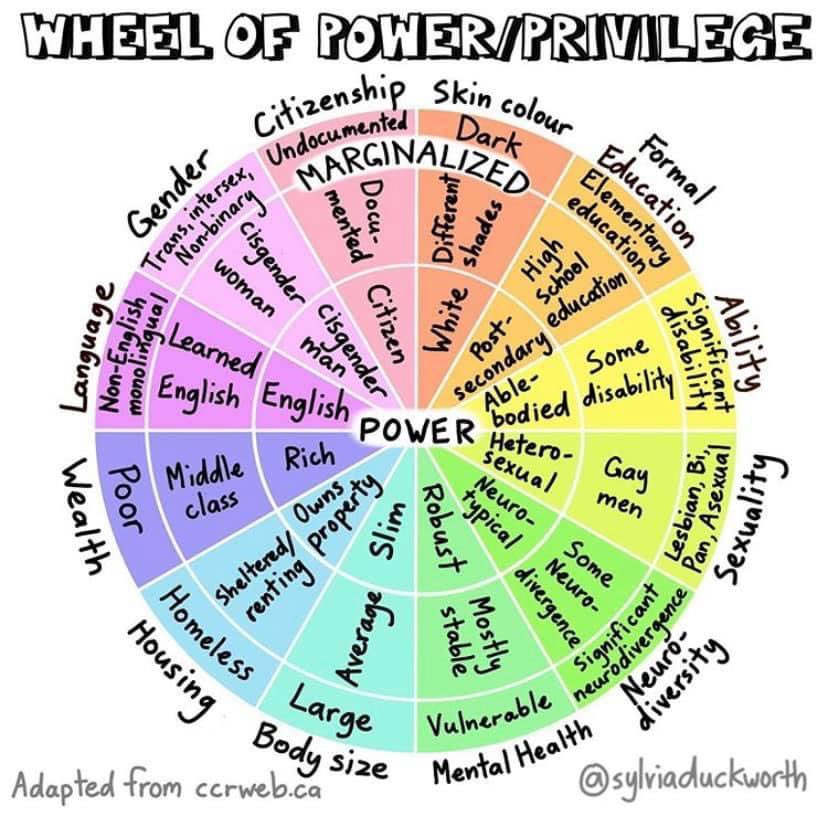
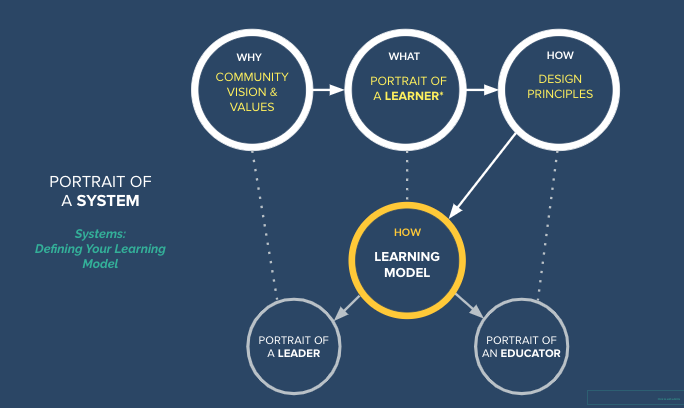
 Jeff Horton | Blog Site