Leading with Purpose: How Equity Is Redefining Modern Thought Leadership

In today’s evolving world, leadership is no longer measured solely by titles, authority, or accomplishments. True leadership — the kind that inspires change and drives innovation — stems from a commitment to equity, inclusion, and shared growth. As organizations and communities become more diverse and interconnected, equity-centered thought leadership has emerged as one of the most powerful forces shaping the future.

At its core, equity goes beyond equality. While equality focuses on giving everyone the same resources, equity recognizes that people start from different places — and therefore require different levels of support to reach the same opportunities. Thought leaders who embrace equity understand that meaningful progress is not achieved through uniformity but through fairness, empathy, and intentional action.

Equity-driven leadership begins with awareness. Leaders must acknowledge the experiences, barriers, and perspectives of those they serve. This requires listening deeply, engaging with diverse voices, and challenging long-standing assumptions. Instead of relying on traditional top-down approaches, equity-centered leaders create space for collaboration and shared decision-making. They amplify the voices of individuals who have historically been overlooked, allowing new ideas and perspectives to shape forward-thinking strategies.

One of the most powerful qualities of equity-centered thought leadership is courage. Promoting equity often means confronting uncomfortable truths — systemic bias, unequal access, and the silent ways organizations perpetuate exclusion. Courageous leaders are willing to question old systems, advocate for change, and take bold steps to redesign structures that no longer serve the collective good. This type of leadership doesn’t shy away from discomfort; it embraces it as a catalyst for transformation.

Another essential component is representation. Thought leaders who reflect the diversity of their communities help create trust, connection, and authenticity. Representation not only empowers underrepresented groups but also strengthens organizations by bringing in fresh ideas and varied experiences. When leaders model inclusivity, others follow their example, creating cultures where everyone feels valued.

Equity-centered leaders also invest in education and continuous learning. They understand that personal growth is an ongoing process — one that requires self-reflection, humility, and openness. They seek out training, workshops, and conversations that deepen their understanding of equity and sharpen their leadership skills. By prioritizing learning, they demonstrate that leadership is not about being right, but about growing, adapting, and evolving.

The impact of equity-focused thought leadership extends far beyond organizations. It shapes workplaces that empower employees, classrooms that nurture diverse learners, and communities that value belonging. It influences policies, transforms cultures, and inspires future leaders to carry the torch forward.

Perhaps the most transformative aspect of equity-centered leadership is its ability to spark collective action. When people feel seen, heard, and supported, they become more engaged and motivated. They collaborate more effectively, innovate more boldly, and contribute more meaningfully to shared goals. Equity is not just a leadership value — it’s a strategic advantage that leads to stronger teams, better outcomes, and lasting social change.

In a world that demands progress, thought leaders who champion equity stand at the forefront of transformation. They lead with purpose, empathy, and vision. They challenge the status quo, uplift communities, and redefine what leadership means in the modern era. By embracing equity, we don’t just create better leaders — we create a better future for everyone.

How Thought Leaders Champion Equity in a Changing World

In an era of rapid globalization and technological advancement, equity has become a focal point in addressing societal challenges. Thought leaders—innovators, visionaries, and influencers—play a pivotal role in advancing equity and advocating for fairness, inclusivity, and opportunity in a world that is constantly evolving. Here’s how they champion equity in transformative ways.

  1. Raising Awareness

Thought leaders use their platforms to spotlight disparities in areas like education, healthcare, employment, and technology access. Through articles, speeches, social media, and public appearances, they amplify marginalized voices and bring attention to systemic inequalities. By fostering dialogue, they inspire individuals and organizations to take action.

  1. Driving Policy Change

Many thought leaders work with governments and institutions to advocate for equitable policies. Whether it’s shaping education reform, advocating for gender parity in the workplace, or pushing for digital inclusion, their influence helps establish frameworks that promote fairness. They provide data, research, and real-world insights to inform decisions and guide meaningful change.

  1. Innovating Solutions

Equity requires creative solutions, and thought leaders are often at the forefront of innovation. In technology, they develop tools that bridge digital divides, such as affordable internet access and educational apps for underserved communities. In business, they champion diversity, equity, and inclusion (DEI) initiatives, creating pathways for underrepresented groups to thrive.

  1. Mentorship and Empowerment

Through mentorship, thought leaders empower individuals from disadvantaged backgrounds, helping them overcome barriers and achieve their potential. By sharing their experiences and offering guidance, they inspire others to succeed and pay it forward, creating a ripple effect of opportunity.

  1. Building Collaborative Networks

Thought leaders understand that equity is a collective effort. They foster partnerships between nonprofits, businesses, and governments to tackle challenges from multiple angles. Collaborative initiatives, such as public-private partnerships or community-driven projects, amplify impact and ensure sustainability.

  1. Leading by Example

Authenticity matters. Thought leaders champion equity by embodying the values they promote. Whether it’s ensuring diverse representation on their teams or committing to ethical business practices, their actions set a powerful precedent.

  1. Adapting to Change

In a rapidly shifting world, equity requires continuous effort. Thought leaders remain agile, anticipating challenges and adapting their strategies to meet new demands. By staying proactive, they ensure their efforts remain relevant and impactful.

Through their vision and dedication, thought leaders are catalysts for equity, paving the way for a fairer, more inclusive world. Their work reminds us that real change begins with leadership that values and champions the dignity of all.

Emerging Tech Trends That Will Shape the Future of Education

The education sector is undergoing a profound transformation as emerging technologies redefine traditional learning paradigms. These innovations are enhancing accessibility, engagement, and personalization, preparing students for a dynamic, tech-driven world. Here are the top tech trends poised to shape the future of education.

  1. Artificial Intelligence (AI) in Learning

AI is revolutionizing education by enabling personalized learning experiences. AI-powered tools can assess a student’s strengths and weaknesses, providing tailored recommendations for improvement. Virtual tutors, like AI chatbots, offer round-the-clock assistance, while advanced AI systems help educators streamline grading and administrative tasks.

  1. Immersive Technologies: AR and VR

Augmented Reality (AR) and Virtual Reality (VR) are transforming classrooms into immersive environments. AR overlays digital information onto the physical world, enabling interactive lessons like anatomy visualization or historical re-enactments. VR, on the other hand, transports students to simulated environments, allowing them to explore topics like space exploration or underwater ecosystems in a hands-on manner.

  1. Gamification and Game-Based Learning

Gamification is gaining traction as an effective way to boost engagement and motivation. By integrating game elements like rewards, leaderboards, and challenges into educational content, students are more likely to stay engaged. Platforms offering game-based learning, such as Minecraft Education Edition, foster creativity and problem-solving skills.

  1. Blockchain for Secure Records

Blockchain technology is emerging as a solution for secure and verifiable academic records. Digital credentials stored on a blockchain network eliminate the risk of forgery, providing employers and institutions with instant, tamper-proof access to a student’s achievements.

  1. Internet of Things (IoT) in Smart Classrooms

IoT is enabling the development of smart classrooms equipped with connected devices like interactive whiteboards, automated lighting, and smart desks. These tools create a responsive learning environment, optimizing comfort and engagement while collecting data to improve classroom management.

  1. EdTech Platforms for Lifelong Learning

With the rise of EdTech platforms, education is no longer confined to traditional schooling. Platforms like Udemy, Coursera, and LinkedIn Learning offer a wealth of courses for continuous skill development, catering to learners of all ages.

  1. 5G and High-Speed Connectivity

The adoption of 5G technology promises to bridge the digital divide by delivering high-speed internet to remote areas. This enhanced connectivity enables real-time virtual classes, HD video content, and seamless collaboration, ensuring equitable access to education.

As these technologies continue to evolve, they promise to make education more inclusive, engaging, and future-ready. The integration of these tools will not only enhance learning outcomes but also prepare students to navigate a rapidly changing world with confidence.

How Technology is Revolutionizing Modern Education

Technology is reshaping modern education, breaking traditional barriers, and transforming the way students learn and educators teach. From virtual classrooms to AI-driven learning tools, the digital revolution is creating dynamic, accessible, and personalized learning environments. Here’s how technology is redefining the educational landscape.

  1. Personalized Learning Experiences

One of the most profound impacts of technology is the ability to customize education to individual needs. Adaptive learning platforms powered by artificial intelligence analyze students’ strengths, weaknesses, and learning speeds to tailor content accordingly. This personalized approach ensures students grasp concepts at their own pace, fostering better understanding and retention.

  1. Expanding Access to Education

Technology has democratized education, enabling learners from all corners of the globe to access quality resources. Online learning platforms like Coursera, Khan Academy, and edX offer free or affordable courses from top institutions. This accessibility empowers students in remote or underserved areas to gain previously out-of-reach knowledge and skills.

  1. Interactive and Engaging Tools

Traditional teaching methods are being augmented with interactive tools like gamification, augmented reality (AR), and virtual reality (VR). Gamified learning apps turn lessons into engaging challenges, while AR and VR create immersive experiences, such as exploring ancient civilizations or conducting virtual science experiments. These tools make learning more exciting and impactful.

  1. Collaboration and Communication

Technology facilitates seamless collaboration and communication among students and educators. Platforms like Google Classroom, Microsoft Teams, and Zoom enable virtual discussions, group projects, and instant feedback, fostering a sense of community even in online settings. This connectivity has also made hybrid and remote learning more feasible and efficient.

  1. Empowering Educators

Educators benefit from technology through tools that streamline administrative tasks and enhance teaching. Learning management systems (LMS) help organize course materials, track student progress, and provide insights into performance trends. Teachers can also access professional development resources and global networks to stay updated on educational best practices.

  1. Preparing Students for the Future

Incorporating technology into education equips students with essential digital skills. Familiarity with tools like coding software, data analysis platforms, and digital collaboration tools prepares learners for the demands of the modern workforce.

  1. Overcoming Challenges

While technology offers numerous benefits, it also presents challenges like the digital divide and cybersecurity concerns. Addressing these issues requires investment in infrastructure, training for educators, and robust policies to ensure safe and equitable access for all.

Technology is revolutionizing education by creating innovative, inclusive, and effective learning experiences. As it continues to evolve, the possibilities for transforming how we teach and learn are boundless.

Why ‘Just Tell a Teacher’ Isn’t Enough – The Power of Bystander Intervention to End Bullying

By: Jorge Arteaga

In a time when 1 in 5 students face bullying, equipping young people with the skills to stand up against these injustices is more crucial than ever. 

While traditional approaches like “tell a teacher” have been helpful, they aren’t enough to address the complex dynamics of bullying today. Students need real-world skills to create lasting change, and that’s where bystander intervention can play a transformative role.

Right To Be, a nonprofit dedicated to ending harassment in all forms, developed the Right To Be Youth Program, a curriculum that gives young people practical bystander intervention tools to safely intervene when they witness bullying or harassment.

The program launched at the Academy of Urban Planning and Engineering in Brooklyn, NY, in 2023, where educators immediately saw positive impacts.  “I worked with 9th Graders, and coming in from middle school, there was a lot of harassment and bullying that would happen. After implementing the program, I started to hear the students address each other when they saw instances of bullying or harassment,” said Rosemarie Flore, Teacher and Interim Assistant Principal, Academy of Urban Planning and Engineering. 

According to Flore, many of their students came with a “lack of social skills in great part because of surviving through the COVID-19 pandemic in a virtual setting during some of your most formative years, when you learn to interact with others.”

Bullying and harassment have serious consequences, affecting emotional well-being, mental health, and academic performance, often leading to long-term trauma, anxiety, and depression. For students from marginalized communities, harassment adds additional barriers to achieving educational equity.

As one youth participant described it: “Going to school with bullying is like wearing armor every day.” This sentiment highlights the emotional toll bullying can take on students. The Right To Be Youth program aims to equip students to break down these barriers and stand up for themselves and each other.

What is the Right To Be You(th) Program?

The Right To Be Youth Program is grounded in Right To Be’s proven 5Ds of Bystander Intervention methodology.  The five strategies provide flexible options for students to respond to these situations in ways that feel safe and appropriate for them.

Here’s a breakdown of the 5Ds:

1. Distract: Create a distraction to defuse the situation.

2. Delegate: Seek help from someone else, like a teacher or friend.

3. Document: Record the incident and share it with the person being targeted.

4. Delay: Check in with the person afterward to offer support.

5. Direct: Set boundaries and redirect attention to the person being harassed.

The methodology offers a toolbox of safe intervention strategies that any student can use, regardless of their personality or the specifics of the situation.

As one student who participated in the program shared, “Learning about the 5Ds showed me there are many ways to help. It doesn’t matter how comfortable you feel—there’s always something you can do.” 

Real-World Impact and Lifelong Skills

The program not only teaches students how to safely intervene, but it also emphasizes the power of community.  Educators highlighted the importance of using these tools to foster a broader cultural shift within schools, creating environments where inclusion and diversity are prioritized. “For all students engaged in learning the 5Ds, how can I help them understand that situations of disrespect present opportunities for teens to exercise agency in ways they haven’t realized before? And what can help them appreciate the ripple effect of the individual choice to intervene in an instance of disrespect/hate and the eventual change they’re contributing to the overall school climate?” said June Wai, lead facilitator for the Right to Be Youth program sponsored by Rivertown Parents, who is preparing to teach the curriculum this fall.  

One program participant also emphasized the importance of this cultural shift: “Schools can help students understand they can change their environment, not just be a product of it. See that you can become what you want and give people hope.”

Right To Be’s 5Ds for You(th) Program builds on the organization’s evidence-based Bystander Intervention training program. To date, Right To Be has trained more than 2 million people in bystander intervention. Approximately 98% of participants report feeling more confident in their ability to support someone experiencing harassment after going through the training. Even six months after attending a session, 76% of participants say they still use bystander intervention strategies in their daily lives.

Educators highlighted the long-term value of the program for youth: “Every year, we have a dialogue day where students address conflicts and troubling behaviors. With the 5Ds, they now have real strategies to support these discussions,” said Jorge Sandoval, Principal of the Academy of Urban Planning and Engineering.

“The idea that we can equip them with tools to interrupt hate and bias feels incredibly meaningful, especially in a time when such skills are so needed,” said Sonia Balaram, a lead facilitator for the program.

The hope is that learning the 5Ds will have an impact far beyond school. Students who gain these skills can also develop confidence, empathy, and leadership abilities that will serve them well into adulthood.

“The 5Ds allowed me to become more confident in helping someone who is in a difficult situation. Even after two years of taking the class, the 5Ds have been engraved in my head. I shared what I learned in class with my relatives so they too can help others,” said one student. 

Another anonymous youth participant shared: “This training just reminded me to always be aware of my surroundings and to look out for others in any way I can.” 

Right To Be aims to bring this curriculum to 50 schools and youth-serving organizations across the U.S. and Canada. As we wrap up Anti-Bullying Awareness Month, it’s critical that these conversations continue. Programs like the 5Ds for Youth could teach young people that creating safe, supportive communities can start with them.

 “We’ve seen students step up in ways they never did before. They’ve become more empathetic and proactive in supporting each other, which has made our school environment feel safer and more inclusive,” said Sandoval. 

“Students no longer feel helpless when they see someone being harassed; they feel equipped to act. Now, I hear students say, ‘I’m going to delegate and get help’ when they see bullying happening,” said Flore. 

Ultimately, these students are not just changing their schools; they’re paving the way for a more inclusive, compassionate world.

Jorge Arteaga serves as the Vice President of Movement Building at Right To Be, overseeing initiatives aimed at fostering safer, more inclusive environments by advocating for anti-hate and anti-harassment strategies and community empowerment.

The post Why ‘Just Tell a Teacher’ Isn’t Enough – The Power of Bystander Intervention to End Bullying appeared first on Getting Smart.

from Getting Smart https://www.gettingsmart.com/2024/11/01/why-just-tell-a-teacher-isnt-enough-the-power-of-bystander-intervention-to-end-bullying/

A New Operating System for Public Education: Learner-Centered Ecosystems

America’s education system was a groundbreaking effort to help a growing nation thrive in the 19th century. Now, 200 years later, the world has changed; the horizon looks drastically different. Collectively, we need to redesign our education system to enable all of our children — and, by extension, our nation — to thrive today and tomorrow. “Horizon Three” or “H3” names the future-ready system we need, one that is grounded in equity serving learners’ individual strengths and needs as well as the common good. This series provides a glimpse of where H3 is already being designed and built. It also includes provocations about how we might fundamentally reimagine learning for the future ahead. You can learn more about the horizons framing here.


Over the years, I’ve often found myself trying to explain my work to my dad. Despite his genuine interest, his responses usually include a mix of head nods and “Hmmm… okay.” It’s clear that some of the nuances of my job don’t always translate well. But there’s one topic that always breaks through the confusion: public systems. My passion for systems sits in the education domain, and his — in transportation.

My dad spent most of his career working on logistics for high-speed trains, and he knows that effective public systems must be more than just functional—they need to be responsive, reliable, and aligned with the real needs of the people they serve. He knows strong systems are ones that people believe in, rely on, and come to love. Learning from work with communities around the world, he understands that equitable public systems must create opportunities for everyone, not just the lucky few, and how designing them with community, really matters. 

He also understands that by the time a system starts to decay, it’s often too late—the public may have already lost trust in it and the institutions connected to it. That’s why he also values continual research and development, planning ahead, and sometimes building rail infrastructure years before an operational train route is established. 

So, when I tell him that we need a new approach to education, that our public schools need to be a key part of that effort, and that the investment and R&D in their transformation is both essential and underway, he gets it. 

We need systems that inspire hope.  

What Do These Systems Look Like?

At Education Reimagined, our big bet is that education systems in Horizon 3 need to look a lot more like learner-centered ecosystems. We see the work right now as bigger than just improving individual schools; it’s about weaving the fabric of our communities back together. Upward mobility, especially for those furthest from opportunity, is deeply connected to education and community, therefore; these two things can no longer be divorced from one another. Yes, we must keep supporting learner-centered schools, but we also must create systems conducive for them to spread and reach all families. As Sam Chaltain describes it: 

“Education Reimagined’s big bet is that the best way to impact American education writ large is not primarily by seeding singular schools (as important as that is), but by reimagining the larger organizing principle of each community’s commitment to its children—away from the sclerotic model of a ‘unified’ district, and towards the nascent notion of a truly ecological approach in which a community’s full wealth of existing resources—from its libraries to its public parks to its civic partners to, yes, its schools— are intentionally woven together with a new set of organizations, adult roles, and learning pathways to result in a more vibrant set of everyday experiences for young people that are relevant, fulfilling, and perhaps even fun.”

This vision emerged from the wisdom of many, including communities that have historically organized themselves in this way and honor that education must operate at the intersection of equity, ecology, economy, and culture. Collective Shift would describe this as, “responsive, reciprocal behaviors and relationships: between educators and students, between students, between school and families, between school and communities.” 

More tangibly, ecosystems are:

  • Dynamic and responsive. The future of education must rely on emergent strategy and cannot be prescribed. Ecosystems are designed to know and respond to each person and their community, and can readily address needs and take advantage of opportunities. As Dee Hock, founder and CEO Emeritus of VISA would say, they “embrace principles of living systems as a basis for organizing.” 
  • Anchored in holistic outcomes and human development. Ecosystems demonstrate a system that weaves together what we know about the holistic development of young people with what is relevant in young people’s lives today. Building on this foundation of strong relationships, well-being, belonging, and dignity, ecosystems also ensure each young person works towards meaningful competencies like quantitative reasoning, expressing ideas, and being able to read the world and grow in their mindsets, knowledge, and skills
  • Focused on regeneration and growth: Horizon 3 systems adapt and thrive over time and embrace a culture of growth, continually assessing and integrating learnings into how they operate. Regular refinement of practices and behaviors based on feedback is core to these systems’ flexibility and growth. 
  • Collaborative and connected. What if the strongest muscles in our education systems were collaboration and connection—rather than compliance and conformity? Trees form neural networks, sharing resources and relying on each other, knowing they can’t go it alone. As Kara Borbroff shares, education must do the same and, “share knowledge, models, and policy recommendations so that each community or local network isn’t reinventing the wheel.”

The good news is that there are already places proving this kind of system is possible. 

Ecosystems Coming to Life

We need more than just visions — we need examples of how these systems operate in practice. At Education Reimagined, we are collaborating with partners in twelve diverse communities who are demonstrating proof points. These partners, among many others, are growing ideas in public, piloting education systems that push us to rethink the core operating system of school. 

Learning Journeys Lead the Day. Like Reggio schools, Horizon 3 systems begin with what learners need, not a standard scope and sequence. Advisors and educators help construct learning journeys what we know helps young people develop with what matters most to them and their communities. Ecosystems enable more continuity in learning journeys, including when there might be pivots due to mental health needs, traumatic events, natural disasters, or simply a shift in the learner’s path. The work of Norris Academy and Da Vinci Rise exemplify this well, both examples of places that honor the realities of young people’s lives and work with them to build their learning journeys. 

Expanded Educator Roles. In ecosystems, there is a broadened vision of who educators are, what they can contribute, and what roles they play. Educators can include mentors, local experts and artists, advisors, coaches, and community and family members. For instance, in Newport, Rhode Island, at FabNewport educators from the community engage young people in projects that connect them with their local environment, promoting academic and personal growth. At Big Thought, a range of experts, from marketers to artists, provide learning experiences and mentorship for Dallas youth.

Community-Based. Ecosystems embrace community partners, whether in-person or virtual, as core to learners’ experiences. Ranging in degree and frequency, learning happens in different community contexts. Take initiatives like Runway Green in New York City, which taps into the rich tapestry of local history and industry and will offer learners experiences in their community, including at a National Park and an oyster preservation organization. At Memphis Lab School, even the youngest learners spend at least one day a week at a partner farm and work to develop competencies while deepening their connections to the land. 

The ecosystem approach is incredibly beneficial in rural areas where assets and resources might look different than in other settings. Take Mat Su Central in Alaska, where some learners live up to 100 miles away from the school, learners and families use an online platform to connect with opportunities, including experiences like helping engineers on the slopes in the winter to engaging in First Robotics challenges online and with local peers. A designated community liaison works with the learners and their advisors to weave everything together into meaningful learning journeys. 

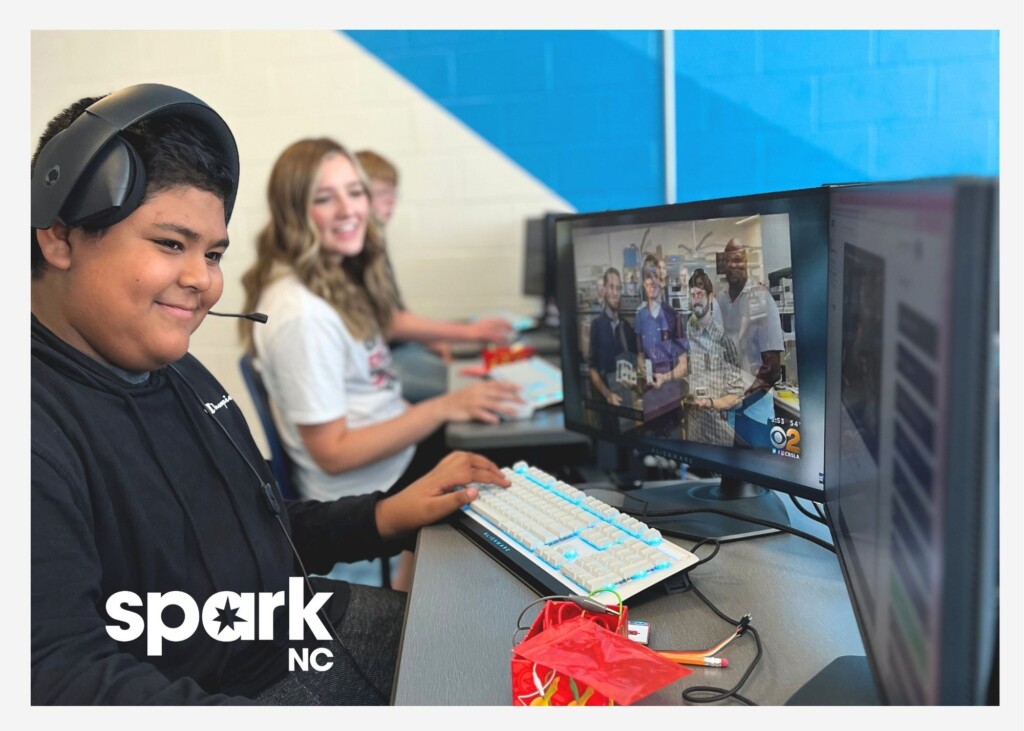
Relevant to Learner’s Lives Now and Longer Term Success. Ecosystems make real-world learning a consistent thread throughout learners’ experiences. In Columbus, Ohio, the Columbus EcosySTEM Initiative empowers students through hands-on STEAM experiences that bridge identity-building and real-world applications. Learners have frequent opportunities to explore different roles and professions. SparkNC, a regional effort in North Carolina, connects learners in SparkLabs across their interdistrict network with industry partners to engage in meaningful internships and real-world projects that enhance learners’ durable and tech skills.

These partners help us see glimpses of an entirely transformed system. They provide a view into what it looks like when a system is designed to serve learners now, and that also is working to understand what future tracks need to be built.  

Full Steam Ahead

Young people are telling us, often by way of their own feet, that the current modus operandi of school isn’t working for them or their families. They need systems that see them as whole humans who are navigating a lot of complexity, seeking joy and love, and who desire life-sustaining skills and rewarding work to help them find meaningful pursuits and passions. Schools are an essential part of these systems, but they should no longer go it alone, trying to provide young people with all the resources and experiences they need in one building. 

Let’s get to work. How can we create systems that prioritize connection, inclusivity, and adaptability? Together, we can help create ecosystems our young people and communities deserve. We can create systems that not only function but flourish.

This blog series is sponsored by LearnerStudio, a non-profit organization accelerating progress towards a future of learning where young people are inspired and prepared to thrive in the Age of AI – as individuals, in careers, in their communities and our democracy. 

Curation of this series is led by Sujata Bhatt, founder of Incubate Learning, which is focused on reconnecting humans to their love of learning and creating.

The post A New Operating System for Public Education: Learner-Centered Ecosystems appeared first on Getting Smart.

from Getting Smart https://www.gettingsmart.com/2024/10/31/a-system-that-supports-all-learners-ecosystems-could-be-the-answer/

Let High Schoolers Do Less? Let High Schoolers Experience More

The New York Times ran a guest column last month by an English teacher calling for high school students to “do less so they can do better.” Student responses from three schools (two suburban public schools and one private school) on October 10 echoed the stressed-out, over-scheduled message. This well-intentioned plea to dial back expectations aims at a small percentage of US students and offers the wrong prescription. Boredom, disengagement, and weak career preparation are bigger problems. The answer is not less, it’s better experiences and better signals. Better experiences to engage all students and better signals to replace proxy credentials like grades and transcripts with true skill and experience representation.  

Few students play the selective admissions game. 

Less than 3% of high school students are admitted to selective colleges. With pressure from parents, maybe 10% of students opt into the selective college admissions game by seeking perfect grades in AP/honors courses and a “more is better” approach to extracurriculars. It’s an obsolete and inefficient game yielding weak signals. It’s a track packed with isolated low-level tasks in time-based courses valuing memorization and compliance over relevant skill development. 

The exploding cost of selective universities makes the prize for this “race to more”  relatively less valuable. In a world where skills rule, it will matter less where you go to college and more what you can do.  Additionally, the emergence of AI has experts predicting the impact on entry-level professional jobs, like those filled by selective admissions college graduates.

High school students are stressed about context more than curriculum. 

As Professor Scott Galloway notes in his TED Talk, the deck is stacked against young people. Many arrive at school each day coming from challenging environments of unstable housing, food scarcity, and threats of violence. Some are working evenings and weekends in minimum-wage jobs. They are worried about the climate crisis and are pretty sure social security won’t be around for them. 

Some aspire to be first-generation college students but lack access to guidance and financial aid (exacerbated by the recent FAFSA challenge which data indicated reduced the number of college applicants). A recent survey suggests that three-quarters of students feel less than prepared to make college and career decisions. Nearly half of those starting college leave without a credential (whether a diploma or otherwise). This suggests bad-fit decisions and results in the new worst-case scenario of debt without a degree.

Disengagement is a much bigger problem than over-scheduling. 

Many students are not engaged in school. A recent survey found that  60% of high school students are engaged. Only 52% said they enjoy coming to school and 48% said what they are learning in school helps them outside of school. The pandemic increased trauma, hopelessness, and dissatisfaction with traditional education, particularly rote one-size-fits-all learning.  

​​Jal Mehta and Sarah Fine, during their 2018 tour In Search of Deeper Learning, similarly found that deep engagement was more of an exception than the norm. Additionally, according to Gallup’s 2023 report, on average, students rate their school’s ability to make them feel excited about learning as a mere C+.

School should be more challenging with high agency,  high interest, and high-value learning experiences, rather than compliance-focused with little voice and choice and few if any opportunities to identify important and interesting problems. 

Solution 1: We need to provide better experiences.

Rather than simply reduce the amount of work, let’s redesign the high school for more work that matters. When surveyed, Americans believe that students need more personalized and purposeful learning. A new Populace study found that “Americans do not care if all students study the same thing compared to them getting to choose courses based on their individual interests.”  They also found that “Americans prefer an education system where all students receive the unique supports that they need throughout their learning and all students get whatever amount of time they need to learn a new concept or skill at their own pace.” Also, “Americans want to grant more control to students themselves, prioritizing a K-12 education where all students have the option to choose the courses they want to study based on interests and aspirations.”  

Research on motivation and engagement supports personalized and purposeful learning. Students are more motivated when they see relevance and have some choice. We summarize this in six core principles to which schools should strive.

First, all students deserve access to high-quality learning opportunities that support long-term success and a strong sense of belonging. Second, every learner is different. By providing (or supporting learners to co-author) personalized approaches that meet challenging outcomes, we increase the chances of success for every learner. Competency-based approaches that focus on mastery rather than time in a class fuel this approach. Third, learning experiences should help students find and develop a purpose or purpose mindset to make a difference in the world. Fourth, when learning leads to awe, wonder, joy, or engagement, outcomes are stronger. Joy can be supported by strong relationships with others (peers, mentors, teachers, etc.). Fifth, building learning experiences that are culturally connected, contextualized, relevant, place-based, or real-world increases engagement and outcomes. And finally, every learner deserves to be intellectually challenged with high expectations.

Solution 2: We need to depend on better signals.  

While a transcript full of uninspiring honors courses and inflated grades based on seat time is a current proxy to gain access to the best universities, we need better signals. Students need rich learning experiences embedded in the school day that are documentable, communicable, and valuable to the learners themselves, higher education, and prospective employers. When we replace traditional transcripts with learning and experience records, we increase access and value to higher education and employers for every student. These experiences connect learners to the real world through internships and apprenticeships, applying what they learn to purposeful work. Using the (still-valuable) core knowledge and skills to apply to novel contexts and challenges, all students get real-world challenging experiences to help guide them towards college and/or career. When each student can showcase these experiences and related skills – accumulated over a high school career – the outdated transcript proxy fades as verified skills surface.

This already is happening. Early efforts in extended transcripts exist in Ohio’s Graduation Seals program, the national Seal of Biliteracy, and New York’s Civic Readiness Seal among many others. And, students from public and private high schools are gaining access to quality universities with competency-based transcripts (without grades) through the efforts of organizations like Mastery Transcript Consortium. Individual schools like Iowa Big, Building 21, and Northern Cass and innovation networks like Collegiate Edu-Nation, P-TECH, New Tech Network, Big Picture Learning, High Tech High, XQ Learning, and CAPS, among others, show that high school can look and feel different – while better preparing all students for the future. 

Solution 3: We need to continue listening. 

We would love to see another round of student responses. The brave students who submitted responses from Glenbard West High School, Hinsdale Central High, and Northwest Academy (which we are confident offer strong and well-funded education programs – even if the students feel like it is too much) are schools that serve a more affluent population. What do the rest of the students think about their high school experience when the primary issue is not the volume of work? 

The answer is not less, it’s better experiences and better signals for all students in every high school. Let’s lean into the work of redesigning the American high school.

The post Let High Schoolers Do Less? Let High Schoolers Experience More appeared first on Getting Smart.

from Getting Smart https://www.gettingsmart.com/2024/10/29/let-high-schoolers-do-less-let-high-schoolers-experience-more/

AI Can Help STEM Bridge Educational Disparities

In the 1990s the folks at the National Science Foundation began bouncing around the acronym SMET to describe the related disciplines of science, math, engineering, and technology. It did not catch on. In 2001, Judith Ramaley, a biologist who was then working as the assistant director of education and human resources at NSF, rearranged the words to form the STEM acronym. She just liked the sound of it better. 

This pedagogical blend has blossomed around the world into programs in 96 countries, taking on such names as MINT (Germany), SHAPE (England) and the handful or so variations found in U.S. schools, including STEAM and STREAM. The evolution of STEM has been driven by the headlong velocity of technological innovation. AI, as you can imagine, has accelerated that pace of change.

Over the last couple of weeks, I canvased movers, shakers, and shapers in the world of STEM to get a feel for how they think the field will adapt to changes instigated by AI.

At the School Level

Steve Zipkes is a former principal of nationally renowned Manor New Tech High School in Texas, which was visited by President Barack Obama to celebrate the school’s STEM success with diverse learners. He currently works a principal for Cedars-International Next Generation STEAM High School.

The pedagogy of choice at Steve’s schools is always project-based learning; it is the delivery system for STEM/STEAM content. “AI combined with Project-Based Learning in STEM turns classrooms into innovation hubs, where students become creators, not just consumers, of technology” said Zipkes. “This integration in STEM education fosters critical thinking and creativity, empowering students to solve real-world problems with data-driven insights and collaborative solutions.

At the State Level

Casey Agena is an educational consultant working on various AI-related projects for the Hawaii Department of Education. Agena, who was one of the authors of the California state computer science standards, focused during our conversation on how integration of AI impacts middle and high school math, particularly for diverse learners.

“Hawaii is rewriting content standards for the 2024-2025 school year,” Agena explained. “We have to look at the scope and sequence of math pathways in that process. We have to look at what math pathways look like to get Hawaiian students skilled so they can pursue a career in a STEM-related field. Does that mean we run Algebra II as a data science course? Does that mean we incorporate AI-generated and analyzed data into Algebra I? We also have to figure out if there is a gatekeeper for these courses. What is helping or preventing students from enrolling in these classes? We are deeply worried about equity issues.”

Agena touched upon one of the biggest pain points (and costs) associated with wholesale AI integration: professional development and teacher recruitment. “Who is going to teach these classes is always one of the first questions we ask ourselves,” Agena said. “And how do we prepare them to teach?”

In California, recently signed legislation requires considering AI literacy in the criteria for evaluating instructional materials, especially those focused on the STEM fields. According to California Assembly Bill 2876, AI literacy is “…the knowledge, skills, and attitudes associated with how artificial intelligence works, including its principles, concepts, and applications, as well as how to use artificial intelligence, including its limitations, implications, and ethical considerations.”

At the National Level

Dr. David L. Dimmett, President and CEO of Project Lead the Way, is being proactive about how his organization, which operates in more than 12,200 schools in all 50 states, integrates AI into its work.

“There are two primary ways we are thinking about AI at PLTW,” Dimmett said. “First, as a business, we want to use the most effective tools to help our team be both effective and efficient in our work. To that end, we are adopting appropriate policies and use-specific AI tools to strengthen and support our team. Second, we want to ensure that the millions of students and over 100,000 educators we support have access to the most relevant curricular offerings and instructional tools. To that end, we are enhancing our content, platform, and related supports for teaching and learning to include AI elements where appropriate.”

Dr. Erika Shugart is the CEO of the National Science Teaching Association, which has included STEM in its strategic planning since 2014. As expected, her organization devotes a great deal of attention and resources to incorporating AI literacy into its professional development and materials.

“NSTA empowers educators to transform science education with professional learning and teaching resources on relevant topics, like artificial intelligence,” Shugart told me. “Through our conferences, professional learning, and publications we are enhancing teachers’ effectiveness in the classroom with resources on the practical use of AI in learning settings, on school and district policies on AI, and about the social justice implications of AI. By equipping teachers with the knowledge and tools to navigate these emerging technologies, we can positively impact student learning for all.”

Pat Yongpradit is the Chief Academic Officer of Code.Org, which focuses its organizational efforts on the computer science domain in STEM. Yongpradit bridles at the assumption that the code-writing capacity of generative AI diminishes the importance of computer science.

“It’s ridiculous to think that learning computer science (CS) is no longer important because AI tools are able to write code,” Yongpradit said. “It’s like saying algebra isn’t important because kids have graphing calculators. Computational thinking, metacognition, and creative agency are just a few benefits of a foundational CS experience. The reality is that CS education is more important than ever in an age of AI. When you learn how AI works and about the societal and ethical impacts of AI, you will use AI more effectively and responsibly.”  

The Federal Level

The Institute of Education Sciences (IES), the independent research arm of the U.S. Department of Education, has received funding to create four research and development centers that seek to “identify high-reward, quick turnaround, scalable solutions to improve education outcomes for all learners and eliminate persistent achievement and attainment gaps.”

Two of the four centers will study the different use cases for generative AI in STEM fields. The centers will share the name U-GAIN: Using Generative Artificial Intelligence to Augment Teaching and Learning in Classrooms. 

The most relevant to this conversation is the National Center on Generative AI for Uplifting STEM+C Education (GENIUS Center), which will transform STEM education through the development of a Gen AI-powered tool called GenAgent. According to IES,  GenAgent will serve as a tutor, learning buddy, and assistant for teachers and students in five states: Georgia, Michigan, South Carolina, Tennessee, and California.

From the Source

OpenAI has billed its newest model, o1, as a thinking model, a significant milestone on the road to artificial general intelligence. I wanted to see what it thought about STEM so I asked the following question: “How can generative AI, in particular model o1 of ChatGPT, be beneficial to teaching and learning in the STEM fields?”

It dished out some boilerplate about personalization, interactivity, and resources, and then concluded with a rationale that resonated with my hopes for STEM: “It can explain concepts ranging from basic physics to advanced computational algorithms, making it a valuable tool for students at all levels,” opined ChatGPT. “This accessibility is particularly beneficial for learners in remote areas or underfunded schools where educational resources may be limited. By democratizing access to knowledge, generative AI can help bridge educational disparities.”

Amen, my silicon friend.

The post AI Can Help STEM Bridge Educational Disparities appeared first on Getting Smart.

from Getting Smart https://www.gettingsmart.com/2024/10/28/ai-can-help-stem-bridge-educational-disparities/

First-Year Insights into Building a Truly Learner-Centered Approach with SparkNC

By: Dana Brinson

SparkNC is a whole new way to do school, offering learner-centered, industry-relevant, and competency-based learning in high-tech fields–like cybersecurity, artificial intelligence, and game and software development–across our interdistrict network of 17 North Carolina public school districts. The SparkNC experience is facilitated by a SparkLab leader with home-base SparkLab where learners connect and collaborate. We engage learners, particularly those who may not yet see themselves in high-tech careers, to chart their own pathways to developing a competitive edge in tech-infused futures. Learners choose from a catalog of more than 60 modular, stackable learning experiences offered in varied formats: experiential, live-interdistrict, and on-demand. If they choose and stack six and complete a capstone experience, they can earn high-school credit along the way. 

In our first year of implementation, we held our learner-centered values dear. But sometimes in the rush of getting things off the ground, we fell short of our goals. So this spring and summer, we had conversations with learners and our partners. We listened, reflected, and took action to become even more learner-centered in the years to come. 

SparkNC is now engaging Spark Scholars as design partners, givers of very honest feedback, and cultivators of real-world connections. We are:

  • Launching our first student-designed learning experience across our inter-district network;
  • Co-designing an ambassador program with learners to develop them as leaders ready to engage their peers and build community connections and support for their SparkLab; 
  • Partnering with industry leaders to hold learner-led design and pitch events to create an app that helps Spark Scholars navigate the SparkNC experience, and
  • Developing partnerships with like-minded organizations to help us authentically engage youth voice in our design and improvement efforts.

To further our efforts in cultivating learner-centered environments, SparkNC has joined Education Reimagined’s Learner-centered Ecosystem Lab which is creating focused R&D space and support for diverse communities across the United States to advance pilots of learner-centered ecosystems. The lab supports a dozen organizations through facilitated learning, collaboration, solution prototyping, and resource connection. We look forward to learning with and from our fellow Lab members in the year to come. We know our participation in this Lab will help us work in greater alignment with our vision for Spark Scholars.

Starting with a Vision for Spark Scholars

At SparkNC, we believe students should be empowered to select pathways, learning partners, and pace, and we are expanding opportunities for learners to design and shape our program. Doing this well requires learners to possess a set of skills that must be purposefully cultivated. For learners who may only spend small portions of their school days within a learner-centered environment, the whiplash of moving between the two paradigms can be daunting. And in the beginning, they can readily fall back into the routine of waiting to be told what to do next or what the right answer is. They need ongoing encouragement and guidance to grow into individuals who can fully leverage the potential of a learner-centered environment.

After a year of working together–with learners, leaders, and learning experience designers–we are crafting a shared vision of Spark Scholars that will guide our work and help us live up to our aspirations. Though it is still being developed, it centers on learners:

  • feeling they belong in SparkLab and the high-tech world beyond;
  • having a strong sense of self-efficacy and the safety to try new things, fail, and try again with the support of peers, lab leaders, and a network of caring adults;
  • knowing themselves as individuals and as learners and using that self-knowledge to identify preferences and interests to shape their own path; and 
  • believing that what they create in SparkNC can have an impact on their communities. 

Spark Scholars build and present a portfolio of industry-relevant work, cultivate a network of peers and professionals in the high-tech industry, give and receive feedback, and build high-tech, teamwork, and NC Portrait of a Graduate skills. This has real value in the world of work. All the same, we are finding that connection, self-reflection, play, and safety are critical prerequisites. Learners told us this and we listened. 

Why do I stay in SparkNC? It’s simple, because here I’m not just a student, I’m a part of something that’s bigger than myself. I’m a member of a community that celebrates curiosity, embraces creativity and empowers each and every one of us to reach our fullest potential.

A Spark Scholar

SparkLab Leaders are the “Heart and Soul” of SparkLabs

Over and over, learners have said, “SparkLab feels like home” and the SparkLab leader is undeniably the creator and caretaker of that culture of belonging. Enthusiastic, approachable, and knowledgeable leaders create thriving learning environments and our most effective lab leaders remain flexible and guide learners to identify and solve challenges together rather than waiting for an answer from an adult. Learners have shared that they greatly valued having a supportive lab leader and peers which creates a safe space for learning and expression. 

What I love most about this role is the students. They have wonderful ideas. They are so creative. I love promoting critical thinking. I do have to deprogram them a little [they are so used to teacher-centered environments]. I enjoy that students can work at their own pace. 

A SparkLab Leader

Rooted in learner feedback and program data, SparkNC is developing new approaches to onboarding and professional learning for lab leaders so they can craft these lab experiences. This year, SparkLab leaders are serving in working groups piloting new approaches to competency-based learning and assessment, leveraging AI to automate some processes so lab leaders can be even more present for learners, and creating tools that help lab leaders facilitate learners to find experiences that are the right fit for them. Lab leaders support one another in PLCs and will receive personalized training to develop their skills at cultivating partnerships with local industry and high-tech professionals to generate real-world relevant learning opportunities for Spark Scholars. 

SparkLabs: Welcoming, Collaborative Learning Environments

The physical environment of the SparkLab encourages student engagement and collaboration and learners describe it as open, relaxed, and judgment-free. Many expressed gratitude for the freedom and flexibility with no deadlines or pressure. SparkLabs are attractive spaces that offer the flexibility and creative collaboration common in modern high-tech workplaces. Learners feel supported to collaborate and work in teams, sometimes expressing surprise that they can each take on a specialized role in a project and that they don’t all have to do the same thing. 

SparkLabs were designed by experienced educators and learning environment experts, but the current SparkLab model did not incorporate significant learner input. After a year of use, and to lean into our learner-centered approach, we are creating opportunities for learners to apply their design thinking and user experience (UX) design skills to inform the reshaping of the SparkLabs to better support their connection and learning.

Learning Experiences: Leveraging Autonomy and Choice

Spark Scholars have told us that they value the absence of rigid grading systems and appreciate the space for exploration, experimentation, and pursuing their own passions. We got rave reviews for some learning experiences that were more hands-on with opportunities to be creative and have fun. And learners were open and refreshingly direct about which units were boring or even overwhelming. As a sign of the lingering challenges brought by the pandemic, many learners avoided the online, self-driven learning opportunities, preferring to work in pairs or teams in interactive ways. For our platform-based experiences, some learners identified user interface improvements and gently chided us for these shortcomings given the multiple units we have focused on good user experience design! Learners asked us to do better and we are. 

In response, we are redesigning our orientation and capstone components of the SparkNC experience to prepare learners to build the skills of self-reflection, identifying preferences, trying on experiences just outside of their comfort zone, and setting goals they can revise as they learn more. We hope to build learners’ discernment to identify when they want to quit a project just because they have hit a temporary roadblock or because they truly are not interested in continuing and want to exercise their choice to move on.

We are also revising every learning experience (and our learning design template) to ensure greater accessibility for different learners and provide clearer guideposts and onramps for those new to high-tech topics. We have developed tools to support better matching between learner interest, skill level, learning needs, pacing, and desired formats with the offerings in our expanding catalog. And, even better, learners now have opportunities and guidance to design their own personalized learning experiences to go deeper when their interest is sparked or to explore topics not yet covered in the catalog. We look forward to learning from these budding designers and sharing what they create across the network. 

Partnership is Key to Industry-Connected Learning

Though learners are becoming integral design partners with SparkNC, we know that true partnerships with district leadership, high-tech industry partners/businesses, higher education, and leaders in education transformation are essential to bringing industry-relevant learning into SparkLabs and getting Spark Scholars out into the world to familiarize them with high-tech careers while expanding learner-centered ecosystems across North Carolina.

High-Tech Industry Connections

Learners shared that some of the most meaningful experiences they had with SparkNC last year were when industry professionals came to their labs to teach them tech skills, share their career journeys, or give feedback on learners’ high-tech projects. Professionals taking the time out of their days to visit labs made learners feel special and important, they said. Our scholars also valued opportunities to visit high-tech company campuses. Learners visited Cisco, SAS, IBM, and more in their first year and we are creating pitch events with other partners for this year. Learners are cultivating their professional networks now that they can leverage for years to come. 

Higher-Education Pathways
SparkNC has both established and emerging partnerships with higher education institutions – both at the community college and university level. We have located SparkLabs on community college campuses and designed curricular materials with university professors that are offered through our platform. We are focused on avoiding duplication of efforts across the state while clearing pathways and demystifying processes for learners to go from exploration, through learning experiences and then tracking toward industry credential and college credit opportunities that align with each learner’s goals. 

District Partnerships
Perhaps most centrally, district partners help us bring our approach to life. Because our labs are largely located within public schools, it is crucial that the superintendent, principal, and SparkLab leader are aligned in their vision to expand competency-based, learner-centered models. When they are, districts are more likely to invest in the launch of their SparkLab startup and remove barriers to implementation, creating a dynamic and supportive learning environment for Spark Scholars. In situations where key district stakeholders are not fully invested in making progress toward a learner-centered model, gaining traction can be challenging.

Transformational Education Partners

In joining Education Reimagined’s Learner-Centered Ecosystem Lab, SparkNC has committed to build upon the transformational learning experiences we have already fostered with our partner district communities. We will continue to design, pilot and share new solutions for cultivating learner-centered ecosystems while learning from other education leaders across the country to bring new ideas to our state. 

To strengthen alignment and deepen our interdistrict network’s capacity to offer true competency-based education, SparkNC has published comprehensive guiding documents and implementation playbooks to ensure clarity and consistency for all stakeholders. Our external evaluation, internal data, and feedback from learners and district stakeholders is guiding us toward clarity on which parts of our model are necessary to adhere closely to and where we can provide broad flexibility for local adaptation of the SparkNC experience.

Continued Learning and Iteration

In our first year in schools, we made hundreds of real-time changes to our approach, the design of our platform, the structure of our credit model, and more. Decision fatigue is real, and it takes substantial commitment to keep moving forward. But at SparkNC we began this organization by first listening to learners, and we must regularly recommit the time and attention it takes to remain learner-centered. True transformation can’t happen without that. In addition, SparkNC invested in a Director of Development and Business Partnerships to facilitate deeper connections between SparkLab students and industry partners while building SparkLab Leaders’ own capacity to foster strong, local networks of partners who feel connected with their community’s SparkLab. 

[SparkNC] isn’t defined within the four walls of a classroom, we take our knowledge beyond the school walls…we are always on the move, spreading the spark of innovation wherever we go.

A Spark Scholar

With our partners, including learners, we are developing a handful of signals for success to keep our focus on what matters most–our shared vision for Spark Scholars–and the leaders, labs, and learning experiences that help us bring that vision to life. In our first year, we reached 1,500 learners across North Carolina and many are serving as design partners and ambassadors now. We will keep learning alongside our scholars and we commit to sharing our journey until our collective vision for learner-centered, competency-based, and industry-relevant learning is a true reality for all young people. 

Dana Brinson is the Senior Director of Strategic Programs and Development, SparkNC

The post First-Year Insights into Building a Truly Learner-Centered Approach with SparkNC appeared first on Getting Smart.

from Getting Smart https://www.gettingsmart.com/2024/10/25/first-year-insights-into-building-a-truly-learner-centered-approach-with-sparknc/

Igniting the Flame: How Motivation Catalyzes Student Potential in Horizon 3 Education

America’s education system was a groundbreaking effort to help a growing nation thrive in the 19th century. Now, 200 years later, the world has changed; the horizon looks drastically different. Collectively, we need to redesign our education system to enable all of our children — and, by extension, our nation — to thrive today and tomorrow. “Horizon Three” or “H3” names the future-ready system we need, one that is grounded in equity serving learners’ individual strengths and needs as well as the common good. This series provides a glimpse of where H3 is already being designed and built. It also includes provocations about how we might fundamentally reimagine learning for the future ahead. You can learn more about the horizons framing here.


By: Chris Unger

In the complex chemistry of education, motivation stands out as a powerful catalyst, accelerating the reactions between a student’s latent potential and their actual engagement and achievement. This catalytic role is particularly potent when we empower youth to pursue their interests and become agents of their own learning. But this transformation most often comes when fueled by students’ true interests and intrinsic motivation – that which propels students to pursue learning not for external rewards, but for learning itself. And in an environment that fuels the reaction that leads to learner transformation.

Horizon 3 learning environments pay attention to motivation in very different ways than traditional schools, representing a paradigm shift in education. They move away from reorienting students to what we want them to learn and how we want them to learn it, to new pedagogies and curricular designs that focus on what drives and engages the learner. In traditional schools, we actually do battle with learners’ intrinsic drives and interests. We tell them to sit down and pay attention. We threaten them with bad grades if they don’t turn in their work on time or do it as we want them to. And we berate them if they aren’t paying attention to what we want them to pay attention to. But to what? And for whom? Us?

H3 Schools: Paying Attention to Learners’ Intrinsic Interests … and Why

Horizon 3 learning environments operate differently. The educators, mentors, and advisors are paying attention to what intrinsically drives their learners. What they are interested in. What they want to do. What they want to make and create. The difference they want to make in the world. This approach takes students’ authentic interests seriously and even build their practices to assist them in their pursuit of those interests. And in such a way that students are also acquiring the skills and their ability to be self-directed that will benefit them going forward – how to thrive in a rapidly changing world. These schools place great value on their learners’ deeper learning, development of durable skills and competencies, and put their energy into a broader definition of success for their learners that includes life skills, career readiness, and civic engagement. Not getting A’s. Not passing in papers. Not focused on covering prescribed state content. But rather focused on the development of their learners’ agency to see, think, and act in the world that transcends the coverage of content and subjects.

The plethora of research on learner engagement and learner outcomes through intrinsic interest vs. extrinsic rewards is tall – a mountain of evidence. When one pays attention to what inherently and intrinsically engages a learner, and creates opportunities, experiences, and supports where students can follow those interests, learning looks, feels, and sounds very different. Learners are meaningfully engaged. They are pursuing learning activities because they want to learn. They want to know. They want to get better at something. They want to build, create, make, or do something because they want to, not have to. They are driven by their own curiosity and intrinsic need to do something. Thomas Edison didn’t make bulb after lightbulb because someone told him he had to. Marie Curie didn’t experiment with radioactivity because someone said, “You better, or else.” The same for Da Vinci and his experiments in science and art. Virginia Woolf, Hemingway, and Bradbury, their explorations in writing. They all did what they did because they wanted to. And they were persistent in these activities because they wanted to. Our schools are not designed to assist learners in their learning “because they want to.” 

Horizon 3 schools tilt the iceberg upside down and work to build on their learners’ inherent interests to drive their learning, even working hard to assist them in identifying what they are interested in and assisting them in pursuing those interests, including getting good at what they want to get good at. When schools are designed in this way, learning outcomes are different: we see deeper engagement, enhanced learning, increased ownership of students learning, and increased learner agency.

The Stories of Kayden, Shelby, and Ted at Three Horizon 3 Schools

Three schools that exemplify Horizon 3 learning environments and how a central focus on learners’ intrinsic interests can deepen meaningful learning are Big Picture Schools, the Center for Advanced Professional Studies (CAPS) program, and One Stone in Boise Idaho. 

Big Picture Schools focus on personalized learning, real-world experiences, and student agency, with students in charge of their personal learning plans, pursuing their interests through internships, and pursuing personal learning projects. CAPS programs get kids out of the school building with the usual rotation of periods across traditional disciplines and immerse them in profession-based learning journeys, where students spend half a day undertaking client-based projects, interest-driven internships, and learning how to think and act professionally through their numerous interactions with adults in their communities. One Stone focuses on their students taking ownership of their learning, pursuing personal projects, interest-driven internships, and community-connected contributions, pursuing what they call “living in beta.”

To illustrate the transformative power of such Horizon 3 (H3) learning environments and their potential impact, let’s dig into the stories of three students and how their H3 learning environment contributed to who they are and their future journeys. The interviews with students and alumni of Gibson Ek High School and the GO CAPS Monett program were facilitated through America Succeed’s Research Practice Collaborative study looking at how schools assist and support the development of their students’ Durable Skills.

Kayden, the Industrial Psychologist, from One Stone. Kayden was lost. Disengaged. Depressed. And disappointed with his experience in high school. “What’s in it for me?” He was more than capable of doing well in school but struggled academically because he felt disconnected from any real reason to learn, which pressed him to seek out whether there were any alternatives to schooling as he had come to know it. Researching online, he came across the late great Sir Ken Robinson and his TED talks, which lit a fire under him. And then discovered that there were a number of schools that were “doing school” differently, eventually coming across One Stone. 

Upon entering, Kayden at first struggled not knowing how to take advantage of the opportunity to direct his own learning.  As he said, he was biding his time and not doing much at first, but one day, Chad, the founding Director at Lab 51, the high school at One Stone, happened upon him while wasting his time and said, in short, you know it’s on you.  No one else is going to make this happen for you. YOU are in charge.

The way Chad said this – non-punitive and matter-of-fact – woke Kayden up and ignited him to seek out and pursue things that interested him, eventually immersing himself in the graphic design business the school ran and philosophy… and chess. Yes, chess. For whatever reason, this grabbed his attention and sparked his focus on how to get better, eventually leading him to be state champion.

This bent to direct and pursue his own learning led him to pursue several majors at the College of Idaho as well as reach out to several faculty to pursue research opportunities within and outside the college For example, he sought out an opportunity to collaborate with epidemiologists at the Idaho Department of Health in public health research. And over one summer he worked at the University of Missouri on an NIH-funded project on alcoholism.  

This work eventually led him to apply to and enroll in Virginia Tech’s PhD program in industrial-organizational psychology where he is now studying the use of LLM models to evaluate human competencies. And, in fact, it was recognizing that he wanted to pursue a PhD in psychology that pushed him to pursue all of the research he did during college – even outside the college walls – so that it would lead him to successfully enrolling in the program of his choice.

Talk about being self-directed … and having agency.

Shelby, the cadaver researcher, from Monett GO CAPS. CAPS programs, now with over 100+ initiatives across the country, provide students with real-world, professional experiences in their areas of interest. As part of the Medicine and Healthcare strand in the CAPS program in Monett, MO, Shelby participated in extensive job shadowing at local hospitals, observations of several medical procedures, and several medical activities, such as drawing blood and taking vital signs. All of these had an impact, particularly observing a c-section, which she identifies as a pivotal experience in wanting to become a physician. But ultimately it was a visit to a cadaver lab at the local hospital that ignited her fascination with brain anatomy, which then led Shelby to specifically enroll in Missouri Southern State University because of its cadaver lab. Crazy, right? But in fact this proved to be pivotal, because Shelby then became so involved in the work of the cadaver lab that she became a student assistant in the university’s dissection courses, then a lab technician responsible for maintaining the cadaver lab, eventually undertaking her own research. In this research as an undergraduate she traced the nerves of cadavers discovering unexpected anatomical variations, counting fascicles that showed positive antibodies for tyrosine hydroxylase, an enzyme involved in dopamine production and sympathetic nervous system function, leading to several hypotheses related to the phrenic nerve’s role in breathing and the vagus nerve’s potential in treating conditions like seizures and depression.  No small stuff. And now, off to medical school!

When asked how her experience in the GO CAPS program contributed to her pursuits and journey, she says that the program taught her to take initiative, pursue her interests proactively, and develop her critical thinking skills, which were crucial in her research work, enabling her to approach anatomical variations and research challenges creatively. She also said that the program improved her communication skills, which led her to interact effectively with professors and colleagues in her research work. And it had a big hand in building her confidence in medical settings, through her extensive shadowing. Amongst many other things related to professionalism, career clarity, and adaptability.

Eventually, her research led to several co-authored publications, and upon graduation, Shelby secured a position as an EEG technician at Freeman Hospital, quickly advancing to become the EEG coordinator and currently getting ready for her engagement at medical school. In Shelby’s words, she thinks she never would be doing the work today that is doing and has published medical research if it wasn’t for the CAPS program, exposing her to opportunities and supporting her real-world journey.

Ted, the LEGO enthusiast, from Gibson Ek. Ted has loved LEGOs from an early age. But it wasn’t until his experience at Gibson Ek that he saw the possibility of turning his passion into a profession. The school’s emphasis on real-world learning and ultimately two internships with professionals at LEGO encouraged Ted to think big. With support from his advisor, Ted took the initiative to reach out to LEGO directly, seeking a virtual internship opportunity. After several attempts through social media and a few targeted emails, it was a meeting with a marketing professional in Billund, made through a connection his mom had at work, that led to his first virtual internship pursuing marketing with LEGO. This subsequently led to Ted working directly with a LEGO designer by way of the marketer, where he developed several design ideas under his guidance and mentorship.

What did he gain through both of these experiences? Professional connections, marketing knowledge inclusive of consumer behavior, skills in market research, product design, concept development, and user testing. As well as the design pipeline, toy landscape, play categories, gap analysis, concept development, prototyping, and play testing. And confidence. Confidence that he could work in these two worlds … and that he wanted to!

As Ted put it, the skills he developed – from professional communication to design thinking to consumer research – prepared him well for his post-secondary education. Ted is now pursuing a degree in Interactive Arts and Technology, with the goal – yes, of course – of becoming a product designer at LEGO, in Billund, Denmark.

Not Just These Three Students

While these all sound fascinating and unusual, let me tell you, having interviewed dozens of other students across these three schools, they are not unusual. The transformative experiences of Kayden, Shelby, and Ted are echoed in the stories of these three H3 schools. These innovative learning environments consistently nurture students’ intrinsic motivation and self-direction, empowering them to confidently pursue their interests while in school and their personal, educational, and professional aspirations beyond school. 

Elise from One Stone leveraged her experience to launch a freelance career in New York’s competitive creative industry. Ethan discovered his passion for emergency medical services, becoming an EMT with Ada County paramedics. From the Monett GO CAPS, John found a passion for psychology, leading him to pursue advanced research in a social psychology lab at Columbia University. Sadie’s classroom rotations and professional development in the teacher education strand prepared her to excel in her college elementary education program. At Gibson Ek, Sae combined her passion for pottery with community service, independently organizing a charity event called Empty Bowls, which included writing grants, collaborating with the school foundation, and engaging other students in the process. Finally, Lyn secured an internship at Swedish Hospital, where she was able to work with biomedical technologists, combining her interests in biology, nutrition, and cultural heritage.

What is inherent in all of these stories?

  • Personalization. Each student was able to substantively pursue their unique interests, whether it was graphic design, philosophy, chess, medical research, or LEGO design rather than spend large chunks of their time rotating through subject-specific courses.
  • Real-world relevance. From hospital shadowing to industry internships to running charity events, most of these experiences took place in real-world contexts in real-world activity, not trapped and isolated within prescribed curricula in prescribed subject-matter classes
  • Emphasis on agency. All students were pushed to take initiative in their pursuits grounded in their interests with others and in real-world contexts in ways that significantly contributed to their future education and professional pursuits.
  • Skill development beyond academics. Communication, research, design thinking, and other crucial skills were developed through authentic projects and explorations.
  • Supportive mentorship. Educators’ focus in these programs was to guide and encourage their students to identify their interests and pursue experiences that extended and expanded their future potential and possibilities.

The schools’ focus on personalized learning and real-world engagement allows students to explore their interests deeply, develop crucial professional skills, and gain the confidence to adapt to new challenges. This approach consistently produces graduates who are well-prepared to navigate their chosen fields with purpose and resilience, far beyond what most traditional schools do.

The Future, Taking Into Account Learners’ Intrinsic Interests

As we look to the future of education, Horizon 3 learning environments offer a significant path forward. By recognizing and harnessing the power of their learners’ intrinsic interests and motivation, these models create educational experiences that are not only more engaging and effective but more aligned with the needs and opportunities provided in our current world.

The challenge is not small. It is hard for educators and systems to change what they are doing (think policy, systems, and practices) out of years of habit to pivot to a completely new mindset, new focus, and new practices. This is why most Horizon 3 schools started from scratch – built from the ground up, unencumbered by history and unshackled by traditional expectations, typically led by courageous visionaries and educators committed to starting something new.

We have several examples of such schools and programs – albeit not yet enough. Perhaps these examples of possibility can assist and support current and new communities to focus on the growth of learners grounded in what we know to be true about real learning and the critical role of motivation – how it can fuel and catalyze the development of youth as agentic, self-directed learners, igniting the flame in each student toward their potential futures.

As educators, parents, and policymakers, our challenge is to fully embrace and implement the principles of Horizon 3 education, creating learning ecosystems where learners’ interests and intrinsic motivation can flourish. By doing so, we can unleash a potent catalyst that can transform the potential of each youth, setting the stage for a lifetime of engaged, self-directed learning. The research is clear, the observations from innovative schools are compelling, and the potential impact is enormous. It’s time to harness the catalytic power of learners’ true interests and ignite the flame of true, deep, and lasting learning in every youth.

Postscript

 As I wrapped up this piece, I emailed everyone to be sure it was ok for me to use their first name. They all said yes. But imagine my smile when they also shared the next step in their adventures, proving once again the value of giving students agency to pursue their intrinsic interests:

From Elise, formerly of One Stone, who had moved to New York City to pursue her creative interest in fashion there: “A lot is new actually! I temporarily moved to Portugal in August until the end of the year for a residency in a woodworking and metalworking studio alongside other sustainability-minded artists. It’s been so amazing!”

And from Ted, who dreamed of working for LEGO, a 14.5-hour plane flight from home: “Life’s been a little busy lately [drumroll] as I’ve been gearing up to try and make it over to Denmark for my next term in school to continue my work with LEGO.”

Now if that isn’t cool … I don’t know what is. 

Chris Unger is a Teaching Professor in the Graduate School of Education at Northeastern University and supports the Graduate School of Education’s Network for Experiential Teaching and Learning (NExT) with a number of his colleagues at the University.

This blog series is sponsored by LearnerStudio, a non-profit organization accelerating progress towards a future of learning where young people are inspired and prepared to thrive in the Age of AI – as individuals, in careers, in their communities and our democracy. 

Curation of this series is led by Sujata Bhatt, founder of Incubate Learning, which is focused on reconnecting humans to their love of learning and creating.

The post Igniting the Flame: How Motivation Catalyzes Student Potential in Horizon 3 Education appeared first on Getting Smart.

from Getting Smart https://www.gettingsmart.com/2024/10/24/igniting-the-flame-how-motivation-catalyzes-student-potential-in-horizon-3-education/

Design a site like this with WordPress.com
Get started